
 Worksheets
Science Worksheet Quiz
Total questions: 92
Worksheet time: 46mins
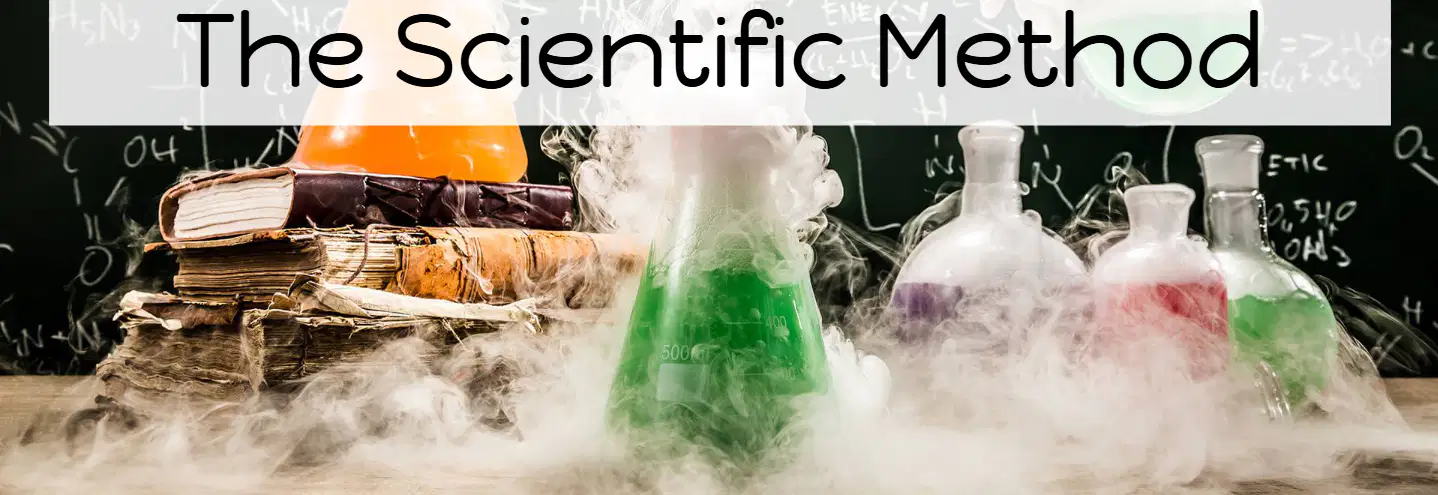
What is the main topic shown in the image?
The Scientific Method
The Water Cycle
Photosynthesis
The Solar System
Which of the following is NOT one of the three things you should answer when planning a hypothetical experiment?
The question you are investigating
The answer you are expecting
Your favorite color
Your experimental design
When designing a hypothetical experiment, what should you include about your experiment?
The experimental design
The number of students in your class
The weather outside
The name of your pet
What is the first step mentioned when thinking of something to investigate in an experiment?
The answer you are expecting
The question you are investigating
Your experimental design
The materials you will use
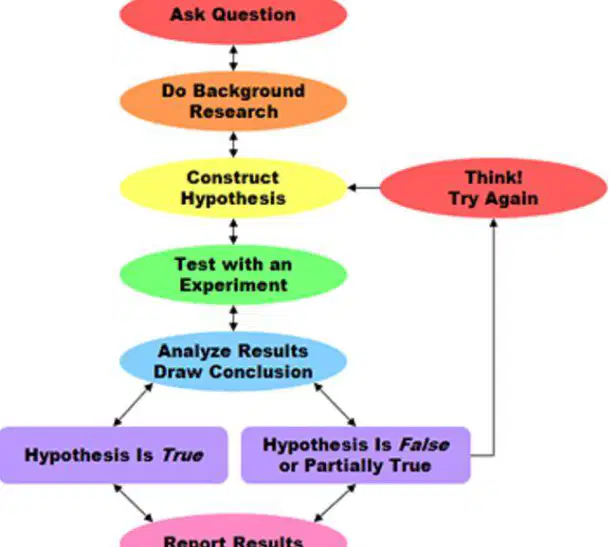
What is the first step in the scientific method?
Do Background Research
Construct Hypothesis
Ask Question
Test with an Experiment
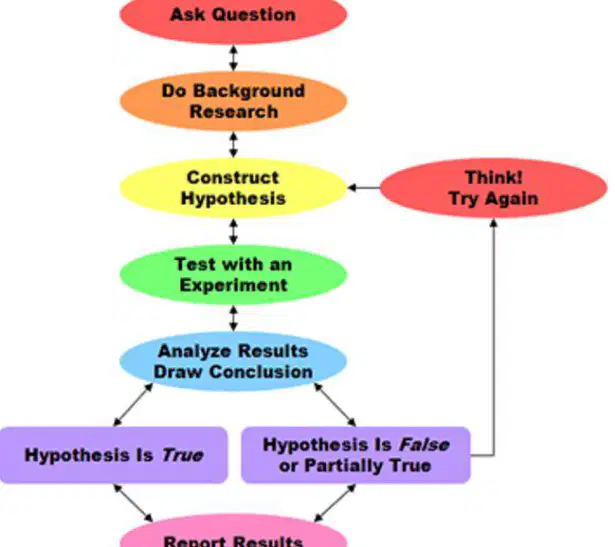
After constructing a hypothesis, what should you do next in the scientific method?
Analyze Results
Test with an Experiment
Report Results
Do Background Research
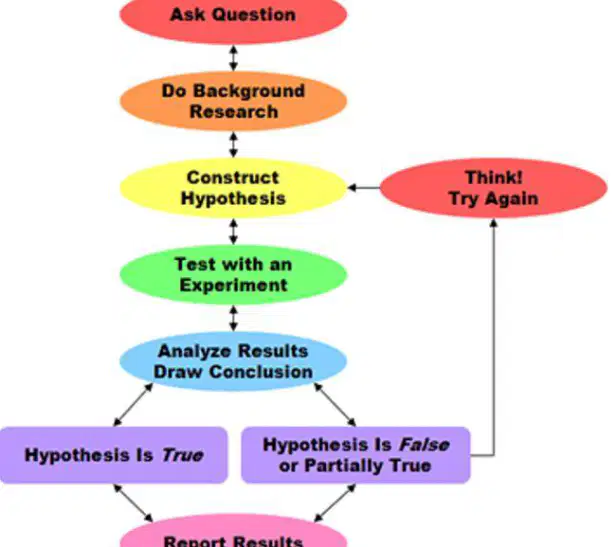
If your hypothesis is false or partially true, what should you do according to the scientific method?
Report Results
Do Background Research
Think! Try Again
Ask Question
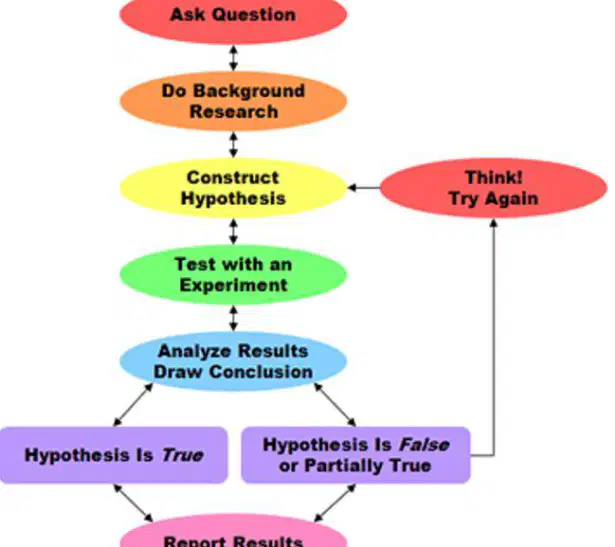
What step comes immediately after "Analyze Results Draw Conclusion" if the hypothesis is true?
Think! Try Again
Report Results
Do Background Research
Test with an Experiment
Which of the following is NOT a step in the scientific method shown in the diagram?
Construct Hypothesis
Make a Guess
Test with an Experiment
Report Results
What should you do if you are observing something and want to learn more about it?
Ignore it
Ask questions about it
Forget about it
Wait for someone else to notice
When researching your question, what is one thing you should check?
If your friends like the question
If someone has already answered your question
If the question is too easy
If the question is funny
What is another thing you should look for when researching your question?
If there is any available explanation
If the question is long
If the question is expensive
If the question is popular
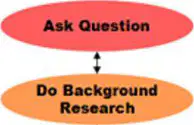
Which of the following is the first step in the scientific process shown in the diagram?
Test with an Experiment
Do Background Research
Ask Question
Report Results
What is the main question being asked in the image?
Do you feel comfortable with asking a question and doing research?
Do you like to play sports?
Do you enjoy reading books?
Do you prefer working alone?
What is a hypothesis?
An explanation of a situation that can be tested with experiments
A random guess with no evidence
A list of materials for an experiment
A summary of results
Which of the following best describes the format of a hypothesis statement?
IF, THEN statement
WHEN, WHERE statement
WHO, WHAT statement
WHY, HOW statement
In a hypothesis, what comes after "If" in the statement "If ______, then _____, because _____"?
Independent variable
Dependent variable
Rationale
Conclusion
In a hypothesis, what comes after "then" in the statement "If ______, then _____, because _____"?
Dependent variable
Independent variable
Materials
Procedure
What is the purpose of the "because" part in a hypothesis statement?
To provide the rationale
To list the materials
To describe the experiment
To state the conclusion
What is the correct format for writing a hypothesis as shown in the example?
If, then
When, so
Because, if
Then, if
According to the example, why do plants need sunlight?
To make flowers
To grow
To change color
To produce seeds
Which of the following is an example of an "if, then" hypothesis?
If I water a plant, then it will grow taller.
Plants are green because of sunlight.
Watering plants is important.
Plants need soil.
What type of hypothesis is mentioned in the question: "How confident are you with writing an 'if, then' hypothesis?"
"If, then" hypothesis
"Why, because" hypothesis
"When, where" hypothesis
"Who, what" hypothesis

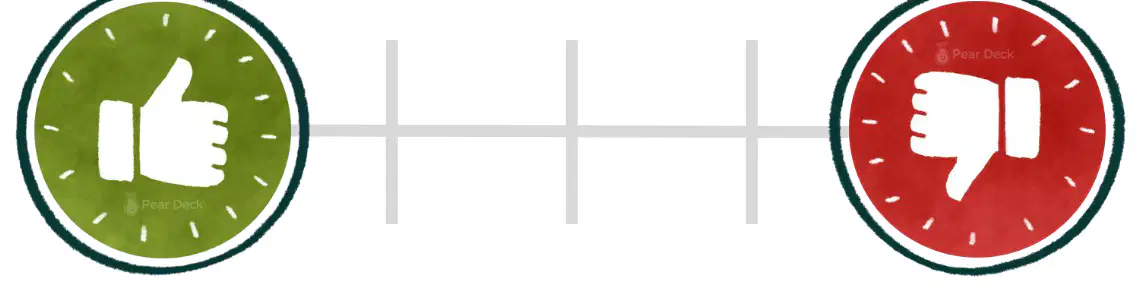
What does the green thumbs up icon most likely represent in the context of the question?
High confidence
Low confidence
Confusion
No opinion

What does the red thumbs down icon most likely represent in the context of the question?
Low confidence
High confidence
Excitement
Agreement
What is a variable in an experiment?
Anything in the experiment that can change or be changed
The result of the experiment
The equipment used in the experiment
The person conducting the experiment
Which variable is changed by the experimenter in an experiment?
Dependent variable
Controlled variable
Independent variable
Measured variable
What is the dependent variable in an experiment?
The factor changed by the experimenter
The factor that must be kept constant
The factor affected by changes in the independent variable (what is measured)
The person conducting the experiment
What must be kept constant in an experiment to ensure a fair test?
Dependent variable
Controlled variable
Independent variable
Measured variable
In the hypothesis, "If I give a plant constant sunlight, then it will grow constantly, because plants need sunlight to grow," what is the independent variable?
The amount of sunlight given to the plant
The type of plant
The amount of water given to the plant
The soil type
In the same hypothesis, what is the dependent variable?
The plant's growth
The amount of sunlight
The type of pot used
The temperature of the room
Why do plants need sunlight according to the hypothesis?
To grow
To change color
To produce seeds
To attract insects
What is the hypothesis stated in the learning material?
If a plant is given constant sunlight, it will grow constantly.
If a plant is given no water, it will grow faster.
If a plant is kept in the dark, it will grow constantly.
If a plant is given constant sunlight, it will stop growing.
According to the hypothesis, what do plants need to grow?
Sunlight
Rocks
Plastic
Sand
Which of the following is a variable that should be controlled while testing the hypothesis about plant growth?
Amount of water given to the plant
Type of music played near the plant
Color of the pot
Shape of the leaves
Why is it important to control variables when testing a hypothesis?
To make sure the results are accurate and reliable
To make the experiment more fun
To use more materials
To finish the experiment faster
In an "if, then" hypothesis, what should you do to identify the independent and dependent variables?
Draw a circle around the independent variable and a square around the dependent variable.
Draw a triangle around the independent variable and a circle around the dependent variable.
Draw a square around the independent variable and a circle around the dependent variable.
Draw a line under both variables.
What is the purpose of rewriting your "if, then" hypothesis in this activity?
To identify and mark the independent and dependent variables.
To change the meaning of the hypothesis.
To make the hypothesis longer.
To remove variables from the hypothesis.
Which of the following is important when designing a "good" experiment?
Test only one independent variable at a time
Test many variables at once
Ignore repeated trials
Allow outside influences
What does it mean for an experiment to be fair and unbiased?
The experiment is not influenced by personal opinions or outside factors
The experiment is done only once
The experiment changes variables randomly
The experiment ignores the results
Why are repeated trials important in an experiment?
They help ensure the results are reliable
They make the experiment more confusing
They allow for more variables to be tested at once
They are not important at all
What is a confounding variable in an experiment?
An outside influence that can affect the results
The main variable being tested
The control group
The number of repeated trials
Why should a good experiment have a control group and multiple experimental groups?
To compare the effects of the independent variable
To make the experiment more difficult
To avoid using repeated trials
To ignore confounding variables
What is an important rule when designing a "good" experiment?
Test only one independent variable at a time
Test as many variables as possible at once
Change all conditions randomly
Ignore the variables
Why is it important to be fair and unbiased in an experiment?
So your opinion does not influence the experiment
So you can get the results you want
So you can finish faster
So you can use fewer materials
Why should experiments have repeated trials?
To make sure the results are reliable
To make the experiment more complicated
To use more resources
To confuse the results
What does it mean to have no outside influence in an experiment?
No confounding variables affect the results
Letting anything change during the experiment
Changing the experiment every time
Ignoring the control group
What is the purpose of having a control group in an experiment?
To compare results with normal conditions
To make the experiment longer
To test more variables at once
To avoid repeating the experiment
What is the main purpose of a control group in an experiment?
To provide a comparison by not changing the independent variable
To test the effect of the independent variable
To increase the number of groups in the experiment
To change the dependent variable
Which of the following best describes an experimental group?
The part of the experiment where the independent variable is changed
A group that is not tested and used for comparison
A group with no variables changed
A group that is always the same as the control group
How many control groups are usually present in an experiment?
Usually only one group
Many groups
No groups
Exactly two groups
Which of the following is NOT true about a control group?
It is the same as a controlled variable
It is used for comparison
The independent variable is not changed
It is usually only one group
Which of the following is important when designing a good experiment for your hypothesis?
Testing multiple independent variables at once
Having only one independent variable being tested
Not repeating trials
Allowing outside influences to affect the results
Why is it important to have repeated trials in an experiment?
To make the experiment more complicated
To ensure the results are reliable
To test more variables at once
To avoid using a control group
What should be controlled in a good experiment to avoid outside influences?
The number of groups
Certain variables
The number of students
The color of the equipment
What is the purpose of having a control group in an experiment?
To test a different hypothesis
To compare results with the experimental groups
To increase the number of variables
To repeat the experiment
How many independent variables should be tested in a well-designed experiment?
One
Two
Three
As many as possible
What is an example of quantitative data?
Numbers (measuring/counting)
Colors of objects
Types of plants
Feelings about an experiment
What does qualitative data describe?
Descriptive characteristics using words
Numbers and measurements
Graphs and charts
Mathematical equations
How should data be organized after it is collected?
Put data into a chart or graph
Throw it away
Write it in a story
Ignore it
How many data points are needed for a good experiment?
At least 3
Only 1
At least 10
None
Which of the following is a good example of collecting data for an experiment with plants?
Use 3 different plants in constant sunlight
Use only 1 plant in the dark
Guess the results
Do not record any data
Which step comes after "Test with an Experiment" in the scientific process shown in the diagram?
Analyze Results Draw Conclusion
Ask Question
Report Results
Do Background Research
Which type of data deals with numbers and counting?
Quantitative data
Qualitative data
Descriptive data
Categorical data
Which type of data deals with words and descriptions?
Qualitative data
Quantitative data
Numerical data
Statistical data
What is the purpose of comparing the experimental group with the control group in an experiment?
To see if there are differences between the groups.
To make the experiment longer.
To use more materials.
To confuse the results.
When analyzing results, what is an important question to ask?
What results did you expect?
How many people were in the room?
What color was the equipment?
Who was the teacher?
Which step comes after "Test with an Experiment" in the scientific process shown in the diagram?
Analyze Results Draw Conclusion
Ask Question
Report Results
Construct Hypothesis
How should you feel if your actual results are different from your expected results?
It is OK if my actual results are different from my expected results.
It is never OK if my actual results are different from my expected results.
You should always get the expected results.
You should ignore your actual results.
What is the main topic of the page shown in the image?
How to graph data
How to write an essay
How to solve equations
How to read a map
What is the first step when creating a graph for data?
Add a title to the graph
Draw a picture
Write a story
Color the graph
What is the title of the graph shown in the image?
Plant Growth With Varied Sunlight Exposure Times
Animal Growth With Varied Food Types
Plant Growth With Different Water Levels
Sunlight Exposure and Temperature
What is the main topic of the learning material shown in the image?
How to graph data
How to write an essay
How to conduct experiments
How to measure temperature
What is the y-axis usually used for when graphing data?
Dependent variable
Independent variable
Title
Units
What is an example of a good title for a graph about plant growth and sunlight?
Plant Growth With Varied Sunlight Exposure Times
My Favorite Plants
How to Water Plants
Sunlight and Water
What is the main topic of the learning material shown in the image?
How to graph data
How to plant seeds
How to water plants
How to write a story
Where is the title usually placed on a graph?
At the top
On the y-axis
At the bottom
On the x-axis
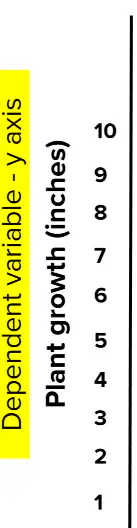
What is the dependent variable in the graph shown in the image?
Plant growth (inches)
Sunlight exposure time
Temperature
Soil type
What is the title of the graph shown in the image?
Plant Growth With Varied Sunlight Exposure Times
Sunlight and Water Effects on Plants
Plant Growth Over Time
Effects of Temperature on Plant Growth
On which axis is the dependent variable usually placed when graphing data?
Y-axis
X-axis
Z-axis
W-axis
What is the dependent variable in the example graph shown in the image?
Plant growth (inches)
Sunlight exposure time
Temperature
Soil type
Where is the dependent variable usually placed on a graph?
On the y-axis
On the x-axis
In the title
In the legend
What is the title of the example graph in the image?
Plant Growth With Varied Sunlight Exposure Times
Sunlight and Water for Plants
Plant Growth Over Time
Effects of Temperature on Plants
What does the y-axis represent in the example graph?
Plant growth (inches)
Sunlight exposure time
Number of plants
Water amount
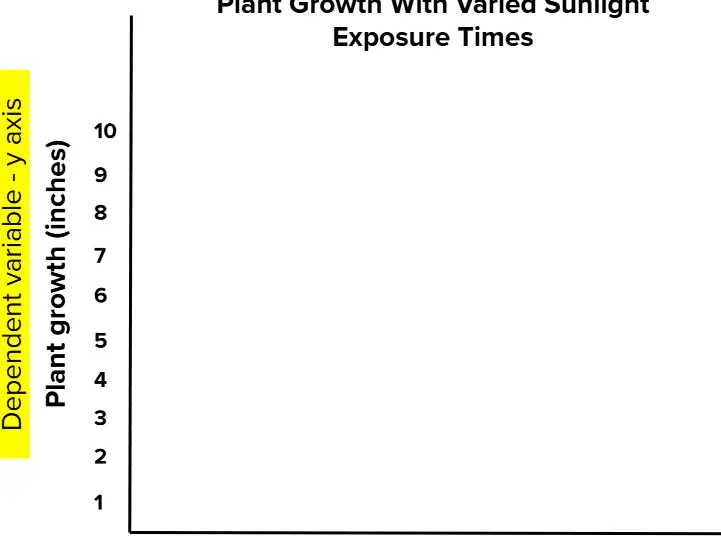
What is the dependent variable in the example graph about plant growth?
Plant growth (inches)
Sunlight exposure time
Temperature
Soil type
Where is the independent variable usually placed on a graph?
On the x-axis
On the y-axis
In the title
In the legend
What should the title of a graph describe?
What the graph is about
The color of the graph
The number of data points
The type of paper used
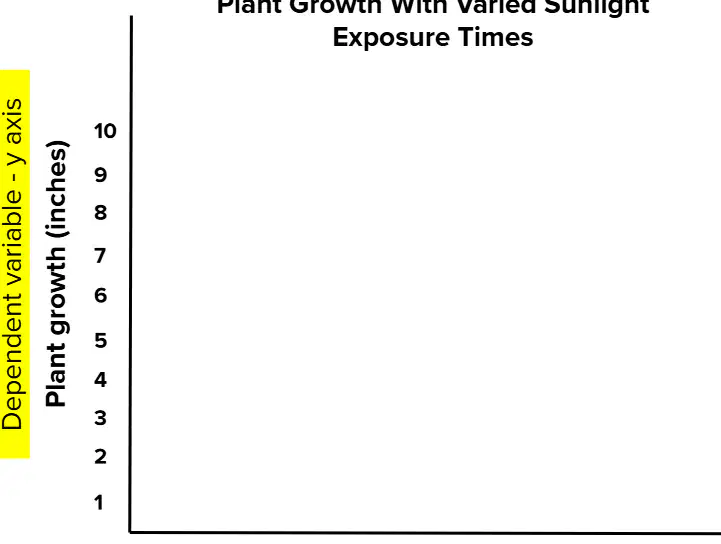
Which axis is labeled as the dependent variable in the example graph?
Y-axis
X-axis
Diagonal axis
No axis
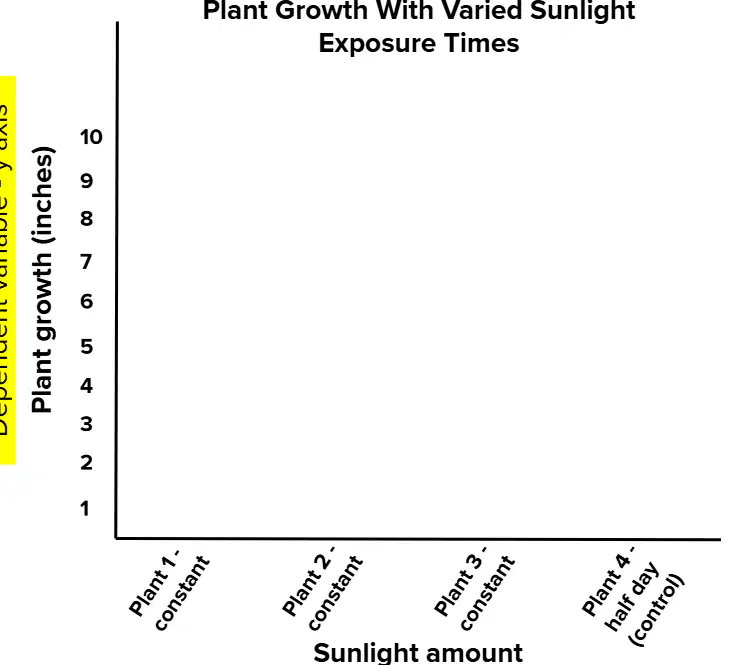
What is the dependent variable in the graph shown in the image?
Plant growth (inches)
Sunlight amount
Plant type
Water amount
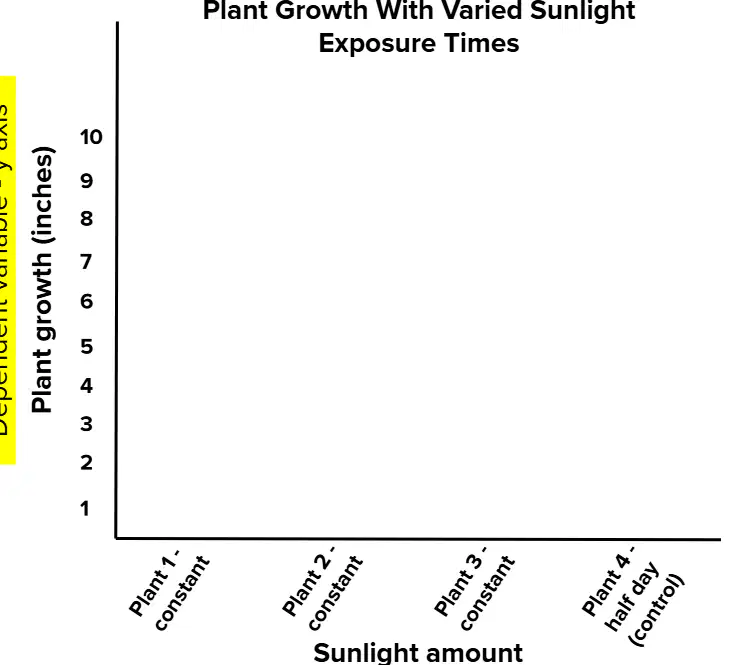
Where is the independent variable usually placed on a graph?
On the x-axis
On the y-axis
In the title
In the legend
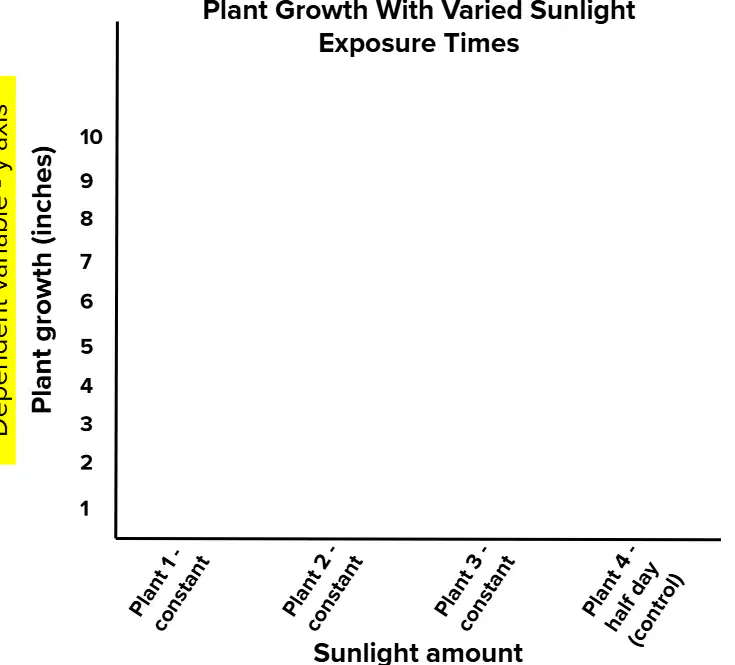
What is the title of the graph in the image?
Plant Growth With Varied Sunlight Exposure Times
Plant Growth Over Time
Sunlight and Water Effects
Growth of Different Plant Types
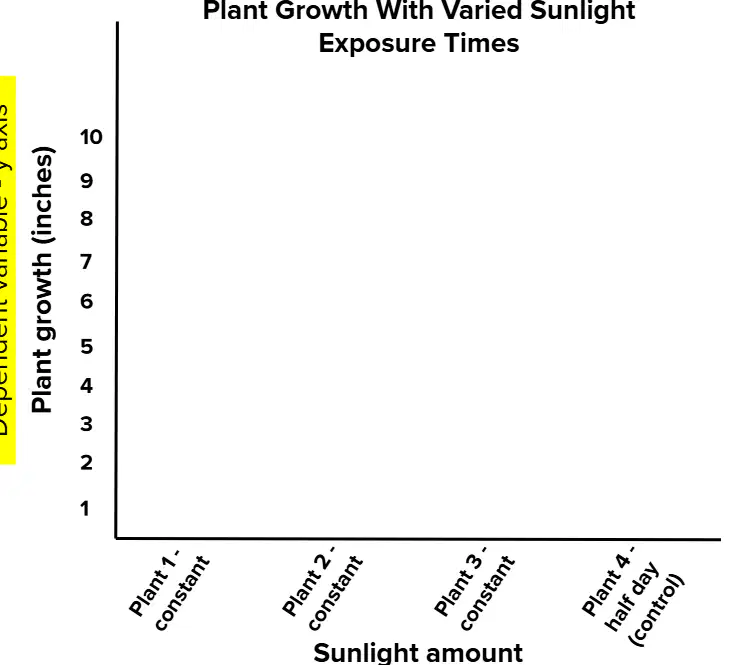
Which of the following is an example of an independent variable in the graph?
Sunlight amount
Plant growth (inches)
Number of leaves
Soil type

