
 Worksheets
Sociology Unit 4 Post test
Total questions: 20
Worksheet time: 10mins
Name
Class
Date
1.
Which of the following is an essential characteristic of the global economy?
a)
Agriculture
b)
Communication using technology
c)
Factories
d)
All those mentioned
2.
Which of the following describes a market economy?
a)
Individuals own businesses, and they compete with one another for profits.
b)
Individuals own some businesses, and the government also owns some businesses.
c)
The government and the people own everything together.
d)
The government owns and runs all the businesses.
3.
Which statement describes a monarchy?
a)
Power can be taken away through votes by citizens.
b)
Everyone is responsible for creating their own rules.
c)
Power is held by a supreme leader.
d)
Citizens have a voice in and responsibilities to the government
4.
Why is voting for leaders significant for citizens of the United States?
a)
It allows citizens some control of the government
b)
It ends the need for all social institutions
c)
It replaces the need for a military
d)
It is a grand tradition.
5.
How are extended families and nuclear families alike?
a)
They are both outlawed in some countries.
b)
They are both historical entities that no longer exist.
c)
They are both unique to the United States.
d)
They are both social institutions
6.
Which statement about religions is true?
a)
There are four religions in the world, the rest are cults.
b)
Sociologists try to prove which religion is better and more powerful that the others.
c)
It is a system of beliefs related to a deity or reality that cannot be explained.
d)
Its main purpose is to control the government and the economy.
7.
Which of the following is a major health issue in the United States today?
a)
Rickets
b)
Polio
c)
Tuberculosis
d)
Obesity
8.
In which area do health maintenance organizations (HMOs) specialize?
a)
International economics
b)
Medical Care
c)
Mass communication
d)
Religious values
9.
Which statement is the best example of a structural-functional approach to education?
a)
Education socializes children
b)
Education helps students make sense of their world
c)
Education should be a social equalizer
d)
Education is a financial enterprise
10.
What is one problem caused by unequal funding for schools?
a)
Differences in the quality of teachers
b)
Differences in the quality of education
c)
Differences in the opportunities for students
d)
All of those mentioned
11.
A focus on ideas instead of physical products in central to which type of economy?
a)
Capitalist
b)
Postindustrial
c)
Argrarian
d)
Industrial
12.
Marshall is considered a member of the tertiary market. Which of Marshall's characteristics places him in this category?
a)
He is the coach of his daughter's soccer team.
b)
He graduated from a local high school in the top 10 percent of his class.
c)
He dreams of someday owning his own store that specialized in selling hard-to-find hardware supplies.
d)
He works in a local hardware store at the lead salesperson for paint and painting supplies.
13.
What method do totalitarian governments use to gain support of people?
a)
Promoting a national goal
b)
Encouraging people to take care of themselves
c)
Ending education for the citizens
d)
Forcing people to be afraid of the leaders
14.
According to social-conflict theorists, what is a problem in the power-elite model of government?
a)
The people influence the government by expressing their views
b)
Power is shared between the government and the voters
c)
The leaders do not have power
d)
The average person's voice is not heard
15.
Which theoretical framework of sociology recognizes religion as something that helps set limits on behavior and can be a powerful source of change or dysfunction?
a)
The symbolic-interaction approach
b)
The social-conflict approach
c)
The structural-functional approach
d)
All of those mentioned
16.
According to Émile Durkheim, all religions separate:
a)
Believers from the nonbelievers
b)
the holy from the unholy
c)
the sacred from the profane
d)
chosen people from unchosen people
17.
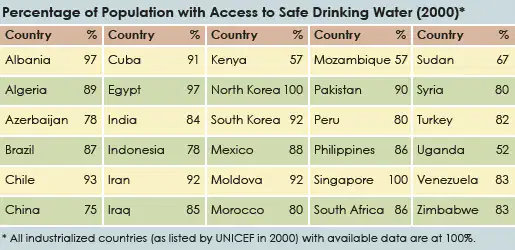
Based on the data, which country's citizens would you expect to have the shortest lifespans?
a)
Albania
b)
Uganda
c)
Moldova
d)
Singapore
18.
Scientists who study patterns of health are called social ______.
a)
Antropopgists
b)
epidemiolists
c)
psychologists
d)
biologists
19.
What is the primary goal of educational apprenticeships, as opposed to schooling?
a)
To teach people specific trade skills
b)
To assist people in being elected to political offices
c)
To help students pass standardized tests
d)
To ensure the equality of information in the mass media
20.
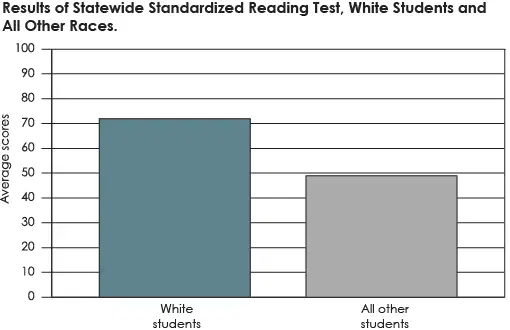
What does this graph demonstrate?
a)
The latent studies
b)
the tracking system
c)
the achievement gap
d)
the web-based curriculum
100 %

