
Font size
 Worksheets
Types of Bonds Quiz
Total questions: 20
Worksheet time: 13mins
Which of the below is an ionic compound?
Copper Wire (Cu)
MgCl2
H2O
CH4
What part of the atom does bonding involve?
Protons
Neutrons
All electrons
Valence electrons
Which of the following is a characteristic property of ionic compounds?
They form hard, brittle crystals with characteristic 3D repeating patterns
They have low melting points
They have low boiling points
They contain no charged particles
In what form can an ionic compound conduct electricity?
When dissolved in water
As a solid
As a crystal
As a gas
Low melting point are general properties of what bond?
Ionic
Covalent
Chemical
Glucose
Which bonds have a crystal structure?
Ionic and covalent
Covalent only
Metallic and covalent
Ionic and metallic
The octet rules states that most elements want to have … valence electrons
2
4
6
8
In order to fulfill the octet rule, Magnesium (Mg) will…
Lose 1 electron
Lose 2 electrons
Gain 7 electrons
Gain 2 electrons
Sulfur has an electronegativity of 2.5 and oxygen has a value of 3.5. Which element will have the more pull?
Sulfur
Oxygen
Both
Neither
What is an ionic bond?
A chemical bond formed by the transfer of electrons between atoms.
A chemical bond formed by the repulsion of like charges between ions.
A chemical bond formed by the attraction of opposite charges between ions.
A chemical bond formed by the sharing of electrons between atoms.
Which type of bond involves the transfer of electrons?
Metallic bond
Hydrogen bond
Covalent bond
Ionic bond
What is a covalent bond?
A covalent bond is a chemical bond that involves the repulsion of like charges between atoms.
A covalent bond is a chemical bond that involves the transfer of electron pairs between atoms.
A covalent bond is a chemical bond that involves the attraction of opposite charges between atoms.
A covalent bond is a chemical bond that involves the sharing of electron pairs between atoms.
Which type of bond involves the sharing of electrons?
Ionic bond
Hydrogen bond
Covalent bond
Metallic bond
What is a polar covalent bond?
A polar covalent bond is a type of chemical bond where electrons are not shared between two atoms.
A polar covalent bond is a type of chemical bond where electrons are shared equally between two atoms.
A polar covalent bond is a type of chemical bond where electrons are shared unequally between two atoms.
A polar covalent bond is a type of chemical bond where protons are shared unequally between two atoms.
Which type of bond has an unequal sharing of electrons?
ionic bond
nonpolar covalent bond
metallic bond
polar covalent bond
What is the main difference between ionic and covalent bonds?
Ionic bonds involve the transfer of electrons, while covalent bonds involve the sharing of electrons.
Ionic bonds are stronger than covalent bonds.
The main difference between ionic and covalent bonds is the way in which electrons are shared.
Ionic bonds only occur between metals and nonmetals, while covalent bonds occur between nonmetals.
Organize these options into properties of ionic compounds or properties of covalent compounds
High melting and boiling points
Can conduct electricity when dissolved in water
Makes liquids or gases
Low melting and boiling point
Cannot conduct electricity
metals + nonmetals
Nonmetals +nonmetals
Transfer Electrons

You have a compound (NaCl) that does NOT melt on the hot plate and is a GOOD conductor of electricity when dissolved in water. Which type of compound is it?
Ionic
Molecular (Covalent)
Metallic
What type of bond is Copper wire (Cu)
metallic bond
Covalent Bond
Ionic Bond
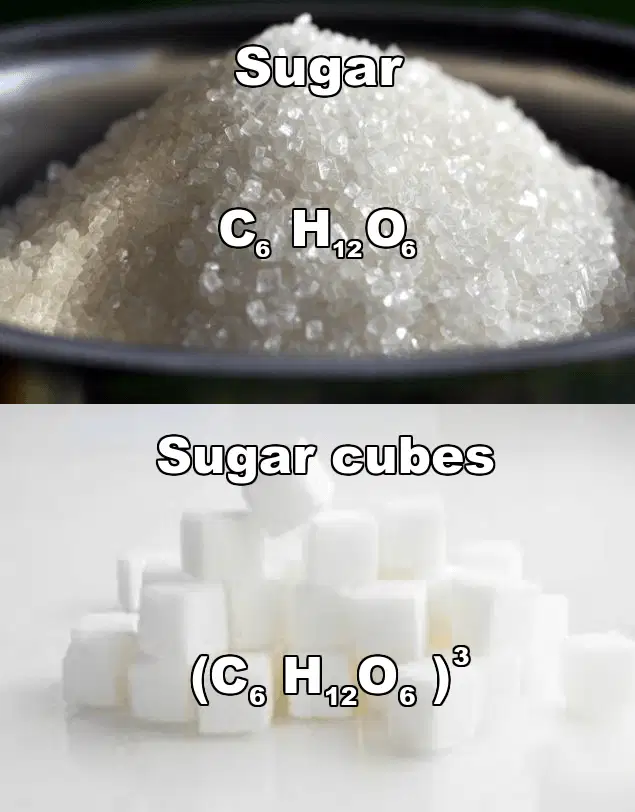
What type of bond is sugar (C6H12O6)?
Metallic Bond
Covalent Bond
Ionic Bond

