
Font size
 Worksheets
Domain 4 Exam_25
Total questions: 71
Worksheet time: 1hrs 28mins
Isolationism is the belief that
Countries can and should take over other, weaker countries
Countries should form alliances with other countries for protection
Countries should not focus or participate in foreign affairs
All wars are bad
All the following were causes of World War One EXCEPT
Communism
Alliances
Militarism
Imperialism
With the outbreak of World War I in 1914, the great majority of Americans
hoped to stay out of the war.
favored entering the war in support of the Allies.
supported the Central Powers.
wanted to form a military alliance of neutral nations.
President Wilson broke diplomatic relations with Germany when
the Zimmermann note was intercepted and made public.
Germany announced that it would resume unrestricted submarine warfare in the Atlantic.
news was received that the revolutionary movement had overthrown the czarist regime in Russia.
it appeared that the German army would take Paris.
Germany’s notorious Zimmermann Telegram
promised to end the submarine warfare.
apologized for the sinking of the Lusitania.
rejected the U.S. efforts for a truce in the fighting.
proposed an alliance between Mexico and Germany.
President Wilson broke diplomatic relations with Germany when
the Zimmermann note was intercepted and made public.
Germany announced that it would resume unrestricted submarine warfare in the Atlantic.
news was received that the revolutionary movement had overthrown the czarist regime in Russia.
it appeared that the German army would take Paris.
Which American was jailed for speaking out against America joining WW1?
Samuel Gompers
Eugene Debs
What was the goal of President Wilson’s Fourteen Points?
To impose disciplinary measures on aggressor nations
To provide a plan for a just and lasting peace
To distribute colonial possessions equally
To implement a comprehensive reparations plan
President Wilson’s final point in his Fourteen Points called for
the creation of a “general association of nations” (League of Nations).
punishing Germany for the use of “unrestricted U-Boat warfare.”
a reduction of military weapons.
Allowing nations to trade freely without fear of retribution.
Why did millions of people in Europe reject the idea that there could be peace without victory?
They wanted vengeance against Germany and demanded that Germany pay for its actions.
They wanted to continue the war and completely destroy the Central Powers.
They wanted to pretend that the war had not even occurred so everything could go back to the way it was before the war.
They believed the Allied Powers were wrong and wanted to pay back Germany for all the warfare.
Why did President Wilson make sacrifices on 13 of his Fourteen Points?
He wanted to guarantee the League of Nations would be included in the Treaty of Versailles.
He had a stroke and could not encourage the inclusion of all Fourteen Points.
He thought that the first 13 points were no longer needed.
He changed his mind and believed Germany should be punished.

3. This political cartoon illustrates which of the following opinions regarding the League of Nations?
If the United States joined the League of Nations then it would be pulled into foreign affairs
Leaders from around the world were hoping to paralyze United States power by involving them in the League of Nations
If the United States joined the League of Nations then the leaders of foreign nations would take down the United States
The Senate did not want to give up its right to negotiate treaties
What is the League of Nations?
An international organisation that helps to promote trade
An international organisation that aims to promote peace among the countries
An international organisation that will fight other countries
An international organisation that will bring hope and stability in the world
The Red Scare refers to -
the spread of Communism to eastern European countries
thousands of people were arrested and deported for being suspected communists
it was discovered it was not communist responsible for the bombing
relationship between Russia and American grew as they cooperated in finding the suspects
As a result of the Red Scare and a rise of immigrants from Eastern Europe, the U.S. government placed _____________on immigrants.
sanctions
quotas ( or a limit)
The purchasing of material goods or acquiring goods in ever-greater amounts.
Consumerism
Productionism
Suffrage
Prohibition
A flowering of African American artistic creativity during the 1920's centered in the Harlem community of New York City.
Harlem Renissance
Harlem Enlightenment
Harlem Shake
Harlem Age
Production of more of a product, commodity, or substance than is wanted or needed
Underproduction
Underconsumption
Overproduction
Equilibrium
A period lasting from 1929 to 1940 in which the U.S. economy was in sever decline and millions of Americans were unemployed.
Great Recession
Great Gatsby
Great Depression
Great Oppression
The purchase of goods and services at a level lower than that of their supply.
Overproduction
Underconsumption
Overconsumption
Equilibrium
The region, including Texas, Oklahoma, Kansas, Colorado, and New Mexico that was made worthless for farming by drought and dust storms during the 1930's.
Dust Bowl
Dust Plate
Dust Platter
Dust Chafing Dish
A shantytown built by unemployed and destitute people during the Depression of the early 1930s.
Slumville
Wilsonville
Hooverville
Trumpville
President Franklin Roosevelt's program to alleviate the problems of the Great Depression, focusing on relief for the needy, economic recovery, and financial reform.
Old Deal
New Deal
Great Deal
Green Deal
A law enacted in 1935 to provide aid to retirees, the unemployed, people with disabilities, and families with dependent children.
Social Security Act
Tennessee Valley Authority
Works Progress Administration
National Labor Relations Act
Louisiana Senator, presidential candidate and critic of Roosevelt's New Deal. Proposed his own plan to help with the depression called Share Our Wealth.
Huey Lewis
Huey Long
Huey Short
Huey Stout
How was Henry Ford able to make automobiles cheaper than ever before?
paying his workers less
the use of installment plans
the use of the assembly line
the introduction of lightweight bodies
What were TWO causes for the Dust Bowl?
Over-farming the land
Too many houses built
Not enough flat land for farming
Severe drought
Roads being built
What was one of the most popular consumer products of the 1920s that led to a surge in the growth of music producers and 'music shops'?
Computers
Radio
Television
Smartphones
Which is an accurate statement about American society during the 1920's?
The public expressed great interest in sports heroes and movie stars
Social attitudes were identical to those of earlier decades
Political figures were widely praised as role models.
How did many people end up increasing their personal debt?
Opening more credit cards
Large car loans
Taking on multiple jobs
Installment buying
What is it called when people buy stock on credit?
Mortgage
Margin
Bond
Mutual Fund
In the 1930s, populations in the American West began to increase significantly due to
the rapid growth of manufacturing in communities on the Pacific Coast.
the migration of farmers from the Great Plains during the Dust Bowl.
the completion of the first transcontinental railroad.
the elimination of immigration quotas by the government.
When consumers buy less products. This was common after the Stock Market Crash.
Overspending
Overproduction
Under-consumption
Buying on Margin
Is the following program a Relief, Reform, or a Recovery program?
2. Emergency Banking Act On March 6, 1933, FDR shut down all the banks in the nation and forced Congress to pass this Act. It gave the government the opportunity to inspect the health of all banks. This re-established citizens’ faith in banks. Inspectors found that most banks were healthy, and two-thirds of all banks were allowed to open soon after
Relief
Reform
Recovery
Is the following program a Relief, Reform, or a Recovery program?
National Youth Administration (NYA) created under the Emergency Relief Act of 1935, provided more than 4.5 million jobs for young people. It gave part-time employment to students, established training programs and provided aid to unemployed youth.
Relief
Reform
Recovery
Is the following program a Relief, Reform, or a Recovery program?
The Agriculture Adjustment Administration (AAA) of 1933 raised farm prices through subsidies. It paid farmers not to raise certain crops and livestock, hoping that lower production would cause prices to rise. The Supreme Court struck down the tax that funded AAA subsidies to farmers.
Relief
Reform
Recovery
Which of the following BEST describes why wealthy conservatives opposed New Deal policies?
They were against creating new land development policies in the South.
They were against creating an extensive road system and large buildings.
They were against the government creating any sort of safety net for the poor.
They were against the government intervening in business and redistributing wealth.
Which statement BEST explains how Eleanor Roosevelt influenced African Americans to vote for Democratic, instead of Republican, candidates?
Eleanor successfully lobbied Congress to integrate public schools so that African American students could have equal access to education.
Eleanor advocated for African American civil rights and was vocal about ending discriminatory practices associated with New Deal legislation.
Eleanor befriended many African American leaders during her lifetime, especially those who fought for feminism and social justice, such as American educator, Mary McLeod Bethune.
Eleanor traveled across the country observing the various social conditions in which African Americans lived and then reported to her husband who addressed these issues to the nation in his fireside chats.
How did Eleanor Roosevelt help women benefit from New Deal programs during the Great Depression?
She organized the She-She-She Camps to help unemployed women in the same way the Civilian Conservation Corps helped unemployed men.
She organized a women's march on Washington to demand that New Deal programs such as the Civilian Conservation Corps help both men and women.
She organized a nationwide voting campaign to elect representatives who were willing to vote against New Deal programs if they did not include women.
She organized a women's strike that threatened to substantially decrease wartime manufacturing needs if New Deal programs were not open to women.
What was the purpose of the Lend-Lease Act?
To provide financial aid to Axis powers
To establish trade agreements with neutral countries
The purpose of the Lend-Lease Act was to provide military aid to the Allies during World War II.
To support the development of nuclear weapons
How did the Lend-Lease Act impact the United States' economy during World War II?
The Lend-Lease Act boosted the U.S. economy by increasing production and creating jobs.
The Lend-Lease Act caused a decrease in production and job opportunities in the U.S.
The Lend-Lease Act had no impact on the U.S. economy during World War II
The Lend-Lease Act led to a surplus of goods and resources in the U.S. economy
What was the significance of the Lend-Lease Act in strengthening the Allied forces?
The Lend-Lease Act had no impact on the strength of the Allied forces
The Lend-Lease Act provided military aid and resources to the Allied forces, helping them to continue fighting against the Axis powers by supplying them with essential equipment and supplies.
The Lend-Lease Act provided financial support to the Axis powers, weakening the Allied forces
The Lend-Lease Act only benefited the Axis powers, making the Allied forces weaker


Put the events of World War II in chronological order
Germany invades Poland
Japan attacks Pearl Harbor
Japanese Americans forcibly interned
Allies invade Europe on D-Day
United States drops atomic bombs on Japan
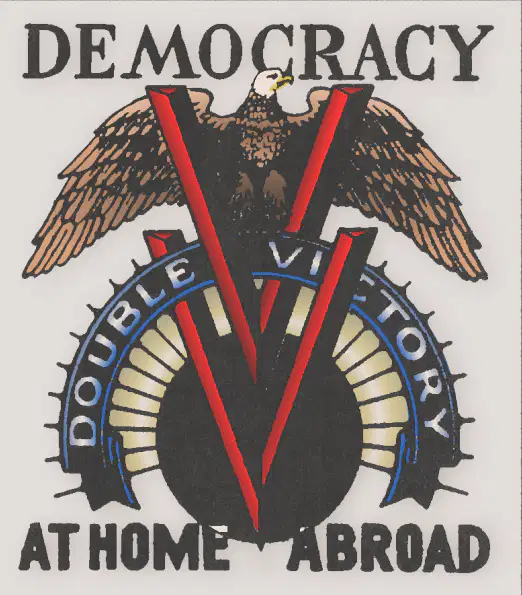
Drive to promote the fight for democracy overseas and at the home front in the United States for African Americans.
Cash & Carry
Dehumanization
Double-V Campaign
Island Hopping
Rosie the Riveter
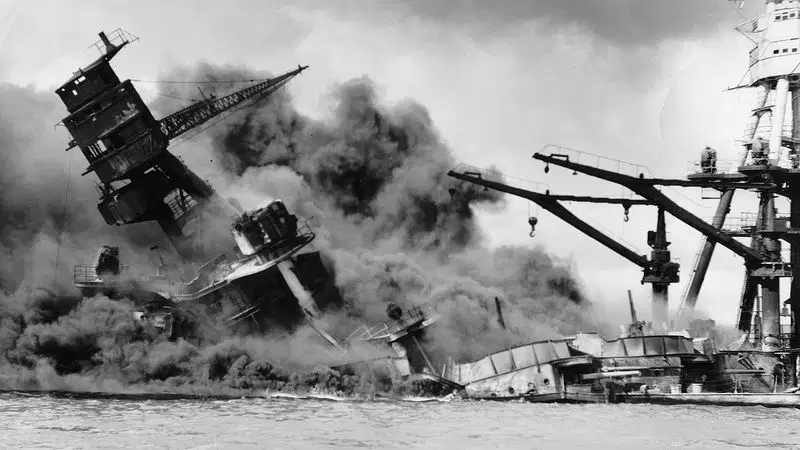
Base in Hawaii that was bombed by Japan on December 7, 1941, which angered America to enter the war.
Pearl Harbor
Waikiki Beach
Manila Harbor
Hiroshima

What was the goal of posters such as Rosie the Riveter?
To make sure Victory Gardens were grown
To motivate proper use of the Ration Books
To motivate women to find work in factories as men were drafted
To encourage women to take on combat roles overseas
______ _______ (two words) is the war strategy used by the U.S. to go from one island in The Pacific to another.
(a)
The cities of ______ and ______ in Japan were hit with the atomic bombs.
(a)
Match the following
Battle of Midway
Turning point battle in the Pacific
Okinawa and Iwo Jima
US used these as bases to attack Japan
Hiroshima and Nagasaki
Atomic bombings in World War II
Why did the U.S. seize Pacific Islands during World War II?
To gain access to vital natural resources
To fulfill commitments to military alliances
To protect shipping routes for neutral countries
To establish military bases for use in further atttacks
What was the name of the top-secret development of the atomic bomb?
Operation Overlord
Operation Barbarossa
Dutch Harbor
Manhattan Project
What was one of Germany'S military strategy called?
operation Sealion
invasion via ocean
air raids
Blitzkrieg
Germany invaded Poland

Europeans allowing Italy and Germany to expand militarily and grab territory was called-
"Appeasement"
"Reconciliation"
"Reparation"
"Regret"


Why did Americans grow Victory Gardens during World War II?
To exchange for extra ration coupons at grocery stores
To sell the food for profit to the government
To make sure they had enough food as the nation rationed
If they grew a certain amount of food they could skip military service
Americans of all backgrounds were encouraged to support the war effort by... (multiple answers)
Purchasing war bonds
Planting victory gardens
Rationing and donating scarce materials
Speaking out against the War Effort
Which executive order authorized the internment of Japanese-Americans during World War II?
Executive Order 8802
Executive Order 9066
Executive Order 9981
Executive Order 9102
What was the primary reason given for the internment of Japanese-Americans?
Economic competition
National security concerns
Diplomatic relations with Japan
Public health concerns
What was the main purpose of Executive Order 8802?
To declare war on Japan
To intern Japanese-Americans
To prohibit racial discrimination in the defense industry
To establish the War Relocation Authority
How did Roosevelt's executive orders impact the defense industries during World War II?
They led to a decrease in production.
They facilitated the integration of minority workers.
They resulted in the privatization of defense industries.
They had no significant impact.

