
NEW
Font size
 Worksheets
Directional Movement Medical Terminology Quizs
Total questions: 20
Worksheet time: 10mins
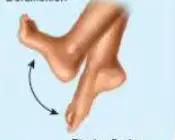
Dorsiflexion
Movement of the sole of the foot upward (flexed toward the lower leg).
Movement of the sole of the foot downward (extended away from the lower leg).
Movement of the toes inward toward the midline of the body.
Movement of the heel upward while the toes remain on the ground.

The straightening of a limb after it has been flexed
Flexion
Extension
Adduction
Abduction
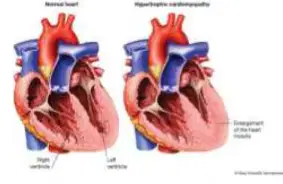
Excessive growth or abnormal enlargement of a muscle
Atrophy
Hypertrophy
Dystrophy
Sarcopenia
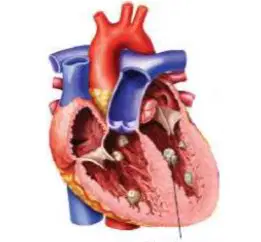
Benign tumor consisting of striated muscle that occurs on or in the smooth muscle of the heart.
Rhabdomyoma
Lipoma
Fibroma
Myxoma
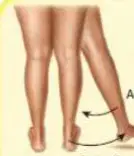
Movement of a body part away from the midline of the body.
Adduction
Abduction
Flexion
Extension
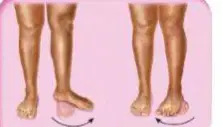
Movement medially, or toward the midline of the body
Lateral rotation
Medial rotation
Abduction
Adduction
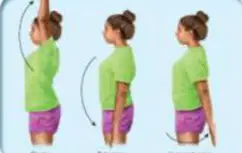
The movement of two body surfaces toward each other, as in the act of bending
Extension
Flexion
Abduction
Adduction
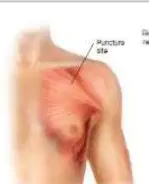
The removal of a small piece of living tissue for microscopic examination.
biopsy
autopsy
necropsy
surgery
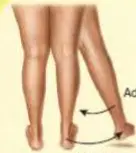
Movement of a body part toward the midline of the body.
Abduction
Adduction
Flexion
Extension
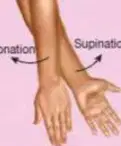
Pronation
Rotational motion of the forearm in which the palm moves to face downward.
Rotational motion of the forearm in which the palm moves to face upward.
A movement that involves bending the elbow to lift an object.
A motion that involves twisting the wrist to rotate the hand.
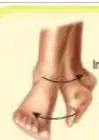
The turning outward of the sole of the foot
Inversion
Eversion
Dorsiflexion
Plantarflexion
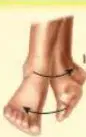
Inversion
The turning inward of the sole of the foot.
The turning outward of the sole of the foot.
The bending of the foot upwards towards the shin.
The movement of the foot away from the midline of the body.
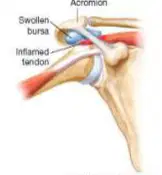
Condition that occurs when tendons of the shoulder become impinged, or compressed, by the bones of the shoulder.
Impingement syndrome
Rotator cuff tear
Shoulder bursitis
Tendinitis
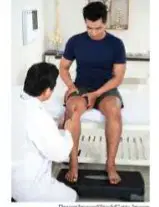
Evaluation of involuntary muscular responses with a reflex hammer.
deep tendon reflexes
muscle strength testing
neurological examination
joint mobility assessment
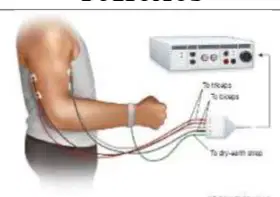
A graphic recording of the contraction of a muscle as a result of electrical stimulation.
electromyogram
electrocardiogram
ultrasonogram
magnetic resonance imaging

Supination
Rotational motion of the forearm in which the palm moves to face upward.
Rotational motion of the forearm in which the palm moves to face downward.
A movement that involves bending the elbow to lift an object.
A type of stretching exercise for the wrist.

Rotation of an arm or leg (as if "drawing a circle" with the limb).
Flexion
Extension
Circumduction
Abduction
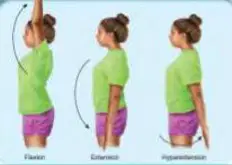
Hyperextension
The act of bending a joint or limb beyond normal extension or range of motion.
A type of joint movement that decreases the angle between two body parts.
The process of straightening a bent limb or joint.
A movement that involves rotating a limb around its axis.
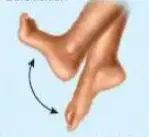
Plantar Flexion
Motion of the plantar surface (sole of the foot) away from the midline of the body.
Motion of the dorsal surface (top of the foot) towards the midline of the body.
Bending the knee to bring the heel towards the buttocks.
Lifting the toes upwards towards the shin.
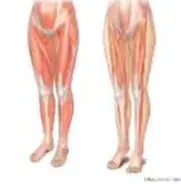
Genetic disease characterized by progressive muscular weakness and skeletal muscle deterioration.
Muscular dystrophy
Cystic fibrosis
Huntington's disease
Sickle cell anemia

