
 Worksheets
Indian and Chinese Empires Review
Total questions: 25
Worksheet time: 13mins
Name
Class
Date
1.
1. Respect for elders and ancestor worship are part of what philosophy/religion ?
a)
Hinduism
b)
Taoism
c)
Buddhism
d)
Confucianism
2.
2. Check the FOUR options that are true about Buddhism:
a)
The Four Noble Truths are an important part of Buddhism
b)
It was STARTED by Siddhartha Gautama
c)
Buddhists believe that following the instructions in the Eightfold Path will lead to Nirvana
d)
Buddhism spread into China
e)
It was STARTED by Asoka
3.
3. Which of the following BEST describes the Silk Road?
a)
land and sea trade routes that linked Eastern Asia with North and South America
b)
land and sea trade routes that allowed for trade and contact between China and other cultures as far away as Rome, Italy
c)
land and sea trade routes that linked India to Australia and eastern continents
d)
land and sea trade routes that allowed for contact between Sub-Saharan Africa and northern Europe
4.

4. Living in harmony with nature is an important part of Chinese culture because of:
a)
Taoism
b)
Confucianism
c)
Buddhism
d)
Hinduism
5.

5. The Great Wall of China was built to —
a)
close China to foreign trade
b)
provide a trade route across Asia
c)
protect China from invaders
d)
create a monument to Mongol rulers
6.
6. The Hindu concept of ____________________ means “re-birth”
a)
Moksha
b)
Dharma
c)
Reincarnation
d)
Karma
7.
8. The Hindu concept of karma means
a)
Respect your elders
b)
rebirth of the soul into a new body
c)
all thoughts and actions result in future consequences
d)
all life is suffering and suffering is ended with the Eightfold Path
8.
9. Which religion used the caste system?
a)
Confucianism
b)
Hinduism
c)
Buddhism
d)
Christianity
9.
10. Buddhists achieve Enlightenment by following the —
a)
laws of the Old Testament
b)
decrees of the Upanishads
c)
Five Pillars of faith
d)
Eightfold Path
10.
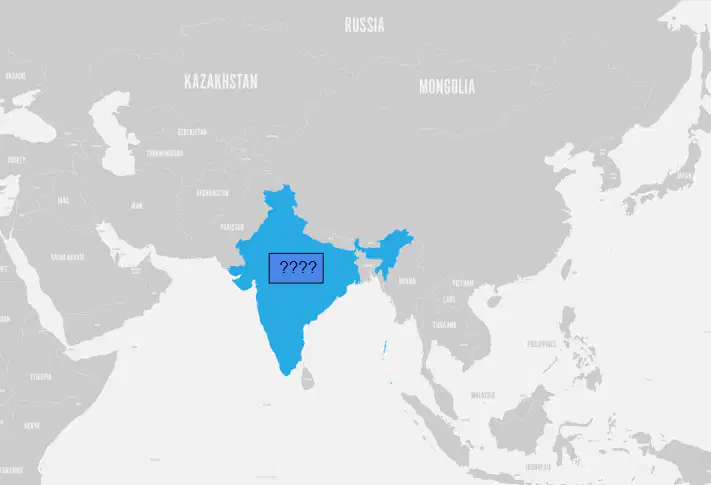
11. Which area is seen in blue on the map?
a)
Persia
b)
India
c)
Mesopotamia
d)
China
11.
13. Which BEST describes imperial bureaucracy?
a)
independent cities that act like states that are spread out over a large area
b)
one ruler in charge of many states throughout a big piece of land
c)
people vote for rulers in different areas of the empire
d)
land is divided into smaller parts and an emperor puts someone in charge of each part
12.
16. Which religion started in India and believes in many forms of one god?
a)
Buddhism
b)
Judaism
c)
Hinduism
d)
Christianity
13.
17 . Which list of physical features helped protect India from easy invasion?
a)
Tigris River, Euphrates River, and Zagros Mountains
b)
Indus River, Atlas Mountains, and Ganges River
c)
Hindu Mountains, Gautama Mountains, and Gupta River
d)
Hindu Kush Mountains, Himalayas and Indian Ocean
14.
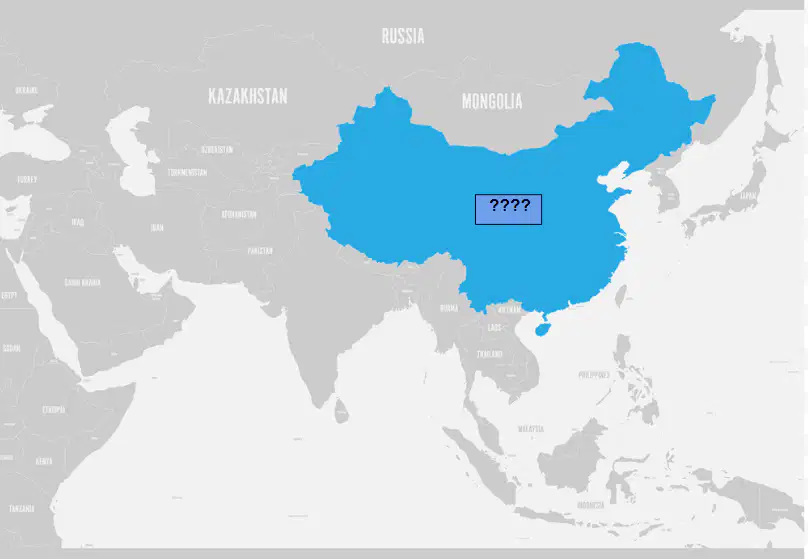
18. What area is marked in BLUE on the map?
a)
The Persian Empire
b)
China
c)
Mesopotamia
d)
India
15.
20. Which group of people are at the top of the caste system?
a)
priests
b)
untouchables
c)
warriors
d)
business owners
16.
21. Which group of people put the caste system in place in India?
a)
Aryans
b)
Buddhists
c)
Hebrews
d)
Persians
17.
22. Which two rivers are important to India?
a)
Tigris and Nile
b)
Euphrates and Hindu Kush
c)
Indus and Ganges
d)
Euphrates and the Huang He
18.
23. Which empire had the following accomplishments: Mathematics (concept of zero), medical advances (setting bones), astronomy (concept of a round earth), new textiles, literature
a)
Mauryan
b)
Gupta
c)
Persian
d)
Buddhist
19.
24. Which of the following people SPREAD Buddhism?
a)
Asoka
b)
Confucius
c)
Chandragupta Maurya
d)
Laozi
20.
25. Which Indian empire had good roads, free hospitals, and vet clinics?
a)
Gupta
b)
Mauryan
c)
Persian
d)
Ganges
21.
26 . What are the holy books of Hinduism called?
a)
Karmas
b)
Vedas and Upanishads
c)
The Torah
d)
Code of Hammurabi
22.
27. Please pick the TWO things that make Hinduism DIFFERENT from Buddhism
a)
started in India
b)
focus on living a positive life
c)
belief in many forms of one god
d)
use of the caste system
23.
28. Which choice best describes the Mandate of Heaven?
a)
In China, it was the idea that the power of the emperors came from the gods
b)
In India, it was the idea that all suffering would end if people ended their desires
c)
In Persia, it was the idea that an empire should be split up and have governors in charge of each part
d)
In India, it was the idea that your karma influences your place in the caste system
24.
29. Check ALL of the key beliefs of Hinduism
a)
reincarnation
b)
karma
c)
many forms of one god
d)
good karma gets you reincarnated higher in the caste system
e)
Four Noble Truths
25.
30. "You can only lose what you cling to". Which of the following religious leaders said this?
a)
Xerxes
b)
Cyrus
c)
Qin Shi Huangdi
d)
Siddhartha Gautama
100 %

