
NEW
Font size
 Worksheets
Joining Methods Quiz
Total questions: 74
Worksheet time: 37mins
Which of the following is a characteristic of temporary joining methods?
Not easily reversed
Can be dismantled
Uses adhesives
Requires welding
Which of the following is an example of a permanent joining method?
Screws
Nuts & bolts
Welding
Knock down fittings
What is the primary purpose of jigs and formers in joining materials?
To hold pieces of materials together for joining
To dismantle permanent joints
To create screw threads
To reverse temporary joining methods
Which of the following is NOT a temporary joining method?
Set screws
Knock down fittings
Brazing
Nuts & bolts
What is a common feature of permanent joining methods?
They use screw threads
They are easily reversed
They involve welding or adhesives
They use knock down fittings
Which of the following is NOT a permanent joining method?
Soldering
Riveting
Screws
Nailing
What is one of the uses of jigs and formers?
To replicate joining methods many times
To reverse permanent joining methods
To create knock down fittings
To dismantle screws

What type of wood joint requires little or no adhesive?
Comb joint
Finger joint
Dovetail joint
Cam lock joint

Which type of wood joint increases surface area for gluing to improve strength?
Comb/finger joint
Dovetail joint
Cam lock joint
Knock down fitting
What joining mechanism is commonly used for manufactured boards?
Dovetail joint
Comb joint
Knock down fittings and cam locks
Finger joint
Which of the following is an example of a temporary wood joint?
Comb joint
Knock down fittings
Finger joint
Dovetail joint
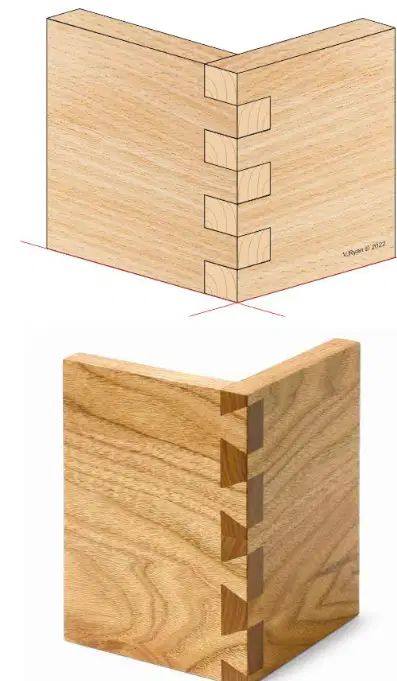
What type of joint is commonly used in box construction for furniture?
Mortise and tenon joint.
Dovetail joint.
Butt joint.
Lap joint.
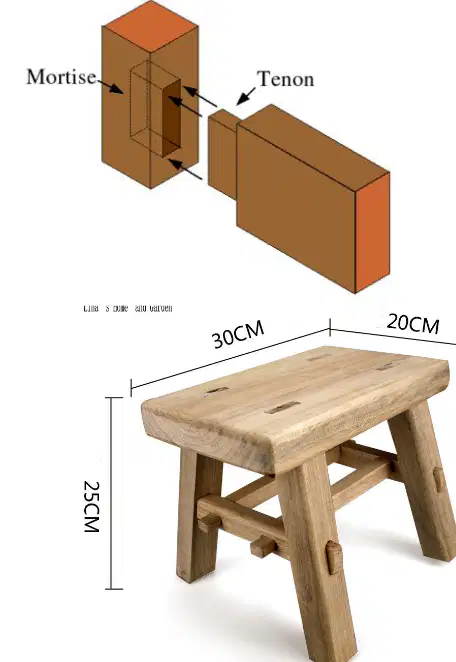
Which of the following is true about stool construction?
Legs are fixed on top of the seat.
Legs must be loosely attached for flexibility.
Mortise and tenon joints are often used with blind holes.
Legs are not required to be securely fastened.

Which type of joint is shown in the diagram where a peg or screw can be used for reinforcement?
Dowel joint
Corner halving joint
Bridle joint
Tee halving joint

Which joint is shown in the diagram with an exploded view and is used for joining frameworks at an angle?
Mitred bridle joint
Dowel joint
Cross halving joint
Dovetail halving joint
What is a characteristic of sophisticated box joints used for solid timber?
They interlock strongly and permanently.
They are reinforced by metal brackets.
They are only suitable for manufactured boards.
They are used for decorative purposes only.
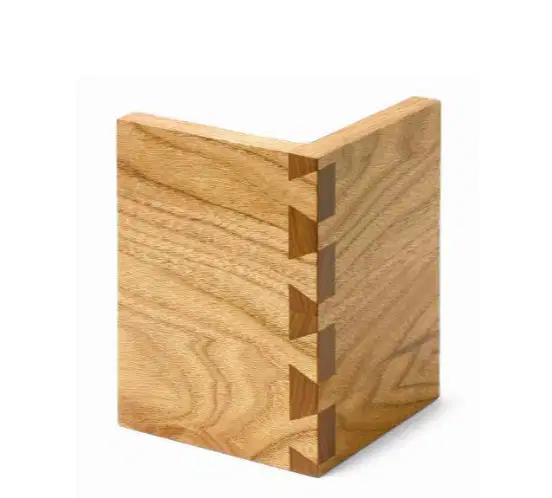
Identify the type of wood joint shown.
Dovetail joint
Mortise and tenon joint
Mitre joint
Lap joint
What is the primary characteristic of solder once it is heated?
It evaporates.
It flows along the components and bonds them when it solidifies.
It becomes brittle and breaks.
It changes color permanently.
How does soldering compare to brazing in terms of strength?
Soldering is stronger than brazing.
Soldering is weaker than brazing.
Soldering and brazing have the same strength.
Soldering does not involve strength comparison.
What is the purpose of solder in the soldering process?
To act as a filler and bond components when solidified.
To clean the components before joining.
To provide insulation between components.
To cool down the components after heating.

What is a key characteristic of the joint formed by silver soldering?
The joint is weaker than the metal being joined.
The joint is stronger than the metal being joined.
The joint is flexible and can be bent easily.
The joint is temporary and can be undone easily.
What is silver soldering commonly used for?
Making plastic products.
Joining wood pieces.
Making jewellery and fine metal products.
Welding large metal structures.
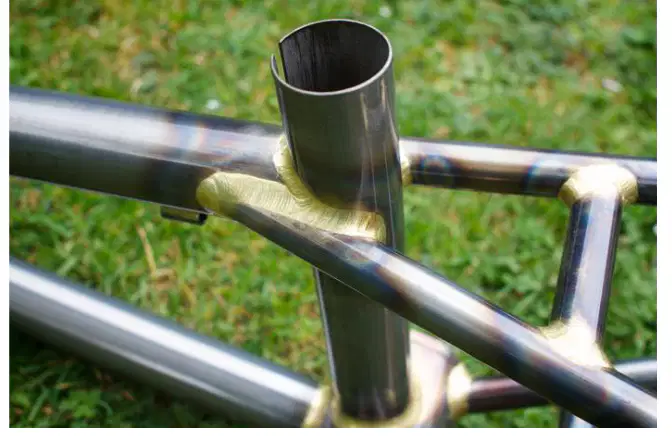
What is brazing commonly used for?
Joining two different metals together
Melting metals for recycling
Coating metals with paint
Separating metals from alloys
Which metal is often used as the third metal in the brazing process?
Copper
Brass
Aluminum
Steel
Why must the two pieces to be joined in brazing have a higher melting point than the brass joining rod?
To ensure the brass solidifies faster
To prevent the pieces from melting during the process
To make the process quicker
To allow the brass to bond with the metals
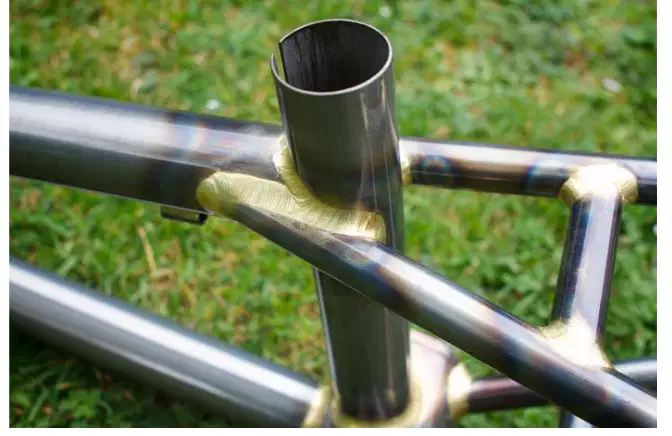
What happens to the brass after the heat is removed during brazing?
It evaporates
It solidifies and bonds the metals
It becomes brittle
It changes color
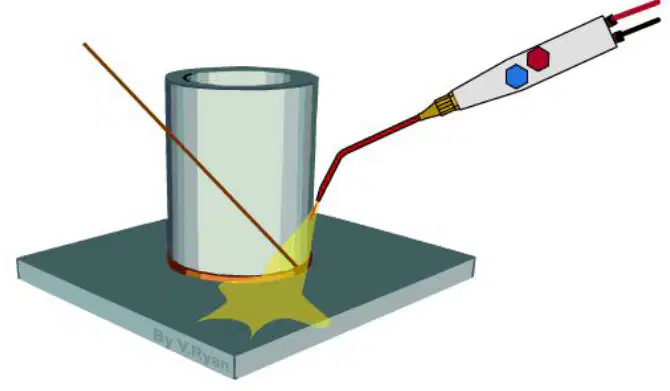
What tool is used to heat the pieces to be joined in brazing?
Welding machine
Brazing torch
Blow dryer
Soldering iron
What is the primary purpose of heating metals to extreme temperatures during welding?
To make the metals brittle.
To cause the metals to melt and join together.
To change the color of the metals.
To reduce the weight of the metals.
What happens when the components cool and solidify during welding?
The metals separate.
The metals are joined together permanently.
The metals become brittle.
The metals lose their strength.
Why is filler material used in the welding process?
To make the metal heavier.
To keep the molten metal clean and free from oxidation.
To change the color of the metal.
To reduce the melting point of the metal.
What safety equipment is necessary when welding?
Gloves.
Welding mask.
Safety boots.
Ear protection.
Which type of welding uses electricity to generate a spark in order to melt the metals to be joined?
Oxy-acetylene welding
Spot welding
Arc welding
MIG welding
What is the main gas used in oxy-acetylene welding?
Carbon dioxide
Oxygen mixed with flammable gas
Nitrogen
Helium
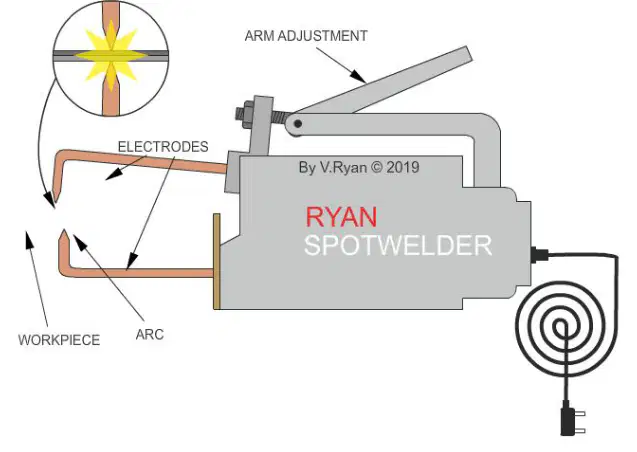
Which type of welding is commonly used for car bodies and involves metal workpieces being fused together using current passed through electrodes?
Arc welding
Spot welding
MIG welding
Oxy-acetylene welding
What is the advantage of MIG welding compared to electric arc welding?
It uses flammable gas.
It is slower but more precise.
It is faster and cost-effective.
It does not require electricity.

What is the primary function of a rivet in fixtures and fittings?
To allow easy removal of components.
To permanently join components together.
To provide electrical conductivity.
To act as a decorative element.
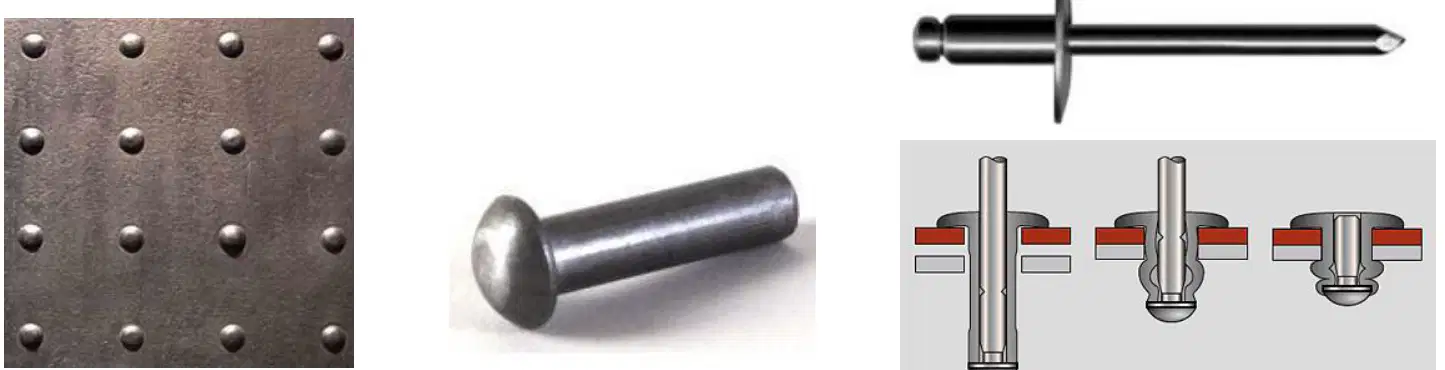
What material were traditional rivets commonly made of?
Aluminium.
Copper.
Iron.
Steel.
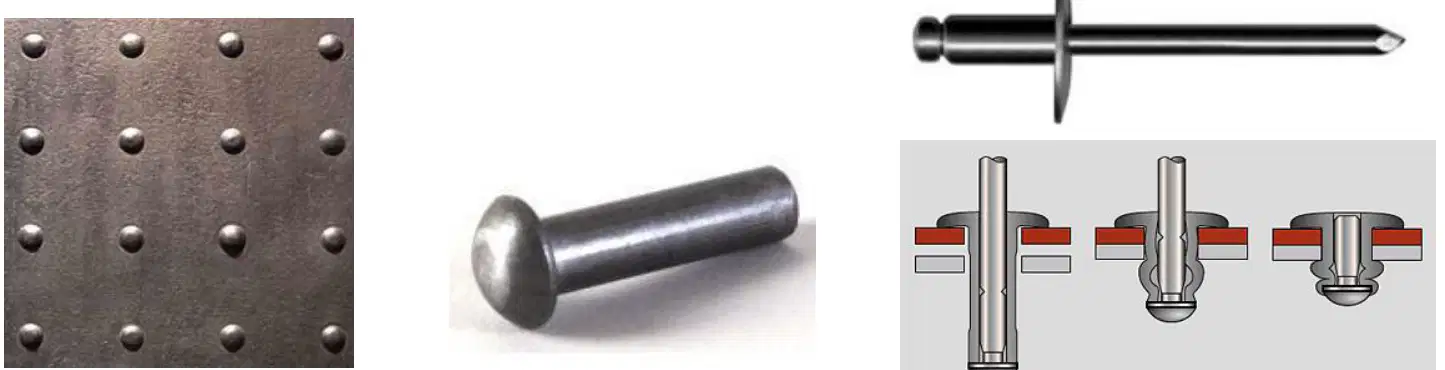
What happens to traditional rivets when they cool after being hammered down?
They expand, creating a loose fit.
They contract, creating a tight fit.
They dissolve into the material.
They change color.
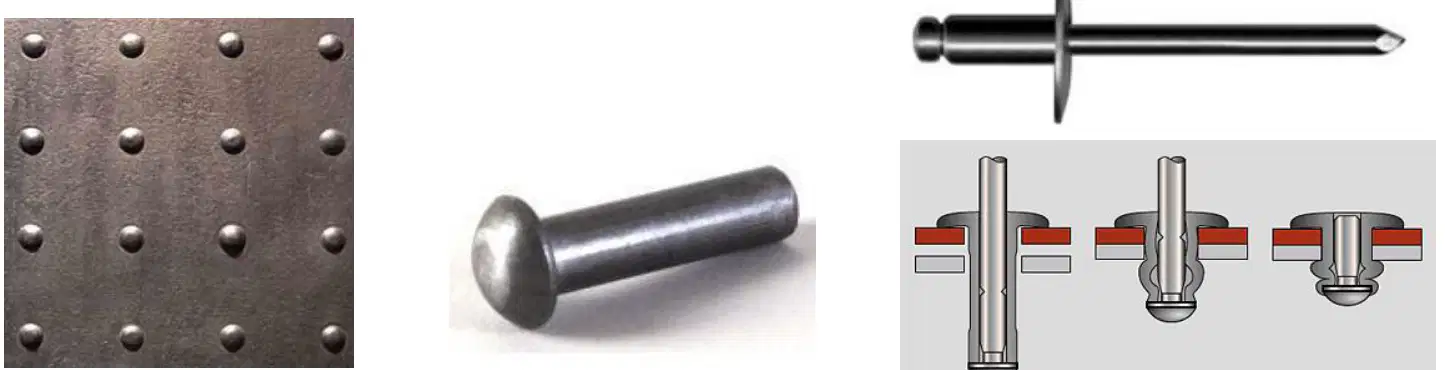
What is a modern version of traditional rivets?
Steel rivets.
Aluminium pop rivets.
Copper rivets.
Plastic rivets.
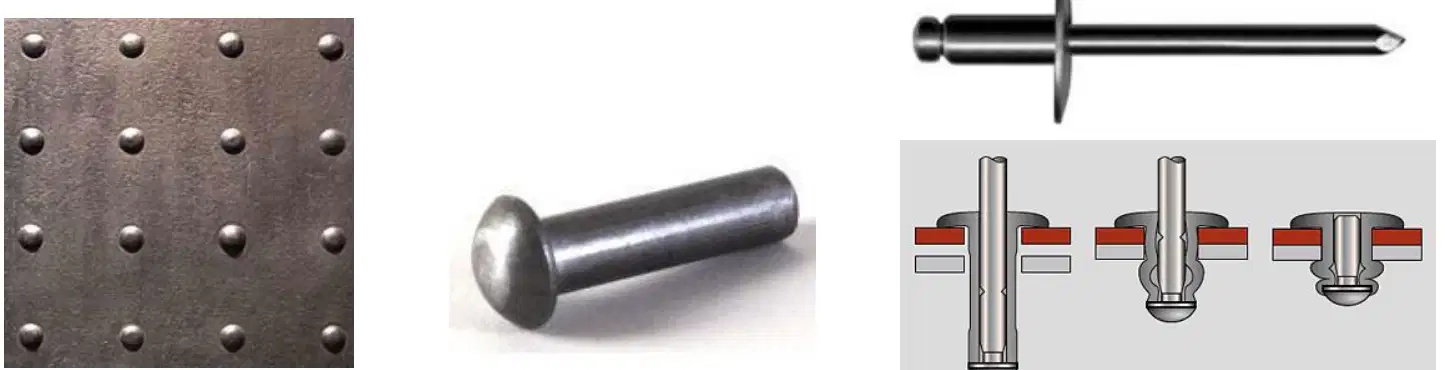
Which of the following is NOT a characteristic of rivets?
They can have different shaped heads.
They are designed to be removable.
They are inserted into holes in components.
They are deformed to ensure they cannot be removed.
What is commonly used to glue metals permanently?
Super Glue
Epoxy Resin
Wood Glue
Silicone Adhesive
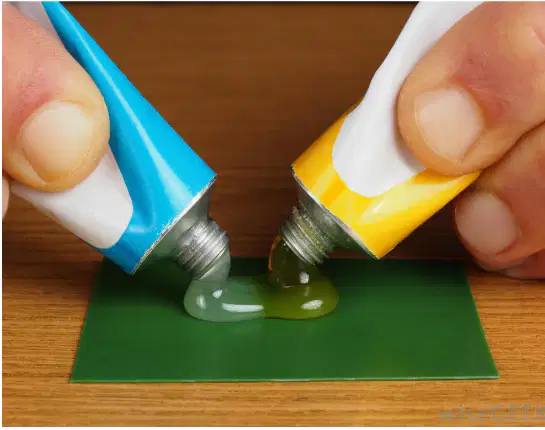
What are the two components of epoxy resin glue that must be mixed in equal quantities?
Resin and water
Resin and hardener
Hardener and adhesive
Glue and solvent
What tool can be used to weld plastics together?
Heat gun
Screwdriver
Hammer
Drill
What type of cement is used to glue polymers together by lightly melting the surfaces of the plastics being joined?
Teflon cement
Tensol cement
Epoxy resin
Super glue
What is the primary purpose of nails in fixtures and fittings?
To decorate wood surfaces
To reinforce a joint or join wood together
To prevent wood from rotting
To polish wood surfaces
Why are nails usually used in softwood rather than hardwood?
Hardwood is more expensive
Hardwood causes bending or deforming of nails
Softwood is easier to find
Softwood is stronger than hardwood
What is the main characteristic of panel pins?
Heavy and long
Small and lightweight
Oval-shaped
Used for splitting timber
What is the advantage of the oval shape of oval wire nails?
It makes the nail easier to remove
It prevents splitting of timber
It makes the nail more decorative
It reduces the weight of the nail
What is the primary function of screws?
To cut through metal and plastic
To act as a clamp to pull two materials together
To create permanent joints between materials
To provide decorative finishes to surfaces
Which type of screw is designed to cut its own thread into metal or plastic?
Wood screws
Machine screws
Self-tapping screws
Countersunk screws
What type of screw has a smooth shank below the head and a tapered point?
Machine screws
Wood screws
Self-tapping screws
Dome head screws
Which of the following is a characteristic of machine screws?
Tapered point
Smooth shank below the head
Thread to head
Used in wood
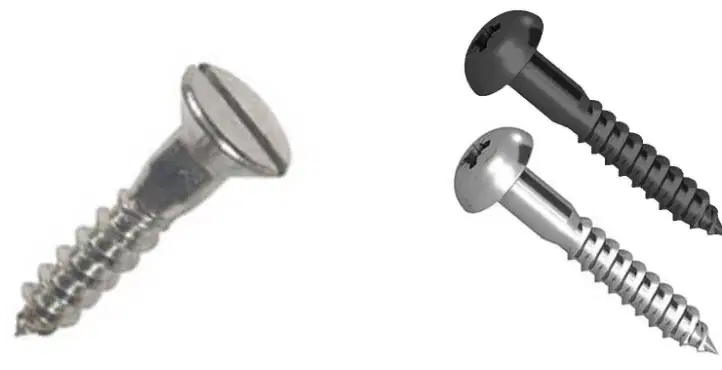
What are countersunk heads, dome heads, and pan heads examples of?
Types of screw threads
Types of screw heads
Types of screw materials
Types of screw lengths
What is the primary function of nuts and bolts?
To clamp materials together by passing through a hole and screwing tight
To create decorative designs on materials
To act as electrical conductors
To insulate materials from heat
How are nuts and bolts typically described?
By their color and texture
By their length and diameter
By their weight and material composition
By their brand and price
What does "M5 x 45mm" indicate in the context of nuts and bolts?
Threaded diameter of 5mm and length of 45mm
Weight of 5 grams and length of 45mm
Material composition of 5% steel and 45% nylon
Price of $5 for a pack of 45 bolts
What is a hex nut?
A nut with a nylon inner piece to keep it in place
A 6-sided nut commonly used
A nut made of hexagonal steel
A decorative nut used for aesthetic purposes
What is the purpose of a nylon insert lock (nyloc nut)?
To act as a decorative piece
To keep the nut in place using a nylon inner piece
To increase the weight of the nut
To reduce the diameter of the nut

What is the primary function of hinges in fixtures and fittings?
To connect two pieces of material that need to move.
To secure materials permanently without movement.
To act as a decorative item only.
To replace nuts and bolts in construction.

Which of the following is NOT a method of securing hinges onto materials?
Screwing onto wood.
Welding into place.
Using nuts and bolts.
Gluing onto surfaces.
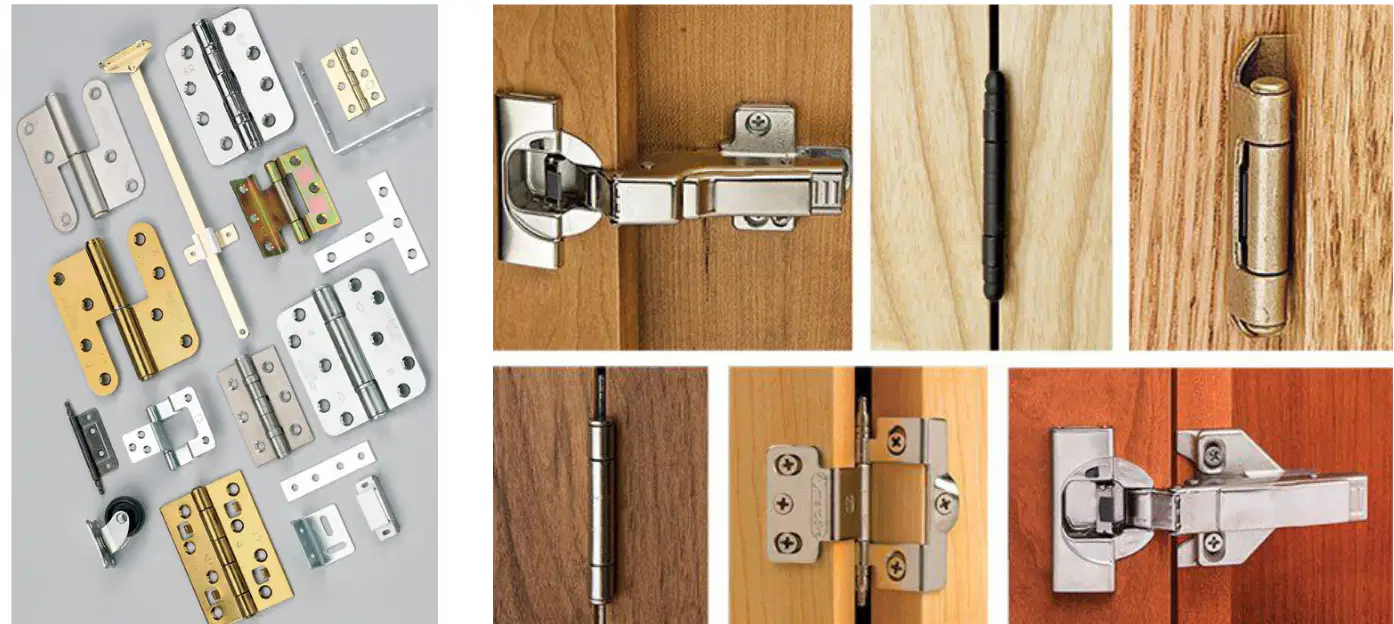
How can hinges be hidden in fixtures and fittings?
By painting them the same color as the material.
By using a rebated slot.
By covering them with decorative panels.
By welding them into the material.

What is one decorative use of hinges in fixtures and fittings?
Hidden hinges.
Surface-mounted hinges.
Welded hinges.
Hinges painted in bright colors.
What is the primary purpose of catches, locks, and latches in fixtures and fittings?
To decorate furniture
To secure lids to boxes or close doors on cabinets
To increase the weight of the product
To reduce the size of the product
Which of the following is a characteristic of a Decorative Swing Latch?
Requires a key to operate
Can be simple or ornate
Sits inside the product
Difficult to open
What is a key feature of a Mortise Chest Lock?
Quick to fix
Easy to open
Secure locking mechanism
Sits outside the product
Where can catches, locks, and latches be placed on a material?
Only inside the material
Only outside the material
Inside or outside the material
Only on the surface of the material
What is the primary purpose of Knock Down (KD) fittings in flat pack furniture?
To provide permanent fixing for furniture components.
To allow furniture components to be joined easily at home with minimal equipment.
To increase the cost of furniture production.
To make furniture heavier and more durable.
Why are Knock Down (KD) fittings considered temporary fixings?
They are designed to be assembled and dismantled repeatedly.
They are made of permanent materials.
They are used for heavy-duty furniture.
They require professional tools for assembly.
How do manufacturers minimize costs when using Knock Down (KD) fittings?
By using expensive materials for fittings.
By limiting the number of different fittings used.
By increasing the complexity of the fittings.
By making the fittings permanent.
What are corner blocks typically made of?
Metal and glass
Wood and plastic
Steel and rubber
Aluminum and fabric
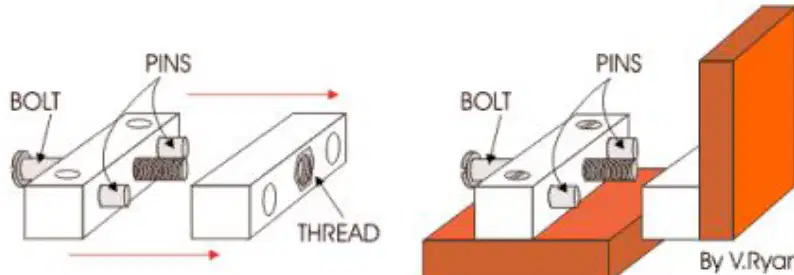
What happens when the bolt in a two-piece corner block is tightened?
The blocks are pulled apart.
The blocks are pulled together.
The pins are removed.
The screws are loosened.
What is the primary method of installing corner blocks?
Using glue
Using screws
Using nails
Using clamps
What is the primary purpose of scan fittings in Knock Down (KD) fittings?
To pull materials together securely, sometimes permanently.
To lock manufactured bolts into place.
To provide decorative finishes to furniture.
To create adjustable joints in materials.
How is a steel barrel fitting used in Knock Down (KD) fittings?
It is inserted into one piece of work, and a screw is tightened through the second piece into the barrel.
It is used to lock manufactured bolts into place.
It is used to create adjustable joints in furniture.
It is used to provide decorative finishes to materials.

