
 Worksheets
Quiz on Chapter 10.2 and Learning Material
Total questions: 19
Worksheet time: 10mins
Why are eggs considered suitable for all age groups when cooked properly?
They are easily digested
They are high in sugar
They are low in vitamins
They are difficult to cook
Which type of eggs comes from birds that are free to roam in barns and outdoors?
Free range
Barn
Cage
Organic
Which type of eggs comes from birds that are fed organic feed and are not given growth hormones or antibiotics?
Organic
Barn
Cage
Free range
Which of the following is NOT a part of the structure of an egg?
Shell
Yolk
Membrane
Seed
Which nutrient do eggs lack?
Carbohydrates
Protein
Fat
Mineral
What makes eggs a good option for low calorie diets?
They are nutrient dense and relatively low in calories.
They are high in sugar.
They contain no protein.
They are high in saturated fat.
A person is planning a diet for someone recovering from illness. What should they consider regarding eggs?
They should avoid serving raw or lightly cooked eggs due to the risk of food poisoning.
They should only serve eggs fried in oil.
They should serve eggs with every meal.
They should only use eggs in desserts.
Explain how eggs contribute to the texture and appearance of baked goods when used for glazing.
Eggs give baked goods a golden colour and shiny finish when brushed on before baking.
Eggs make baked goods taste sweeter.
Eggs make baked goods rise higher.
Eggs make baked goods more chewy.
Which of the following is NOT usually found on egg packaging ?
cooking instructions
farming method
country of origin
best-before date
If eggs are stored next to onions in the fridge, what is a likely consequence?
The eggs may absorb the smell of onions.
The eggs will become sweeter.
The eggs will last longer.
The eggs will become harder to cook.
What is the benefit of using room temperature egg whites when making meringues?
They will whisk more easily.
They will taste sweeter.
They will cook faster.
They will be less likely to burn.
What happens if you overcook eggs?
They become dry and rubbery and difficult to digest.
They become sweeter.
They become more nutritious.
They become easier to peel.
How can you test the freshness of an egg using water?
Place the egg in water; if it sinks, it is not fresh.
Place the egg in water; if it floats, it is not fresh.
Place the egg in water; if it dissolves, it is fresh.
Place the egg in water; if it cracks, it is fresh.
If you want to avoid eggs becoming tough and rubbery, what should you do?
Overcook them
Cook them for a short time
Add sugar while cooking
Freeze them before cooking
How should eggs be stored to maintain their freshness?
At room temperature in direct sunlight
In the refrigerator, away from strong-smelling foods
In a warm, humid place
In an open container on the kitchen counter
Which of the following is an effect of cooking on eggs?
Eggs become more liquid
Proteins coagulate and eggs solidify
Eggs lose all their nutrients
Eggs turn into carbohydrates
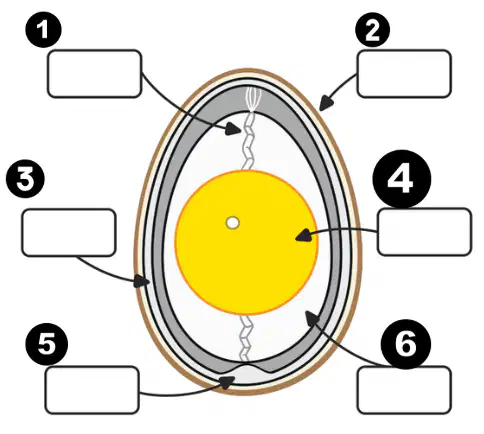
Which number label in the diagram represents the egg membrane?
1
2
3
4
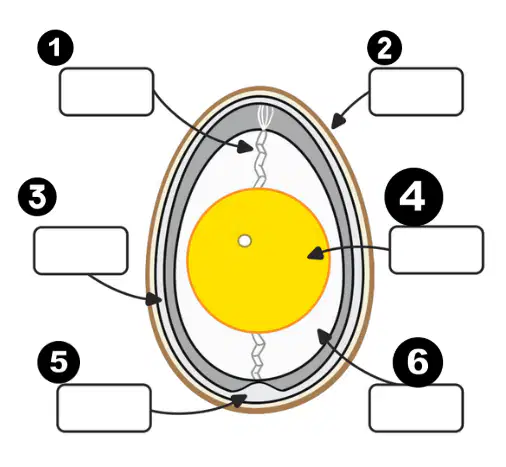
Which number label in the diagram represents the chalazae?
1
3
5
6
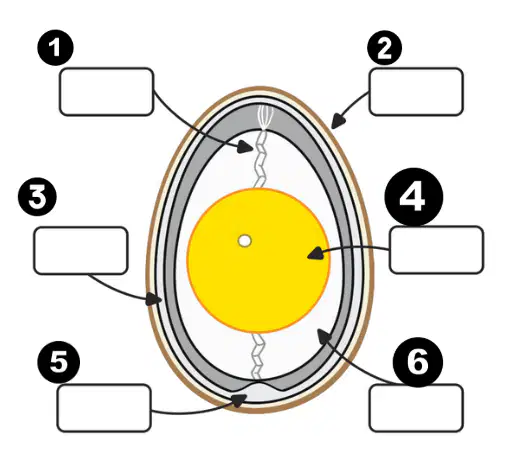
Which of the labels in the diagram show the air space?
6
5
4
1

