
 Worksheets
CPR 1
Total questions: 100
Worksheet time: 50mins
Fill in the blank: The term for severe bleeding is _________.
hemorrhage
anemia
edema
thrombosis
Fill in the blank: The condition of abnormally low body temperature is called _________.
hypothermia
hypertension
hyperthermia
hypoglycemia
Fill in the blank: A cut or wound made by a sharp instrument is called an _________.
incision
abrasion
contusion
laceration
Fill in the blank: The invasion of the body by harmful microorganisms is known as _________
infection
digestion
respiration
excretion
Fill in the blank: A condition caused by insufficient blood flow to the organs is called _________.
insulin shock
hypertension
hyperglycemia
hypothermia
Fill in the blank: A torn or jagged wound is called a _________.
laceration
abrasion
contusion
incision
Fill in the blank: The harmful effect caused by swallowing or exposure to toxic substances is called _________.
poisoning
digestion
infection
allergy
Fill in the blank: A small hole made by a sharp object is called a _________.
puncture
fracture
bruise
scratch
Fill in the blank: A sudden drop in blood flow throughout the body is called _________.
shock
stroke
seizure
hypertension
Fill in the blank: An injury to a ligament caused by twisting is called a _________
sprain
fracture
dislocation
bruise
Fill in the blank: An injury caused by overstretching or tearing a muscle or tendon is called a _________.
strain
sprain
fracture
dislocation
Fill in the blank: A sudden interruption in the blood supply to the brain is called a _________
stroke
migraine
seizure
tumor
Fill in the blank: The process of sorting patients based on the severity of their condition is called _________.
triage
diagnosis
referral
discharge
Fill in the blank: An injury where the skin is cut or broken is called a _________
wound
bruise
sprain
fracture
Fill in the blank: A person who responds first at the scene of an emergency is called a _________
First Responder
Bystander
Paramedic
Spectator
Fill in the blank: A medical professional who specializes in emergency medicine is called an _________.
Emergency Medicine Physician
Cardiologist
Radiologist
Pediatrician
Fill in the blank: A specialist in disaster medicine is called a _________.
Disaster Medicine Specialist
Trauma Surgeon
Epidemiologist
Paramedic
Fill in the blank: A person trained to provide emergency medical care and transport is called an _________.
Emergency Medical Technician
Paramedic
Firefighter
Police Officer
Fill in the blank: A healthcare professional who provides advanced emergency care is called a _________
Paramedic
Nurse
Pharmacist
Radiologist
Which of the following is a basic principle of first aid?
Panic and act quickly
Remain calm and evaluate the situation
Ignore the environment
Provide treatment without reason
According to the passage, what should you do before checking any accident victim?
Call EMS immediately
Check the scene and make sure it is safe to approach
Move the victim to a safe area
Start CPR
When should you call emergency medical services (EMS) immediately before providing any care?
For a conscious adult
For an unconscious adult
For a child with a minor injury
For a victim with a small cut
Fill in the blank: Never move an injured victim unless the victim is in a dangerous area such as an area filled with ________ or smoke, flood waters, or carbon monoxide or poisonous fumes.
fire
sand
water
dust
Which of the following information should you provide to EMS when calling for help?
Only your name
Actions taken, exact location, telephone number from which you are calling, assistance required, number of people involved, and condition of the victim(s)
Just the location
Only the condition of the victim
If the victim is unconscious, confused, or seriously ill and unable to consent to care, and no other relative is available to give permission, you can assume that you have permission to provide care.
True
False
Fill in the blank: If no one arrives to call EMS, continue providing care by giving five cycles of CPR (approximately ______ minutes).
2
5
10
1
Which of the following is NOT a situation where you should call EMS immediately before providing any care?
An unconscious adult
An unconscious child who has reached puberty
A conscious adult with a minor cut
Any victim for whom you witness a sudden cardiac arrest
Which of the following is NOT an example of a life-threatening emergency that must be treated first according to triage principles?
A) No breathing or difficulty in breathing
B) Persistent pain in the chest or abdomen
C) Minor cuts and scrapes
D) Severe bleeding
Fill in the blank: Triage is a method of prioritizing _______.
treatment
transportation
diagnosis
documentation
Which of the following should you do when examining a victim according to first aid procedures?
A) Ask the victim about pain or discomfort
B) Ignore abnormal signs or symptoms
C) Avoid checking vital signs
D) Skip checking the pupils of the eyes
When providing first aid, you should avoid giving an unconscious or vomiting victim anything to eat or drink.
True
False
Fill in the blank: When providing first aid, it is important to protect the victim from cold or ________, but avoid overheating the victim.
chilling
burning
sweating
drowning
Which of the following is a general principle of care when first aid is necessary?
Obtain qualified assistance as soon as possible
Move the victim unnecessarily
Discuss the victim's condition with all observers
Provide treatment you are not qualified to provide
Fill in the blank: The information provided in the section on CPR is not CPR for health care providers according to American Heart Association standards. The information provided is not intended to take the place of an approved _______ course.
certification
training
lecture
seminar
It is essential to maintain confidentiality and protect the victim's right to privacy while providing treatment.
True
False
Which of the following should be reported to emergency medical services when they arrive at the scene?
A) Abnormalities noted during examination
B) Only the victim's name
C) Only the time of the accident
D) None of the above
What does CPR stand for?
Cardiopulmonary resuscitation
Central Pulse Recovery
Critical Pressure Response
Cardiac Pulmonary Reaction
What is the main purpose of administering CPR?
To keep oxygenated blood flowing to the brain and other vital body organs until the heart and lungs start working again, or until medical help is available.
To increase the patient's heart rate rapidly.
To cure all types of injuries instantly.
To prevent the patient from feeling any pain.
Clinical death occurs when the heart stops beating and the victim stops breathing. Biological death refers to the death of the body cells.
True
False
Which of the following is NOT a component of the CABD sequence used in CPR?
Circulation
Airway
Breathing
Digestion
C stands for ________ in the CABD sequence of CPR.
circulation
compression
consciousness
cardiac
A stands for ________ in the CABD sequence of CPR.
airway
breathing
circulation
defibrillation
B stands for ________ in the CABD sequence of CPR.
breathing
bleeding
bones
balance
D stands for ________ in the CABD sequence of CPR.
defibrillation
decompression
diagnosis
dilation
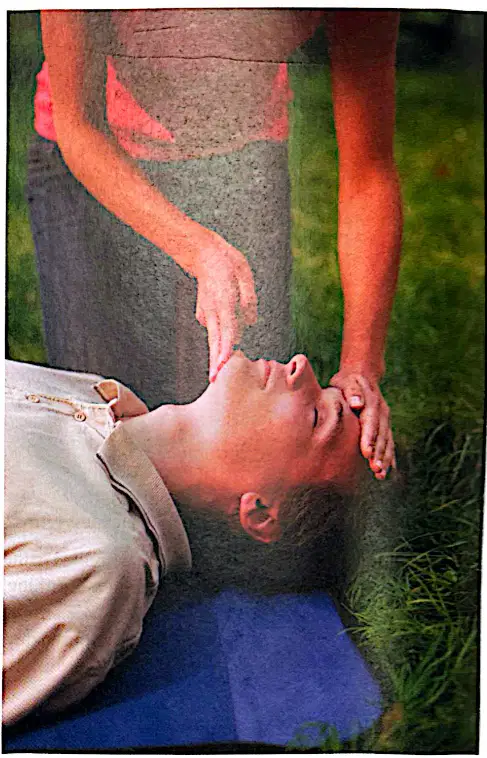
Figure 17-3 shows the method used to open the victim's airway. What is this method called?
head-tilt/chin-lift method
jaw-thrust maneuver
mouth-to-mouth method
bag-valve-mask technique
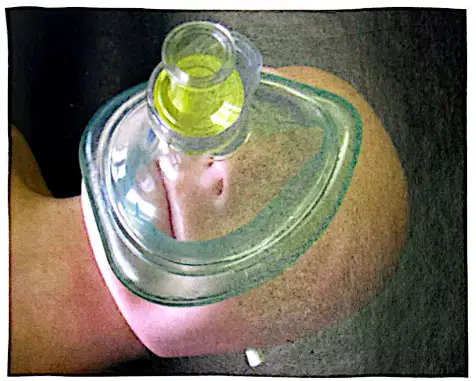
What is the purpose of using a CPR barrier mask while giving respirations?
To prevent transmission of disease while giving respirations.
To increase the oxygen concentration in the air delivered.
To make the process faster and easier.
To reduce the need for chest compressions.
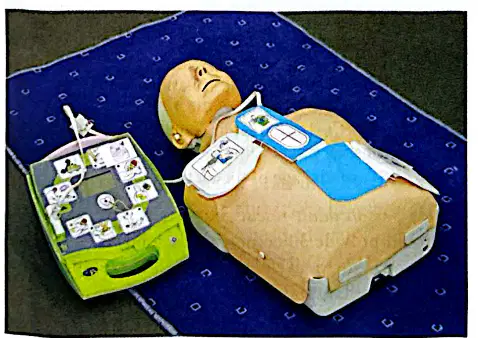
When cardiac arrest occurs, what device can be used to analyze the electrical rhythm of the heart and apply a shock to try to restore the normal heart rhythm?
Automated External Defibrillator (AED)
Pacemaker
Oxygen mask
CPR barrier mask
The pediatric dose for AED is recommended for any child from 1-8 years of age.
True
False
Which of the following should be assessed first before starting CPR?
A) Responsiveness and breathing
B) Heart rate
C) Blood pressure
D) Temperature
List one situation when you should call for help and start CPR if you are alone.
An unconscious infant or child from 1 year of age to puberty.
A conscious adult with a minor injury.
A person who is coughing and talking.
A person who is breathing normally but feeling dizzy.
CPR should be used until an AED is available.
True
False
In a two-person adult rescue, what is the correct compression-to-ventilation ratio when performing CPR?
30:2
15:2
20:2
10:2
When performing chest compressions on an adult during CPR, the sternum should be compressed at least 2 inches (5.0 cm) but not more than 2.4 inches (6 cm).
True
False
For infants, which pulse site is used to check for a pulse during CPR?
Brachial pulse site in the arm
Carotid pulse site in the neck
Radial pulse site in the wrist
Femoral pulse site in the groin
When giving compressions to an infant, the sternum should be compressed to what depth?
About 1.5 inches or 4 centimeters, at least half the depth of the chest.
About 0.5 inches or 1 centimeter, just a slight press.
About 3 inches or 8 centimeters, almost the full depth of the chest.
About 2 inches or 5 centimeters, more than half the depth of the chest.
What is the correct compression-to-ventilation ratio for two rescuers performing CPR on an infant?
15:2
30:2
20:2
10:2
For children, the initial steps of CPR are the same as for adults, except that the head is not tilted as far back when the airway is opened.
True
False
What is the most effective method of expelling an object from the airway if the victim is conscious and able to cough?
Abdominal thrusts
Coughing
Back blows
Chest compressions
If a choking victim is conscious but not able to talk, make noise, breathe, or cough, what immediate action must be taken?
Abdominal thrusts must be given to provide a force of air to push the object out of the airway.
Give the victim water to drink to help clear the airway.
Lay the victim down and wait for them to recover.
Pat the victim gently on the back and encourage them to cough.
When should chest compressions be started for a choking victim?
If the victim is conscious
If the victim is unconscious and has an obstructed airway
If the victim is able to cough
If the victim is talking
A finger sweep of the mouth is performed only if the object can be seen in the mouth.
True
False
If the victim is pregnant or obese, what type of thrusts should be performed?
Chest thrusts
Abdominal thrusts
Back thrusts
Head thrusts
Once CPR is started, it must be continued unless one of the following situations occurs. Which of the following is NOT a reason to discontinue CPR?
The victim recovers and starts to breathe
The rescuer is so physically exhausted, CPR can no longer be continued
The scene suddenly becomes unsafe
The victim is still unconscious after 2 minutes
What is the sequence of steps used to remove an obstruction for an infant (birth to 1 year old)?
Five back blows, five chest thrusts, a check of the mouth, a finger sweep if the object is seen, and an attempt to ventilate.
Five abdominal thrusts, five chest compressions, a check of the mouth, and an attempt to ventilate.
Five chest thrusts, five abdominal thrusts, a check of the mouth, and a finger sweep regardless of visibility.
Five back blows, five abdominal thrusts, a check of the mouth, and immediate CPR.
According to PROCEDURE 17-2A: Performing CPR—One-Person Adult Rescue, what equipment and supplies are needed to practice this procedure?
CPR manikin, barrier device, alcohol or disinfecting solution, gauze sponges
AED, oxygen tank, gloves
Bandages, splint, ice pack
Stethoscope, thermometer, blood pressure cuff
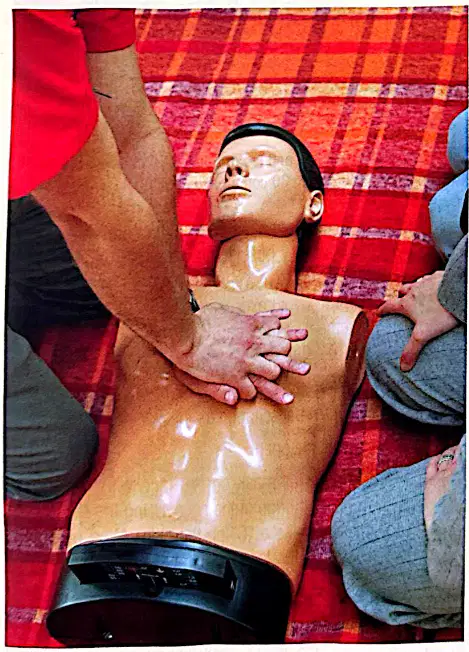
Safety Caution: Only a CPR training manikin should be used to practice this procedure.
True
False
If the victim does not respond, what should you do next?
Activate EMS immediately. Follow the 'call first, call fast' priority. Get an AED if available.
Check for minor injuries and wait for the victim to wake up.
Give the victim water and monitor for 10 minutes.
Move the victim to a comfortable position and observe.
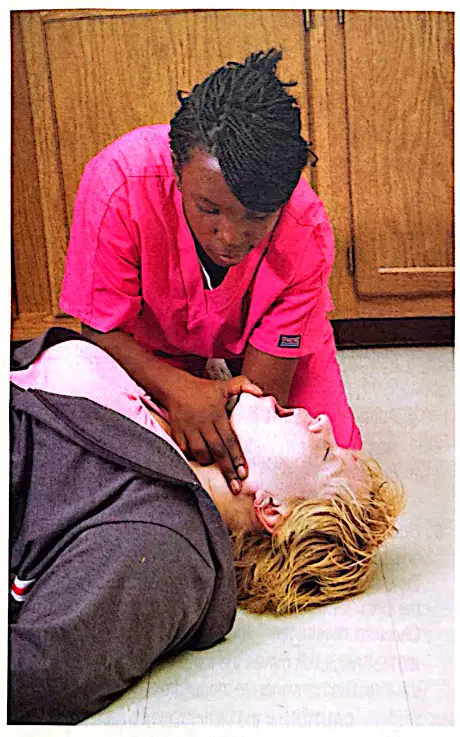
When palpating the carotid pulse, how long should you take to feel for the pulse?
At least 2 seconds but not more than 5 seconds
At least 5 seconds but not more than 10 seconds
At least 10 seconds but not more than 20 seconds
At least 1 second but not more than 3 seconds
If the victim has a pulse but is not breathing, what should you do according to the procedure?
Provide chest compressions
Provide rescue breaths every 5–6 seconds
Wait for EMS to arrive
Give water to the victim
If the victim does not have a pulse, or you are not sure if they have a pulse, what is the next step according to the procedure?
Administer chest compressions.
Check for breathing again.
Call for help and wait.
Give the victim water.
Which of the above are valid reasons to stop CPR?
You are so physically exhausted, you cannot continue
The victim recovers
The scene suddenly becomes unsafe
A physician or other legally qualified person orders you to discontinue the attempt
Qualified medical help arrives to take over and give CPR and/or apply an AED
What is the recommended percentage of alcohol solution for cleaning the manikin?
70-percent alcohol solution.
30-percent alcohol solution.
50-percent alcohol solution.
90-percent alcohol solution.
CAUTION: Only a CPR training manikin should be used to practice this procedure. Never practice CPR on another person.
True
False
Equipment and Supplies for Performing CPR—Two-Person Adult Rescue include: Which of the following is NOT listed as equipment or supplies for this procedure?
CPR manikin
Barrier device
Alcohol or disinfecting solution
Gauze sponges
After ___ minutes of CPR, most AEDs will prompt you to reanalyze the rhythm.
2 minutes
1 minute
3 minutes
5 minutes
According to Procedure 17:2B, what should you do first when checking for consciousness and breathing?
Start CPR immediately
Gently shake the victim and ask, 'Are you OK?'
Call emergency services
Give two breaths
If the victim is unconscious and not breathing normally, what is the first action the rescuer should take according to Procedure 17:2B?
The first rescuer starts CPR.
Check for a pulse.
Call for help and wait for instructions.
Place the victim in the recovery position.
How long should you feel for the carotid pulse according to Procedure 17:2B?
At least 5 seconds and not more than 10 seconds
At least 10 seconds and not more than 20 seconds
At least 2 seconds and not more than 5 seconds
At least 1 minute
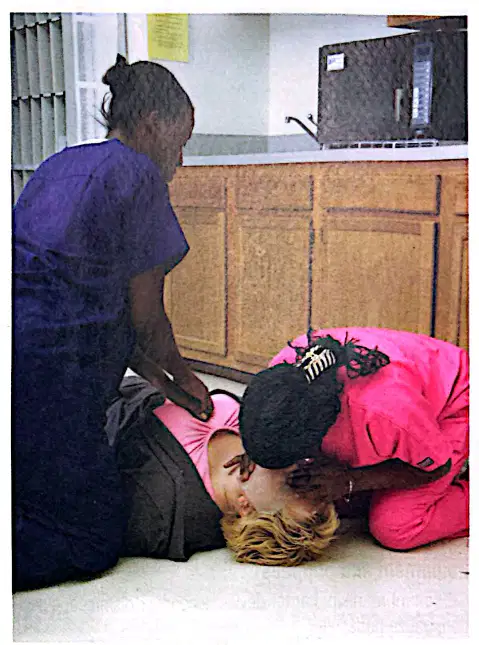
According to Procedure 17:2B, when the victim is not breathing, how many compressions should be given for every 2 breaths in a one-person rescue?
30 compressions for every 2 breaths.
15 compressions for every 2 breaths.
20 compressions for every 2 breaths.
10 compressions for every 2 breaths.
According to Procedure 17:2B, a CPR pocket face mask with a one-way valve should be used to provide a barrier and prevent the transmission of disease.
True
False
According to Procedure 17:2B, after every five cycles of CPR (approximately 2 minutes), what should the rescuers do?
The rescuers should change positions.
The rescuers should stop CPR and check for a pulse.
The rescuers should administer medication.
The rescuers should call for additional help.
If an AED is available, what should one rescuer do while the other is giving cycles of CPR according to Procedure 17:2B?
One rescuer should set up the AED while the other rescuer is giving cycles of CPR.
Both rescuers should stop CPR and wait for medical professionals to arrive.
One rescuer should leave to call for help while the other continues CPR.
Both rescuers should alternate giving CPR every 30 seconds.
According to Procedure 17:2B, when should CPR be discontinued?
CPR should be discontinued when qualified medical help arrives, the victim recovers, a physician or other legally qualified person orders CPR discontinued, the scene suddenly becomes unsafe, or a legally valid do not resuscitate (DNR) order is presented.
CPR should be discontinued only after 30 minutes regardless of the situation.
CPR should be discontinued when the victim's family requests it, even if the victim has not recovered.
CPR should be discontinued immediately if the rescuer feels tired.
After the practice session, what solution can be used to clean the manikin's face and mouth area?
70-percent alcohol
10-percent bleach disinfecting solution
Both A and B
Water
A 10-percent bleach solution is more effective than alcohol for disinfecting manikins.
True
False
What should be done if the mouthpiece of the manikin is discarded after use? Fill in the blank: The remainder of the face should still be ________.
disinfected
washed with water only
left untouched
covered with a cloth
What is the final step after completing the disinfection procedure for the manikin?
Replace all equipment used. Wash hands.
Store the manikin in a sealed container.
Apply moisturizer to the manikin's surface.
Leave the manikin exposed to air for 24 hours.
CPR should be practiced on a human infant during training.
True
False
For CPR techniques, infants are usually considered to be under ______ year old.
1
2
3
5
If the infant is unconscious and not breathing, what should you do after calling for help?
Wait for EMS
Begin CPR
Give water
Shake the infant
If the infant is known to have a high risk for heart problems or a sudden collapse was witnessed, what should be activated before beginning CPR?
EMS (Emergency Medical Services)
Fire Department
Poison Control Center
Animal Control
When checking the pulse on an infant, where should you place your fingertips?
On the inside of the upper arm and halfway between the elbow and shoulder.
On the side of the neck, just below the jawline.
On the wrist, below the thumb.
On the back of the knee.
If a pulse is present but the infant is not breathing, how often should you provide ventilations?
Every 3 seconds (approximately 20 breaths per minute)
Every 5 seconds (approximately 12 breaths per minute)
Every 10 seconds (approximately 6 breaths per minute)
Every 1 second (approximately 60 breaths per minute)
If no pulse is present or the heart rate is below 60 beats per minute with signs of poor circulation, what should be administered?
Cardiac compressions
Oxygen therapy
Antibiotics
Intravenous fluids
How deep should compressions be given on an infant's chest during CPR?
At least 1½ inches (4 cm)
At least 3 inches (8 cm)
At least ½ inch (1 cm)
At least 2½ inches (6 cm)
Tipping the infant's head too far will cause an obstruction of the infant's airway.
True
False
According to Procedure 17:2C, if there is no breathing, how many breaths should you give to an infant, and how long should each breath last?
Give 2 breaths, each breath lasting approximately 1 second.
Give 1 breath, each breath lasting approximately 2 seconds.
Give 3 breaths, each breath lasting approximately 1 second.
Give 2 breaths, each breath lasting approximately 3 seconds.
What should you use to provide a barrier and prevent the transmission of disease when giving breaths to an infant during CPR?
A CPR pocket face mask with a one-way valve.
A cloth handkerchief.
Your bare hands.
A regular surgical mask.
After 2 breaths are given to an infant during CPR, what is the next step?
Administer 30 chest compressions.
Check for a pulse.
Call emergency services.
Remove any airway obstruction.
To establish the correct rate for chest compressions during infant CPR, what should you count out loud?
One, two, three, four, five . . . .
A, B, C, D, E . . . .
Ten, twenty, thirty, forty, fifty . . . .
Red, blue, green, yellow, orange . . . .

