
 Worksheets
BIOL 1014 FINAL EXAM
Total questions: 185
Worksheet time: 2hrs 33mins
the positive subatomic particle is the
quark
proton
positron
neutron
which event occurs during interphase
protein synthesis is halted
the cell doubles it cytoplasmic contents
the nucleus divides
the nuclear envelope disassembles
An oncogene is a _____
mutated gene that results in tumor growth
normal gene that promotes mitosis
gene that codes for a growth factor that stimulates cell division
mutated gene that results in cell cycle arrest
According to cell theory, ____
all cells are approximately the same size
proteins are the genetic material of cells
all organisms are multicellular
all cells come from preexisting cells
The spindle apparatus appears during _____
metaphase
interphase
telophase
prophase
The spread of cancer cells from one site to others in the body is known as _____
mutational slippage
cleavage
benign transfer
metastasis
Nuclear envelopes reform during _____
telophase
metaphase
prophase
interphase
Chromosomes are aligned at the middle of the cell during _____
prophase
telophase
interphase
metaphase
____ are long whip like cellular structures that act like propellers to move a cell through fluid environments
microvilli
cilia
microfilaments
flagella
The nucleus of an atom contains ____.
protons and electrons
electrons only
neutrons only
protons and neutrons
One of the generalizations of cell theory is that ____
all cells divide by meiosis
cells arise through spontaneous generation
all cells have a nucleus
all living organisms are made up of cells
During S phase, _____.
DNA is replicated
chromosomes condense
the cell produces proteins in a preparation for mitosis
the cytoplasm begins to divide
Ribosomes are ____
membrane-enclosed organelles
involved in protein synthesis
involved in the transport of molecules
required for DNA synthesis
Which is not a feasible measure to protect oneself from carcinogens?
awareness of surrounding industry
filtration mechanisms
absolute avoidance
consumption moderation
Which of the following treatment methods are not currently being utilized in cancer treatment?
surgery
chemotherapy
immunotherapy
radiation
Chromosomes are unduplicated during which phase of cell cycle?
G1
S
prophase
metaphase
Which cell feature is absent in bacterial cells?
cytoplasm
nucleus
DNA
ribosomes
Immortal cell lineages _____
have limited research applications
are derived from normal body cells
are unable to grow outside the body
are derived from cancerous cells
Which of the following risk factors for cancer are beyond an individuals control?
exposure to known carcinogenic chemicals
diet
exposure to uv radiation
exposure to air pollution
The neutral subatomic particle is the ____.
neutron
electron
proton
quark
Abnormal cell division that does not pose a threat to surrounding tissues is termed _____.
benign
metastatic
carcinogenic
malignant
Which cellular feature is found in all cell types?
cytoplasm
nucleus
mitochondria
endoplasmic reticulum
Nucleotides are monomers of ____.
nucleic acids
cellulose
complex lipids
polysaccharides
Which cellular component is considered an organelle?
cell wall
ribosome
plasma membrane
DNA
Cell shape is reinforced by ____
cytoskeletal filaments
ribosomes
transport proteins
DNA
Which bond is weakest?
non polar covalent
double covalent
polar covalent
hydrogen
In what phase of the cell cycle does a typical cell spend most of its life?
telophase
interphase
prophase
anaphase
Which of the following occurs in prophase?
DNA replicates
chromosomes align in the middle of the cell
sister chromatids separate
the spindle apparatus begins to form
An example of a biofilm is ____
oral bacteria living on teeth
elongated pili
a bacterial capsule
an oil slick
A uniform mixture is called a ____
solvent
solute
solution
salt
Tumor suppressor genes _____.
will turn into cancer genes
are cancer genes that back mutate into normal genes
promote mitosis
inhibit mitosis
The negative subatomic particle is the ____
proton
quark
neutron
electron
A parent cell with 12 chromosomes will produce daughter cells with _____ chromosomes by mitosis
6
12
24
3
The bond in table salt (Na+Cl-) is ____
ionic
nonpolar
polar
covalent
Eukaryotic cells have their DNA enclosed in the _____.
nucleoid
nucleus
plasma membrane
nuclear envelope
The organelle that acts like UPS by pinching off portions of its membrane to form a vesicle used for storage or transport is the ____.
chloroplast
mitochondrion
nucleus
Golgi body
Which phases comprise interphase?
prophase, metaphase, anaphase, and telophase
G1, S, & G2
G1 & S
G1 & G2
The main enzyme produced in the saliva acts on ____
fats
nucleic acids
proteins
carbohydrates
Substances that enter a reaction are termed ____
enzymes
products
reactants
energy carriers
Glycogen is a polysaccharide used for energy storage by ____
plants
archaea
animals
bacteria
During inhalation, the diaphragm moves _____ and the intercostal muscles move the rib cage _____.
downward; outward
downward; downward
outward; outward
outward; downward
Fermentation reactions occur in the ____
thylakoid membrane
chloroplast outer membrane
cytoplasm
mitochondria
Glycolysis converts glucose into ____.
pyruvates
pigments
heat energy
electrons and protons
ATP contains ____.
alanine
phosphate
tyrosine
glucose
The energy in chemical bonds is what type of energy?
kinetic
nuclear
potential
thermal
Which organic molecule is a carbohydrate monomer?
fatty acid
monosaccharide
triglyceride
nucleotide
Which food product would likely contain the largest amount of unsaturated fat?
cream
lard
olives
cheese
The sodium–potassium pump is an example of ____.
active transport
facilitated diffusion
bulk flow
osmosis
A(n) ____ is a protein monomer
monosaccharide
nucleotide
simple sugar
amino acid
Anemia is an oxygen depletion that could be to which of the following?
a form of leukemia
too few or abnormal red blood cells
too many or abnormal white blood cells
too few or abnormal white blood cells
Wilting of a plant (shriveling of the cells) occurs ____.
if the plant is placed in an isotonic solution
if there is a rise in turgor pressure
if the plant is placed in a hypertonic solution
if the plant is placed in a hypotonic solution
A typical fat molecule has ____ fatty acid tails.
five
four
three
one
In alcoholic fermentation, the final product is ____.
lactate
ethanol
acetaldehyde
pyruvate
ATP is formed when ____ the inner mitochondrial membrane.
hydrogen ions leave
electrons enter
hydrogen ions enter
water is split into
The ____ contain(s) oxygen-poor blood
pulmonary veins
pulmonary arteries
aorta
left ventricle
The longest segment of the gut is the____.
cecum
colon
small intestine
esophagus
Nucleotides are monomers of ____
polysaccharides
proteins
complex lipids
nucleic acids
Energy is defined as ____
capacity to store sugar
movement of electrons
the movement of atoms and molecules
the capacity to do work
Over working the heart by having too much blood volume, making it more difficult to push blood forward in the system is which of the following conditions?
atherosclerosis
hypertension
anemia
asthma
The minimum amount of energy needed to get a chemical reaction started is called the ____ energy.
activation
chemical
enzymatic
reaction
Breathing is under _____ control.
voluntary
voluntary and involuntary
oxygen-mediated
involuntary
The second law of thermodynamics states that ____.
energy transformation create a more orderly universe
when energy is transferred from one source to another a small amount of energy is released into the surroundings as heat
the energy of the universe is a constant
energy can be neither created or destroyed
ADH____
increases water reabsorption
increases secretion of digestive enzymes
increases glucose reabsorption
decreases amino acid reabsorption
The driving force for blood circulation is ____.
opening of the AV valves
contraction of the atria
contraction of the ventricles
closing of the aortic valve
Our primary source of energy is obtained from ____
fatty acids
carbohydrates
protein
triglycerides
An individual who does not produce bile has the most trouble digesting ____.
fats
essential vitamins
nucleic acids
carbohydrates
Most enzymes are composed of ____.
RNA only
substrate only
protein only
RNA and protein
Blood pumped from the left ventricle goes to ____
arteries that feed the body
pulmonary artery
right ventricle
left atrium
Blood pressure is lowest when ventricles are _____; this is known as _____.
fully relaxed; diastolic pressure
contracting; diastolic pressure
fully relaxed; systolic pressure
contracting; systolic pressure
If you were to consume too much vitamin C, _____.
you would metabolize it for energy
it would be stored in your adipose tissue
it will become toxic
you would eliminate it in your urine
Cellular respiration that requires oxygen is called ____.
aerobic respiration
mitochondrial respiration
electron respiration
anaerobic respiration
The primary role of bile salts during digestion is ____.
to drive the enzymatic digestion of fats
to kill bacteria that may have been consumed
to drive the enzymatic digestion of proteins
to coat fat droplets and separate them into droplets
Osmosis is an example of ____.
endocytosis
exocytosis
active transport
passive transport
The three main categories of energy-producing foods are ____.
fats, carbohydrates, and proteins
fats, vitamins, and proteins
carbohydrates, vitamins, and proteins
fats, carbohydrates, and vitamins
Which structure is responsible for keeping the fetus from slipping out of the uterus prematurely?
cervix
placenta
endometrium
vagina
DNA molecules contain protein-coding sequences called _____
nucleotides
genotypes
genomes
genes
An allele is ____ if its effect masks that of a ____ allele paired with it
incompletely recessive; dominant
dominant; recessive
codominant; recessive
recessive; dominant
An autosomal recessive disorder ____.
requires the both parents are carriers
displays its symptoms in heterozygotes
requires that only one parent be a carrier
is more frequent in males than females
Frameshift mutations may involve _____
the insertion or deletion of base pairs
mutations in the promoter
the substitution of codons
the substitution of nucleotides
When two alleles of the same gene are different, the individual carrying those alleles is said to be ____
phenotypic
homozygous
somatic
heterozygous
Mammals nourish their embryos by means of a(n) ____
amnion
placenta
blastocyst
yolk sac
During a human pregnancy, implantation occurs at which stage?
fertilization
zygote
blastocyst
fetus
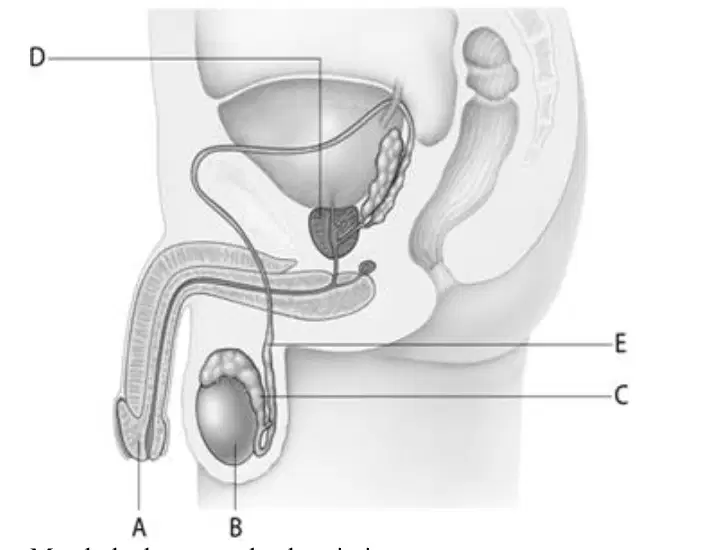
The organ at letter _____is the male counterpart to the female ovary.
a
b
c
d
e
The organ at letter ____ is a structure that contributes fluid to the semen mixture during ejaculation
a
b
c
d
e
Sperm are stored to allow for maturation in the structure at letter ____
a
b
c
d
e
The vas deferens are represented by letter ____.
a
b
c
d
e
Which base pairs with adenine in a DNA molecule?
thymine
cytosine
uracil
adenosine
Meiosis in a diploid organism typically produces _____
four diploid cells
four haploid cells
one triploid cell
two haploid cells
Which extraembryonic tissue burrows into, and thus attaches to, maternal tissues?
the blastocyst protein coat
the amnion
the chorion
the yolk sac
In codominance, ____
the intermediate phenotype may be the result of enzyme insufficiency
two alleles may be equally expressed
the heterozygous phenotype is intermediate to the homozygous phenotypes
one allele is dominant to another allele
An individual’s ____ determines its observable ____
genotype; phenotype
heterozygote; homozygote
gene location; allele
homozygote; heterozygote
How many nucleotides comprise one codon?
16
2
6
3
When two alleles of the same gene are identical, the individual carrying those alleles is said to be ____
homozygous
genotypical
recessive
heterozygous
Meiosis is the basis for _____.
sexual and asexual reproduction
distribution of cytoplasm
cellular division
sexual reproduction
In the human males, sperm are produced in the ____
prostate
bulbourethral glands
seminiferous tubules
epididymis
Different expression options for the same gene are called ____
genotypes
somatic
recessive
alleles
The first cell of a new individual is the ____
blastula
zygote
gamete
gastrula
What is the function of the prostate secretions?
to stimulate the release of LH
to provide sperm with energy
sperm maturation
to protect sperm from vaginal acidity
____ conveys sperm outside of the body.
ejaculatory duct
vas deferens
urethra
epididymis
In which organ does the embryo develop?
vagina
uterus
ovary
oviduct
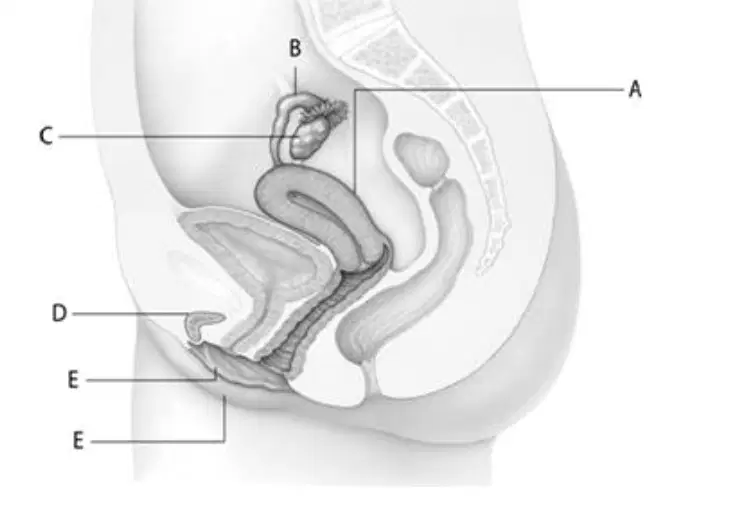
The organ at letter ____ is lined with endometrium
a
b
c
d
The organ that produces eggs and sex hormones is at letter ____.
a
b
c
d
Which letter indicates the oviduct?
a
b
c
d
Which letter indicates female erectile tissue that contains a large nerve bundle?
a
b
c
d
Fertilization in humans occurs in the ____
uterus
vagina
oviduct
follicle
If tall (D) is dominant to dwarf (d), and two homozygous varieties DD and dd are crossed, the progeny produced will be____
all tall
all dwarf
all intermediate forms
1/2 tall and 1/2 dwarf
In humans, skin color is controlled by several genes. Thus, skin color is a(n) ____ characteristic.
codominant
dominant
recessive
polygenic
Human females form their eggs during which part of their lifecycle?
shortly after birth
before birth
at fertilization
at puberty
Which membrane is referenced in the expression my water broke?
placenta
chorion
amnion
yolk sac
Menstrual flow results in the discharge of ____
blood from the blood vessels on the outer surface of the uterus
the corpus luteum
the endometrial lining of the uterus
the follicle
In a Punnett square, the letters on top of the square and on the side of the square represent ____
parental phenotypes
parental gametes
offsprings genotypes
offspring phenotypes
Which immune cells provide "memory" that can be used as defense for many years?
natural killer cells
macrophages
t-cells
b-cells
Passive immunization ____.
results in memory cell formation
is an innate immune response
involves receiving antibodies from a non-self source
involves exposure to antigens
The process of speciation always includes ____ isolation.
behavioral
geographic
reproductive
ecological
Natural killer cells, or cytotoxic T cells, are capable of ____.
killing bacteria in the interstitial fluid
shutting down adaptive immune responses
destroying infected body cells
stimulating T cell memory
Which of the following is NOT an autoimmune condition?
anaphylactic shock
type 1 diabetes
multiple sclerosis
rheumatoid arthritis
____ is the study of body plans and structures across different organisms.
evolution
biogeography
comparative genetics
comparative morphology
In ____ immunity, the response is immediate, nonspecific, and preprogramed in every individual
cell-mediated
antibody-mediated
innate
adaptive
Which type of organisms contain pathogens that have eukaryotic cells and are all aquatic?
bacteria
protists
fungi
archaea
The adaptive immunity response is based on what?
fever mechanisms
nonspecificity
self-recognition
reliance on surface barriers
What is the best definition of a population?
a group of interbreeding individuals from different geographical regions
a collection of different species living in the same area at the same time
a group of individuals of two different species that interact with each other
a group of interbreeding individuals of the same species in a given area
Occurs when two separate populations can no longer successfully interbreed
reproductive isolation
stabilizing selection
directional selection
founder effect
The changes in peppered moths in London during the industrial revolution are an example of what?
reproductive isolation
stabilizing selection
directional selection
founder effect
When a new population is developed from a few individuals that carry allele frequencies that differ from the original population
reproductive isolation
stabilizing selection
directional selection
founder effect
Occurs when the heterozygous, or intermediate, phenotypes are favored over the extremes.
reproductive isolation
stabilizing selection
directional selection
founder effect
____ selection occurs when individuals choose mates with a particular desirable trait
sexual
asexual
artificial
stabilizing
All of the alleles in a population make up the ____
species abundance
genome
gene pool
species diversity
Individuals with adaptive traits tend to survive longer and produce more offspring, leading to ___ of the species
artificial selection
extinction
evolution
a decrease in fitness
Breast feeding a newborn baby is important because it gives the baby what?
passive immunity
vaccination
active immunity
herd immunity
The ability of the adaptive immune response to tailor its response to a particular antigen is referred to as ____.
specificity
memory
inflammation
diversity
What is the original source of new alleles?
independent assortment
mutation
crossing over
fertilization
The goal of immunization is to ____
enable infected individuals to recover from specific diseases
expose individuals to a disease so they can "schedule" sick time
induce herd immunity to disease without risk of actual infection
limit the amount of time a person is ill with a disease
Biogeography is the study of the ____
patterns in the geographical distribution of species
distribution of landmasses
patterns of species dispersal
patterns of population demographics
Autoimmune disorders are caused by ____
impaired innate immunity function
inability to activate T cells
the inability to make antibodies
immune cells that target self-cells
The similar body shape and color of dolphins and sharks is an example of ____
variations in alleles
morphological convergence
morphological divergence
homologous structures
A ____ mutation changes the DNA sequence but has no impact on the fitness of the individual.
lethal
neutral
fitness increasing
beneficial
Vaccinations were originally designed to help us develop adaptive immunity to which type of pathogen?
viral
bacterial
archaea
protozoan
Which viral pathogen results in immunodeficiency in humans?
HIV
chicken pox
herpes
ebola
Hind leg bones in whales are an example of ____ structures.
analogous
vestigial
adaptive
homologous
Process of evolution where allele frequencies shift in a population over short periods of time.
microevolution
marcoevolution
artificial selection
natural selection
sexual selection
Process of evolution driven by reproductive competition.
microevolution
marcoevolution
artificial selection
natural selection
sexual selection
Process of evolution where the inheritance of "fit" traits is driven by environmental pressure and survival.
microevolution
marcoevolution
artificial selection
natural selection
sexual selection
Process of evolution where humans choose certain organisms for breeding to drive the expression of desirable traits in the offspring
microevolution
marcoevolution
artificial selection
natural selection
sexual selection
Process of evolution where mutation accumulation results in the creation of a new species.
microevolution
marcoevolution
artificial selection
natural selection
sexual selection
____ is the degree of adaptation to a specific environment.
adaptation
fertility
natural selection
fitness
Active immunization ____
results in memory cell formation
utilizes the inflammation response
is given only to children
involves receiving antibodies from another individual
The normal flora that inhabit our body surfaces ____
produce vitamin C
competitively exclude more harmful species
become even more beneficial if they invade tissues
are harmful
Innate immunity begins with the first line of defense that involves which of the following?
vaccines
cell-mediated response
mechanical and chemical barriers
inflammatory response
Due to biological magnification, which would have the highest concentration of a plastic?
grass - the dominant primary producer
hawk - predators of mice
mice - predators of butterflies
grasshoppers - an herbivore
Desertification is mainly caused by ____
deforestation
erosion
poor agricultural practices
lack of rain
What happens to air as it is warmed?
it rises
it sinks
it moves along a pressure gradient
it moves toward higher latitudes
A(n) ____ species resides where it evolved and is found nowhere else on Earth
endangered
persistent
endemic
native
Which is a density-independent factor?
parasitism
earthquakes
predation
disease
Consumers that digests the remains of various organisms down into inorganic building blocks.
decomposer
herbivore
carnivore
detritivore
Consumers that feed on small bits of broken up organic material
decomposer
herbivore
carnivore
detritivore
Consumers that mainly eats producers.
decomposer
herbivore
carnivore
detritivore
Consumers that mainly eats the flesh of other animals.
decomposer
herbivore
carnivore
detritivore
Which country has the biggest ecological footprint?
united states
canada
china
france
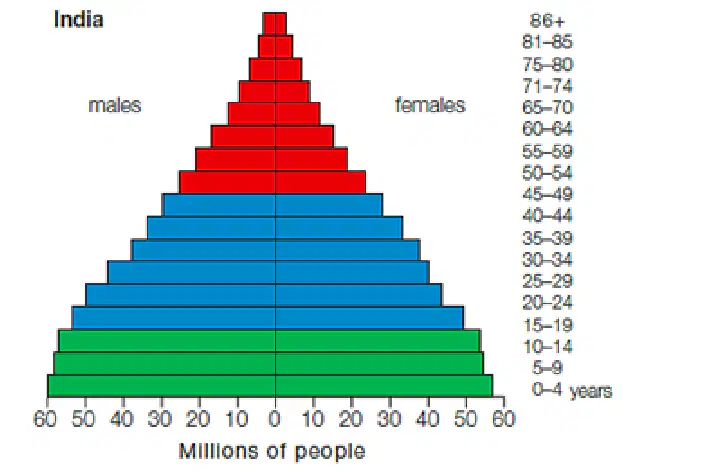
From this age structure diagram for India, it is likely that India’s population will ____
have a larger proportion of older individuals
remain stable
increase
crash
An interaction that benefits both species is ____
mutualism
parasitism
a neutral relationship
commensalism
If the death rate of a population exceeds the birth rate of a population, ____
an exponential growth curve will result
the growth rate will remain static
the environment will become overexploited
the population will decrease in size
Photosynthesis converts the energy of light into ____.
chemical bond energy
pigments
heat energy
electrons and protons
The warming action on Earth’s atmosphere is referred to as ____
the smog problem
ozone depletion
the blanket phenomenon
the greenhouse effect
Which is an example of a detritivore?
fungi
plants
bacteria
earthworm
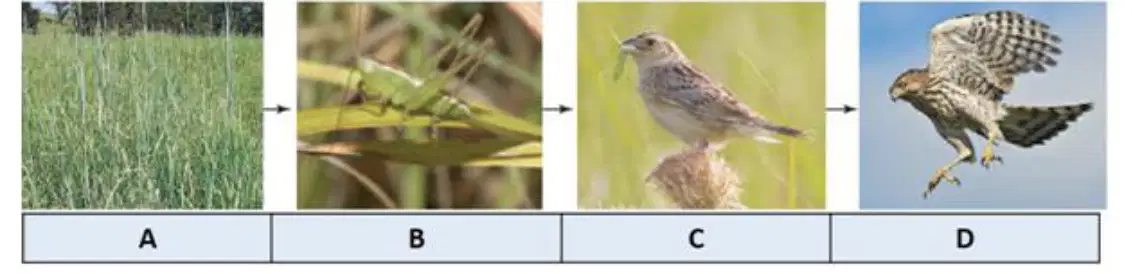
In the simplified prairie food chain illustrated by the following pictures, the letter C represents a ____.
third trophic level
secondary consumer
tertiary consumer
first trophic level
What characterizes a biome?
its plant life and mountain ranges
its temperature and main type of vegetation
its climate and main type of vegetation
its humidity and temperature
The maximum number of individuals of a species that a given environment can sustain indefinitely defines ____.
exponential growth
the carrying capacity of the environment
density-independent factors
density-dependent factors
A population that is growing exponentially in the absence of limiting factors can be illustrated by which shaped curve?
o-shaped
skewed
s-shaped
j-shaped
An epidemic facilitated by a high, dense population is an example of a(n) ____ factor
logistic
density-dependent
biotic
density-independent
A(n) ____ is an observed consequence of global climate change.
increase in earthquakes
decrease in the ozone layer
rise in sea level
acid rain
A community refers to ____.
the interaction between species and their environment
the interaction between populations and their environment
the nonliving components of an area
all species that live and interact in a specific area
Energy flows in one direction in an ecosystem slowly depleting; Nutrients ____ through an ecosystem.
are constantly created
are always recycled
are destroyed when an organism dies
create the energy flow
The greatest concentration of nitrogen on Earth is found in ____.
fossil fuels
the atmosphere
rocks and sediments
living organisms
Acid rain is the result of ____
the greenhouse effect
desertification
deforestation
the burning of fossil fuels
An example of a one-way relationship in which one species benefits and another is directly hurt is ____
mutualism
scramble competition
interspecific competition
parasitism
In contrast to predation, a parasite usually ____.
does not kill its host
its larger than its host
always kills its host
is a short-term visitor
Has a disproportionate effect on the biodiversity of an ecosystem.
endemic species
exotic species
keystone species
indicator species
Evolved in one place and is found nowhere else in the world.
endemic species
exotic species
keystone species
indicator species
Introduced to a new habitat and became established there with time
endemic species
exotic species
keystone species
indicator species
Are particularly sensitive to environmental changes and will thereby flag when shifts occur.
endemic species
exotic species
keystone species
indicator species
A group of organisms of the same species that live in a specific location is called a(n) ____.
community
biome
species
population
In a natural community, the primary consumers are ____.
carnivores
herbivores
detritivores
producers
What is the main function of the ozone layer?
to provide cloud cover for protection of polar regions
to block most of the sun's damaging rays from reaching Earth
to provide a source of oxygen for photosynthesis
to trap a carbon dioxide and warm the planet
Ultimately, what is the greatest threat to biodiversity?
plant pathogens
mineral and energy use
unthinking humans
conservation efforts
The number of individuals of the same species in some specified area or volume of habitat is the ____.
population birth rate
population growth
carrying capacity
population density

