
Font size
 Worksheets
Decorative Textile Quiz
Total questions: 50
Worksheet time: 26mins
Refers to a finished piece of fabric that can be used for varying purposes, such as a bedcover, etc.
Cloth
Textile
Fabric
Fiber
Any material made of interlacing fibers. It also refers to the yarn, threads, and wools that can be spun, woven, tufted, tied, and otherwise used to manufacture cloth.
Cloth
Textile
Fabric
Fiber
Any material made through the various processes such as weaving, knitting, crocheting, or bonding.
Cloth
Textile
Fabric
Fiber
It is the basic element of the textile. The fine, hair-like strand that forms the basis of a yarn.
Cloth
Textile
Fabric
Fiber
Formed by twisting fiber to create a continuous strand.
Cloth
Yarn
Fabric
Fiber
These are long and continuous fibers, usually measured in meters or yards, laid parallel to one another and tightly twisted to produce smooth, strong yarns.
Filament Fibers
Staple Fiber
Spun Yarn
Filament Yarn
These are composed of staple fibers twisted together.
Filament Fibers
Staple Fiber
Spun Yarn
Filament Yarn
The first synthetic fiber.
Rayon
Nylon
Acrylic
Polyester
This is a mixture of natural and synthetic fibers.
Blends
Fusion
Combination
Mixed
Probably the oldest fiber ever woven into fabric.
Linen
Cotton
Jute
Jusi
It is the most widely used plant fiber.
Linen
Cotton
Jute
Jusi
Made from banana fibers.
Linen
Cotton
Jute
Jusi
Also known as Abaca.
Manila Hemp
Hemp
Ramie
Piña
It is said to be the fiber of kings.
Cashmere
Shatoosh
Mohair
Pashmina
It is the growth of silk moths for their silk production.
Sericulture
Liquid Silk
Silk Farming
Silkuture
Silk fabric woven from silk made by wild, uncultivated silkworms.
Tussah
Thai Silk
Bourette
Duppion
The only natural mineral found in fiber form.
Asbestos
Gold
Copper
Silver
Developed by the DuPont Co. in 1950 under the trade name Orlon.
Acrylic
Nylon
Modacrylic
Olefins
A manufactured elastomeric fiber that can be repeatedly stretched over 500% without breaking.
Spandex
Polyester
Saran
Aramids
What do you call a Rayon when spun and woven on the silk system, and bears resemblance to linen when spun and woven on the linen system?
Poor man's Silk
Man-made Silk
Liquid Silk
Cultured Silk
This is the matting together of fibers to form a web by moisture, pressure, and heat.
Felting
Knitting
Films
Braiding
The interweaving and intertwining of three or more strands of yarn or other material so that the strands pass over and under one another.
Felting
Knitting
Films
Braiding
The oldest known hand-knitted fabric, discovered in an Egyptian tomb, dates from about the 4th century B.C.
Wool socks
Cotton gloves
Silk scarf
Leather shoes
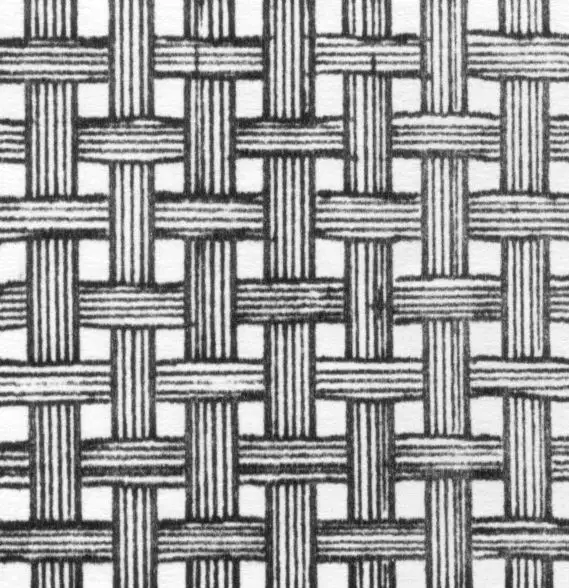
Identify the weaving method shown here:
Plain Weave
Twill Weave
Basket Weave
Satin Weave
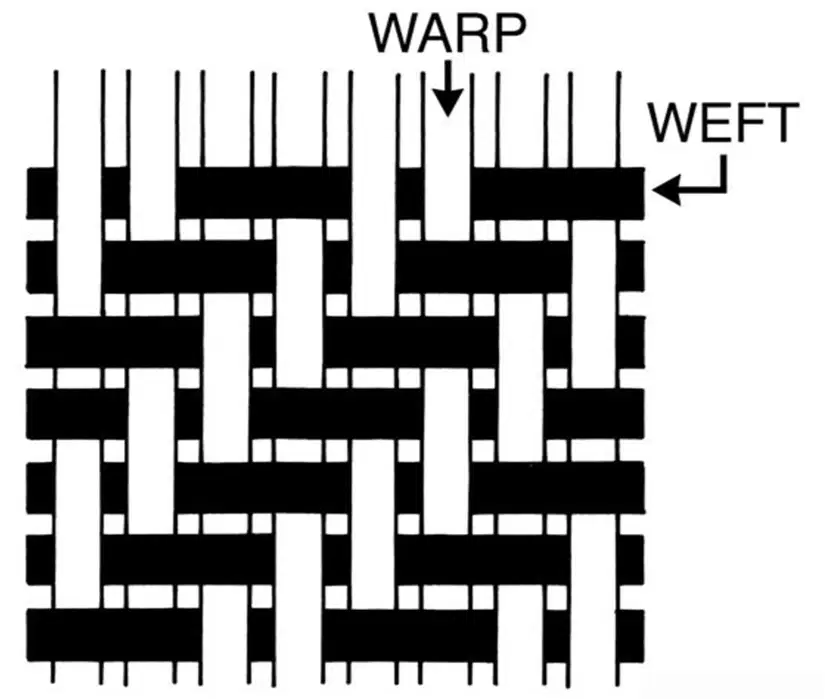
Identify the weaving method shown here:
Plain Weave
Twill Weave
Basket Weave
Satin Weave
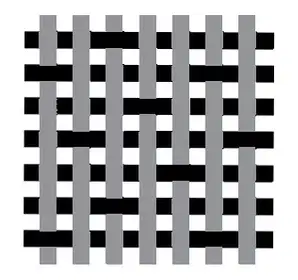
Identify the weaving method shown here:
Plain Weave
Twill Weave
Basket Weave
Satin Weave
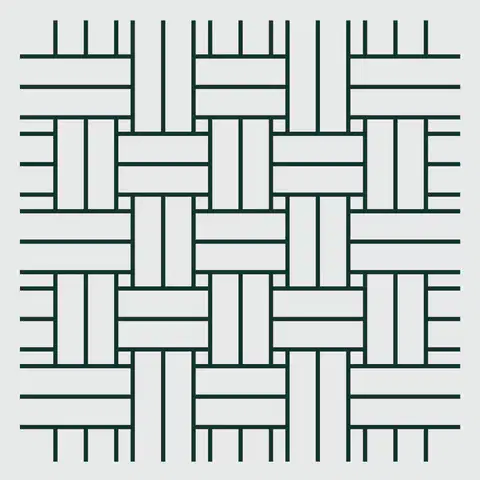
Identify the weaving method shown here:
Plain Weave
Twill Weave
Basket Weave
Satin Weave
A variation made of mercerized cotton. The filler yarns dominate the face of the textile.
Sateen
Satin
Frise
Pile
A decorative fabric made by weaving colored weft threads alternatively over and under the warp threads to form a pictorial or ornamental design.
Tapestry
K'o-ssu
Embroidery
Navajo
It is defined as a process done to fabrics, sometimes to fibers and yarns, causing them to change in appearance, texture, and performance.
Finish
Dyeing
Transform
Morph
These are finishes that affect the texture and appearance of the cloth.
General Finish
Special Finish
Durable Finish
Permanent Finish
A general finish that makes the fabric white, and impurities are removed through the use of chemicals such as peroxide or chlorine compounds.
Bleaching
Crabbing
Mercerizing
Decatizing
A general finish also known as starching. The cloth is filled with starch to increase the strength, smoothness, stiffness, or weight of the fabric.
Dressing
Beetling
Fulling
Tentering
This special finish is also known as Insulated finish.
Heat-reflectant Finish
Flame Retardant Finish
Glazed Finish
Anti-static Finish
A special finish that totally coats the fabric, thus closing the pores and enabling it to shed water under all pressures.
Waterproof Finish
Water-repellent Finish
Wash and Wear Finish
Slip-resistant Finish
These are soluble substances that penetrate into the fabric and are fixed by a chemical action, heat, or other treatment.
Dyes
Pigment
Color
Binding Agent
These dyes are the oldest among the artificial dyes. These are colored salts of organic bases, which are soluble in water.
Basic Dyes
Salt Dyes
Disperse Dyes
Sulphur Dyes
These are the fastest dyes for cotton, linen, viscose, and cuprammonium rayon. They are now considered the most satisfactory of all dyestuffs.
Vat Dyes
Acid Dyes
Developed Dyes
Reactive Dyes
This method of dyeing is also known as dip-dyeing. Cloth is dyed after fabrication.
Piece Dye
Solution Dye
Solid Dye
Union Dye
Fabrics of two or more fibers is placed in a dye bath containing two or more different dyes.
Cross Dye
Union Dye
Fiber Dye
Yarn Dye
These are fabric designs that are produced in the process of making the fabric.
Structural Designs
Applied Designs
Printed Designs
Yarn Designs
This is the oldest method of printing designs on fabrics.
Block Printing
Stencil Printing
Roller Printing
Screen Printing
This printing creates a design, which appears on the face and back of the fabric, simulating a woven pattern.
Duplex Printing
Resist Printing
Burn-out Printing
Warp Printing
It is the simplest method of fabric designing.
Free-hand Printing
Appliqué
Glued and Pasted Designs
Embossed Designs
A fabric design method referred to as having a "watered appearance."
Moire Design
Flocked Designs
Appliqué
Embossed Designs
The center portion of the hide, called (a) , yields the best quality hide.
The type of leather is sometimes called full-top-grain leather. It possesses the genuine original grain of the hide.
Gull-grain Leather
Top-grain Leather
Corrected-grain Leather
Split Leather
This is leather from the skin of unborn calves. It is particularly soft and is highly valued.
Patent Leather
Buckskin Leather
Shagreen
Slink
This is also known as "reconstituted leather" and is composed of 90% to 100% leather fibers, bonded together with latex binders to create a look and feel similar to that of leather.
Bonded Leather
Bycast Leather
Patent Leather
Split Leather
This tanning method produces a hide that is quite supple, with a limited acceptance of dyes.
Combination Tanning
Vegetable Tanning
Mineral Tanning
Finished Tanning

