
 Worksheets
Q4 Test: Chapters 14, 15, 16
Total questions: 50
Worksheet time: 25mins

Which element of design stands out in this space?
mass
form
color
line
Which principle of design refers to the relative size of an object in relation to other objects?
scale
balance
proportion
emphasis
Furnishings need to be in scale with the people using them.
True
False
Balance can be formal or informal.
True
False
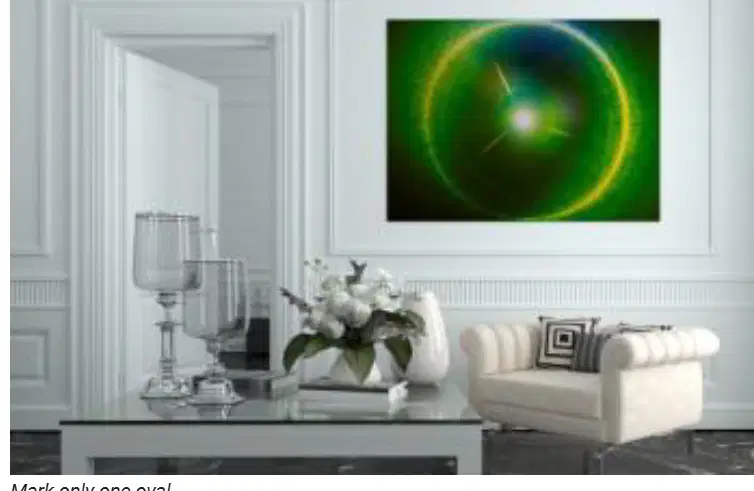
This principle of design creates a center of interest or a focal point in a room.
Proportion
Scale
Balance
Emphasis
Rhythm

The floral arrangement on the fireplace mantel is an example of what type of form?
abstract form
free form
geometric form
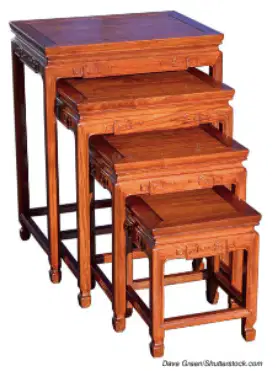
The nesting tables represent rhythm by ____________.
radiation
opposition
transition
gradation
A well designed room can be attractive but NOT function well.
True
False
Designers use different types of line to create certain affects.
True
False
The design of a high mass patterned fabric would be sparse and clean.
True
False
Visual texture can be seen and felt.
True
False
Greeks were masters at proportion.
True
False
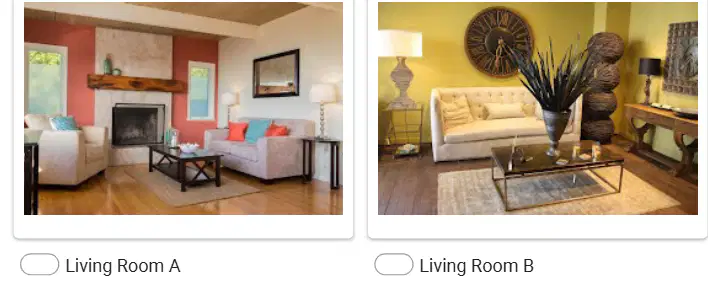
Which picture below is an example of bad proportion?
Living Room A
Living Room B
Which represents lighter visual weight?
Thick lines, bold colors, rough textures and large patterns
Slender lines, light colors, smooth textures, small patterns
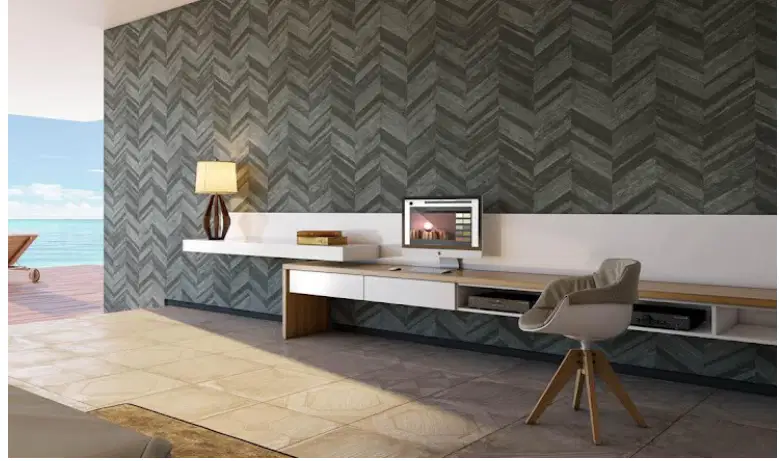
This principle of design occurs when an element of design forms an organized pattern.
Proportion
Scale
Balance
Emphasis
Rhythm
Which type of rhythm is used with the elements of design?
All of the Above
Transition
Radiation
Opposition
Gradation
When curved lines lead the eye from one place to another, it is an example of which type of rhythm?
repetition
radiation
gradation
opposition
transition
Variety ________________.
adds interest to a design
can cause confusion
is a combination of styles and materials
all of the above
The Greeks developed guidelines for the use of proportion.
True
False
The physical shape of objects.
design
form
construction
visual imagery
Which of the following is a principle of design?
color
line
rhythm
texture
Lines flowing outward from a central point are rhythm by_______________.
gradation
opposition
radiation
repetition
Color is part of the electromagnetic spectrum.
True
False
Analogous colors are colors that are opposite one another on the color wheel.
True
False
Tertiary colors are made from mixing primary and complementary colors.
True
False
Primary colors are red, blue and yellow.
True
False
Yellow and Violet are complementary colors on the color wheel.
True
False
The ratio of one part to another or one part to the whole is ______________.
scale
balance
emphasis
proportion
Balance can be symmetrical or asymmetrical.
True
False
Scale of furnishings should relate to the space they occupy to be visually pleasing.
True
False
Thick lines, bold colors and rough textures add visual weight.
True
False
The goals of design are ______________.
function and appropriateness
harmony
beauty
all of the above
Substances that absorb some light rays and reflect others are ______________.
paints
dyes
pigments
colors

The room below represents colors that advance.
warm colors
cool colors
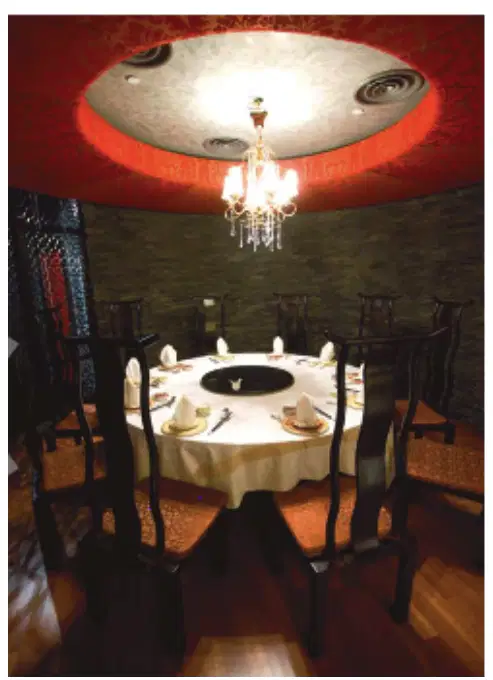
The arrangement of the circular table, chairs and overhead architectural feature is an example of rhythm by ______________.
radiation
opposition
gradation
transition
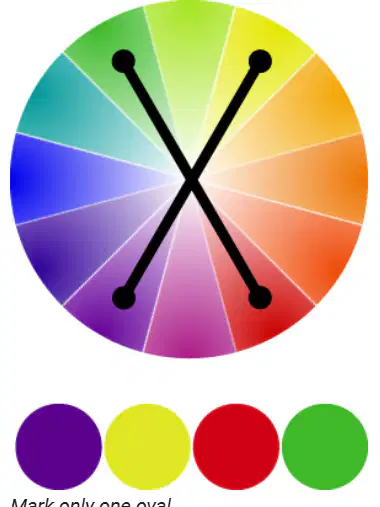
Which color scheme is highlighted in the color wheel below?
split complementary
triadic
double complementary
secondary

Which color scheme is shown in the color wheel below?
monochromatic
triadic
analogous
complementary
Adding white to a color results in a shade of the color.
true
false
A neutral color scheme consists of the following colors__________.
red, orange, yellow
purple, pink, red
black, white, brown, gray
green, blue, pink, red
People are most comfortable when they are surrounded by colors that reflect their personality.
true
false
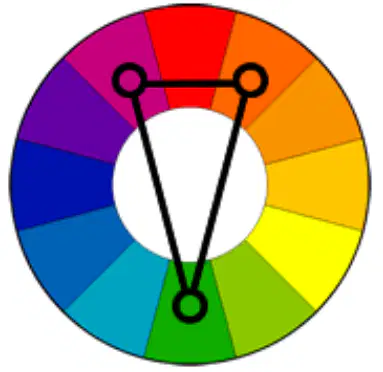
Which color scheme is represented in the color wheel below?
triadic
complimentary
monochromatic
split complimentary
Large spaces create feelings of privacy and protection.
true
false
How crowded or empty a space appears is which element of design?
line
space
form
mass
Texture requires both sight and touch to identify because appearances can be deceiving.
true
false
Color has no emotional effect on people.
true
false
Which example of rhythm occurs when curved lines lead the eye from one place to another?
repetition
transition
radiation
opposition
Furnishings should be appropriate for the function of the home and for the function of each room.
true
false
The principles of design are guidelines to follow with the elements of design.
true
false
Design appears in all of our surroundings.
True
False
The focal point is usually the first thing that catches your eye upon entering a room or space.
true
false

