
 Worksheets
Natural Selection Unit Review 11-6-25
Total questions: 20
Worksheet time: 10mins
Which organ in a frog secretes a digestive juice called bile?
Nictitating membrane
Tympanic membrane
Liver
Small intestine
Using the information provided, predict what would happen to the percentage of dark moths if the environment changed to a darker forest. Explain your reasoning.
The percentage of dark moths would decrease because they would be more visible
The percentage of dark moths would stay the same because environment does not affect survival
The percentage of dark moths would increase because they could camouflage better
The percentage of dark moths would decrease because they would eat less food
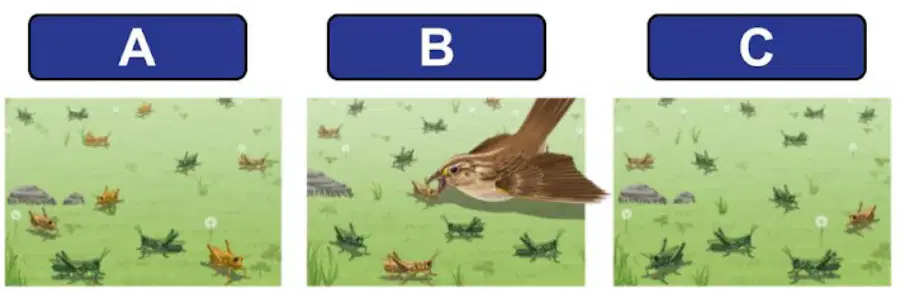
Which label (A, B, or C) best represents the concept of "Variation" in the grasshopper population?
A
B
C
None of the above
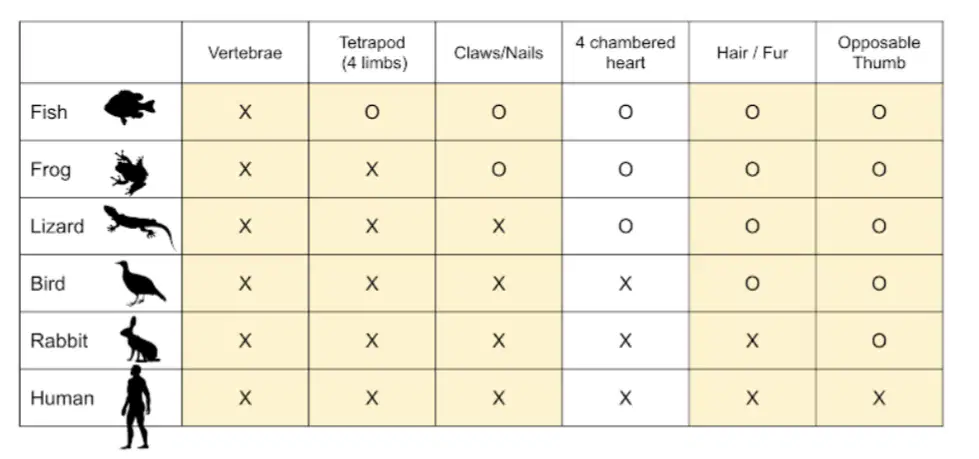
Which animal in the table has all the following characteristics: vertebrae, tetrapod (4 limbs), claws/nails, 4 chambered heart, hair/fur, and opposable thumb?
Bird
Rabbit
Human
Lizard
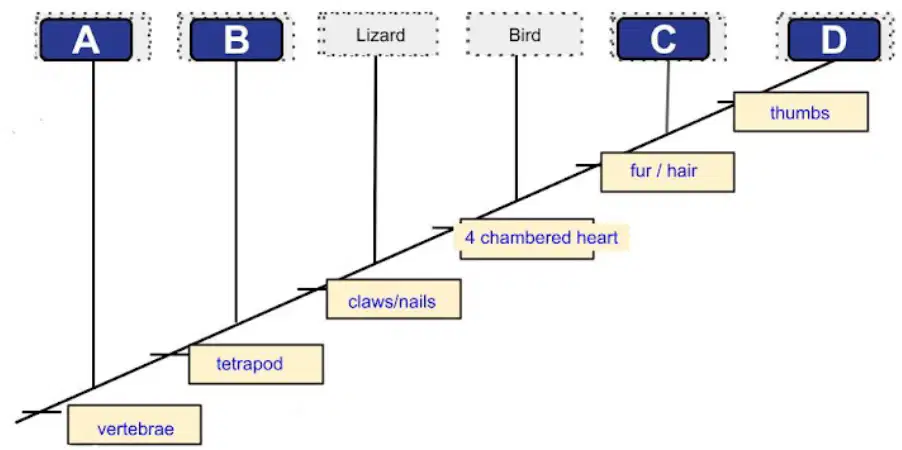
Fish have a vertebra or backbone but no other characteristics on this cladogram. What is the best location for the fish?
A
B
C
D
Which structure in a frog can detect sound waves like a human eardrum?
Nictitating membrane
Tympanic membrane
Liver
Small intestine
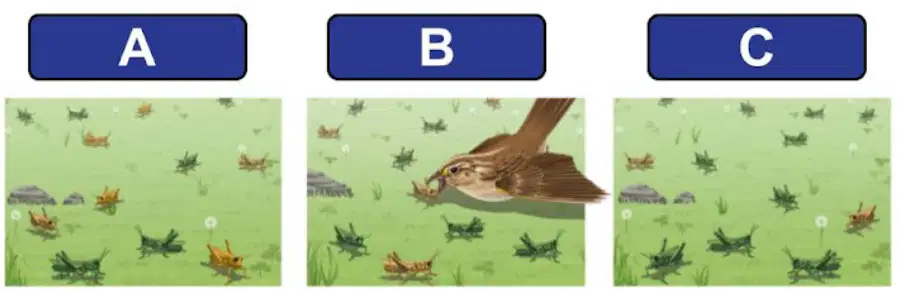
Which label (A, B, or C) best represents the concept of "Adaptation" in the grasshopper population?
A
B
C
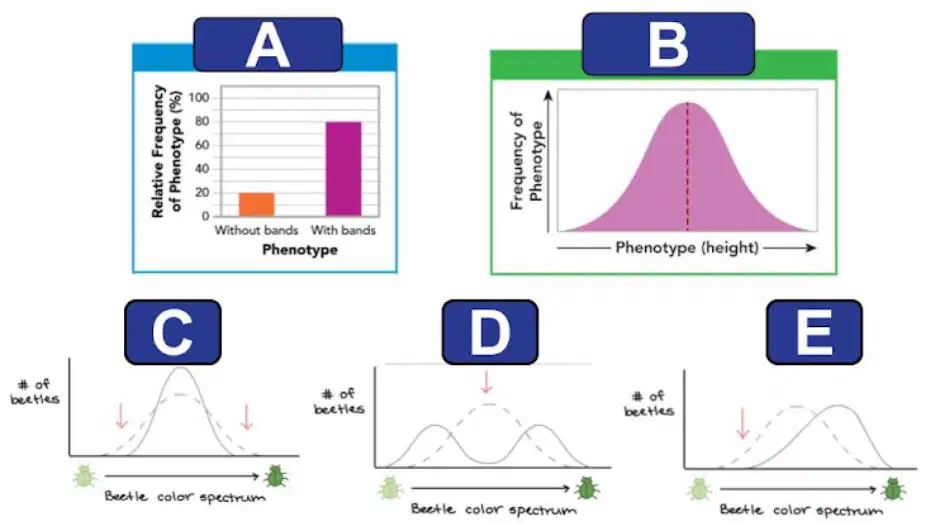
Which letter in the diagram best illustrates Disruptive Selection?
E
C
D
B
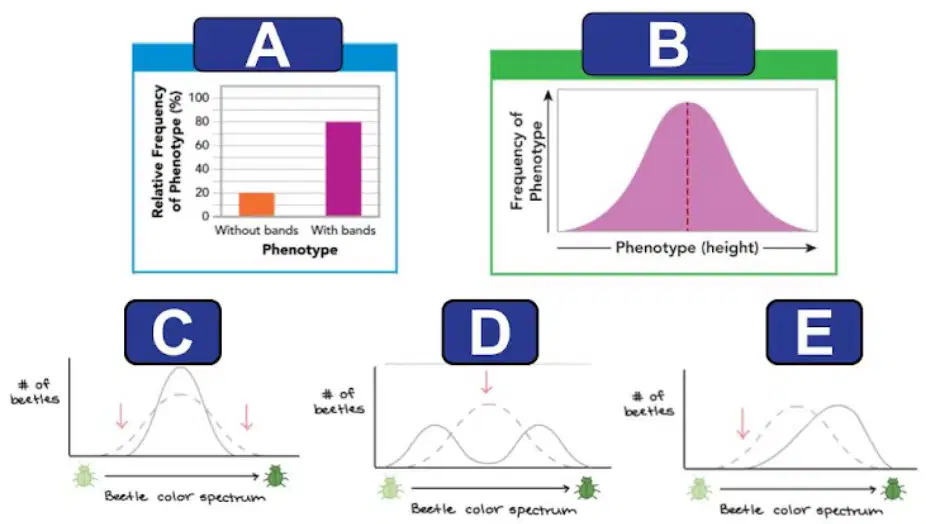
Which letter in the diagram best illustrates Directional Selection?
C
D
E
B
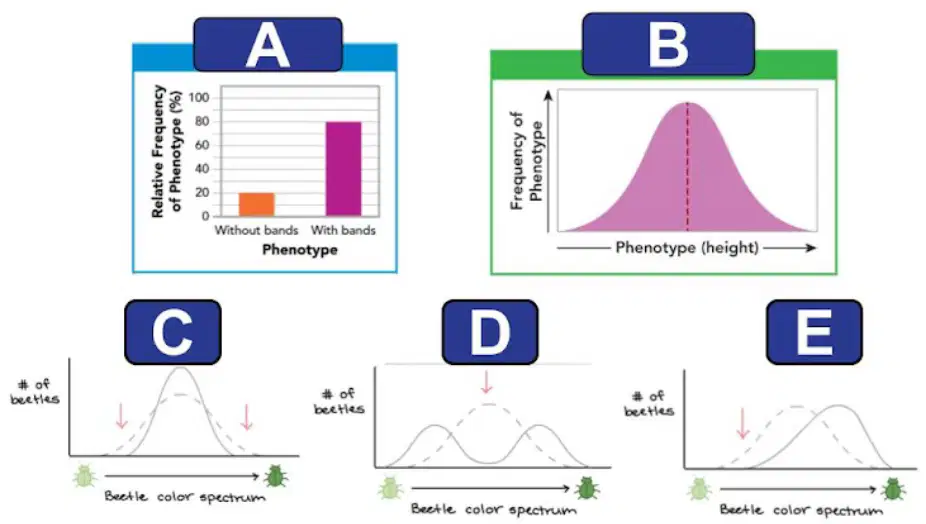
Which letter represents a Polygenic Trait in the diagram?
A
B
D
E
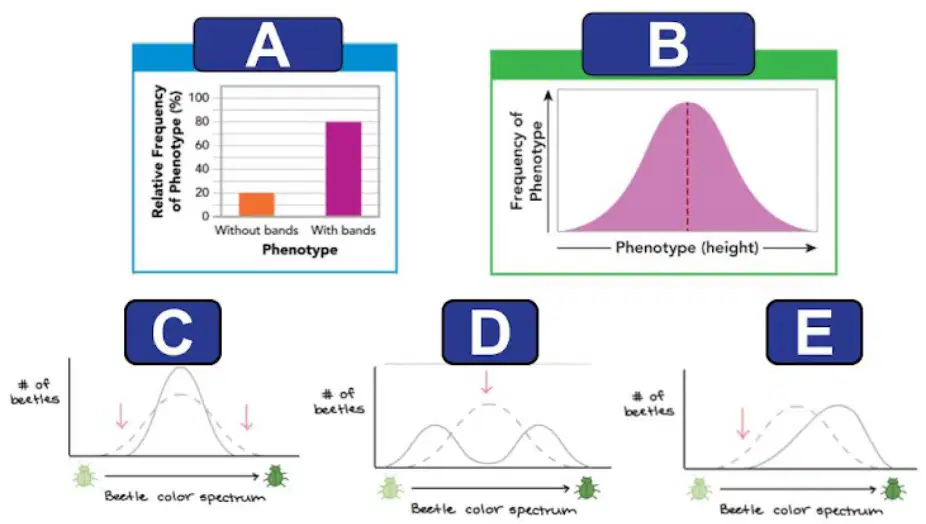
Which letter in the diagram best illustrates Stabilizing Selection?
D
E
C
A
Which type of selection is described by the following definition: "One of the extreme phenotypes has the highest fitness. The bell curve shifts towards the more fit phenotype"?
Stabilizing Selection
Directional Selection
Disruptive Selection
Artificial Selection
What is the function of the nictitating membrane in a frog?
Covers the eye and protects it while the frog is underwater
Detects sound waves
Secretes digestive juice called bile
Absorption of digestive nutrients
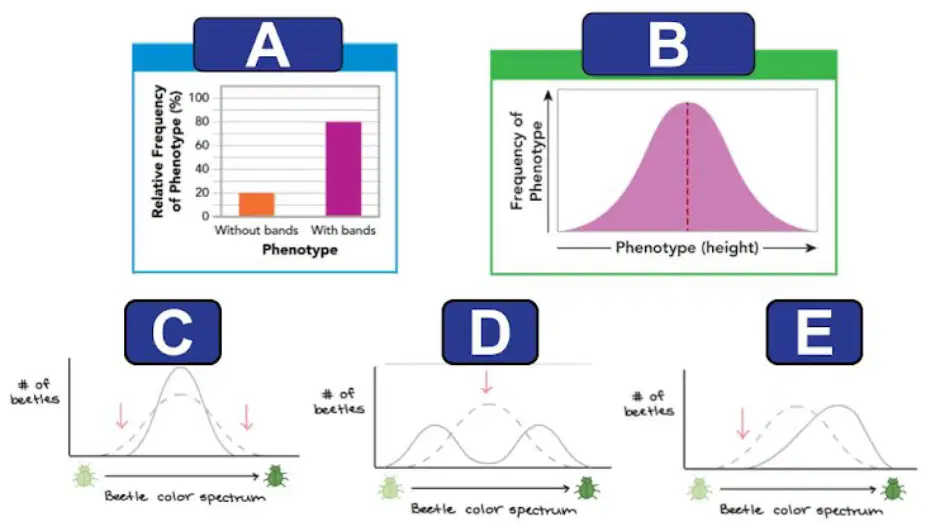
Which letter corresponds to a Single-Gene Trait in the provided diagram?
A
B
C
D
What is the term for a structure that is similar in different species of common ancestry?
Homologous Structures
Adaptation
Vestigial Structures
Analogous Structures
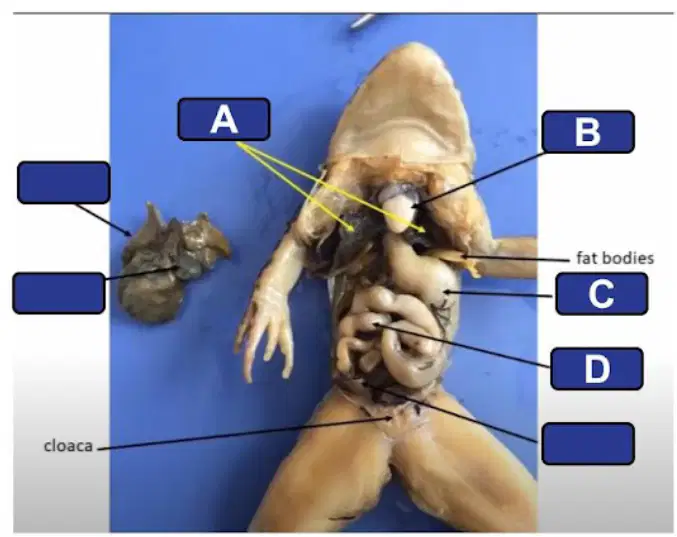
Refer to the image. What does label "C" represent in the frog’s anatomy?
Heart
Lungs
Stomach
Small Intestine
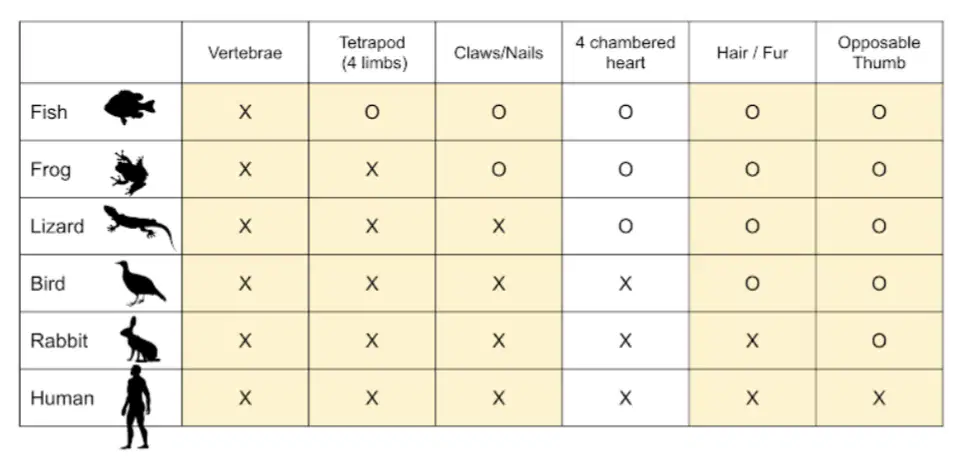
Based on the table, which characteristic is shared by all the animals listed?
Tetrapod (4 limbs)
Vertebrae
Claws/Nails
Hair/Fur
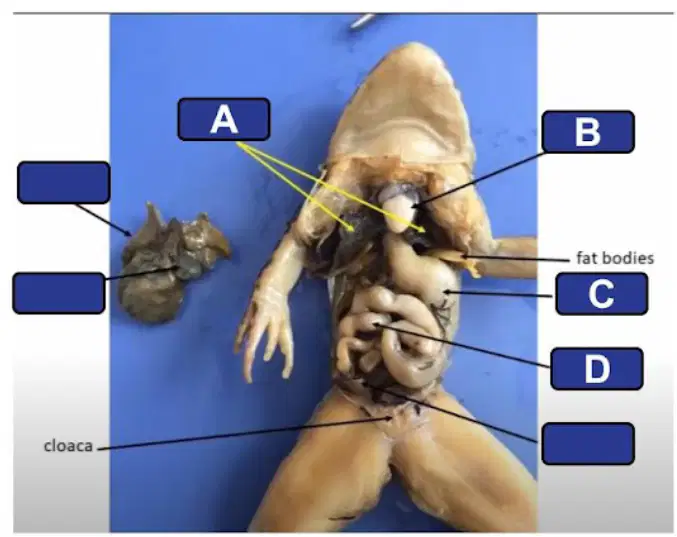
According to the diagram, which organ is marked by label "D"?
Heart
Lungs
Stomach
Small Intestine
Which type of selection is described by the following definition: "Intermediate phenotypes have the highest fitness, and the bell curve tends to narrow"?
Disruptive Selection
Directional Selection
Stabilizing Selection
Natural Selection
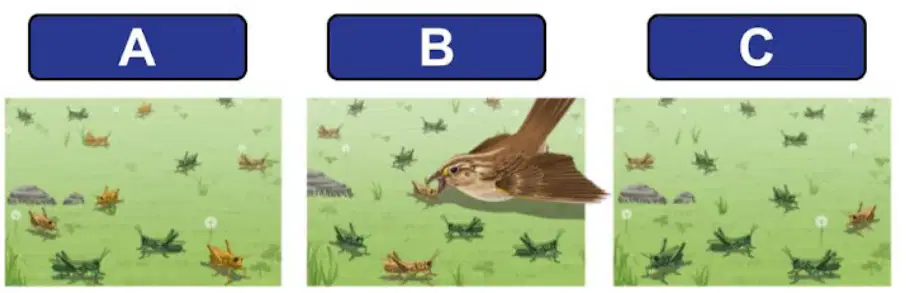
Which label (A, B, or C) best represents the concept of "Natural Selection" in the grasshopper population?
A
B
C

