
 Worksheets
Muscular System Test Review
Total questions: 65
Worksheet time: 33mins
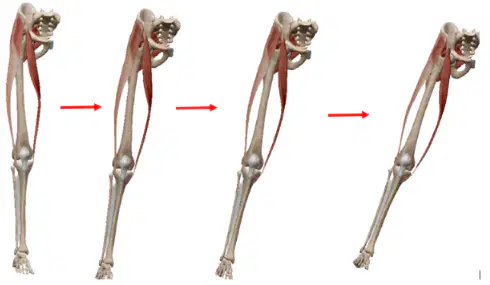
What motion is occurring at the hip?
Abduction
Flexion
Extension
Rotation
What are the four characteristics of muscle tissue?
Excitability, Extensibility, Contractibility, Elasticity
Flexibility, Rigidity, Sensitivity, Durability
Mobility, Stability, Adaptability, Plasticity
Conductivity, Permeability, Viscosity, Density
What type of muscle is associated with and attached to the skeleton? It is under voluntary control.
Skeletal Muscle
Cardiac Muscle
Smooth Muscle
Involuntary Muscle
What type of muscle makes up the walls of our organs and our blood vessels? These muscles are under involuntary control.
Smooth or Visceral Muscle
Skeletal Muscle
Cardiac Muscle
Striated Muscle
What type of muscle makes up the myocardium of the heart?
Cardiac Muscle
Smooth Muscle
Skeletal Muscle
Connective Tissue
Muscles only pull, never push.
True
False
Muscles are attached to bones by non-elastic cords called tendons.
True
False
The origin of the muscles moves the most during a muscle contraction.
True
False
Muscles of the body are grouped in pairs; 1 produces movement in a singular direction, the other produces movement in the opposite direction.
True
False
The antagonist muscle group produces movement in a singular direction and aids in the movement of a muscular contraction.
True
False
Our muscular system likes to maintain the body at a certain temperature range, what is that range?
98.6
95.0
100.4
92.5
What is the major source of energy for muscles to produce work?
Adenosine Triphosphate
Glucose
Lactic Acid
Oxygen
A muscle must be stimulated by a nerve impulse to contract.
True
False
When lactic acid is accumulated in the muscles, what results?
Muscle Fatigue
Increased Strength
Rapid Healing
Improved Flexibility
The wasting or loss of muscle tissue resulting from disease or lack of use is termed what?
Muscle Atrophy
Muscle Hypertrophy
Muscle Dystrophy
Muscle Sprain
16. Which muscle is mainly responsible for shoulder elevation?
Trapezius
Deltoid
Pectoralis major
Latissimus dorsi
What are the 4 Rotator Cuff Muscles?
Subscapularis, Supraspinatus, Infraspinatus, Teres Minor
Deltoid, Biceps Brachii, Triceps Brachii, Teres Major
Pectoralis Major, Latissimus Dorsi, Trapezius, Rhomboids
Supraspinatus, Infraspinatus, Teres Major, Subclavius
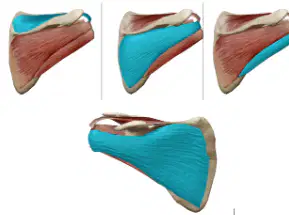
These 4 muscles stabilize the shoulder. They are commonly referred to as the?
Rotator Cuff Muscles
Hamstring Muscles
Quadriceps Muscles
Deltoid Muscles
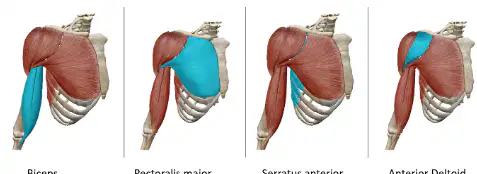
These 4 muscles combine to produce what movement at the shoulder?
Flexion
Extension
Abduction
Adduction
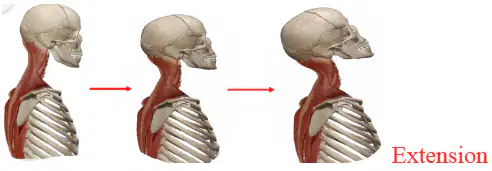
What motion is occurring at the head and neck?
Extension
Flexion
Rotation
Lateral Flexion
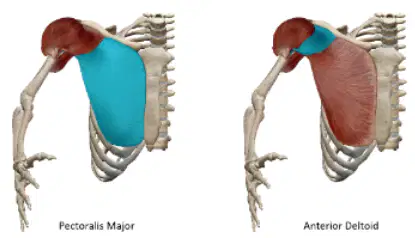
These 2 muscles act as prime movers to create what movement at the shoulder? (Refer to the images of Pectoralis Major and Anterior Deltoid)
Shoulder Horizontal Adduction
Shoulder Abduction
Shoulder Extension
Shoulder External Rotation

What motion is occurring at the shoulder? (Refer to the sequence of shoulder movement images)
Horizontal Adduction
Abduction
Flexion
Extension
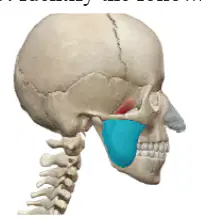
Identify the following muscle? (Refer to the image of the skull with highlighted muscle)
Masseter
Temporalis
Buccinator
Lateral pterygoid
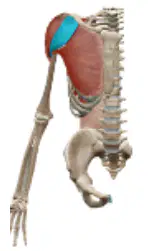
Identify the following muscle.
Latissimus dorsi
Trapezius
Anterior Deltoid
Pectoralis major
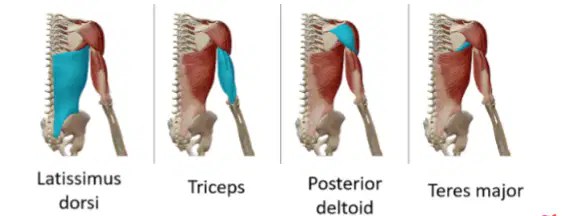
These 4 muscles act as prime movers and together create what movement at the shoulder?
Shoulder Extension
Shoulder Flexion
Shoulder Abduction
Shoulder Adduction
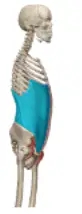
Identify the highlighted muscle:
External Oblique
Rectus Abdominis
Latissimus Dorsi
Serratus Anterior
What is the agonist during elbow flexion?
Biceps
Triceps
Deltoid
Latissimus dorsi
What is the descending phase of a squat called?
Eccentric
Isometric
Concentric
Static
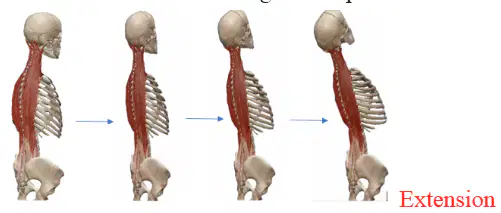
What motion is occurring at the spine?
Extension
Flexion
Rotation
Lateral Flexion
Which muscle group is responsible for knee extension?
Quadriceps
Hamstrings
Gastrocnemius
Gluteus maximus
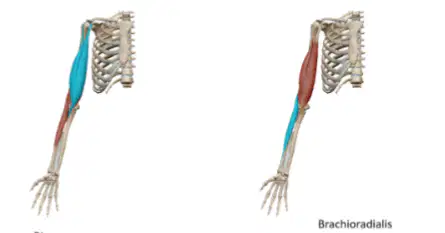
These two muscles (Biceps and Brachioradialis) combine to produce what motion at the elbow?
Flexion
Extension
Abduction
Rotation
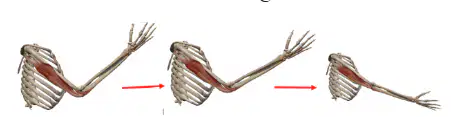
What motion is occurring at the elbow?
Extension
Flexion
Rotation
Abduction

These 2 muscles combine to act as the prime movers that produce what motion in the forearm?
Pronation
Supination
Flexion
Extension
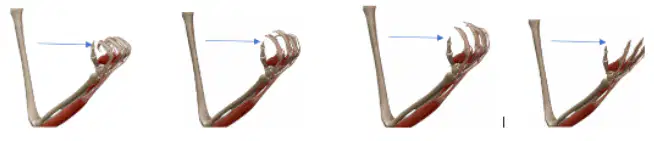
What motion is occurring at the phalanges?
Extension
Flexion
Abduction
Adduction
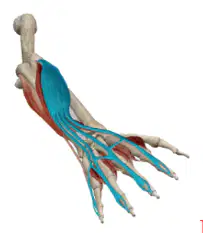
When contracted this muscle causes what motion to occur?
Extension
Flexion
Abduction
Rotation
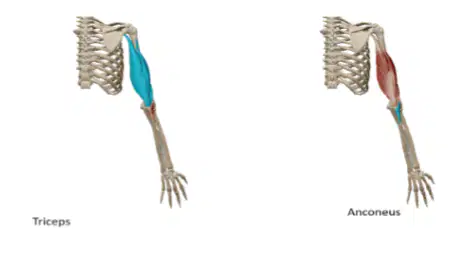
These two muscles combine to produce what motion at the elbow?
Extension
Flexion
Supination
Pronation

These 4 muscles (Iliacus, Psoas major, Rectus femoris, Sartorius) combine to produce what motion at the hip?
Flexion
Extension
Abduction
Adduction
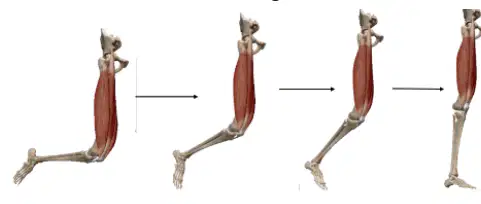
What motion is occurring at the knee?
Extension
Flexion
Rotation
Abduction
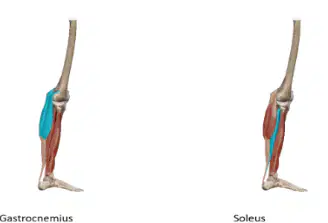
These two muscles (Gastrocnemius, Soleus) combine to produce which motion at the ankle?
Plantarflexion
Dorsiflexion
Inversion
Eversion
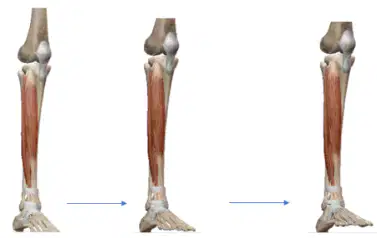
What action is occurring at the ankle?
Dorsiflexion
Plantarflexion
Inversion
Eversion
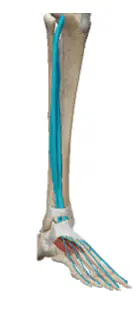
This muscle produces what motion at the phalanges of the foot?
Extension
Flexion
Abduction
Adduction
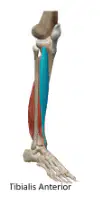
What is the function of the Tibialis anterior?
Dorsiflexion
Plantarflexion
Flexion of the knee
Extension of the hip
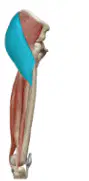
Identify the following muscle:
Gluteus Maximus
Gastrocnemius
Soleus
Peroneus longus
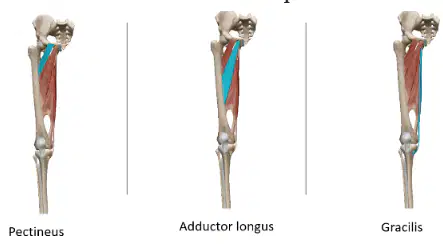
These muscles combine to produce what motion at the hip?
Adduction
Abduction
Flexion
Extension
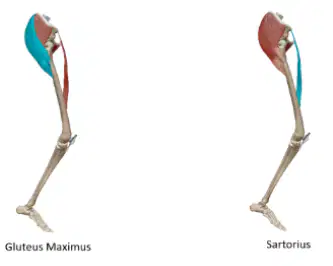
These two muscles (Gluteus Maximus and Sartorius) combine to produce what motion at the hip?
Hip External Rotation
Hip Flexion
Hip Abduction
Hip Internal Rotation
What is the agonist of elbow extension?
Triceps
Biceps
Deltoid
Brachialis
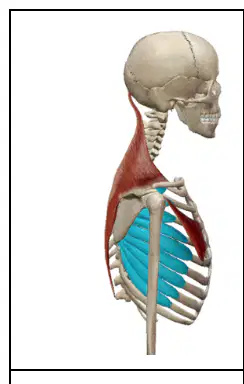
Identify the highlighted muscle in the image.
Serratus Anterior
Latissimus Dorsi
Pectoralis Major
Rectus Abdominis
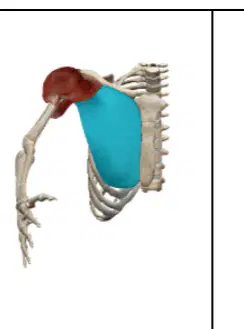
Identify the highlighted muscle in the image.
Pectoralis Major
Deltoid
Latissimus Dorsi
Trapezius
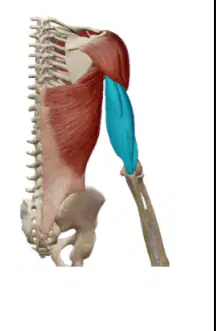
Identify the highlighted muscle in the image.
Triceps
Biceps
Deltoid
Latissimus dorsi

Identify the highlighted muscle in the image.
Temporalis
Masseter
Orbicularis oculi
Frontalis
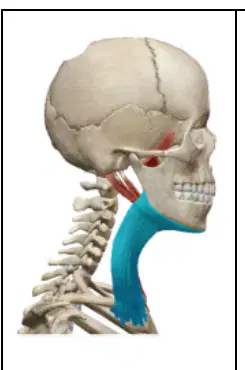
Look at the image. Which muscle is highlighted in blue?
Platysma
Sternocleidomastoid
Trapezius
Latissimus Dorsi
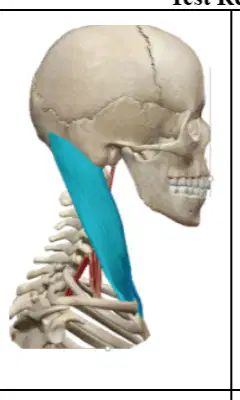
Look at the image. Which muscle is highlighted in blue?
Platysma
Sternocleidomastoid
Trapezius
Latissimus Dorsi
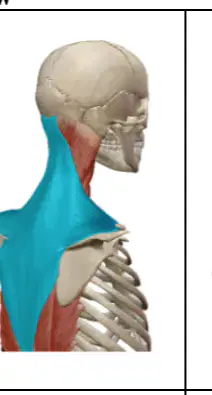
Look at the image. Which muscle is highlighted in blue?
Platysma
Sternocleidomastoid
Trapezius
Latissimus Dorsi
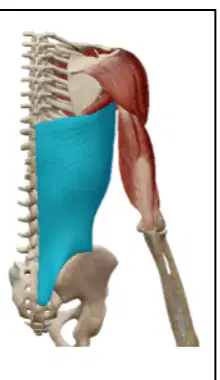
Look at the image. Which muscle is highlighted in blue?
Latissimus Dorsi
Posterior Deltoid
Rhomboids
Rectus Abdominis
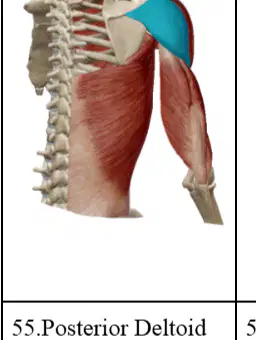
Look at the image. Which muscle is highlighted in blue?
Posterior Deltoid
Occipitalis
Rhomboids
Rectus Abdominis
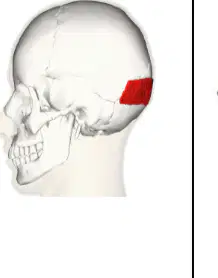
Look at the image. Which muscle is highlighted in red?
A) Occipitalis
B) Platysma
C) Sternocleidomastoid
D) Trapezius
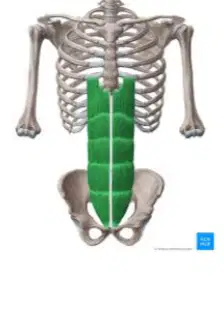
Look at the image. Which muscle is highlighted in green?
Rectus Abdominis
Latissimus Dorsi
Rhomboids
Posterior Deltoid
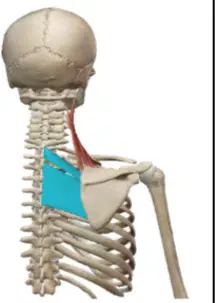
Look at the image. Which muscle is highlighted in blue?
Rhomboids
Posterior Deltoid
Trapezius
Latissimus Dorsi
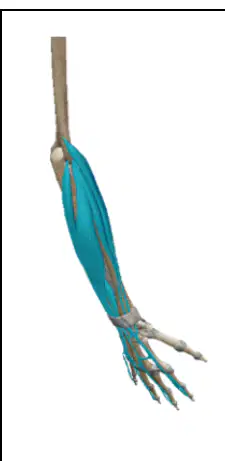
Look at the diagram. Which muscle is highlighted in blue?
Forearm Extensors
Hamstrings
Gastrocnemius
Piriformis
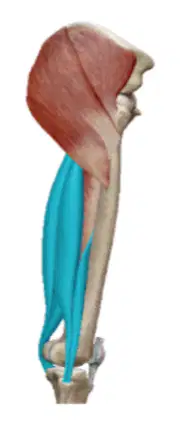
Look at the diagram. Which muscle is highlighted in blue?
Hamstrings
Gastrocnemius
Piriformis
Tensor Fascia Latae
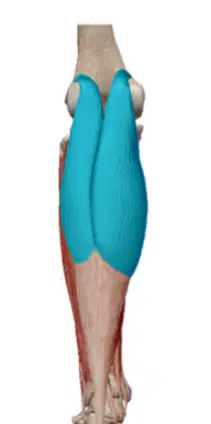
Look at the diagram. Which muscle is highlighted in blue?
Gastrocnemius
Piriformis
Adductor Longus
Sartorius
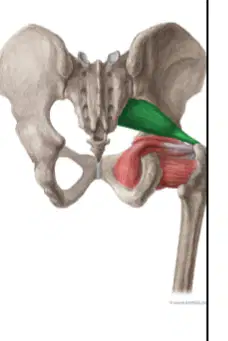
Look at the diagram. Which muscle is highlighted in green?
Piriformis
Tensor Fascia Latae
Sartorius
Forearm Extensors
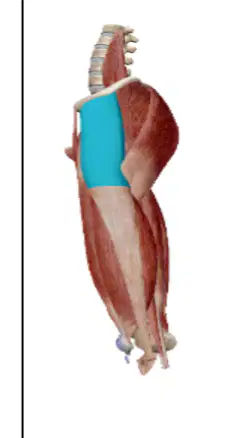
Look at the diagram. Which muscle is highlighted in blue?
Tensor Fascia Latae
Adductor Longus
Sartorius
Hamstrings
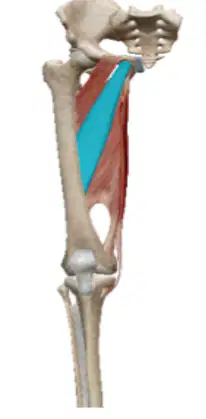
Look at the diagram. Which muscle is highlighted in blue?
Adductor Longus
Sartorius
Gastrocnemius
Piriformis
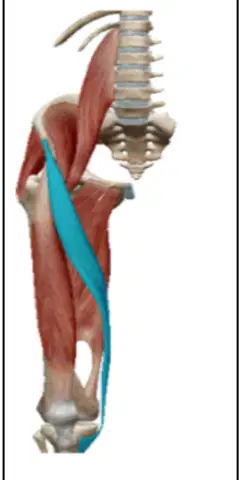
Look at the diagram. Which muscle is highlighted in blue?
Sartorius
Forearm Extensors
Tensor Fascia Latae
Hamstrings

