
 Worksheets
Final Exam Review U.S History 2025
Total questions: 107
Worksheet time: 1hrs 27mins
Which phrase best summarizes the main motives driving European exploration during the Age of Discovery?
Science, settlement, and sovereignty
God, Gold, and Glory
Peace, policy, and parliament
Trade, tolerance, and technology
Which set lists technological advances that directly enabled long-distance voyages during the Age of Discovery?
Compass
Printing press
Astrolabe
Caravel
Gunpowder
What was the Columbian Exchange? Select the most accurate description based on the section summary.
A treaty dividing the New World between Spain and Portugal
A transfer of plants, animals, and diseases between the Old World and the New World
A network of European trade posts in Asia
A system of mercantilist tariffs imposed on colonies
Match each explorer to the correct accomplishment.
Christopher Columbus
Landed in the Caribbean while seeking western route to Asia
Hernán Cortés
Conquered the Aztecs in Mexico
Francisco Pizarro
Conquered the Incas in Peru
John Cabot
Claimed lands in North America for England
Samuel de Champlain
Founded Quebec for France
Which consequence of the Age of Discovery is most directly linked to the spread of diseases to the Americas?
Competition among European powers for colonies
Native population decline due to disease and conquest
Growth of European city-states
Rise of constitutional monarchies
Which development marks the beginning of a transatlantic system of forced labor emerging during the Age of Discovery?
Feudalism
Atlantic Slave Trade
Industrial Revolution
Serfdom in Eastern Europe
Select all effects that resulted from European colonization during the Age of Discovery.
Native populations declined due to disease and conquest
Beginning of the Atlantic Slave Trade
Immediate independence for most American colonies
Increased competition among European powers for colonies
Which explorer was sponsored by Spain and sought a western route to Asia, ultimately landing in the Caribbean in 1492?
John Cabot
Samuel de Champlain
Christopher Columbus
Francisco Pizarro
Which characteristic best describes the Southern Colonies during Colonial America?
Mixed economy with limited agriculture and emphasis on trade
Plantation economy growing tobacco, rice, and indigo with slavery central
Puritan religious foundations and small farms focused on subsistence
Large-scale manufacturing centers with immigrant labor
Identify a defining feature of the Middle Colonies as summarized in the section.
Homogeneous population with strict religious conformity
Plantation system relying primarily on enslaved labor
Diverse population and mixed economy, often called the "breadbasket"
Frontier settlements with minimal trade and education
According to the section, what set the New England Colonies apart from other regions?
Large plantations producing indigo and rice
Puritan religious roots with small farms, trade, and importance of education
Cash-crop exports driven by enslaved labor
Majority of settlers from southern Europe seeking mining opportunities
Match each colonial region to its noted characteristic.
Southern Colonies
Plantation economy with slavery central
Middle Colonies
Diverse population and mixed economy, "breadbasket"
New England Colonies
Puritan roots, small farms, trade, and education important
Which event is correctly paired with its description in the "Important Developments" list?
Mayflower Compact (1620) — first permanent English settlement
House of Burgesses (1619) — early form of self-government aboard a ship
Jamestown (1607) — first permanent English settlement
Great Awakening (1730s–1740s) — first representative assembly in America
Select all items that are identified as early forms of self-government in Colonial America.
Mayflower Compact (1620)
Jamestown (1607)
House of Burgesses (1619)
Great Awakening (1730s–1740s)
Which statement best explains "Salutary Neglect" as presented in the relations section?
Britain strictly enforced all trade laws to curb colonial autonomy
Britain allowed economic freedom in the colonies, which fostered self-government
Colonies ignored British monarchs due to widespread rebellions
Britain withdrew its military forces, causing colonies to form militias
How did the outcome of the French and Indian War (1754–1763) affect the colonies, according to the section?
British defeat led to colonial independence
British victory led to reduced taxes and more trade
British victory created massive debt, prompting new taxes on the colonies
French victory expanded colonial representation in Parliament
Which cause of the American Revolution is correctly described in the section?
Proclamation of 1763 encouraged westward expansion beyond the Appalachians
Stamp Act, Townshend Acts, Tea Act were associated with the idea of "No taxation without representation"
Tea Act established the first representative assembly in America
Townshend Acts guaranteed religious freedom across all colonies
In 1774, the British imposed measures on Massachusetts known as the Intolerable Acts. What was their primary purpose as described? Select ONE best answer.
To punish Massachusetts for colonial resistance
To create a process for admitting new states
To establish a bicameral legislature
To negotiate peace with France
Match each Revolutionary War year with the event listed in the material.
1775
Battles of Lexington and Concord
1776
Declaration of Independence (Thomas Jefferson)
1777
Battle of Saratoga (turning point; led to French alliance)
1781
Surrender at Yorktown (British defeat)
1783
Treaty of Paris ends war; U.S. recognized as independent
Which statement best explains why the Battle of Saratoga (1777) is considered a turning point in the American Revolution? Select ONE option.
It marked the first use of a bicameral legislature
It led to a French alliance with the Americans
It resulted in the surrender of British forces at Yorktown
It ended the war and recognized U.S. independence
Under the Articles of Confederation (1781–1789), which characteristic of the national government is emphasized in the material? Select ONE option.
Strong central authority with power to tax and enforce laws
Weak central government lacking power to tax or enforce laws
Unitary system with appointed governors
Monarchical executive with veto power
Which accomplishment is identified as a success of the Articles of Confederation? Select ONE option.
Great Compromise creating a bicameral legislature
Three-Fifths Compromise for representation and taxes
Northwest Ordinance (1787) establishing a process for new states
Federalists vs. Anti-Federalists debate over ratification
Shays’ Rebellion (1786) is noted in the material for exposing a weakness in the Articles of Confederation. What weakness did it highlight? Select ONE option.
Inability of the central government to enforce laws effectively
Overreach of federal taxation power
Lack of a process for admitting new states
Failure to include equal representation in the Senate
During the Constitutional Convention (1787), the Great Compromise established the structure of Congress. What was the outcome described? Select ONE option.
A unicameral legislature with equal representation
A bicameral legislature with the House by population and the Senate equal
A monarchy with an appointed upper chamber
A confederation with state vetoes in both chambers
Which statement accurately reflects the Three-Fifths Compromise as presented? Select all that apply.
It counted enslaved people as three-fifths for representation
It counted enslaved people as three-fifths for taxes
It created a bicameral legislature
It ended the debate between Federalists and Anti-Federalists
What major political debate surrounded the ratification of the Constitution according to the material? Select ONE option.
Federalists vs. Anti-Federalists
Whigs vs. Tories
Patriots vs. Loyalists
Republicans vs. Democrats
Which statement best captures a key message from George Washington’s Farewell Address?
He urged the nation to expand westward rapidly through purchases.
He warned against political parties and foreign entanglements.
He called for a stronger alliance with France against Britain.
He insisted on immediate abolition of the national debt.
During John Adams’s presidency, what was the XYZ Affair primarily associated with?
A territorial dispute with Spain over Florida
Tension with France involving demands for bribes from U.S. envoys
A domestic uprising against federal taxes
An agreement opening trade with Britain
Match each president with the correct associated event or policy.
George Washington
Farewell Address warned against parties and foreign entanglements
John Adams
XYZ Affair with France
James Madison
War of 1812 against Britain
James Monroe
Era of Good Feelings with one-party rule
Which result is linked to the War of 1812 under James Madison’s presidency?
Loss of national pride and decline in manufacturing
National pride and manufacturing growth
Immediate annexation of Canada
A long-term embargo that boosted foreign trade
What was a major cause of the War of 1812 listed in the material?
U.S. refusal to purchase Louisiana
British impressment and trade restrictions
French occupation of Florida
Spanish closure of the Mississippi River
Which statement best describes the Monroe Doctrine as presented in this section?
A domestic law limiting free speech during wartime
A warning to European powers to avoid colonizing the Americas
A treaty with Britain ending impressment
An economic plan to increase manufacturing tariffs
Which presidency is correctly paired with its defining theme of national unity and one-party rule?
George Washington and the Era of Good Feelings
John Adams and national unity after the XYZ Affair
James Monroe and the Era of Good Feelings
Thomas Jefferson and the Era of Good Feelings
Which statement best explains the “Corrupt Bargain” associated with the Election of 1824?
An agreement in which Andrew Jackson promised cabinet posts to his supporters after winning
A perceived deal between John Quincy Adams and Henry Clay that helped Adams secure the presidency
A secret pact between Southern states to block tariffs in Congress
An arrangement where Jackson and Adams merged parties to form a new coalition
During the Age of Jackson, which development is most closely linked to the rise of the Democratic Party?
Andrew Jackson organized a national political movement that appealed to the “common man”
Henry Clay established a reform club focused on internal improvements
John Quincy Adams launched a regional party limited to New England
South Carolina formed a states’ rights faction known as the Nullifiers
Which policy change illustrates Jackson’s expansion of democracy during his presidency?
Universal white male suffrage gained wider acceptance in many states
Voting rights were restricted to property owners only
Women received the national right to vote
Native Americans were granted full citizenship and voting rights
Select all actions or events associated with Andrew Jackson’s administration.
Implementation of the Spoils System
Passage of the Indian Removal Act (1830)
Compromise of 1850
Veto of the recharter of the Second Bank of the U.S.
Adoption of the Monroe Doctrine
Match each Jackson-era conflict or policy with its main issue.
Nullification Crisis
Tariffs and state vs. federal authority
Bank War
Recharter of the Second Bank of the U.S.
Indian Removal Act
Forced relocation of Native Americans
In the Nullification Crisis, which political tension was central to the dispute?
Whether Congress could regulate foreign policy without presidential approval
Whether states like South Carolina could nullify federal tariffs
Whether the Supreme Court should appoint cabinet members
Whether the West should be closed to settlement
Which theme from the era is best illustrated by westward settlement and the forced removal of Native peoples?
Growth of self-government and civic participation
Conflict over federal vs. state power only
Expansion westward combined with Native displacement
Rise of political parties without social impact
Match the following
Cash crops...
Tobacco, sugar cane, indigo
Who settled in Eastern Canada?
French
This country colonized Brazil.
Portugal
The Spanish Empire in the Americas...
Included parts of North America, much of South America, and the Caribbean Islands
Who settled in what is now Virginia?
England
For Europeans, the desire to grow (a) and spread (b) , coupled with advances in sailing technology, spurred the age of European (c) .
Who were the "conquistadors?"
catholic missionaries
Spanish explorers
Aztec rulers
French adventurers
Colonized what became known as Canada.
Spain
France
Portugal
England

Aboard the Mayflower the Pilgrims wrote and signed a document that established the ideas of self-governance and majority rule in North America.
The Magna Carta
The Mayflower Compact
The Virginia Plan
The Declaration of Independence
Colonial region that was characterized by slavery, plantations that grew cash crops like tobacco, rice and cotton, Anglican religious values, and a warm coastal climate.
The New England Colonies
The Back Country
The Southern Colonies
The Middle Colonies
Aboard the Mayflower the Pilgrims wrote and signed a document that established the ideas of self-governance and majority rule in North America.
The Magna Carta
The Mayflower Compact
The Virginia Plan
The Declaration of Independence
The first successful and permanent English settlement established in North America.
Jamestown
Plymouth
Salem
Charleston
Colonial region that was characterized by slavery, plantations that grew cash crops like tobacco, rice and cotton, Anglican religious values, and a warm coastal climate.
The New England Colonies
The Back Country
The Southern Colonies
The Middle Colonies
Colonial region characterized by puritan religious values, an economy based on subsistence farming, shipping and trade, shipbuilding, and a colder climate.
The Southern Colonies
The Middle Colonies
The New England Colonies
The Back Country
Colonial region that had characteristics of religious and cultural tolerance, an economy based on shipping and trade and cash crops of grains, fruits, and vegetables.
The New England Colonies
The Back Country
The Southern Colonies
The Middle Colonies
What region included Maryland, Virginia, North Carolina, South Carolina and Georgia?
New England
Middle Colonies
Southern Colonies
What region included New York, New Jersey, Pennsylvania and Delaware?
New England
Middle Colonies
Southern Colonies


The Sons of Liberty dumped tea into the Boston Harbor. This act of protest is known as
the Boston Tea Party
the Stamp Act
Committees of Correspondence
Boston Massacre
Starts the Revolutionary War, known as the "shot heard round the world."
Bunker Hill
Saratoga
Yorktown
Lexington and Concord

Argued that people have natural rights.
William Pitt
John Locke
George Washington
King George
What document official ended the Revolutionary War?
Treaty of Paris 1783
Declaration of Independence
Constitution
Treaty of Paris 1763
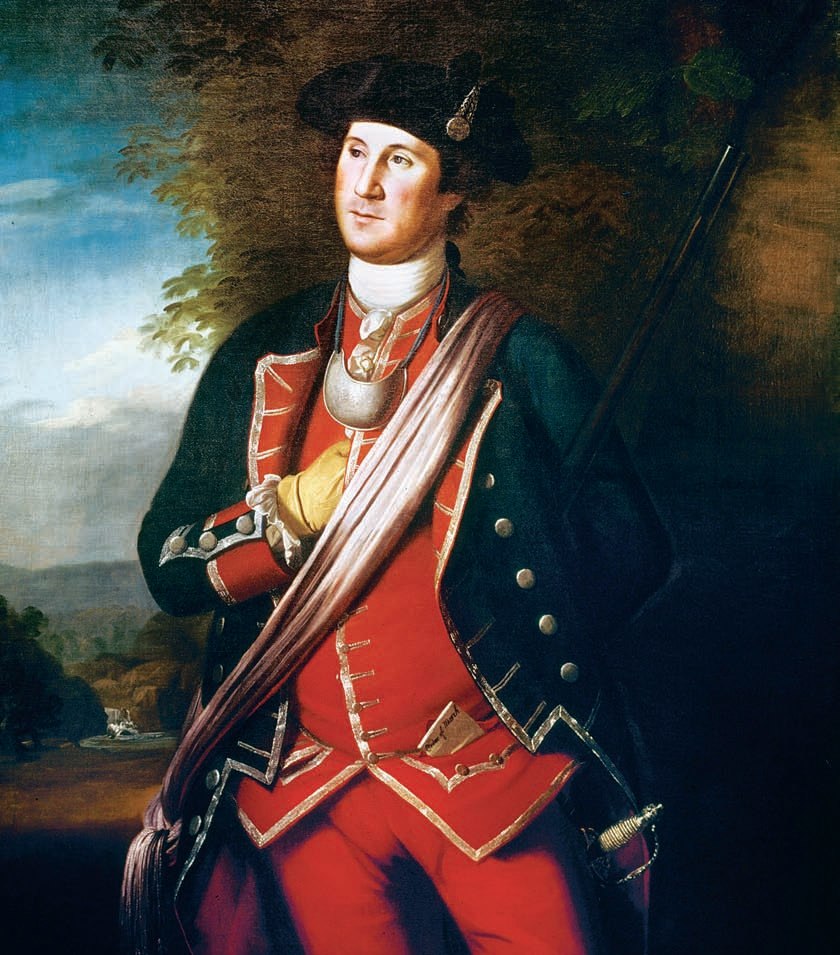

What were American's called who supported independence?
Tories
Separatists
Patriots
Loyalists

This type of American Colonist was in support of the British parliament.
Patriot
Loyalist
Yes man
Neutral

What is the 1st Cause of the American Revolution?
English and Indian War
French and Indian War
French and Spanish War
English and Spanish War

What was the motivation for exploration?
Write a book about it
Gold, God, Glory
Land, food, water
Position in the government

The inhumane voyage of slaves across the Atlantic ocean was called the
End of Days
Middle Passage
Final Destination
End of Freedom


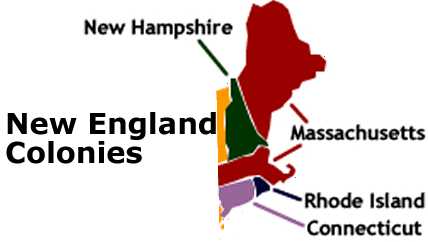
New Hampshire
Rhode Island
Massachusetts
South Carolina
Virginia
Maryland
Georgia
Deleware
New York
New Jersey
Indiana
Ohio
Wisconsin
New Hampshire
Rhode Island
Massachuttes
South Carolina
Virginia
Maryland
Georgia
Delaware
New York
New Jersey
Arizona
New Mexico
Washington
New Hampshire
Rhode Island
Massachuttes
South Carolina
Virginia
Maryland
Georgia
Delaware
New York
New Jersey
Georgia
Louisiana
Alabama
What was the motivation for exploration?
Write a book about it
Gold, God, Glory
Land, food, water
Position in the government
Wh were the colonist called who wanted the colonies free from Britain?
Tories
Patriot
Loyalist
Neutrals
Who wrote the Declaration of Independence?
Benjamin Franklin
John Adams
Thomas Jefferson
John Jay
Whose writing did Thomas Jefferson rely on when he wrote the Declaration of Independence?
John Adams
John Hume
John Locke
Benjamin Franklin
Which Battle represented a defeat for general Cornwallis and the end to the Revolutionary War?
Saratoga
Yorktown
Trenton
Germantown
*Recognized American Independence
*Returned Florida to Spain.
*Set boundaries of the United States.
*Agreed to withdraw British troops.
All of the following were in the ________________.
Treaty of Ghent
Treaty of Paris 1783
Treaty of Paris 1763
Treaty of Versailles
Who tied Thomas Jefferson in the Election of 1800?
George Washington
John Adams
Aaron Burr
James Madison
Sam Adams

Who shot and killed Alexander Hamilton in a dual?
Aaron Burr
Thomas Jefferson
George Washington
The Noid
John Adams

Which territory from the above map was gained when Thomas Jefferson was president?
Mexican Cession
Oregon Country
Louisiana Purchase
Texas
Florida

What was the name of the Native American guide that Lewis & Clark employed on their expedition?
Sacagawea
Pocahontas
Cinderella
Queen Lil
Molly Spotted Elk

Who did the United States face in the War of 1812?
France
England
Spain
Germany
Russia
Who was president and couldn't take criticism and passed the Sedition Act?
George Washington
Thomas Jefferson
James Madison
John Adams
George HW Bush
What future president destroyed the British, after the war, at the Battle of New Orleans?
James Madison
James Monroe
John Quincy Adams
Andrew Jackson
Martin Van Buren
What law led to the removal of Native Americans to land west of the Mississippi River?
The 12th Amendment
Indian Removal Act
Tariff of Abominations
Who did the Cherokee seek help from once Georgia and President Jackson tried to remove them from their land?
Supreme Court
Abe Lincoln
The House of Representatives

