
Font size
 Worksheets
HHA CH.1
Total questions: 93
Worksheet time: 47mins
What was the main purpose of the first homemaker service established by a social service agency in the United States in 1903?
To provide child care
To provide health care
To provide education
To provide transportation
In the early years of society, who was typically responsible for caring for children and family members with disabilities?
Men
Women
Government agencies
Hospitals
Fill in the blank: The Omnibus Budget Reconciliation Act, known as ________, mandates national standards for federally funded nursing homes and home health agencies.
OBRA
HIPAA
FERPA
ADA
Home health aides were expected to work only under direct nursing supervision.
True
False
Which act requires a minimum of 75 hours of training for home health aides?
Social Security Act
Omnibus Budget Reconciliation Act (OBRA)
Nurse Aide Registry Act
Work Projects Administration Act
What must a home health worker complete to be employed in an agency that receives federal or state funding?
Nurse Aide Registry
Background Information Disclosure Form
Homemaker Service
Competency Test
Fill in the blank: In the early 1920s, employment agencies advertised for mature, practical women experienced in ________ and household management.
child care
sewing
teaching
gardening
What is the primary goal of OBRA regulations?
To increase hospital funding
To improve care both for individuals in long-term care facilities and for those in their own homes
To reduce the number of home care workers
To promote nursing homes only
Approximately what percentage of older adults need assistance with personal care activities?
10%
23%
50%
75%
Fill in the blank: One of the main reasons for the increase in the need for home care is that older adults, the main recipients of home care, are the fastest growing population in the country. People are living longer due to advances in ________ and modern technology.
health care
transportation
agriculture
education
Home care services are becoming more available to help a terminally ill client die with dignity in their own home.
True
False
List two main categories of duties performed by home care workers.
Personal care and household tasks
Medical procedures and legal services
Financial planning and transportation
Education and entertainment
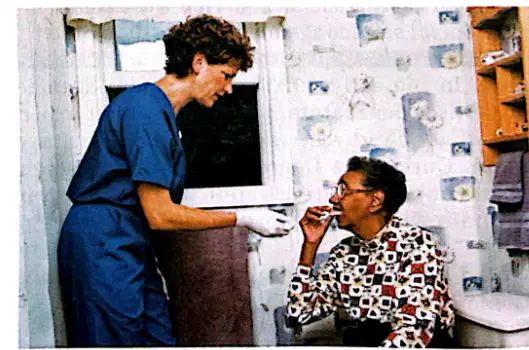
What type of assistance is the home health aide providing to the client?
Personal care assistance
Medical diagnosis
Financial planning
Legal advice
Match the following home care worker titles with their correct descriptions:
Companion
Keeps the client company or maintains safety; usually does not provide personal or homemaking services.
Homemaker
Performs household duties, such as laundry and cooking, as well as light housecleaning.
Personal care worker
Assists with a minimal level of daily living activities, such as meal preparation and companionship, as well as minimal assistance with personal care.
Home health aide
Provides substantial assistance with personal care, such as bathing and dressing, as well as supervised health assistance, such as assistance with rehabilitation activities and self-administered medication.
Fill in the blank: A __________ assists in general household tasks, as well as those listed above for the home health aide.
Homemaker/home health aide
Physical therapist
Registered nurse
Dietitian
Fill in the blank: A __________ works with the client with the goal of assisting the client with independent living under professional supervision.
Home care aide
Physical therapist
Nutritionist
Pharmacist
Match the following health care team roles with their correct descriptions:
Assesses overall needs of the client and decides what services should be provided; usually performed by a nurse or social worker; may supervise the home care worker.
Case manager (CM)
A general term for an agency, institution, or member of the health care team who provides medical care for the consumer.
Health care provider
A specialist who works with clients who have ostomies or clients who require special skin or wound care.
Enterostomal therapist (RN, ET)
Provides direct care to the client, such as treatments and medication; may supervise home care workers.
Licensed practical nurse (LPN)
Fill in the blank: The __________ designs a separate care plan to be followed for each client, specifically outlining the home care worker’s responsibilities.
case manager
home care worker
client
physician
Fill in the blank: The __________ is one member of the health care team who sees the client more frequently than other members of the team.
home health aide
physician
pharmacist
dietitian
Fill in the blank: One routine homemaker function is ________ dishes.
Washing
Painting
Counting
Throwing
Fill in the blank: Doing light housekeeping includes dusting, scrubbing floors, and vacuuming ________ that the client uses.
rooms
windows
tables
clothes
Fill in the blank: Routine homemaker functions include maintaining needed ________.
supplies
decorations
vehicles
records
Fill in the blank: Preparing and serving ________ is a routine homemaker function.
meals
clothes
books
cars
Fill in the blank: Doing ________ is a routine homemaker function.
laundry
skydiving
mountain climbing
scuba diving
Fill in the blank: Shopping for client if no other arrangements can be made is a routine ________ function.
homemaker
medical
administrative
technical
Fill in the blank: Accompanying client to medical clinic or other activity is a routine ________ function.
homemaker
medical
administrative
transportation
Fill in the blank: Routine home health aide functions include recording care and observations on client's ________.
record
medication
schedule
diet
Fill in the blank: Measuring vital signs and ________ is a routine home health aide function.
weight
height
temperature
blood pressure
Fill in the blank: Assisting with toileting needs is a function of a ________ health aide.
home
school
office
lab
Fill in the blank: Assisting with oral ________ is a function of a home health aide.
care
surgery
painting
gardening
Fill in the blank: Assisting with dressing and ________ is a function of a home health aide.
undressing
cooking
gardening
painting
Fill in the blank: Assisting with ________ is a function of a home health aide.
eating
car repair
tax filing
plumbing
Fill in the blank: Assisting with transfer of client from bed to ________ and vice versa is a function of a home health aide.
chair
window
table
door
Fill in the blank: Assisting with repositioning a ________ is a function of a home health aide.
client
doctor
visitor
manager
Fill in the blank: Reminding clients to take ________ on schedule is a function of a home health aide.
medications
meals
exercise
appointments
Fill in the blank: Reinforcing or changing ________ simple dressings is a function of a home health aide.
unsterile
sterile
complex
surgical
Fill in the blank: Assisting with care of ostomy bags or urinary ________ bags is a function of a home health aide.
drainage
supply
food
oxygen
Fill in the blank: Measuring and recording intake and ________ is a function of a home health aide.
output
temperature
pulse
weight
Fill in the blank: Assisting with grooming, care of hair including shampooing, shaving, and nail care is a function of a ________ health aide.
home
school
hospital
laboratory
Fill in the blank: Making and changing ________ linens is a function of a home health aide.
bed
table
curtain
window
Fill in the blank: Assisting client with walking and other prescribed ________ is a function of a home health aide.
exercises
medications
meals
clothes
Fill in the blank: Assisting with applications of prosthetic devices, such as hearing aids and ________ is a function of a home health aide.
braces
gloves
bandages
socks
Fill in the blank: Assisting with ________ measures is a function of a home health aide.
rehabilitation
financial
culinary
transportation
Fill in the blank: Assisting with ________ care is a function of a home health aide.
skin
carpet
vehicle
garden
Fill in the blank: Applying elastic support ________ is a function of a home health aide.
hose
bandage
splint
cast
Fill in the blank: Notifying case manager of any notable change in the client's ________ is a function of a home health aide.
condition
address
insurance
diet
Fill in the blank: A Nurse Practitioner (NP) specializes in additional training in physical examination and ________.
assessment
surgery
pharmacology
radiology
Fill in the blank: An Occupational Therapist (OT) evaluates client's ability to perform ________ necessary for independent daily living.
skills
medications
appointments
exercises
Fill in the blank: A Physical Therapist (PT) evaluates the home environment in preparation of the client's return, assists with safety adaptations, and instructs an appropriate exercise program and usage of special ________.
equipment
medication
clothing
food
What is the role of a Registered Dietitian (RD) in home health services?
Provides information regarding prescribed dietary needs, assists in meal planning adjustment according to the medical condition of the client.
Administers medications and monitors vital signs.
Performs physical therapy and rehabilitation exercises.
Handles billing and insurance paperwork for the client.
Which health care professional initiates the plan of care ordered by the health care provider, performs assessment, planning, and interventions for necessary home care skills and teaching, and evaluates effectiveness of the plan?
Registered nurse (RN)
Licensed practical nurse (LPN)
Physical therapist
Home health aide
Who assists the client with any breathing problems and works with the client with breathing equipment, checking the equipment to see if it is functioning properly?
Respiratory therapist (RRT)
Physical therapist (PT)
Occupational therapist (OT)
Speech-language pathologist (SLP)
Which professional provides information about community services, financial resources, long-term planning, and respite care, and helps the client and family with psychosocial problems?
Social worker (BSW, MSW)
Physical therapist (PT)
Registered nurse (RN)
Occupational therapist (OT)
Who assesses a client's ability to communicate, works with the client to improve abilities, and assists with swallowing difficulties?
Speech therapist (ST)
Physical therapist (PT)
Occupational therapist (OT)
Respiratory therapist (RT)
Emergency support nursing care is available 24 hours a day, 7 days a week through a certified home health care agency.
True
False
Which type of health care workplace provides care for adults who need minimal care or supervision during the day, and assists with eating, bathing, and recreational activities?
Adult day-care centers
Hospice care
Nursing homes
Rehabilitation centers
Assisted-living centers generally offer which of the following services?
Supervised medication program
Cleaning and laundry services
Minor assistance in activities of daily living (ADLs)
All of the above
Homemaker/Home Care Agencies provide which type of services?
Nonmedical home support services, including companions, homemakers, and personal care workers.
Medical procedures such as surgeries and diagnostics.
Pharmaceutical dispensing and medication management.
Emergency ambulance and paramedic services.
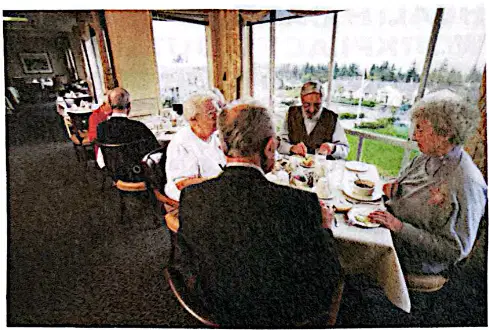
What type of facility is shown in the image?
Hospital
Assisted living complex
Private home
Nursing home
What is the main focus of home health care agencies?
The main focus is on the medical or nursing aspect of care.
The main focus is on recreational activities.
The main focus is on financial management.
The main focus is on transportation services.
Self-employed home health aides are responsible for paying 100% of their Social Security taxes.
True
False
Which system was implemented in the year 2000 to influence how home health agencies are paid?
Diagnosis-related group (DRG)
Prospective Payment System (PPS)
Outcome and Assessment Information Set (OASIS)
Medicaid
Fill in the blank: The Outcome and Assessment Information Set (OASIS) is used to standardize _______ throughout the country.
assessment data collection
patient billing procedures
medical equipment distribution
insurance claim processing
At what age can individuals in the United States apply for Medicare insurance if they were born before 1939?
Once they are disabled or if they were born before 1939.
At age 50 regardless of disability.
At age 21 if they have a job.
Only after reaching age 70.
To qualify for Medicare reimbursement for home health, an individual must be _________.
confined to home
over 65 years old
receiving hospice care
a veteran
To qualify for Medicare reimbursement for home health, an individual must be under the care of a ________ who certifies the need for care.
doctor
nurse
social worker
pharmacist
Which of the following is NOT a requirement to qualify for Medicare reimbursement for home health?
Confined to home
Under the care of a doctor
In need of skilled nursing care, physical therapy, or speech therapy
Must be over 70 years old
Medicaid is a federally and state-funded program that pays for health care services for persons whose income is below a certain amount.
True
False
Long-term care insurance may cover from _______ months up to _______ years.
12 months, 5 years
6 months, 2 years
24 months, 10 years
18 months, 7 years
Health maintenance organizations (HMOs) are examples of managed care.
True
False
Which of the following is covered by Medicare Part A?
Outpatient hospital care
Hospice care
Diagnostic tests
Durable medical equipment
What is an acute illness?
An acute illness is one that arises quickly, requires immediate care, and can be expected to go away, such as a cold, flu, or appendicitis.
An acute illness is a long-term condition that develops slowly and lasts for years, such as diabetes or hypertension.
An acute illness is a genetic disorder present from birth and cannot be treated.
An acute illness is a psychological condition that only affects mental health.
What is a chronic illness?
A chronic illness is a long-standing health problem, such as Alzheimer's or Parkinson's disease, or arthritis.
A chronic illness is a health problem that lasts only a few days.
A chronic illness is a health problem that can be cured quickly with medication.
A chronic illness is a minor injury like a sprain or bruise.
What does developmentally disabled mean?
Developmentally disabled means the person has a severe chronic emotional or physical disability that occurs before the age of 22, such as cerebral palsy or Down syndrome.
Developmentally disabled means the person has a temporary illness that can be cured with medication.
Developmentally disabled means the person has a minor injury that heals quickly.
Developmentally disabled means the person is gifted in multiple areas.
What is a terminal illness?
A terminal illness is one that is expected to result in death within a limited time period.
A terminal illness is one that can be cured with medication.
A terminal illness is a minor health issue.
A terminal illness is a temporary condition that resolves on its own.
Home care clients represent different cultures and ethnic groups. Which of the following is NOT mentioned as a group represented among home care clients?
Hispanics
Asians
Europeans
Australians
Which religions are mentioned as being practiced by home care clients?
Protestantism, Catholicism, Judaism, Islam, Buddhism
Hinduism, Sikhism, Jainism, Shinto, Taoism
Zoroastrianism, Confucianism, Bahá'í Faith, Animism, Paganism
Scientology, Rastafarianism, Wicca, Druidism, Unitarianism
According to the passage, what must a home health aide do when caring for clients from different cultures and religions?
Accept the practices of others, be sensitive to the client's needs, follow instructions given by the case manager, and not judge clients.
Impose their own beliefs and practices on the client.
Ignore the instructions given by the case manager and follow personal preferences.
Judge clients based on their cultural and religious practices.
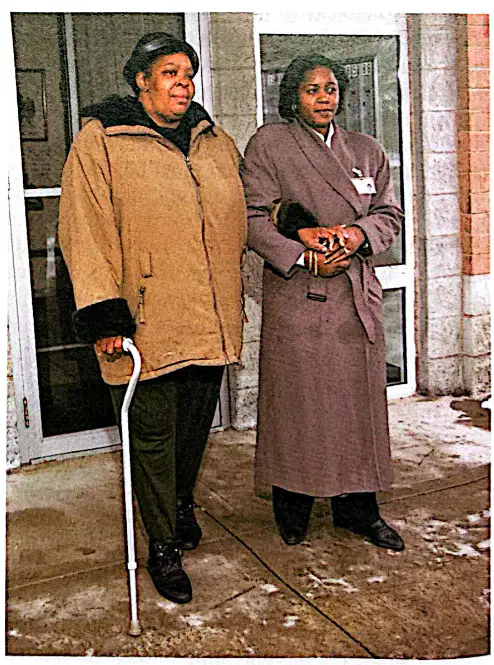
Figure 1-5 shows home health aide clients. What does this figure represent?
Home health aide clients represent many cultures.
Home health aide clients are all from the same age group.
Home health aide clients are only from one gender.
Home health aide clients represent only one ethnicity.
Which of the following is NOT a reason for the increasing trend toward home care?
Rising healthcare costs
Advancements in medical technology
Preference for institutional care
Aging population
Select two main services provided by the home health aide.
Personal care and assistance with daily activities
Financial planning and investment advice
Legal representation and court appearances
Automobile repair and maintenance
Select two differences between Medicare and Medicaid.
Medicare is for people over 65; Medicaid is for low-income individuals.
Medicare covers only children; Medicaid covers only seniors.
Medicare is funded by states; Medicaid is funded by the federal government only.
Medicare is for low-income individuals; Medicaid is for people over 65.
One example of a managed care organization is a:
Nursing home
HMO (health maintenance organization)
Department store
School
Payment for the home health aide services is collected by the agency that assumes responsibility for your client. These payments may come from:
Medicare
Medicaid
The client
Any of the above
Home health aide care involves:
Client care and housekeeping activities
Supervising client's care
Laundry and wallpapering
Client care and giving injections
A hospice cares for clients who are:
Chronically ill
Acutely ill
Terminally ill
Developmentally disabled
A home health aide needs to be aware of the client's:
Cultural differences
Physical needs
Family situations
All of the above
Your mother, who is 80 years old, has to be admitted to a long-term care facility. Her only income is from Social Security, which is $800 a month. She has no other income or assets. What is the name of the federal and state fund that will help pay for her care in a long-term care facility?
Medicaid
Medicare
Social Security Income
Supplemental Nutrition Assistance Program (SNAP)
Name the act that was passed in 1987, which mandates training guidelines for home health aides.
Omnibus Budget Reconciliation Act (OBRA)
Health Insurance Portability and Accountability Act (HIPAA)
Affordable Care Act (ACA)
Patient Protection Act
__________ is a health care specialist who works with a client to improve their ability to hear and speak.
Speech therapist
Physiotherapist
Nutritionist
Radiologist
Adrian Z has just been placed on kidney dialysis and is waiting for a kidney transplant. The home health aide drives him to the local hospital for kidney dialysis three times a week. He is 68 years of age and is on Medicare Part A and Part B. Medicare will pay for the cost of his kidney dialysis.
True
False
An example of an acute illness is Alzheimer's disease.
True
False
An important duty of a home health aide is to report and document changes in the client behavior.
True
False

