
 Worksheets
For Evan Bryant
Total questions: 47
Worksheet time: 26mins
The first step in the problem solving process is _____
evaluate the possible solutions
problem identification
formulate possible solutions
analyze the problem
The last step in the problem solving process is _____
evaluate the chosen solution
problem identification
formulate possible solutions
analyze the problem
Identifying, defining, selecting, implementing and evaluating are all components of the _____ process.
scientific
random selection
engineering design
virtual
At which step in the Engineering Design Process is the need for a new product or solution noticed?
Identifying
Defining
Selecting
Implementing
Evaluating
At which step in the Engineering Design Process is the criteria and constraints broken down?
Identifying
Defining
Selecting
Implementing
Evaluating
At which step in the Engineering Design Process is a written design proposal written up and drawings produced?
Identifying
Defining
Selecting
Implementing
Evaluating
At which step in the Engineering Design Process is a prototype built?
Identifying
Defining
Selecting
Implementing
Evaluating
At which step in the Engineering Design Process does extensive testing take place?
Identifying
Defining
Selecting
Implementing
Evaluating
One creative method of increasing the number of engineering design alternatives is _____.
computer-aided manufacturing
brainstorming
optimizing
computer-aided design
Which one of the following is often included in a design proposal?
multiple design proposals show variations in the design and materials
multiple competing engineering firms the client might use
a list of the suppliers of raw materials
a list of the previously discarded solutions
Which one of the following is an engineering method for analyzing a product's strengths and weaknesses?
Coordinate Measurement Machine (CMM) analysis
Failure Mode and Effects Analysis (FMEA)
Computer Aided Engineering (CAE)
Continuous Process Improvement (CPI) analysis
_____ is an engineering method used to identify, analyze, and prioritize potential failure modes in a product or process, assessing the impact of these failures and determining their potential causes. This helps in identifying the strengths and weaknesses of a design.
Coordinate Measurement Machine (CMM) analysis
Failure Mode and Effects Analysis (FMEA)
Computer Aided Engineering (CAE)
Continuous Process Improvement (CPI) analysis
_____ is a precise method used in engineering and manufacturing to measure the physical geometrical characteristics of an object. This method uses a device that uses a probe to determine the exact coordinates of points on a workpiece’s surface, allowing engineers to analyze the dimensions, shape, and size of parts to ensure they meet design specifications.
Coordinate Measurement Machine (CMM) analysis
Failure Mode and Effects Analysis (FMEA)
Computer Aided Engineering (CAE)
Continuous Process Improvement (CPI) analysis
_____ refers to the use of computer software to assist in engineering tasks such as design, analysis, and simulation of products. This process uses tools to help engineers test and optimize product designs virtually, reducing the need for physical prototypes and speeding up the development process.
Coordinate Measurement Machine (CMM) analysis
Failure Mode and Effects Analysis (FMEA)
Computer Aided Engineering (CAE)
Continuous Process Improvement (CPI) analysis
_____ is a systematic approach aimed at continually improving processes, systems, and products over time. It focuses on making incremental changes that enhance efficiency, quality, and performance, rather than relying on large-scale overhauls. This process is rooted in methodologies like Lean, Six Sigma, and Total Quality Management (TQM), which emphasize ongoing progress through small, sustainable improvements.
Coordinate Measurement Machine (CMM) analysis
Failure Mode and Effects Analysis (FMEA)
Computer Aided Engineering (CAE)
Continuous Process Improvement (CPI) analysis
Why is evaluation an important step in the design solution?
It helps determine whether the design is valid
It provides cost analysis
The product can be sold based on the outcome
The product design is easier to reproduce after a good evaluation
Brainstorming is a technique frequently used in the design process because it _____.
keeps the group on track
provides a forum for criticism
allows group members to vent frustration
allows a large number of ideas to be generated
One of the final steps to the design solution process is to _____.
confirm that the actual result coincides with the forecasted result
hypothesize what the outcome will be
monitor the controls
always have multiple solutions and test each one of them
What is iteration?
developing drastically different outcomes for an idea
going through the same process over and over again
moving from one problem solution to a new problem completely
completely abandoning a project for a new one
Why does the Engineering Design Process exist?
to make things more complicated
to ensure that every problem has a solution
to give a systematic way to solve all problems
to give people jobs so they can make a living
Put the 5 steps in the Engineering Design Process in order from first to last.
Identifying
Defining
Selecting
Implementing
Evaluating
Match the following
Identifying
Noticing a new need or problem to solve
Defining
Explaining the criteria and limitations
Selecting
Writing a solution proposal/drawing
Implementing
Building a prototype
Evaluating
Testing the idea to confirm solution
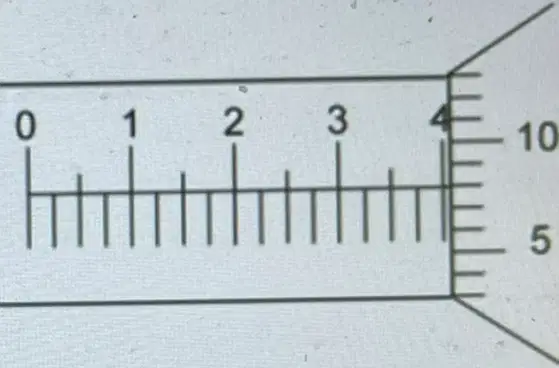
The reading on the micrometer shown is closest to:
.408
.412
.458
.480
For the thread call out 3/4 - 12 UNF 2B, the 2 stands for:
course pitch
threads per inch
class of threads
thread form
For the thread call out 3/4 - 12 UNF 2B, the B stands for:
internal threads
threads per inch
class of threads
external threads
For the thread callout 3/4 - 12 UNF 2B, the 3/4 stands for:
The length of the threaded section in inches.
The nominal major diameter of the thread in inches.
The number of threads per inch.
The class of fit for the thread.
For the thread call out 3/4 - 12 UNF 2B, the UNF stands for:
internal threads
type of threads
class of threads
external threads
For the thread callout 3/4 - 12 UNF 2B, the 12 stands for:
The nominal major diameter of the thread in inches.
The number of threads per inch.
The thread class.
The type of thread series (coarse or fine).
The notation on a drawing, 1/8 = 1 means what?
Every 1/8 unit on the drawing represents 1 unit in real life.
Every 1 unit on the drawing represents 1/8 unit in real life.
The drawing is scaled up by a factor of 8.
The drawing is scaled down by a factor of 1/8.
The notation on a drawing, 1/8 = 1 means what?
1/8 inch equals 1 mm
the drawing has a ratio of 1:8
the parts are 1/8 smaller
1/8 inch equals 1 meter
Bolts and screws should be designated by the following data in which sequence shown below:
product name, nominal size, material and finish, product length for bolts and screws, and threads per inch
material and finish, nominal size, product name, threads per inch, product length for bolts and screws
nominal size, threads per inch, product length for bolts and screws, product name, and material and finish
product length for bolts and screws, material and finish, product name, threads per inch, and nominal size
The first requirement for product development is to:
develop a plan
specify the parts and their dimensions
identify the necessary tools
create a computer simulation
A digital computer used for the automation of electromechanical processes is called a/an:
AGV
TQM
PLC
CAD
The effort to improve the quality of products and attain cost savings by the manufacture of products with fewer defects is a continuous:
benchmark
requisition
invention
goal
A design firm is bidding to design a part for a large automaker. As part of the proposal for submission, the ______ for the part should be included in the design solution submitted to the client.
Statistical Process Control charts
manufacturing method
time study for the manufacturing
material specification
Having things done out-of-house instead of getting them done in-house is called:
downsizing
globalization
restructuring
outsourcing
Which of the following can measure length to an accuracy of 0.001 inch?
scale
micrometer
ruler
meterstick

What is the reading indicated on the external scale of the vernier caliper shown?
.578
.724
.974
1.024
The purpose of the just-in-time material system is to control:
throughput
ergonomics
safety
inventory
Which of the following is the most precise tool to measure the dimension of a part?
draftsman's scale
plug gauges
vernier calipers
snap gauges
When a micrometer, applied to a telescoping hole gauge, reads 6.488 inches for the diameter of a hole that is to be bored to 6.494 inches, the hole is considered to be:
0.006-inch oversize
0.006-inch undersize
0.003-inch oversize
0.003-inch undersize
Manufacturing product quality control often includes:
financial analysis data
production flow charts
maintenance guidelines
precision measuring equipment
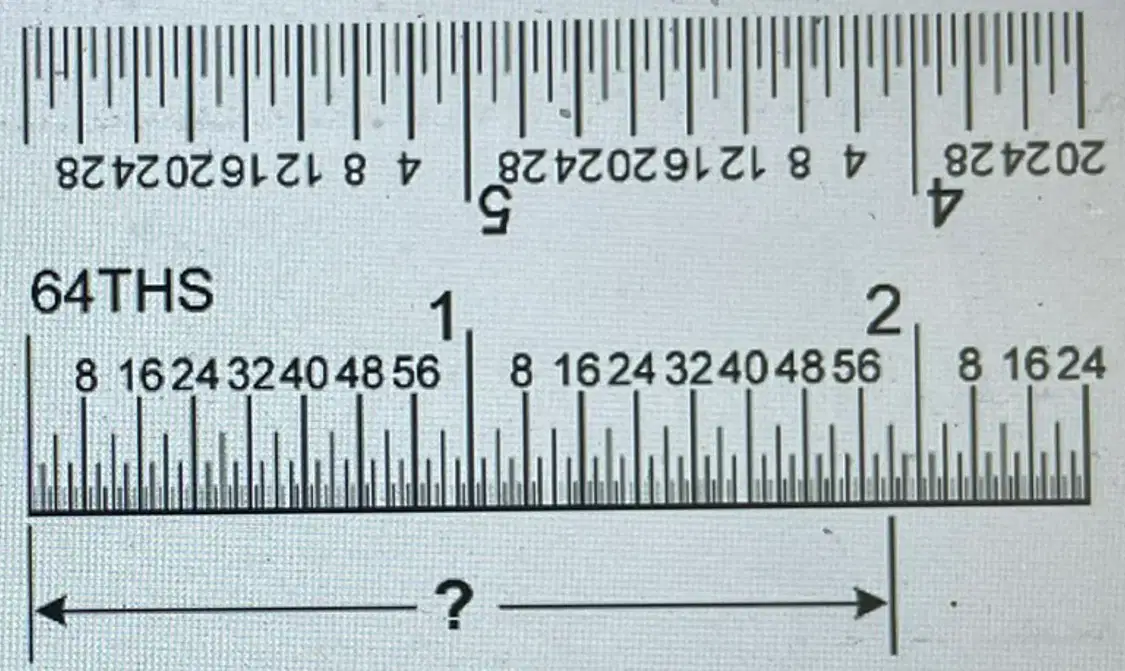
The measurement on the scale is:
1-7/8 inch
1-15/16 inch
1-29/32 inch
1-63/64 inch
A technology that deals with automated machines and can take the place of humans in hazardous or manufacturing processes is:
aluminum extrusion
statistical process control
industrial robots
rapid deploy
The acronym, OEM, refers to:
Operations Efficiency Monitoring
Original Equipment Manufacturer
Only Electrical Manufacturers
Open Equipment Manufacturing
After a new airplane is developed, the next step is to build a prototype. The final step, prior to full production, is to:
sell
test
advertise
polish
Prior to the 20th Century, most manufactured products were made individually by hand. Between 1908 and 1915, Henry Ford was largely credited as the pioneer of the assembly line in the manufacturing process. This process is only possibly because of __________ parts.
plastic
interchangeable
metal
sophisticated

