
Font size
 Worksheets
Objectives: CPU and Von Neumann Architecture
Total questions: 90
Worksheet time: 45mins
What is the role of the CPU in a computer system?
To store data
To execute instructions and control operations
To display output
To manage network connections
What is the fetch-execute cycle in CPU operation?
The fetch-execute cycle is the process by which the CPU retrieves an instruction from memory (fetch), decodes it, and then executes it.
The fetch-execute cycle is the process by which the CPU transfers data between input and output devices.
The fetch-execute cycle is the process by which the CPU manages power consumption during operation.
The fetch-execute cycle is the process by which the CPU stores data permanently in memory.
Which register in the Von Neumann architecture holds the address of the memory location to be accessed?
MAR (Memory Address Register)
MDR (Memory Data Register)
CIR (Current Instruction Register)
ACC (Accumulator)
The MDR (Memory Data Register) is used to _______.
hold the data being transferred to or from memory
store the address of the next instruction
perform arithmetic operations
control the flow of instructions
Which register in the Von Neumann architecture contains the current instruction being executed?
MAR
MDR
CIR
PC
The Program Counter (PC) is responsible for _______.
holding the address of the next instruction to be executed
storing data temporarily during execution
controlling input/output operations
managing memory allocation
What does the Accumulator (ACC) do in the CPU?
Stores instructions
Performs arithmetic and logic operations
Holds intermediate results
Controls input/output operations
Which of the following is NOT a common CPU component?
A) ALU (Arithmetic Logic Unit)
B) CU (Control Unit)
C) Registers
D) Hard Disk
The ALU (Arithmetic Logic Unit) is responsible for _______.
performing arithmetic and logic operations
storing data permanently
controlling input and output devices
managing system memory
The CU (Control Unit) manages and coordinates the activities of the CPU.
True
False
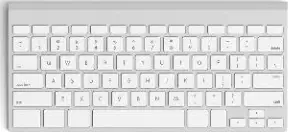
Identify the input and output devices for these computer systems.
Input devices include keyboard and mouse; output devices include monitor and printer.
Input devices include monitor and printer; output devices include keyboard and mouse.
Input devices include CPU and RAM; output devices include hard disk and SSD.
Input devices include speakers and headphones; output devices include microphone and webcam.
Which of the following are input devices for a laptop?
Keyboard, buttons, trackpad, microphone
Speakers, display
CPU
GPS sensor
Which of the following are input devices for a smartphone?
Microphone, buttons, GPS sensor, gyroscopic sensor, touch part of the touchscreen
Speakers, display
CPU
Keyboard, trackpad
Which devices use speakers and display as output devices?
Laptop and smartphone
Laptop only
Smartphone only
CPU
What is the processing unit called in a computer?
CPU
RAM
Monitor
Keyboard
Which of the following is NOT one of the main components of a computer?
Main Memory
Input Devices
Output Devices
Printer
Fill in the blank: The ________ is responsible for processing instructions and managing the flow of information in a computer.
Central Processing Unit (CPU)
Random Access Memory (RAM)
Hard Disk Drive (HDD)
Graphics Processing Unit (GPU)
Match the following computer components to their functions:
Stores data and instructions temporarily
Main Memory
Allows the user to enter data
Input Devices
Displays or outputs information
Output Devices
Stores data and instructions permanently
Secondary Storage
The Central Processing Unit (CPU) is the main component that controls all other components in a computer.
True
False
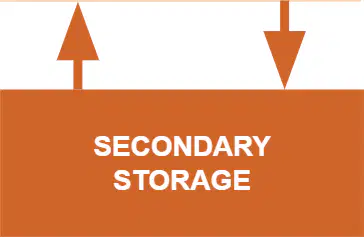
Which component of a computer is used to store data and instructions permanently?
Main Memory
Input Devices
Secondary Storage
Output Devices
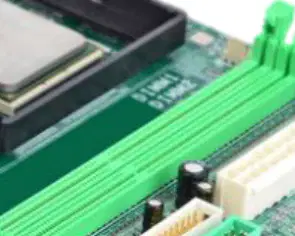
Identify the computer component shown in the image.
RAM (Random Access Memory)
Hard Disk Drive
Graphics Card
Motherboard
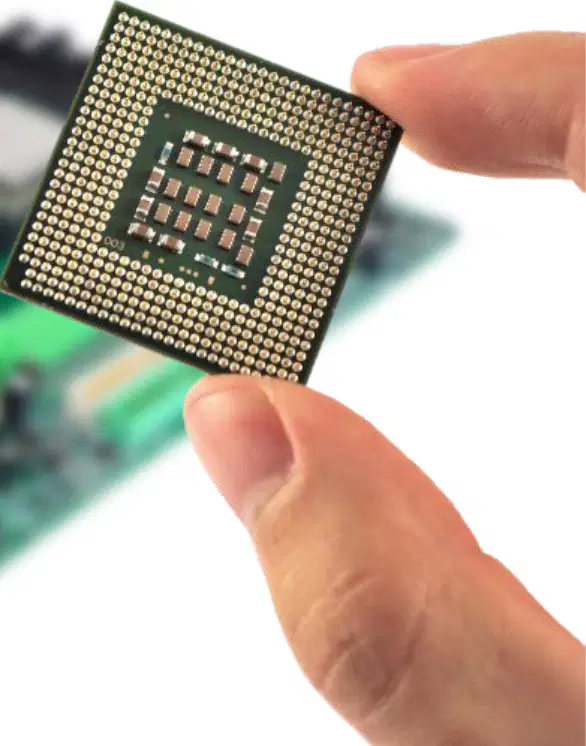
What component of the computer is being held in the hand?
CPU (Central Processing Unit)
RAM (Random Access Memory)
Hard Drive
Graphics Card
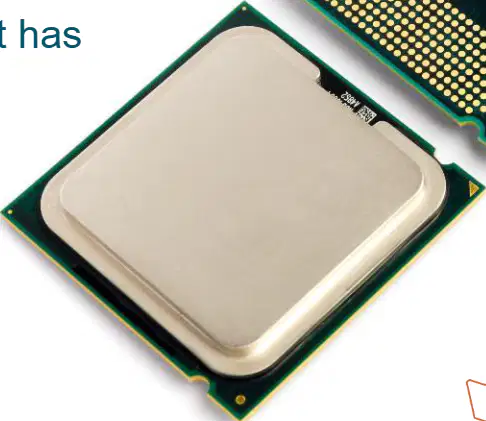
The organ in the human body that it is often compared to is:
Heart
Liver
Brain
Kidney
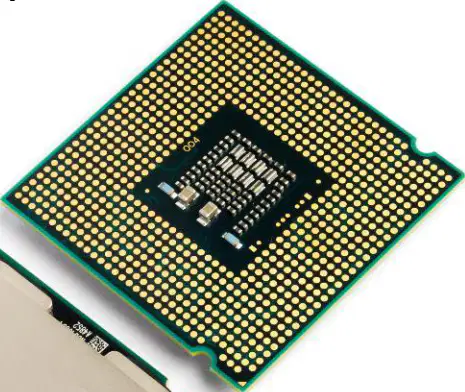
What are the similarities it has to this organ?
Both have similar functions in filtering substances.
Both are located in the same part of the body.
Both are made of bone tissue.
Both are responsible for producing hormones.

What is the main purpose of the CPU?
To store data
To process instructions
To display graphics
To connect to the internet

Fill in the blank: The CPU is often thought of as being the ______ of the computer.
brains
heart
engine
memory

The way that a brain works is very similar to a CPU.
True
False

What does the CPU do when you run a program?
It stores the program
It processes the instructions and data
It displays the results
It connects to the internet
Who had the idea of storing the program instructions as well as the data in memory in 1943-44?
Alan Turing
John von Neumann and his colleagues
Charles Babbage
Bill Gates
Fill in the blank: The ________ was born when program instructions as well as data were stored in memory.
stored-program computer
mainframe computer
analog computer
supercomputer
Von Neumann architecture: Program instructions and the data the programs are using are both stored in the same memory. What does the CPU access from the same RAM?
Only instructions
Only data
Both instructions and data
Only program counter
In Von Neumann architecture, program instructions and ______ are stored in the same memory.
data
registers
cache
ALU
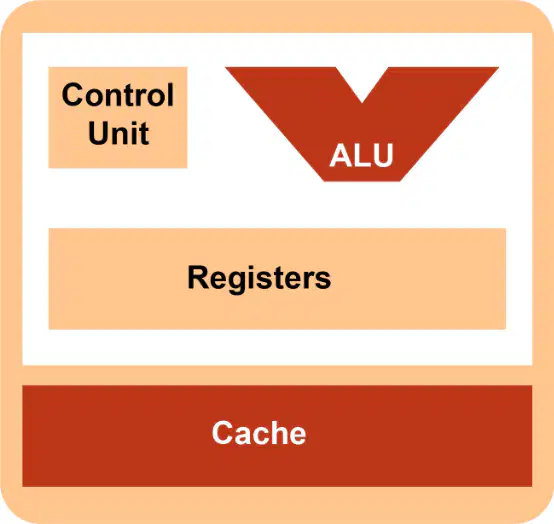
Refer to the diagram of the CPU. Which of the following is NOT a major component of the CPU?
Control Unit
Arithmetic-Logic Unit (ALU)
Registers
Hard Drive
Fill in the blank: The CPU has two major components called the _______ and the Arithmetic-Logic Unit (ALU).
Control Unit
Memory Unit
Register Unit
Cache Unit
Which statement is TRUE about registers?
Registers are located outside the CPU
Registers are very fast memory locations in the CPU itself
Registers are slower than RAM
Registers are used for permanent storage
Cache is located on the CPU. Is it slower to access than registers but faster than RAM?
True
False
Match the following CPU components to their functions:
Performs calculations and logic operations
Directs operations within the CPU
Directs operations within the CPU
Performs calculations and logic operations
Very fast memory location in the CPU
Very fast memory location in the CPU
Slower to access than registers but faster than RAM
Slower to access than registers but faster than RAM
Fill in the blank: The Program Counter (PC) holds the address of the ________ instruction to be executed.
next
previous
current
first
Fill in the blank: The Memory Address Register (MAR) holds the memory address of the ________ instruction, and then the data that it uses, so that these can be fetched from memory.
current
previous
next
random
Fill in the blank: The Memory Data Register (MDR) holds the actual ________, and then the data that has been fetched from memory.
instruction
address
operation
register
Fill in the blank: The Current Instruction Register (CIR) holds the instruction currently being ________ or decoded.
executed
stored
deleted
transferred
Fill in the blank: The Accumulator (ACC) holds the result of an instruction before it is transferred to ________.
memory
register
cache
ALU
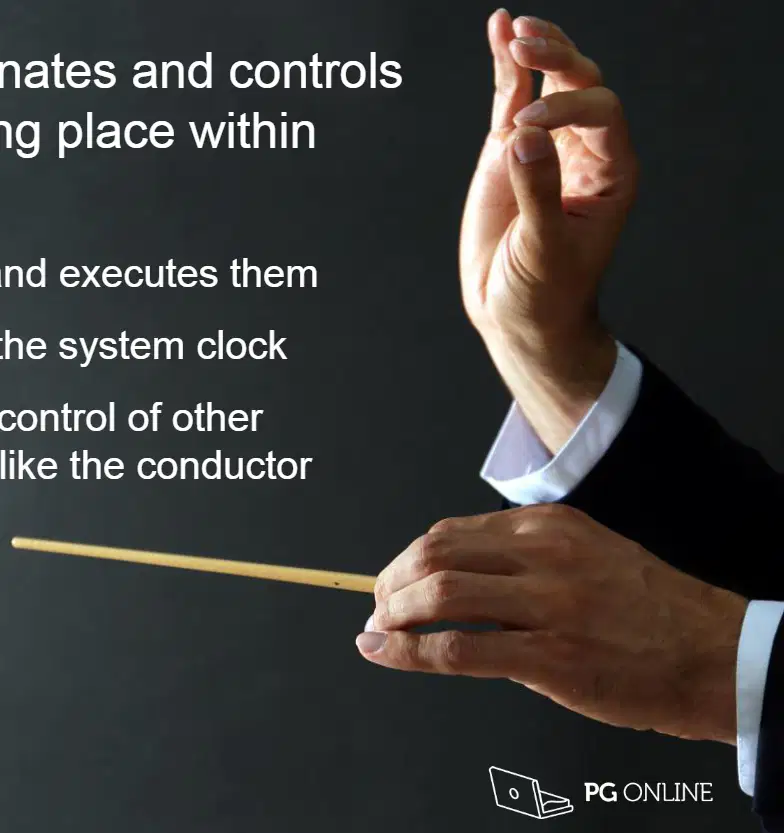
What does the control unit do with instructions in the CPU?
It decodes instructions and executes them.
It stores instructions permanently.
It increases the clock speed of the CPU.
It manages the power supply to the CPU.

What does the control unit receive signals from in the CPU?
It receives signals from the system clock.
It receives signals from the hard disk.
It receives signals from the printer.
It receives signals from the monitor.

The control unit directs the timing and control of other parts of the CPU, much like the conductor of an orchestra.
True
False
What is the main function of the Arithmetic Logic Unit (ALU)?
To store data
To perform arithmetic and logical operations
To display output
To manage input devices
Which logical operations are carried out by the ALU?
A) AND, OR, NOT
B) ADD, SUBTRACT, MULTIPLY
C) SAVE, LOAD, DELETE
D) PRINT, SCAN, COPY
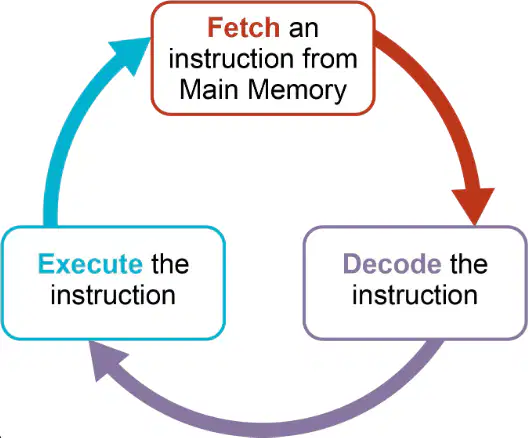
What are the three operations that the CPU repeats?
Fetch, Decode, Execute
Load, Store, Transfer
Input, Output, Process
Read, Write, Erase
Which operation causes the next instruction and any data involved to be fetched from main memory?
A) Fetch
B) Decode
C) Execute
Which operation decodes the instruction?
Fetch
Decode
Execute
Which operation is when the instruction is executed?
Fetch
Decode
Execute
What does the Program Counter hold?
The value of the last instruction executed
The address of the next instruction to be executed
The result of the last calculation
The address of the first instruction
The Program Counter is incremented (increased by 1) as soon as that instruction has been ________.
fetched
executed
decoded
stored
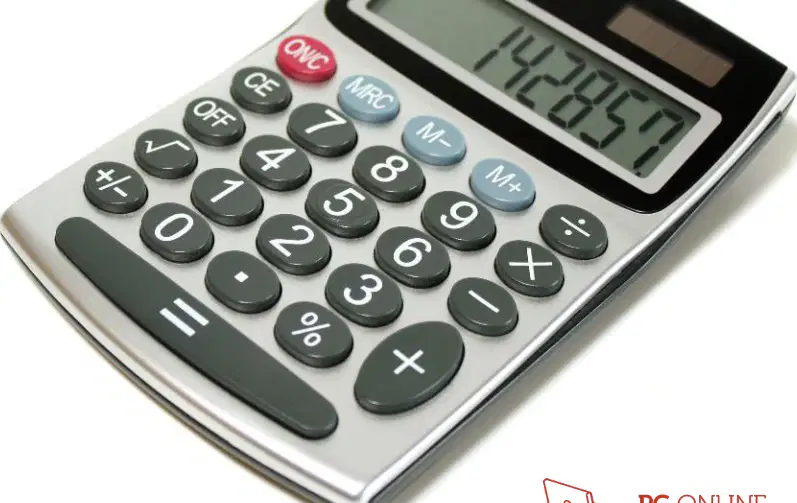
Fill in the blank: The accumulator (ACC) is where _______ and logic results are temporarily stored, much like the M+ function on a calculator.
arithmetic
data
instructions
addresses
In the FETCH stage of the F-E cycle, what is copied from the Program Counter (PC) to the Memory Address Register (MAR)?
The instruction
The address of the instruction
The data
The result
In the FETCH stage of the F-E cycle, the instruction at the address is fetched from memory and copied to the _________
Memory Data Register (MDR)
Program Counter (PC)
Accumulator (ACC)
Instruction Register (IR)
What does the Control Unit do in the F-E cycle?
Executes the instruction
Decodes the instruction and decides if data needs to be fetched
Stores the instruction
Copies the instruction to the MDR
If data needs to be fetched, the MAR is used to hold the address of the ______ to be used in the instruction.
data
register
operation
opcode
The data is fetched and copied to the MDR.
True
False
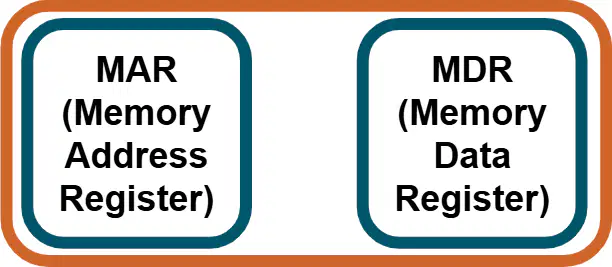
What does MAR stand for?
Memory Address Register
Main Arithmetic Register
Machine Access Register
Memory Allocation Resource
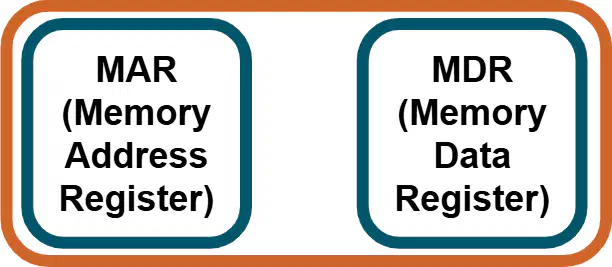
What does MDR stand for? Fill in the blank: MDR stands for _________.
Memory Data Register
Main Data Repository
Machine Data Resource
Module Data Reference
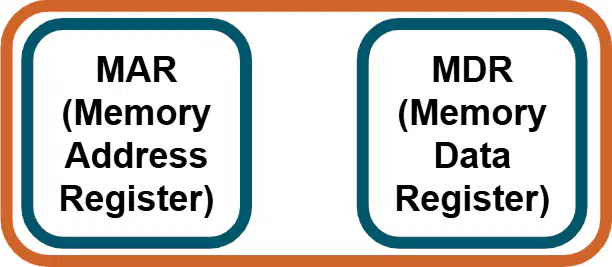
Which of the following best describes the function of the MAR?
Keeps hold of data until it’s ready to be used by the CPU
Knows where to look for data in RAM
Executes instructions
Stores instructions
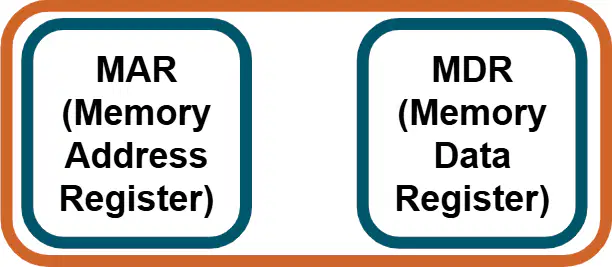
Explain how the MAR and MDR work together in the CPU architecture.
The MAR holds the memory address and the MDR holds the data being transferred to or from that address.
The MAR holds the data and the MDR holds the memory address.
Both MAR and MDR store instructions for the CPU.
The MAR and MDR are used only for arithmetic operations.
What does the current instruction register (CIR) hold?
The instruction that is being executed or decoded at the moment
The data that is being stored in memory
The address of the next instruction
The result of the last operation
The current instruction register (CIR) is also known as the _________?
instruction register (IR)
program counter (PC)
memory address register (MAR)
accumulator (ACC)
The name 'current instruction register' (CIR) indicates that it holds the instruction that is currently being executed.
True
False
What happens once the instruction is loaded from memory?
It is stored in the current instruction register (CIR)
It is executed immediately
It is sent to the ALU
It is deleted
Once the instruction is in the CIR, what is the next step?
It is decoded
It is executed
It is stored in memory
It is sent to the cache
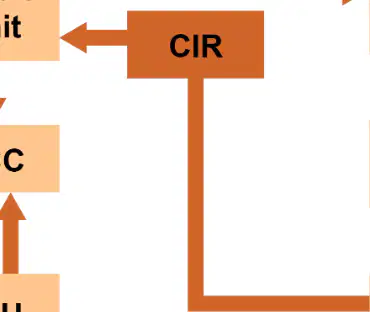
What does the acronym 'CIR' stand for in the context of processor architecture?
Current Instruction Register
Central Interrupt Register
Control Interface Register
Cache Index Register

What does the acronym 'PC' stand for in the context of processor architecture?
Program Counter
Processor Core
Primary Cache
Peripheral Controller
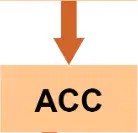
What does the acronym 'ACC' stand for in the context of processor architecture?
Accumulator
Arithmetic Control Circuit
Address Calculation Component
Access Control Channel
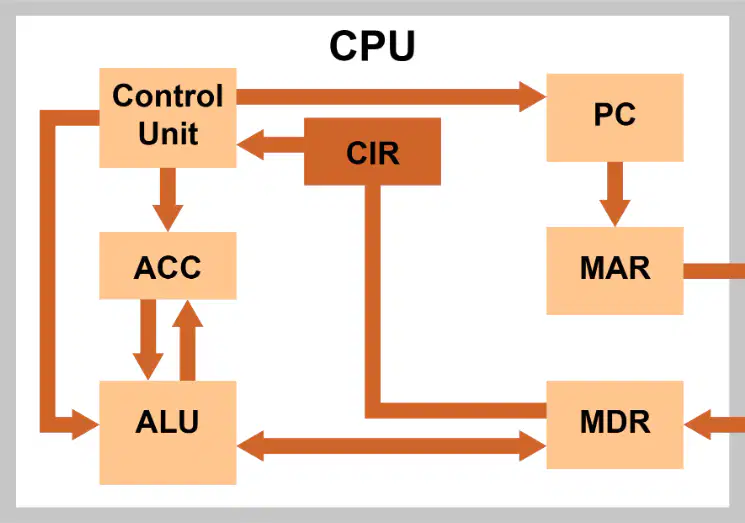
What does the acronym 'ALU' stand for in the context of processor architecture?
Arithmetic Logic Unit
Advanced Logic Unit
Analog Linear Unit
Application Layer Utility
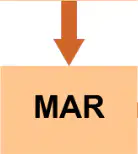
What does the acronym 'MAR' stand for in the context of processor architecture?
Memory Address Register
Main Arithmetic Register
Machine Access Register
Memory Allocation Register
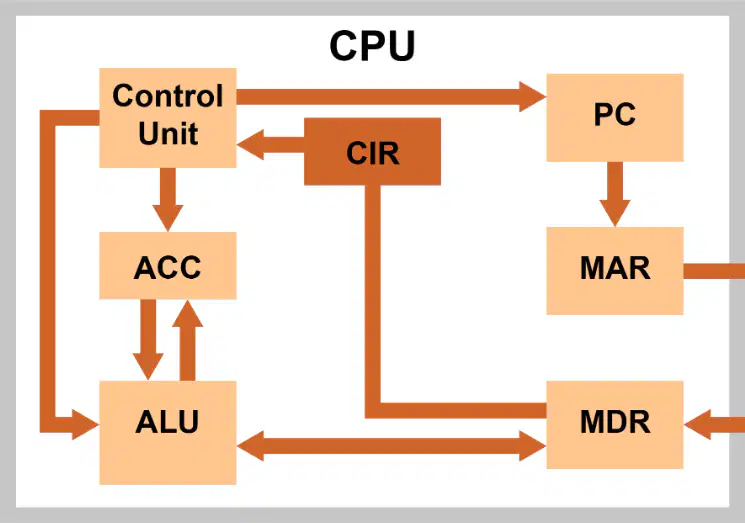
What does the acronym 'MDR' stand for in the context of processor architecture?
Memory Data Register
Main Data Router
Micro Data Receiver
Machine Data Register

What does the acronym 'RAM' stand for in the context of processor architecture?
Random Access Memory
Readily Available Memory
Rapid Access Module
Remote Access Machine
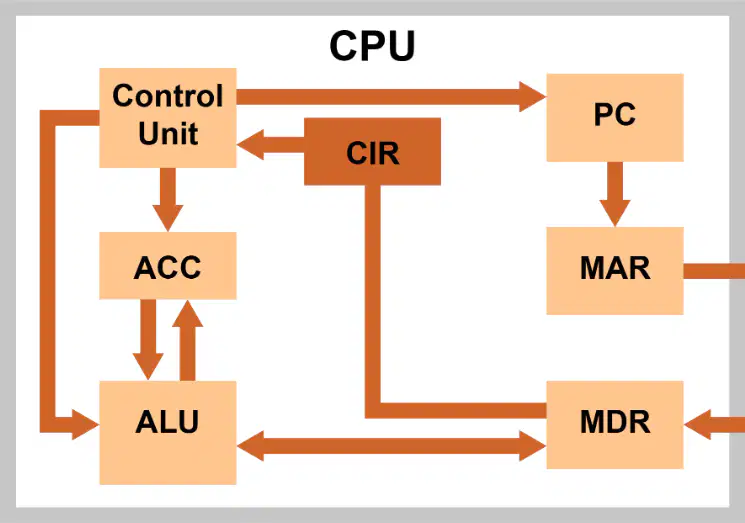
The Control Unit in a CPU is responsible for:
Coordinating and directing the operations of the computer
Storing data permanently
Performing arithmetic calculations
Displaying output on the monitor
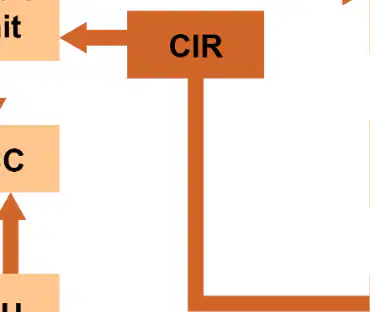
What does the Current Instruction Register (CIR) do in a CPU?
It holds the instruction currently being executed.
It stores the result of arithmetic operations.
It manages the flow of data between CPU and memory.
It controls the power supply to the CPU.

The Program Counter (PC) in a CPU:
stores the address of the next instruction to be executed
stores the result of arithmetic operations
controls the flow of data between CPU and memory
holds the current instruction being executed
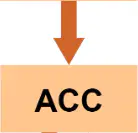
What does the Accumulator (ACC) do in a CPU?
It stores intermediate results of arithmetic and logic operations.
It controls the flow of instructions in the CPU.
It manages the memory addresses used by the CPU.
It handles input and output operations.
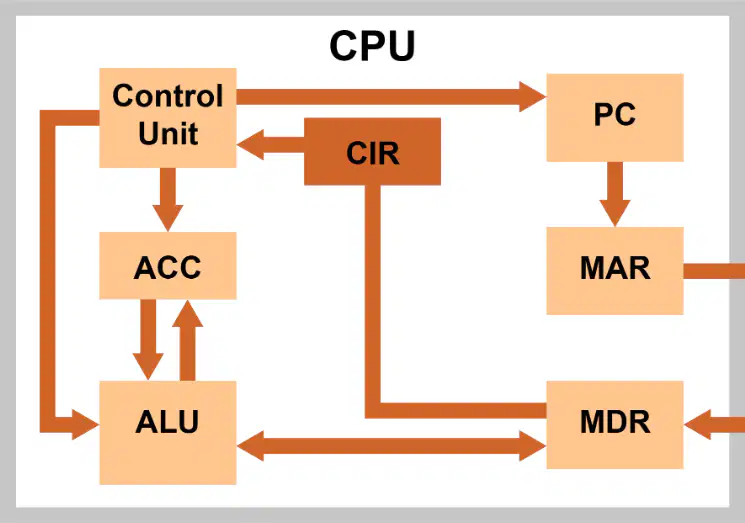
The Arithmetic Logic Unit (ALU) in a CPU is responsible for:
Storing data permanently
Performing arithmetic and logical operations
Managing input and output devices
Controlling the flow of instructions
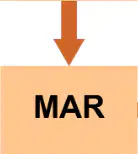
The Memory Address Register (MAR) in a CPU:
Stores the address of the memory location to be accessed.
Stores the data to be processed by the CPU.
Controls the flow of instructions in the CPU.
Performs arithmetic operations in the CPU.
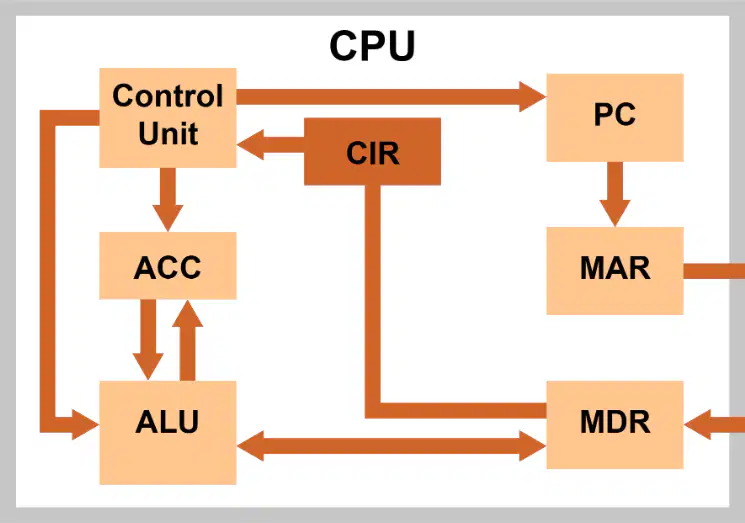
The Memory Data Register (MDR) in a CPU is responsible for:
Storing data being transferred to or from memory
Controlling the execution of instructions
Managing the address of the next instruction
Performing arithmetic operations

The RAM in a computer system:
Stores data and instructions temporarily for quick access by the CPU.
Provides permanent storage for files and programs.
Controls the input and output devices.
Manages the computer's power supply.
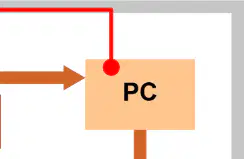
What does the Program Counter (PC) do in processor architecture?
Points to the next instruction.
Stores data temporarily.
Controls input/output operations.
Manages memory allocation.
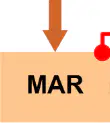
What is the function of the Memory Address Register (MAR) in processor architecture?
Stores the address of the instruction to be executed.
Stores the data to be processed.
Stores the result of an operation.
Stores the address of the next instruction.
What does the Accumulator (ACC) do in processor architecture?
Temporarily stores arithmetic results.
Controls the instruction flow.
Stores program counter value.
Manages input/output operations.
What is the function of the Arithmetic Logic Unit (ALU) in processor architecture?
Performs calculations and logic expressions.
Manages data storage and retrieval.
Controls input and output devices.
Handles network communication.
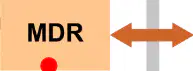
What does the Memory Data Register (MDR) do in processor architecture?
Stores the data to be sent/received from memory.
Controls the instruction execution sequence.
Stores the address of the next instruction.
Performs arithmetic and logic operations.
What is the function of Random Access Memory (RAM) in processor architecture?
Random Access Memory.
Permanent storage of data.
Processing instructions.
Controlling input/output devices.
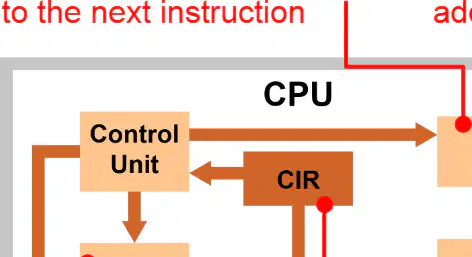
What does the Current Instruction Register (CIR) do in processor architecture?
Stores the current instruction to be decoded and executed.
Stores the result of the last executed instruction.
Holds the address of the next instruction to be fetched.
Manages the communication between CPU and memory.

