
 Worksheets
Part 1: Law of Contract Introduction and Elements Overview
Total questions: 119
Worksheet time: 3570secs

According to the introduction, what is the most accurate definition of a contract?
A written promise between individuals that is morally persuasive
A legally binding agreement between two or more parties, which is enforceable by law
An informal understanding that depends on mutual trust and social norms
A verbal arrangement that cannot be challenged in court
Which statement best captures the idea of a legally binding agreement?
An agreement that creates social obligations but no legal consequences
An agreement recognized by law so parties can be held accountable in court
A promise that only applies if the parties are friends
A policy statement that guides employee behavior but is not enforceable
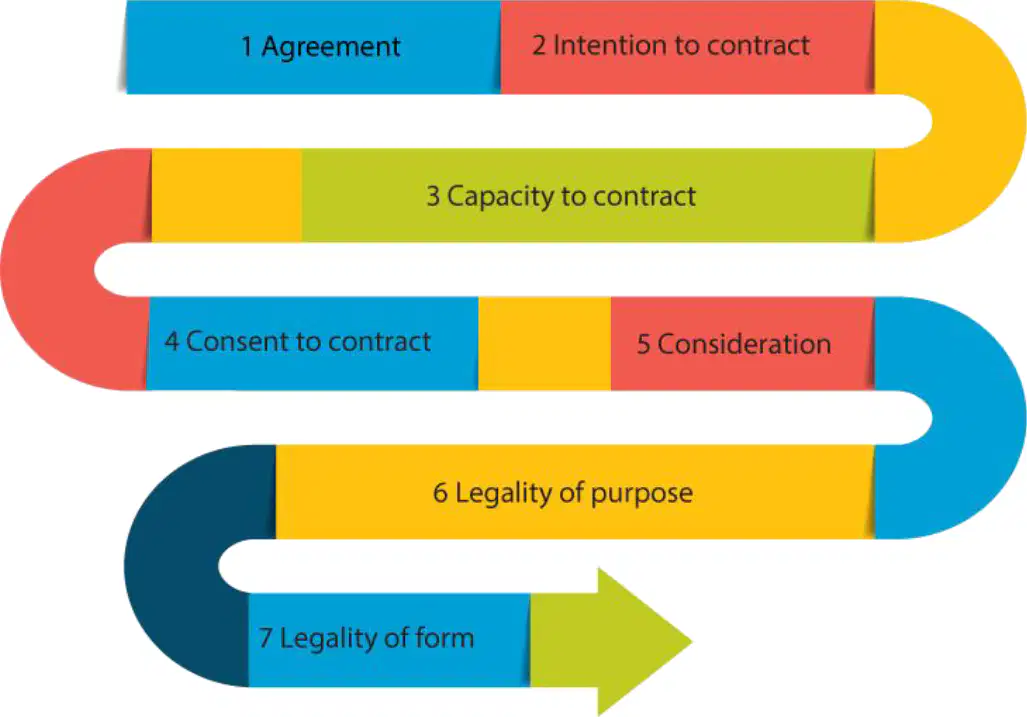
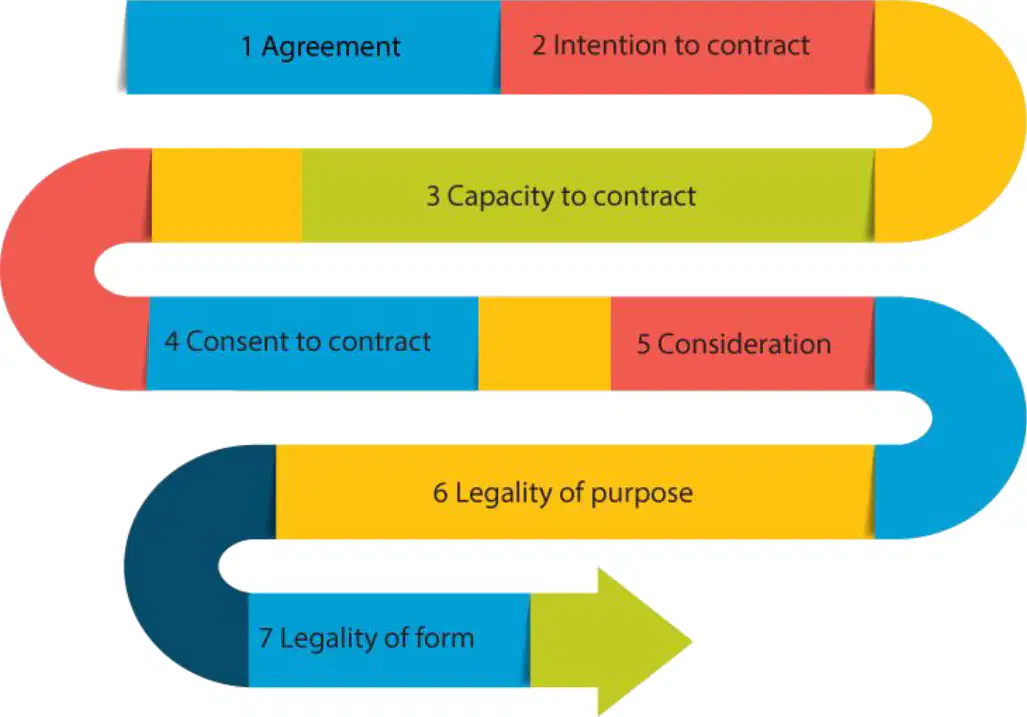
Which of the following lists shows two elements that must exist for a valid contract? Select all that apply.
Agreement and consideration
Intention to contract and legality of purpose
Warranty and cooling-off period
Capacity to contract and consent to contract
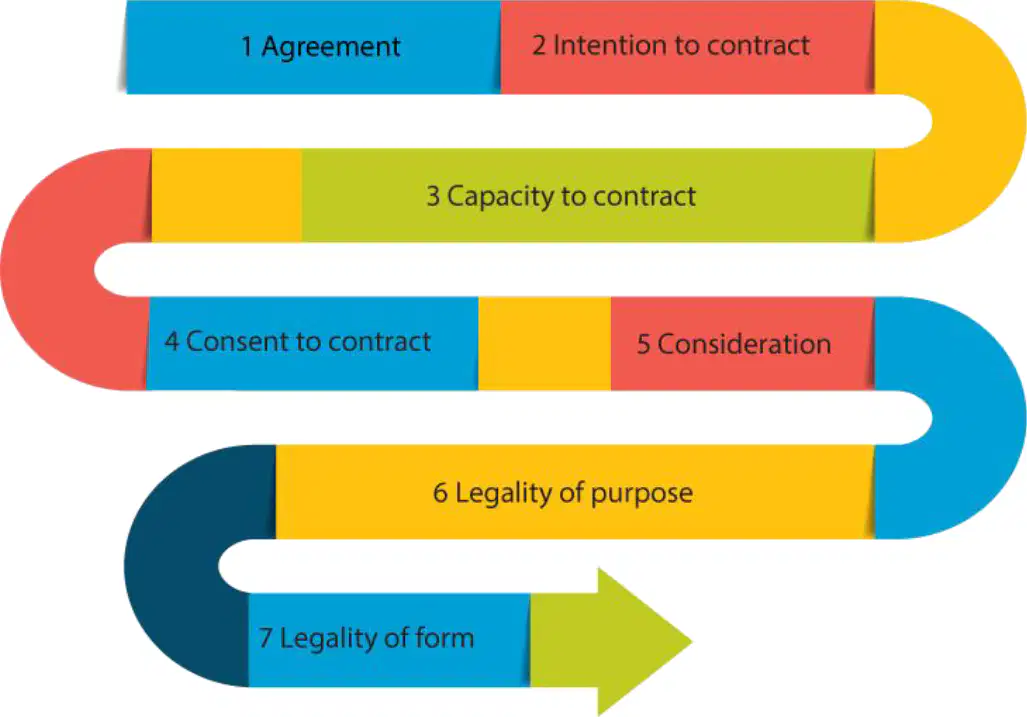
In the overview of elements, which item ensures the parties are permitted by law to enter the agreement?
Capacity to contract
Consent to contract
Legality of form
Agreement
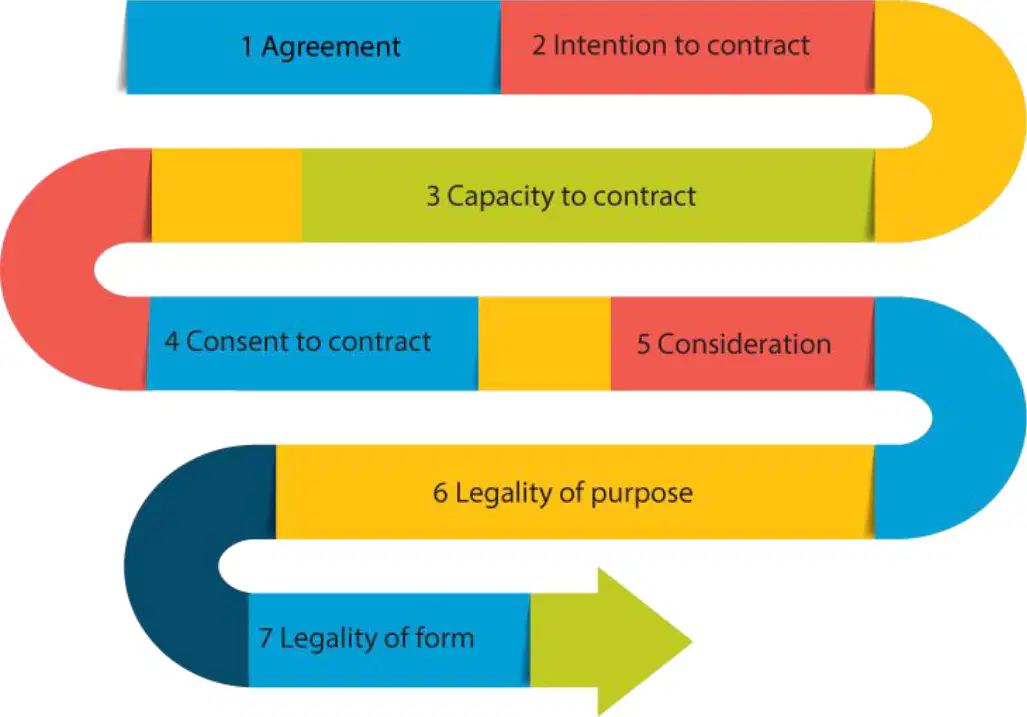
Which element focuses on whether the parties genuinely agree without pressure or misrepresentation?
Consideration
Consent to contract
Legality of purpose
Intention to contract
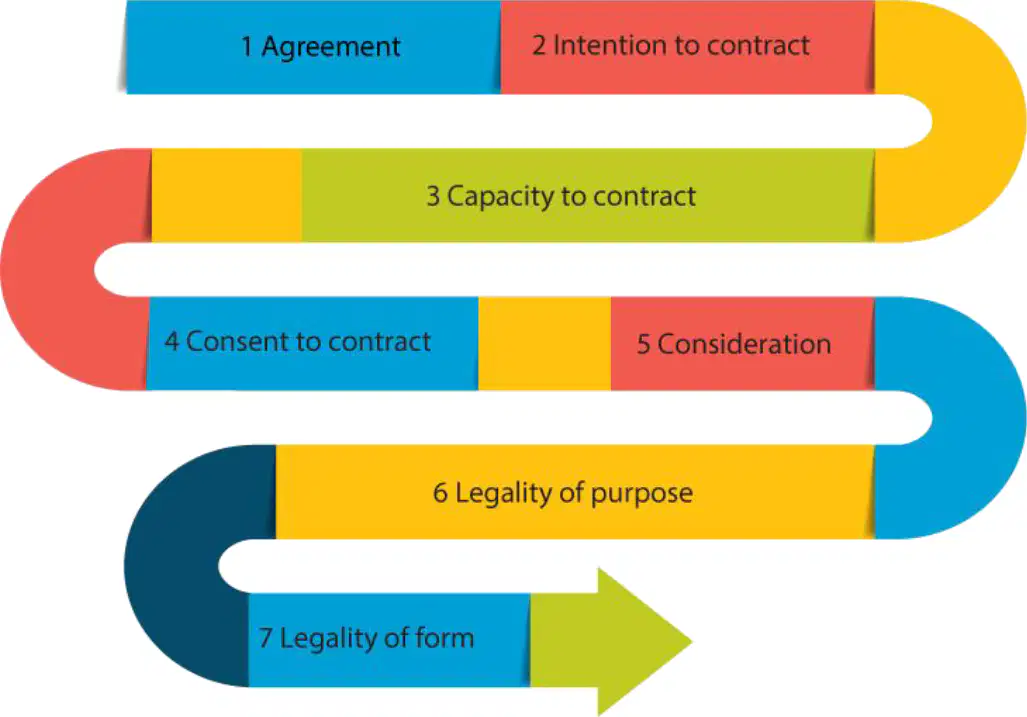
Which element relates to the requirement that the subject matter must be lawful and not against public policy?
Legality of purpose
Agreement
Capacity to contract
Legality of form
Which pair correctly matches an element to its core idea? Select all that apply.
Agreement — a clear offer and acceptance
Consideration — something of value exchanged between parties
Intention to contract — parties plan to be legally bound
Legality of form — contract must always be oral to be valid
According to the material, for an agreement to exist in contract law, what must occur between the parties?
A conditional offer is made and discussed informally
A clear, unconditional and complete offer is made by one party and accepted by the other
Both parties express interest without committing to terms
An invitation to treat is posted and later withdrawn
Which pair correctly lists the two parts that make up an agreement in contract law as presented?
Offer and consideration
Acceptance and capacity
Offer and acceptance
Intention and legality
Which statement best describes an offer made orally, as illustrated in the material?
A signed purchase order for a laptop
A statement like ‘I will give you €200 for that bicycle’
Posting a price tag in a shop window
Emailing general sales terms to customers
In the table shown, which is an example of an offer made by conduct?
Completing a written contract to buy a house
Saying, ‘I will give you €200 for that bicycle’
Consumer handing a newspaper and money to a sales assistant
Uploading standard terms on a website
Which option is NOT listed as a way an offer can be made in the material?
Orally
In writing
By conduct
By silence
Which statement best describes ‘revoked’ in the termination of an offer section?
The offer is rejected by the other party
The offer expires after a stated time limit
The offer is withdrawn before it is accepted by the other party
The offer becomes void because the contract is illegal
Which termination method is correctly matched with its description in the material?
Rejected — The offer is rejected by the other party
Lapse of time — A time limit may be imposed on the offer
Death — If the party making or receiving the offer dies
Revoked — The offer is accepted on new terms
Based on the acceptance definition shown, which action constitutes valid acceptance?
Accepting all terms of the offer orally, in writing or by conduct
Agreeing in principle while changing key terms later
Showing interest by asking for more information
Remaining silent after receiving the offer
Which scenario reflects ‘lapse of time’ as a termination of an offer?
A special offer on services ends after the advertised period
The offeree emails a refusal of the offer
The offeror withdraws the offer before acceptance
The offeree dies before responding
Which of the following best distinguishes an invitation to treat from an offer in the context of agreement?
An invitation to treat is a clear, unconditional and complete proposal ready for acceptance
An invitation to treat invites others to make offers; it is not itself an offer
An invitation to treat automatically forms a contract when acknowledged
An invitation to treat can only be made in writing

Which statement aligns with the material’s depiction of acceptance on the handshake image?
Acceptance requires a written signature only
Acceptance occurs when the person receiving the offer agrees to all terms, which can be done orally, in writing or by conduct
Acceptance is valid only after a cooling-off period
Acceptance can be inferred from silence if the offeror states it

According to the slide, an invitation to treat is best described as which of the following?
A legally binding promise to sell at the advertised price
A request for another party to make an offer that may be accepted or rejected
A final acceptance that creates a contract instantly
A counter-offer that changes the terms of a deal
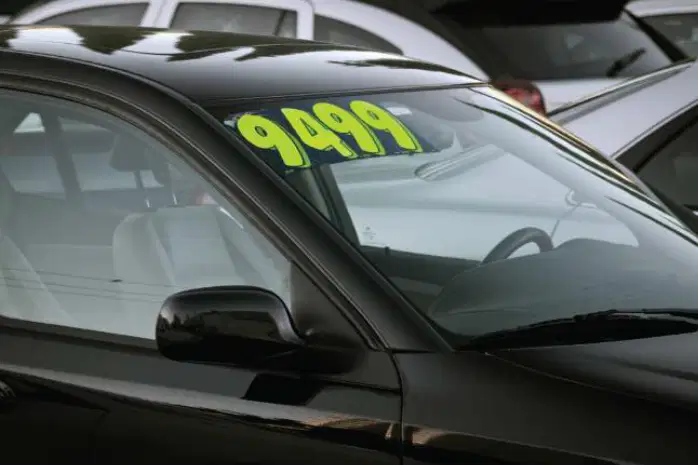
Which item in a dealership was given as an example of an invitation to treat?
A signed sales contract
A salesperson’s verbal promise
A price tag placed on a car
A customer’s deposit receipt
Which statement about invitations to treat is accurate?
They are an element of a legally valid contract.
They compel a buyer to pay the listed price.
They signal willingness to negotiate by inviting offers.
They are equivalent to acceptance in contract law.

Irish contract law assumes which of the following about intention to contract?
Business agreements are intended to be legally binding.
Social agreements are intended to be legally binding.
Private agreements are not intended to be legally binding.
Business agreements are not intended to be legally binding.

Which scenario most likely has the required intention to create legal relations under Irish contract law?
Two friends agree to meet for lunch next week.
A company signs a supply agreement with a retailer.
A parent promises a child an allowance.
Neighbors casually agree to share gardening tools.

Which pair correctly matches agreement type with its presumed legal status under Irish contract law?
Business agreement — not legally binding
Social/private agreement — legally binding
Business agreement — legally binding
Both business and social/private agreements — legally binding
In the house purchase illustration, which elements are shown as necessary for a valid contract? Select all that apply.
Intention
Capacity
Consent
Legality of purpose
Invitation to treat

Which sequence in the house purchase diagram shows offer and acceptance leading toward agreement?
Place deposit → title transfer → inspection
Bid 250k → counter offer 300k accepted → pay 300k
Counter offer 300k → bid 250k accepted → pay 250k
Advertise house → display key → sign deed
Which element ensures parties are legally able to enter the house purchase contract?
Capacity
Consideration
Legality of purpose
Invitation to treat

In the illustration, what term is associated with the value given in exchange for the house?
Consent
Consideration
Intention
Capacity
Which element addresses whether the contract’s objective is lawful in the house purchase example?
Legality of form
Legality of purpose
Consent
Intention
Which statement best connects the diagram’s 'legality of form' with other elements?
It replaces the need for consent and capacity.
It is listed alongside capacity and consent as part of forming a valid contract.
It refers only to the price agreed and is separate from agreement.
It applies only to social agreements and not business agreements.
Which statement best explains legality of purpose in a valid contract?
The contract’s subject matter must be lawful and not involve illegal acts
The contract must be typed and printed on official stationery
The parties must be related by blood or marriage
The consideration must be paid in cash only
Legality of form requires what condition for certain contracts to be valid?
They must be in a prescribed format or written when the law demands it
They must include a witness from a government agency
They must always be verbal to show consent
They must include a deposit that cannot be refunded
Which example violates legality of purpose?
An agreement to sell stolen goods
A written lease for an apartment
A contract to provide tutoring services
A service agreement for lawn care
Which contracts typically require legality of form to be satisfied? Select all that apply.
Contracts for the sale of land or property
Employment contracts of any kind
Consumer credit agreements where legislation specifies written terms
Informal agreements to borrow a book from a friend
A contract is invalid if its purpose is unlawful even when all other elements are present. What does this illustrate?
Legality of purpose is an essential requirement for validity
Consideration can replace the need for legality of purpose
Capacity overrides legality of purpose
Only consent determines validity
Which statement correctly distinguishes legality of purpose from legality of form?
Legality of purpose concerns what the contract is about; legality of form concerns how the contract is documented
Legality of purpose concerns who the parties are; legality of form concerns the value exchanged
Legality of purpose ensures consideration is adequate; legality of form ensures consent is free
Legality of purpose is optional; legality of form is always mandatory
If a contract is for an illegal activity but is properly written and signed, what is its status?
Invalid due to illegality of purpose
Valid because legality of form is satisfied
Valid if both parties consented
Valid provided the consideration is fair
Why might a court refuse to enforce a verbal agreement to sell a house?
It fails legality of form because property sales typically must be in writing
Verbal agreements are never enforceable
It lacks consideration
Consent cannot be given verbally
Which pair correctly matches requirement to example?
Legality of purpose – contract to traffic drugs
Legality of form – written mortgage agreement
Legality of purpose – written employment contract
Legality of form – handshake agreement to purchase land
Choose the statement that aligns with valid contract requirements regarding legality.
A valid contract requires both a lawful purpose and compliance with any required formalities
Only consent and consideration determine validity regardless of legality
Legality of form can be ignored if parties have capacity
Contracts are valid even when their purpose conflicts with the law
Which statement best defines termination of a contract by performance?
Both parties mutually decide to cancel the agreement before completion
An unforeseen event makes it impossible to carry out the contract
Each party fully carries out their contractual obligations as agreed
One party fails to fulfill a term, ending the contract
A contract can be completed or ended in several ways. Which option lists only valid methods of termination?
Performance, agreement, frustration, breach of contract
Performance, novation, rescission, repudiation
Agreement, frustration, consideration, invitation to treat
Frustration, warranty, condition, performance
Which example illustrates termination by agreement?
Buyer pays and seller delivers goods as specified
Parties sign a written document to end the contract early by mutual consent
A natural disaster destroys the subject matter, making performance impossible
Supplier fails to meet a delivery deadline that is a core term
Which scenario is most likely to constitute frustration of a contract?
A party changes their mind about the price
A core term is breached intentionally
A new law prohibits the contracted activity, making performance illegal
Parties mutually decide to postpone the contract
What distinguishes a breach of a condition from a breach of a warranty when terminating a contract?
Breach of a condition allows termination; breach of a warranty typically allows damages only
Both allow termination but only a warranty allows damages
Neither allows termination; only frustration ends a contract
A condition is minor and a warranty is major
Which of the following are recognized ways a contract may end? Select all that apply.
Performance
Agreement
Frustration
Breach of contract
Invitation to treat
In termination by performance, what must occur for the contract to be considered complete?
At least one party partially completes their obligations
Both parties satisfy all obligations as specified
The contract is amended to reduce obligations
The parties agree to delay performance
Which statement best explains termination by breach of contract?
The parties voluntarily end the contract
An external event beyond the parties’ control makes performance impossible
A party fails to perform a significant term, giving the other party remedies including possible termination
The contract expires due to passage of time without actions
When parties decide to end a contract by agreement, which forms can that agreement reasonably take according to legality of form principles?
Only a notarized written document
Only an oral statement witnessed by a judge
Orally, in writing, or by conduct demonstrating mutual consent
Only by conduct, never in writing
Which statement aligns with the principle of legality of purpose?
A valid contract can be formed for any purpose if both parties consent
A legally binding contract must be created for a legal purpose
Contracts are valid even when their subject matter is prohibited by law
Legality of purpose only applies to government contracts
Which option correctly matches the termination method with a concise description?
Performance: obligations are fulfilled by both parties
Agreement: parties mutually consent to end the contract
Frustration: unforeseen event makes performance impossible or illegal
Breach of contract: failure to fulfill a major term leads to remedies
Warranty breach: always ends the contract automatically
Which consequence most likely follows a breach of warranty rather than a breach of condition?
The innocent party can terminate and seek damages
The contract is automatically frustrated
The innocent party typically seeks damages but the contract continues
The contract becomes illegal and void
According to the material, which remedy aims to put the innocent party in the financial position they would have been in if the contract had been properly performed?
Rescinding the contract
Compensation (damages)
Specific performance
Frustration
Which remedy requires the breaching party to carry out their contractual obligations exactly as agreed rather than paying money?
Specific performance
Compensation (damages)
Termination by agreement
Termination by performance
Which remedy involves canceling the agreement and releasing both parties from further obligations after a breach?
Specific performance
Rescinding the contract
Compensation (damages)
Termination by frustration
Select all remedies available when a contract is breached as described in this section.
Compensation (damages)
Rescinding the contract
Specific performance
Frustration due to unforeseen events
Which statement best distinguishes compensation from specific performance?
Compensation orders the party to complete the contract; specific performance pays money for losses.
Compensation cancels the contract; specific performance keeps the contract alive.
Compensation pays for proven loss; specific performance compels the original obligation to be completed.
Compensation applies only to warranties; specific performance applies only to conditions.
When is rescission most suitable as a remedy following breach?
When the innocent party wants to end the agreement and be released from future obligations
When the court wants the work completed exactly as promised
When the breach is minor and only a warranty is affected
When an unforeseen event makes completion impossible

Which pair correctly matches termination grounds with their description?
Performance — both parties mutually agree to end the contract
Agreement — both parties complete their side exactly as set out
Frustration — unforeseen event prevents completion
Breach — non-essential term is broken and contract continues without consequences

Under breach of contract rules, which statement is accurate regarding conditions and warranties?
Breaching a condition ends the contract immediately; breaching a warranty leads to possible compensation without ending the contract
Breaching a warranty ends the contract; breaching a condition has no effect
Both conditions and warranties end the contract when breached
Neither conditions nor warranties lead to compensation when breached

Which situation is an example of frustration rather than breach?
A supplier refuses to deliver despite having stock
Extreme weather destroys the venue, making completion impossible
A party is 20 minutes late to perform a minor term
Both parties mutually agree to end the contract early
Based on the wedding band example, which statement correctly identifies a condition versus a warranty?
Failing to show up is a warranty; arriving 20 minutes late is a condition
Failing to show up is a condition; arriving 20 minutes late is a warranty
Both failing to show and arriving 20 minutes late are conditions
Both failing to show and arriving 20 minutes late are warranties
According to the slide titled "PART 2: CONSUMER CONFLICT," what does the Latin phrase caveat emptor mean for consumers when making purchases?
Let the buyer beware; use common sense when purchasing
Let the seller beware; retailers must test every product
Buyer always has a right to a refund without conditions
Prices must be displayed in euros for transparency
Which scenario best illustrates consumer conflict as described in the section?
A customer chooses between two brands during a sale
A consumer complains about misleading advertising by a business
A retailer launches a new loyalty program
A supplier negotiates bulk discounts with a manufacturer
Select the non-legislative methods for resolving consumer disputes introduced in this section.
Negotiation directly with the business
Writing a formal complaint letter
Bringing the case to a small claims court
Seeking assistance from a third party (e.g., mediation)
When applying caveat emptor, which action aligns with the guidance given to consumers?
Assume all goods meet the highest quality standards
Use common sense and evaluate the product before purchasing
Demand compensation before trying to resolve informally
Avoid asking questions to speed up checkout
According to "Introduction to Consumer Law," what is the recommended first step before making or progressing a complaint?
Contact the small claims court
Know your rights
Threaten legal action
Wait for the business to reach out
Based on the non-legislative approach, in what order should a consumer typically act after encountering a problem?
Act quickly → make a formal complaint → progress further if unsatisfied
Make a formal complaint → wait 30 days → post on social media
Seek third-party help immediately → act quickly → ignore responses
Know who to complain to → do nothing → accept the loss
Which option is NOT highlighted as a consumer best practice in the "Introduction to Consumer Law" slide?
Know who to complain to
Make a formal complaint
Act quickly
Negotiate a supplier contract
A consumer feels misled by an advertisement. Following the section’s guidance, which non-legislative action should they try first?
Initiate a lawsuit immediately
Negotiate with the business to seek a resolution
Report the issue to tax authorities
Refuse to pay for all future purchases

Which statement correctly pairs a remedy with breach of contract as shown in the visual? Refer to the image depicting a person tearing a contract.
Compensation: cancel future marketing emails
Rescind the contract: set a new delivery schedule
Specific performance: require the party to carry out the agreed terms
Compensation: require the party to continue the service

Which remedy for breach of contract involves reversing the agreement so that both parties return to their pre-contract position? Refer to the visual listing remedies.
Specific performance
Rescind the contract
Compensation
Renegotiation
Under the Sale of Goods and Supply of Services Act 1980, which statement best describes the basic rights consumers have when purchasing goods?
Goods must be of merchantable quality, fit for purpose, and as described
Goods must be the cheapest available on the market
Goods must include a free guarantee regardless of retailer policy
Goods can be returned within 30 days for any reason
Which is a consumer right for services under the Sale of Goods and Supply of Services Act 1980?
Services must be provided by a sole trader
Services must be carried out with due care and skill and using proper materials
Services must be completed within 24 hours of booking
Services must be free if the customer is unsatisfied
A consumer buys a washing machine that fails within a week due to a manufacturing fault. What remedy is typically available under the Act?
Refund, repair, or replacement depending on the fault and circumstances
Only a store credit because the item was used
No remedy because appliances have no legal protection
Mandatory replacement with a newer model
Who is legally responsible for resolving issues with faulty goods under the Act?
The manufacturer only
The retailer who sold the goods
The delivery company
The consumer’s bank
Which statement about guarantees is accurate under the Sale of Goods and Supply of Services Act 1980?
A guarantee overrides your legal rights, so you must use it
A guarantee is in addition to your legal rights and cannot reduce them
Guarantees are legally required for all goods
A guarantee limits remedies to repair only
Regarding second-hand goods, which option best reflects the Act?
No consumer rights apply to second-hand goods
Second-hand goods must be fit for purpose and as described, considering their age and condition
Second-hand goods must come with a 12‑month guarantee
Second-hand goods can always be returned within 14 days
Which practice is prohibited as inertia selling under consumer law?
Sending unsolicited goods and demanding payment
Offering a loyalty discount
Providing free samples in-store
Allowing customers to reserve items
Select all remedies that the Act commonly provides when goods are not of merchantable quality.
Full refund
Repair
Replacement
Store credit only
Under the Act, when goods are sold ‘as described’, what does this mean?
The goods must match their advertising, labels, and sales descriptions
The goods must be identical to the competitor’s product
The goods must include all accessories for free
The goods can differ from the description if cheaper
Which combination reflects the core service standards set by the Act?
Due care and skill
Proper materials
Services performed within a reasonable time
Lowest possible price
If a consumer accepts a repair for a faulty product and the fault reoccurs, what is still available under the Act?
No further remedy because the repair was accepted
A refund or replacement may still be available
Only another repair is permitted
The consumer must contact the manufacturer directly
Which situation best illustrates retailer responsibility under the Act?
The retailer tells the consumer to contact the manufacturer, but the consumer insists the retailer resolves the issue
The consumer is required to claim from their bank
The delivery service must replace the item
Responsibility lies with the advertising agency
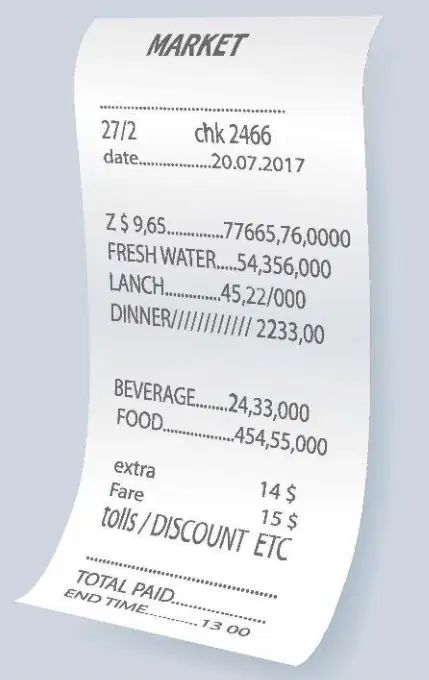
Which statement about proof of purchase and remedies is most accurate?
Without proof of purchase, legal rights do not exist
Proof of purchase helps demonstrate the contract with the retailer, supporting remedies
Only a handwritten note qualifies as proof of purchase
Proof of purchase is needed only for items over €500
What must a guarantee clearly state to be compliant with consumer law?
Duration of the guarantee
Who provides the guarantee
Procedure for invoking the guarantee
That it removes statutory rights
Which is NOT a consumer right for goods under the Act?
Goods must be fit for purpose
Goods must be of merchantable quality
Goods must be as described
Goods must be cheaper than competitors
A consumer purchases second-hand furniture described as ‘scuffed but sturdy’. It collapses under normal use. Which outcome aligns with the Act?
No remedy because it was second-hand
A remedy is available because the item was not fit for purpose given its description
Only the manufacturer is responsible
The consumer must pay for repairs
Identify the prohibited inertia selling behavior from the options below.
Sending goods you did not order and requesting payment
Advertising a product online
Providing optional add-ons at checkout
Offering extended warranties
Which actions form part of effective consumer negotiation when dissatisfied with a purchase?
Return to the retailer with proof of purchase
Speak to a manager and clearly state the problem
Tell the retailer how you would like the issue resolved
Refuse to show any documentation
When a consumer cannot visit or speak to a retailer, what should a formal letter of complaint include?
Outline the problem
Explain the desired resolution
Include copies of proof of purchase
Threaten legal action in the first sentence
Which option correctly pairs a consumer right with an appropriate remedy under the Act?
As described → free accessories
Fit for purpose → refund/repair/replacement
Merchantable quality → loyalty points
Due care and skill → price reduction only
Which legislative method specifically targets unfair, misleading, or aggressive commercial practices and sets rules on price display for consumers?
Sale of Goods and Supply of Services Act 1980
Consumer Protection Act 2007
Ombudsman
Small Claims Procedure
Under the Consumer Protection Act 2007, which practice is prohibited because it distorts a consumer’s decision-making by threatening or coercing them?
Misleading descriptions
Aggressive practices
Price controls
Second-hand goods rules
Select the items that the Consumer Protection Act 2007 regulates to protect consumers from unfair trading.
Misleading descriptions of goods or services
Aggressive selling tactics
Prohibited practices that deceive consumers
Price display requirements
Which statement best describes ‘misleading descriptions’ under consumer law?
Claims that accurately reflect a product’s features and performance
Any statement, omission, or imagery that could cause a consumer to form a false impression of a product
Coercive in-person tactics that pressure the consumer to buy
A voluntary code of practice with no legal consequences
Aggressive practices under the Consumer Protection Act 2007 include which of the following?
Providing clear warranty information
Using harassment, coercion or undue influence to secure a sale
Displaying prices in a transparent way
Offering optional add-ons with full disclosure
Which of the following are prohibited practices under the Consumer Protection Act 2007? Select all that apply.
Falsely claiming an endorsement or approval
Bait advertising that cannot be honored
Persistent and unwanted doorstep selling
Accurately labeling the price inclusive of taxes
What is the main purpose of price display regulations under the Consumer Protection Act 2007?
To allow retailers to negotiate prices privately with each customer
To ensure consumers can see clear, accurate prices before purchase
To set a fixed national price for essential goods
To remove the need for receipts
Price controls under consumer protection law are best described as:
General bans on discounts
Government measures used in limited circumstances to prevent excessive pricing in specific sectors
Retailer-led recommendations that are non-binding
Automatic caps applied to all goods and services
Which body is responsible for enforcing competition and consumer protection, investigating suspected breaches, and informing consumers about their rights?
Consumers’ Association of Ireland (CAI)
Competition and Consumer Protection Commission (CCPC)
European Consumer Centre Ireland (ECC Ireland)
Ombudsman
Key functions of the CCPC include which of the following? Select all that apply.
Enforcing consumer protection legislation
Investigating anti-competitive practices
Providing consumer information and education
Setting retail prices for all goods
If negotiation with a retailer fails, which third-party organisations can a consumer turn to for assistance?
Consumers’ Association of Ireland (CAI)
European Consumer Centre Ireland (ECC Ireland)
Competition and Consumer Protection Commission (CCPC)
Central Bank of Ireland
Which legislative methods are commonly used to resolve consumer conflict?
Sale of Goods and Supply of Services Act 1980
Consumer Protection Act 2007
Competition and Consumer Protection Commission (CCPC)
Ombudsman
Small Claims Procedure
Which option best distinguishes the role of the Ombudsman from the CCPC in consumer conflict resolution?
The Ombudsman investigates complaints about public services, while the CCPC enforces consumer and competition law
Both the Ombudsman and CCPC set legally binding retail prices
The CCPC handles only public service complaints; the Ombudsman enforces consumer law
Neither organisation has investigatory powers
Which act primarily sets out legal rights when purchasing goods and services, including remedies for breaches and retailer responsibilities?
Consumer Protection Act 2007
Sale of Goods and Supply of Services Act 1980
Competition Act
Small Claims Procedure
When considering consumer conflict resolution, which route is most appropriate for a low-value dispute where the consumer seeks a simple, inexpensive remedy without legal representation?
Competition and Consumer Protection Commission (CCPC)
Small Claims Procedure
Ombudsman
European Consumer Centre Ireland
Which statement best describes the role of an Ombudsman in consumer disputes?
A government-appointed advocate who represents businesses during negotiations
An independent body that investigates complaints and seeks fair resolutions when other methods fail
A court judge who issues binding legal rulings in all consumer cases
A private mediator hired by retailers to protect their interests
When should a consumer typically escalate a complaint to the Financial Services and Pensions Ombudsman (FSPO)?
Immediately after purchasing any financial product, even without an issue
After trying to resolve the problem with the financial institution and receiving an unsatisfactory outcome
Only if the complaint involves a non-financial retail purchase
When the issue is criminal and requires police intervention
Which types of issues fall within the FSPO’s remit? Select all that apply.
Disputes about bank charges and loan terms
Complaints about pension benefits administration
Arguments over a faulty kitchen appliance
Claims related to insurance policy handling by a provider
What is the primary outcome an Ombudsman aims for when handling a consumer complaint?
Punishing the business through fines
Achieving a fair, impartial resolution based on evidence
Automatically awarding maximum compensation to the consumer
Forwarding every complaint to the criminal courts
Which first step is most appropriate before contacting any Ombudsman office?
File a claim with the Small Claims Procedure immediately
Complain directly to the business and use its internal complaints process
Hire a barrister to prepare a High Court case
Contact the national competition authority
What distinguishes the Office of the Ombudsman from the FSPO in terms of scope?
The Office of the Ombudsman covers public services, while the FSPO covers financial services and pensions
Both only handle private retail disputes
FSPO specializes in criminal investigations, while the Office of the Ombudsman handles civil litigation
The Office of the Ombudsman is a trade association for banks
Which statement about the Small Claims Procedure is accurate?
It is a low-cost court process for straightforward consumer claims within a specified monetary limit
It requires representation by a barrister and extensive discovery
It can only be used for disputes against public bodies
It is designed solely for employment disputes
In the Small Claims Procedure, which example best fits the typical types of claims?
A claim about defective goods purchased from a retailer
A constitutional challenge to tax policy
A complaint about police conduct
An international trade dispute
Which pair correctly matches the body to its typical complaint type?
FSPO — faulty furniture; Small Claims — pension miscalculation
Office of the Ombudsman — public service delivery; FSPO — bank or insurance complaints
Small Claims — appeals of criminal convictions; Office of the Ombudsman — corporate mergers
FSPO — immigration decisions; Small Claims — diplomatic incidents
Why might a consumer choose the Small Claims Procedure rather than an Ombudsman route?
The issue is with a public service body
The dispute involves straightforward defective goods and the retailer refuses to resolve it
They seek a review of a bank’s handling of an insurance claim
They want mediation without any court involvement
Which is most likely outside the Small Claims Procedure’s scope?
A claim about poor workmanship on a minor home repair within the monetary limit
A dispute over the supply of goods that failed shortly after purchase
A complaint regarding pension payment calculations by a provider
A claim concerning a non-delivery of a low-value online order
Which best describes the complaints pathway for a financial product issue?
Go straight to Small Claims to bypass the business
Start with the provider’s complaints process; if unresolved, escalate to the FSPO
Contact the Office of the Ombudsman first, then the FSPO
Immediately file a criminal complaint with the police

