
 Worksheets
Period 4 Review
Total questions: 67
Worksheet time: 53mins

“Not far from this time Nat Turner’s insurrection [a slave rebellion] broke out; and the news threw our town into great commotion. . . .“It was always the custom to have a muster every year. On that occasion every White man shouldered his musket. The citizens and the so-called country gentlemen wore military uniforms. . . .“I knew the houses were to be searched; and I expected it would be done by country bullies and the poor Whites. . . .“It was a grand opportunity for the low Whites, who had no Negroes of their own to scourge. They exulted in such a chance to exercise a little brief authority, and show their subserviency to the slaveholders; not reflecting that the power which trampled on the colored people also kept themselves in poverty, ignorance, and moral degradation. . . . Colored people and slaves who lived in remote parts of the town suffered in an especial manner. In some cases the searchers scattered [gun]powder and shot among their clothes, and then sent other parties to find them, and bring them forward as proof that they were plotting insurrection.”
Harriet Ann Jacobs, Incidents in the Life of a Slave Girl, published in 1861, describing events earlier in the nineteenth century
Which of the following statements would an abolitionist claim supported the ideas expressed in the excerpt?
Southern states had the authority to restrict free African Americans from owning firearms.
The immorality of slavery had a widespread corrupting effect on Southern culture.
The Constitution held that enslaved people were legally considered property.
Southern interests depended on the labor of enslaved people, while the contributions of poor White citizens were minimal.
Which of the following claims best aligns with the evidence in the excerpt about the relationship between enslaved African Americans and White Southern citizens?
A majority of White citizens held slaves; therefore, they felt obligated to ensure the preservation of slavery.
The attitudes of White citizens regarding the motives of slave rebellions differed by region within the South.
A majority of poor White citizens benefited economically from having enslaved African Americans do the manual labor that White citizens did not want to do.
The slave system gave poor White citizens the feeling of social superiority over free and enslaved African Americans in a culture where African Americans held little power.
Which of the following pieces of evidence best supports the excerpt’s depiction of reactions to slave rebellions?
Southern states banned the importation of slaves from Africa.
Northerners agreed that slavery was a positive institution for society.
Additional restrictions were placed on enslaved and free African Americans.
The majority of slaveholders moved toward using alternative forms of labor.

Samuel Warner, Authentic and impartial narrative of the tragical scene which was witnessed in Southampton County, VA, 1831, Library of Congress
Which of the following was a long term effect of the situation shown in the image?
Virginia began create more restrictive laws regarding the slavery
Laws were passed outlawing the international slave trade system
More African Americans were offered freedom and migrated northward
Congress passed a “gag-rule” to limit conversations related to slavery on the floor of Congress

Which of the following economic developments most directly caused the tension depicted in the image?
The growth of Northern manufacturing, banking and shipping industries
Eli Whitney's invention of the cotton gin
The movement away from subsistence agriculture to increasing the production of goods for a distant market
Federal funding of the National Road
“There are opposers among us! men of wealth and respectability, who encourage the use of spirituous liquors and throw their influence into the scale of intemperance. There is, after all, a numerous class of what are called temperate, moderate drinkers, who love rum, and must have it. They do more hurt than the drunkard. They have influence. He has none. They try to make rum-drinking respectable; he cannot.But they are all alike, the drunkard and the drinker. They are but different species of the same genus. Temperate, moderate drinkers; temperate, moderate slave dealers; temperate moderate gamblers; temperate moderate sinners, all alike. It is the drinking which is wrong. Drunkenness is but a higher degree of the same crime. These temperate, moderate drinkers are training themselves and their children to the highest order of drunkards. They are learning the trade, they are serving the apprenticeship, and they uphold and encourage the drunkard.....”
An Address to the Temperance Society of Plymouth, N.H., 1829
The concerns expressed in the document can best be explained within the context of?
The development of a new national culture
The influence of the westward migration movement
Changes to society caused by the market revolution
New beliefs regarding related to human perfectibility
The ideas expressed by the document above would find the most significant support from which of the following?
Free African Americans
Recent immigrants from Ireland and Germany
Westward migrants
Followers of religious revival movements

A long term effect of the building of the Erie Canal was which of the following?
The fostering of regional interdependence
The growth of manufacturing
An increase in Southern cotton production
A increase in support for the Missouri Compromise

Which of the following inventions eventually superseded (came before) the canal development?
The telegraph
The steam engine
Interchangeable parts
The lightweight steel plow
One key political change BEFORE Jackson’s presidency that helped him get elected was
The federal funding of campaign activities
Efforts to raise educational levels among the voting populace
The change in many state laws to allow white men without property the ability to vote
A growing divide between the South and the North concerning slavery
Urbanization
The Growth of Cities
Entrepreneur
A person who creates and runs new businesses and takes on the risks
Assembly Line
A product is put together as it moves past a line of workers

Which title best completes this diagram?
Innovations in the Cottage Industry
Causes of Rural Development
Expansion of Employees’ Rights
Reasons for Urbanization

The excerpt best serves as evidence of which of the following developments in the antebellum era?
The growth of moral and social reform movements
The increased public participation in democracy
The emergence of a new national culture
The influence of liberal social ideas on art and culture

Which of the following antebellum era historical developments most directly contributed to efforts such as those described in the excerpt?
The Second Great Awakening
The growing population of laboring poor
The emergence of a women's rights movement
The changes resulting from the Market Revolution

Which of the following most directly resulted from the sentiments expressed in the excerpt?
Growing national support among Whigs and Democrats for complete abolition
Increasing numbers of northerners insisting that the federal government should defend slavery
Decreased demand from Northern factories for Southern cotton cultivated by slaves
Increasingly bitter national debates over the institution of slavery
What was one way the Market Revolution changed the way goods were produced?
Goods were exclusively handmade.
Production shifted from homes to factories.
The production of goods became less efficient.
Fewer goods were available to the public.

wanted more federal
government, an industrial economy, and a federal bank.
Federalist
wanted less federal
government, an agricultural economy, and were against the federal bank.
Democratic-Republican
Andrew Jackson called rewarding his campaign supporters with political offices the
spoil system
expanded suffrage
to the common man.
Jacksonian Democracy

Which of the following do you think the above cartoon of President Andrew Jackson best reflects the opinion of his opponents?
The executive branch had become too powerful
The president had become too sympathetic to the common man
The spoil system had failed to improve the government
The President believed in strict construction of the Construction
Which group of people would have benefitted the most from the investments made during the Market Revolution?
Factory workers, poor people, and slaves
Entrepreneurs, industrialists, bankers, merchants, and investors
One result of the invention of the cotton gin was an (a) in the demand for slave labor.
In which region of the United States di each economy develop?
North
Natural waterways powered machines in factoris.
South
Fertile soil for cash crops.
West
Mining for gold and other natural resources.
Identify the economic differences noted in Northern or Southern States.
Textile Manufacturing
Northern States
Oppose High Tariffs
Southern States
Rural Labor Force
Southern States
Cotton Plantations
Southern States
Support High Tariffs
Northern States
The (a) led the United States to rely on itself and begin manufacturing its own goods.


Which act in 1807 prohibited American ships for trading foreign parts?
Trade Act
Embargo Act
Transactions Act
Intercourse Act
James Madison was president during (1809-1812 ) and during the war of 1812. He belonged to the ___________.
Federalists
Founding Fathers
Democratic-Republicans
None of the above
What is the significance of Marbury vs. Madison?
This leads to judicial review
Leads to the creation of congress
There is none, it's just an example of a court case
Leads to the conflict within the election of 1809

why was the election of 1800 remarkable or unique?
It marked the first time a peaceful transition of power from one president to another
It marked the first peaceful transition of power of political parties
It was the first time a president was elected
It marked the first time a clean campaigning season was done
President Jackson is most famous for ignoring which Supreme Court ruling?
Madison v Marbury
Dartmouth College v Woodward
Worcester v Georgia
Gibbons v Ogden
What is sectionalism?
Unity among the states
Different states grouping together based on similar cultures and economies
All states grouping together despite differences
Areas within a state that form similar cultures
Two major sources of European immigrants to America in the 1840's and 1850's were
France and Italy
Germany and France
Germany and Ireland
Ireland and Norway
The transcendentalist writers such as Emerson and Thoreau stressed the ideas of
inner truth and individual self-reliance
political community and economic progress
personal guilt and fear of death
love of chivalry and a return to the medieval past
Henry Clay's proposed "American System" provided
high protective tariffs and federal spending for internal improvements
federal subsidies for American shipping and manufacturing
a national system of railroads
new amendments to the Constitution to strengthen the federal government in relation to the states
Took place in upperstate New York in 1848. Women of all ages and even some men went to discuss the rights and conditions of women. There, they wrote the Declaration of Sentiments, which among other things, tried to get women the right to vote.
Great Convenntion
Niagara Falls Convention
Green Falls Convention
Seneca Falls Convention
Time period given to describe the Monroe presidency due to an increase in economic prosperity & growing nationalism within the US
The Forgotten Years
Era of Bad Feelings
Era of Good Feelings
Period of Peace & Prosperity
This will double the size of the United States, territoriality, & benefited the US by gaining more land for farming, territory for westward expansion, & gained the port of New Orleans
Treaty of Paris 1783
Treaty of Ghent
Louisiana Purchase
Pickney Treaty
All of the following are characteristics of the Federalist party EXCEPT:
Strong central government
Favored farmers
Located mainly in the Northeastern states
Lead by Alexander Hamilton
A key purpose of Henry Clay’s American System was to
Expand slavery into new territories to preserve its economic viability
Improve diplomatic relations with European nations by allowing free immigration
Develop a national economy by improving transportation
Create more interest in politics by eliminating voting restrictions
Andrew Jackson vetoed the recharter of the Bank of the United States partly because he believed that the bank
Concentrated too much power in the hands of a few people
Gave too many loans to assist unstable state and local banks
Was secretly funding the abolitionist movement
Was overly subsidized by state tax monies
Jacksonian Democracy was distinguished by the belief that
An aristocracy posed no danger to the Republic
The National Republicans alone knew what was right for the people
Political participation by the common man should be increased
Political rights should be granted to women
President Monroe articulated the Monroe Doctrine in his 1823 address to Congress primarily in order to
Warn European nations against further colonial ventures in the Western Hemisphere
Respond positively to the recent Latin American revolutions
Rule out United States involvement in South America
Encourage Britain to help the fledging Latin Americans states
The Declaration of Sentiments (1848), issued at Seneca Falls, New York, called for
An end to slavery
Compulsory public education
Temperance legislation
Increased rights for women
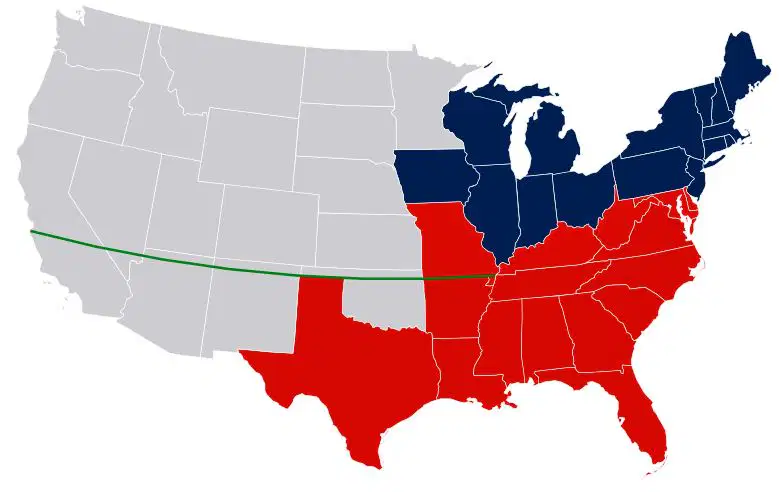
The map shows the United States immediately following the
Identify a major cause of the War of 1812?
Britain continued to impress American sailors into the Royal Navy
Britain allowed access to the Mississippi River
Settlement of debts as a result of the Revolution
Access to trade with British West Indies
Match the following:
Designed to meet the nation's need for economic progress and self sufficiency
The "American System"
Issued to warn European nations against further colonization in the Western Hemisphere
The Monroe Doctrine
Tax on imports to protect American manufacturing
The Tariff of 1816
Time of nationalism, optimism, and good will during Monroe's presidency
The Era of Good Feelings
Allowed Missouri to become a slave state and Maine to become a free state
Missouri Compromise

