NEW
Font size
 Worksheets
Energy Revision Quiz-SA2
Total questions: 50
Worksheet time: 1hrs 26mins

Material of density of 762 kg/m3 occupies a container volume of 99 cm3. What is its mass?
Hint: density = mass/volume
75438 kg
7.70 kg
0.13 kg
6858 kg
If 96.5 grams of gold has a volume of 5 cm3 , what is the density of gold?
Hint: density = mass/volume
482.5 g/cm3
19.3 g/cm3
0.05 g/cm3
101.5 g/cm3
If the density of a diamond is 3.5 g/cm3 , what would be the mass of a diamond whose volume is .5 cm3?
Hint: density = mass/volume
1.75 g
7 g
0.14 g
4 g
If a 96.5g piece of aluminum has a density of 2.7 g/cm3, what is its volume?
Hint: density = mass/volume
35.7 cm3
260.55 cm3
0.03 cm3
99.2 cm3
The density of pine is generally about 0.5 g/cm3 . What is the mass of a 800 cm3 piece of pine?
Hint: density = mass/volume
0.000625 g
1600 g
400 g
16000 g
What is the volume of 325 g of metal with a density of 9.0 g/cm3 ?
Hint: Density = mass/volume
36.11 cm3
0.03 cm3
2925 cm3
361.11 cm3
A sealed 2500 cm3 flask is full to capacity with 0.36 g of a substance. Determine the density of the substance.
Hint: Density = mass/volume
6944.44 g/cm3
900 g/cm3
0.0000144 g/cm3
0.000144 g/cm3
A piece of tin has a mass of 16.52 g and a volume of 2.26 cm3. What is the density of tin?
Hint: density = mass/volume
7.3 g/cm3
37.3 g/cm3
7.3 cm3/g
37.3 cm3/g
Diamonds have a density of 3.5 g/cm3 . How big is a diamond that has a mass of 0.10 g?
Hint: density = mass/volume
35 cm3
.35 cm3
0.002 cm3
0.03 cm3
What is the formula for density?
density = mass * volume
density = volume * mass
density = mass/volume
density = volume/mass
The measure of the average kinetic energy of all the particles within an object is called ____________.
conduction
heat
radiation
temperature
The energy transferred between the particles of two objects because of the temperature difference between the two objects is called ________________.
conduction
heat
radiation
temperature
High specific heat means...
It heats up quickly with energy added.
It requires more energy to change the temperature.
As the kinetic energy of the molecules in a substance increases, the temperature of the substance __________.
decreases
increases
heat always travels from _____ to ______ objects
hot to cold
cold to cold
cold to hot
hot to hot
When the temperature of matter decreases the particles ...
speed up and move farther apart
slow down and move farther apart
speed up and move closer together
slow down and move closer together
High temperature is connected to:
Low kinetic energy.
Zero net energy.
High kinetic energy.
Equal kinetic energies.
When the air in a hot air balloon is heated the air inside the balloon...
condenses.
contracts.
evaporates.
expands.
When an object is cooled, its molecules slow down and move closer together, causing the object to _____.
become a gas
expand or move apart
shrink or contract
squeeze into a solid

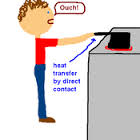
Which direction will the heat flow while this person holds a hot cup of chocolate?
from the cup to her hand
no heat is transferred
from her hand to the cup
According to the law of conservation of energy, energy can be created or destroyed.
True
False
In every energy transformation, some energy is always “lost” as ____ energy.
Chemical
Radiant
Electrical
Thermal
According to the law of conservation of energy, the total amount of energy in the universe ____.
remains constant
changes constantly
increases
decreases
Work _____ energy.
reduces
reflects
transfers
stops
Which equation is correct?
mechanical energy = kinetic energy – potential energy
mechanical energy = potential energy – kinetic energy
mechanical energy = kinetic energy + potential energy
mechanical energy = kinetic energy × potential energy
When two surfaces interact, some mechanical energy leaves the system as thermal energy due to ________.
surrounding heat
water
friction
fusion
A fire warms you by transferring _____ energy.
potential
thermal
chemical
nuclear
A couple of friends decide they want to play Fortnite together on their Playstation 4. When they turn the game on the TV, what kind of energy transfer is taking place?
Heat to electric
Electric to light
Chemical to electric
Electric to Light
The sun provides ____________ and ____________ energy that can be harnessed and used for solar power.
chemical, sound
sound, light
mechanical, light
light, thermal
Energy can't be _____.
transformed
converted
made or created
harnessed or produced
When a football player kicks a ball, he transfers energy to the ball. What happens as a result?
the ball gains kinetic energy
the ball loses thermal energy
the ball loses sound energy
the ball gains light energy
According to the law of conservation of energy, energy can be created or destroyed.
True
False
According to the law of conservation of energy, the total amount of energy in the universe ____.
remains constant
changes constantly
increases
decreases
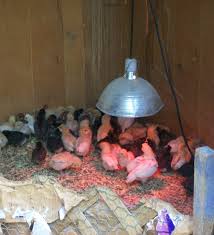
Which of the following scenarios represents thermal energy transfer through radiation?
A thermometer sitting on top of a heat lamp.
A person trying to unscrew a hot light bulb.
A child sitting in front of a space heater.
Swimming in the pool & noticing that the deep end of the pool is colder than the shallow end.

The following picture represents which way that
thermal energy can be transferred to the spoon?
conduction
convection
radiation
cremation
A hot potato is sitting out on the counter. After 3 hours, you pick up the potato and notice that it is no longer hot. Why is the potato not hot anymore?
the cold room made the potato cold
the potato is molded, and mold makes food cold
the heat from the potato went to the air
the potato is still hot
Why is it dangerous to swim in ice cold water?
the heat leaves your body
the cold water makes your blood freeze
the cold water causes your muscles to stop working
the heat from the water goes into your body
Standing in front of a campfire to keep warm is an example of what?
conduction
condensation
convection
radiation
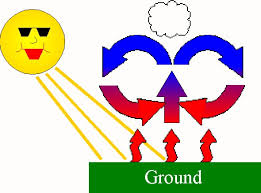
The hot and cold currents in the Pacific Ocean are examples of…
conduction
condensation
convection
radiation


Molecules in cold things move more _________
than in hot things.
quickly
slowly
speedy
Rapidly
How does heat energy reach the Earth from the Sun?
Conduction
Radiation
Convection
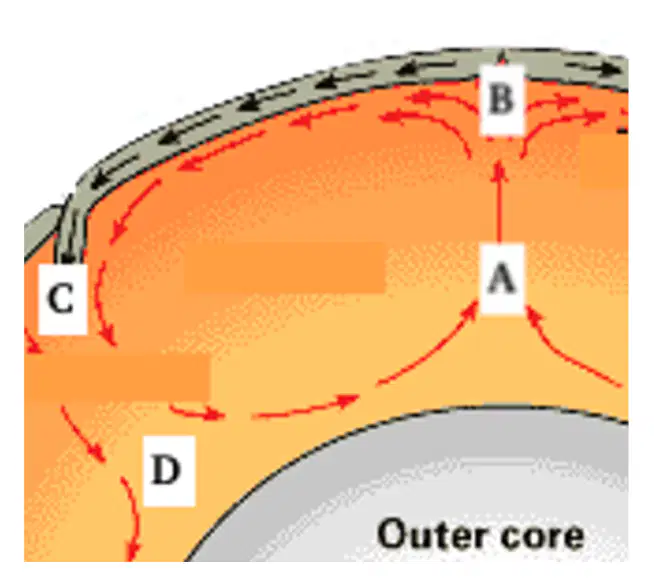
Which statement is true about the mantle material from points D to A on the convection current in the asthenosphere…
Heats, molecules move faster, becoming less dense
Cooling, molecules move slower, becoming more dense
Heats, molecules move faster, becoming more dense
Heats, molecules move slower, becomes more dense.