wayground logo

Free Printable Worksheets

Font size

S
M
L
XL
Worksheets

Heat

Total questions: 50

Worksheet time: 24mins

Name
Class
Date
1.
Heat is a form of _______________.  
a)
movement
b)
energy
c)
melting
2.
Does this give off heat?
a)
yes
b)
no
3.
How many kinds of heat transfer are there?
a)
1
b)
2
c)
3
d)
4 or more
4.
In heat transfer, heat always flows from the _______________ substance to the _______________ substance.
a)
Hotter to colder
b)
Colder to hotter
c)
Hotter to hotter
d)
Colder to colder
5.
The type of heat transfer that happens through direct contact of molecules or particles with each other is ___________________.
a)
Convection
b)
Conduction
c)
Radiation
d)
insulation.
6.
The kind of heat transfer that travels through space in electromagnetic waves is ______________________.
a)
insulation.
b)
Radiation
c)
Conduction
d)
Convection
7.
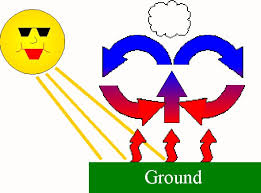
___________________ is the type of heat transfer that occurs in fluids, such as warm air rising and cold air sinking; creating wind.
a)
Convection
b)
Conduction
c)
Radiation
d)
insulation.
8.

Which statement is true?

a)

The quicker a molecule moves, the colder it is.

b)

The slower a molecule moves, the warmer it is.

c)

The quicker a molecule moves, the warmer it is

d)

The movement of molecules don't affect temperature
9.
When you use a microwave, what is the main way that heat is transferred?
a)
Convection
b)
Conduction
c)
Radiation
d)
insulation.
10.
The handle of a metal spoon warms up when it is placed in a hot bowl of soup because of
a)
Convection
b)
Conduction
c)
Radiation
d)
insulation.
11.
Which of the following is the best example of conduction?
a)
A light bulb warming a lampshade
b)
An egg cooking in a frying pan
c)
Water boiling in a pot
d)
Gases circulating in the atmosphere
12.
What kind of heat transfer happens when the sun is heating your body?
a)
Conduction
b)
Radiation
c)
Convection
d)
Density
13.
Warm air rises and the cool air sinks demonstrates this type of heat transfer. 
a)
conduction
b)
convection
c)
radiation
d)
Insolation 
14.
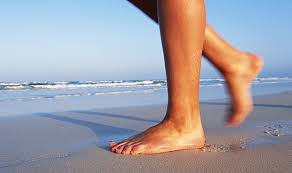
Walking on the warm sand sand with your bare feet demonstrates this type of heat transfer. 
a)
conduction
b)
convection
c)
radiation
15.
Ironing a shirt is an example of...
a)
condensation
b)
conduction
c)
convection
d)
radiation
16.
A group of friends gather around a fire to stay warm.
a)
conduction
b)
convection
c)
radiation
17.
You get sunburned due to __________ from the sun.
a)
conduction
b)
convection
c)
radiation
18.
The candle will slowly heat the metal and transfer the heat directly to the mans hand.
a)
conduction
b)
convection
c)
radiation
19.
A chair is placed several feet from a fireplace.  The fireplace has a glass screen.  The side of the chair facing the fireplace gets warm because of 
a)
conduction
b)
convection
c)
radiation
20.

As particles are exposed to warmer temperatures they __________

a)

speed up

b)

slow down

c)

stay the same

d)

vibrate at fixed positions

21.
As particles are exposed to colder temperatures they _____
a)
speed up
b)
slow down
c)
stay the same
d)
become ions
22.
Particles in a _____________ are tightly packed together.
a)
solid
b)
liquid
c)
gas
d)
plasma
23.
When objects absorb heat, the particles...
a)
gain energy and vibrate at fixed position.
b)
gain energy and increase in size.
c)
gain energy and move slower.
d)
gain energy and move faster.
24.

Choose the correct statements on effects of heating on matter.

a)

Matter expands

b)

Particles in matter is closer to one another

c)

Particles are further apart from each other

d)

Particles vibrate or move faster

e)

Distance between particles decrease

25.

Choose the correct statements of effects on cooling of matter.

a)

Particles are closer to each other

b)

Matter expands

c)

Matter contracts

d)

Distance between particles decreases

e)

Particles vibrates or move faster

26.

Mercury is a good heat ___________________

a)

conductor

b)

insulator

c)

sensitive

d)

thermometer

27.

Mercury is used inside thermometer because _________________

a)

very sensitive to temperature

b)

expand faster than water

c)

contract when hot

d)

expand when cold

28.

The small gaps between tracks of train enable the tracks to ______________ and preventing any damage.

a)

contract

b)

expand

c)

longer

d)

shorter

29.

Immerse the lid of a bottle in _______________ to make it expand and loosen it.

a)

cold water

b)

hot water

c)

liquid soap

d)

vinegar

30.

When a nearly empty plastic bottle is taken from warm room and put into the freezer. What will happen?

a)

It will crushed

b)

It will expand

c)

Nothing change

31.

What you will do to restore a dented ping pong ball?

a)

Immerse in ice

b)

Immerse in hot water

c)

Immerse in cold water

d)

Immerse in liquid soap

32.

An inflated balloon will _____________ when put inside basin full of ice.

a)

contract

b)

burst

c)

no change

d)

expand

33.

The condition where two substances in physical contact with each other exchange no heat energy. They are said to be the same temperature.

a)

Thermal Energy

b)

Cooler to Warmer

c)

Energy Transfer

d)

Thermal Equilibrium

34.
heat always travels from _____ to ______ objects
a)
hot to cold
b)
cold to hot
c)
cold to cold
d)
hot to hot
35.

Two objects have different temperatures. Object A has a temperature of 42 degrees and Object B is 37 degrees. Which direction should the energy transfer between Objects A and B?

a)

From Object A to Object B

b)

From Object B to Object A

c)

Energy will not transfer

d)

Energy will transfer both directions

36.

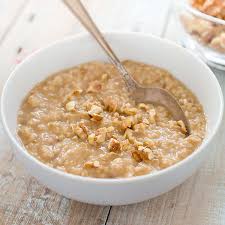
You leave your cold spoon in a hot bowl of oatmeal. What happens after an hour?

a)

The temperature of both the oatmeal and the spoon stay the same

b)

The spoon and the oatmeal become the same temperature

c)

Only the temperature of the oatmeal will change

d)

Only the temperature of the spoon will change
37.

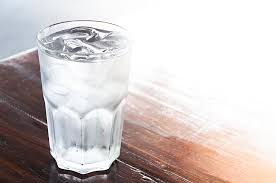
Johnny put ice in his water. Which idea do you think best explains why the water got cold?

a)

The coldness from the ice moved into the water

b)

The coldness and the heat moved back and forth until the water cooled off.

c)

The heat from the water moved into the ice.

d)

The water does not cool of

38.
What are some examples of heat transfer?
a)
conduction
b)
convection
c)
radiation
d)
all of the above
39.
The liquid in a thermometer ______________ as the temperature increases.
a)
expands
b)
disappears
c)
freezes
d)
explodes
40.
High temperature is connected to:
a)
Low kinetic energy.
b)
High kinetic energy.
c)
Zero net energy.
d)
Equal kinetic energies.
41.
Which of the following is NOT true about heat? 
a)
Heat moves from hot to cold
b)
Heat is a form of energy
c)
Heat cannot be transferred
d)
Heat makes molecules speed up 
42.

If two objects A and B are in thermal equilibrium with a third C , then :

a)

B and C are in thermal equilibrium

b)

The temperature of C is twice the temperature of A or B

c)

A and B have the same temperature

d)

no correct answer

43.

The diagram shows a metal sphere P at 80oC is immersed in a cooler liquid Q. Thermal equilibrium is reached when

a)

temperature of P = temperature of Q

b)

mass of Q displaced = mass of P

c)

volume of Q = volume of P

d)

specific heat capacity of P = specific heat capacity of Q

44.

What happens when the coffee and the cup are in thermal equilibrium?

a)

The temperature of the cup is increasing

b)

The temperature of the coffee is decreasing

c)

There is no net heat flow from the coffee to the cup

d)

There is a net flow from the coffee to the cup

45.

Which is measured in degrees Celsius or degrees Kelvin

a)

Heat

b)

Temperature

46.

A measure of the average kinetic energy of the particles in an object.

a)

electrical energy

b)

conduction

c)

convection

d)

temperature

47.

A material that does not conduct heat well is called a(n)

a)

insulator

b)

conductor

c)

metal

d)

radiator

48.
What is NOT an example of an insulator in the kitchen?
a)
An oven mitt
b)
Pots and pans
c)
A wooden spoon
d)
A plastic measuring cup
49.
A great conductor of energy is:
a)
wood
b)
plastic
c)
metal
d)
cloth
50.
Conductors are materials that...
a)
Allow heat to pass through
b)
Stop heat from passing through
c)
Allow cold to pass through
d)
Stop cold from passing through