wayground logo

Free Printable Worksheets

NEW

Font size

S
M
L
XL
Worksheets

Unit 1 & 2 STAAR Review

Total questions: 54

Worksheet time: 2hrs 21mins

Name
Class
Date
1.

What is the charge of a proton?

a)

Negative

b)

Positive

c)

Neutral

2.

What is the charge of a neutron?

a)

Negative

b)

Positive

c)

Neutral

3.

True or False:

Atoms are the basic building blocks of most of the matter around you.

a)

true

b)

false

4.

What are the subatomic particles?

a)

Protons, Electrons, Neutrons

b)

Molecules, and atoms

c)

Electrons, Protons, Nucleus

d)

Nucleus, and Electrons

5.

What is this subatomic particle that has negative charge?

a)

Electron

b)

Neutron

c)

Proton

d)

Megatron

6.

What is the small, DENSE REGION consisting of protons and neutrons at the CENTER of an atom?

a)

Molecules

b)

Nucleus

c)

Subatomic particle

d)

Atoms

7.
True or False - Protons and Neutrons have about the same mass.
a)
True - They have about the same mass
b)
False - They do not have about the same mass
8.
Which two subatomic particles make up the nucleus of an atom?
a)
Protons and Electrons
b)
Neutrons and Electrons
c)
Electrons and Protons
d)
Protons and Neutrons
9.
Where are the Electrons found in the structure of an atom?
a)
In the nucleus
b)
In spaces around the nucleus
10.
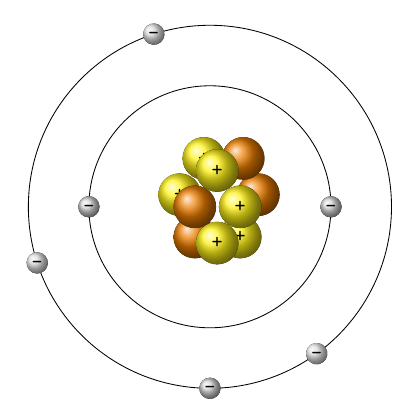
How many protons does this atom have?
a)
3
b)
6
c)
4
d)
2
11.

At what part of the atom is the arrow pointing?

a)

nucleus

b)

energy level

c)

electron

d)

proton

12.

The mass of an atom is

a)

equal to the number of protons

b)

the protons + electrons

c)

the protons + neutrons

d)

the protons + neutrons + electrons

13.

In a neutral atom,

a)

protons = electrons

b)

protons = neutrons

c)

neutrons = electrons

d)

protons = neutrons = electrons

14.

What part of the diagram is a. pointing to?

a)

Electron Cloud

b)

Protons

c)

Neutrons

d)

Nucleus

15.

What part of the diagram is b. pointing to?

a)

Electron Cloud

b)

Protons

c)

Neutrons

d)

Nucleus

16.

What part of the diagram is c. pointing to?

a)

Electron Cloud

b)

Protons

c)

Neutrons

d)

Nucleus

17.

What part of the diagram is d. pointing to?

a)

Electron Cloud

b)

Protons

c)

Neutrons

d)

Nucleus

18.

The majority of the mass of the atom is found in the...

a)

nucleus

b)

protons

c)

electrons

d)

element

19.

The identity of the atom is determined by the ______.

a)

protons

b)

neutrons

c)

electrons

20.

How many protons are present in this Carbon atom?

a)

4

b)

5

c)

6

d)

7

21.
For a given element, the atomic number indicates the number of _____
a)
protons in the nucleus
b)
neutron in the nucleus
c)
electrons in the atom
d)
nucleons in the atom
22.

Groups run:

a)

up and down

b)

left to right

23.

Periods run:

a)

up and down

b)

left to right

24.

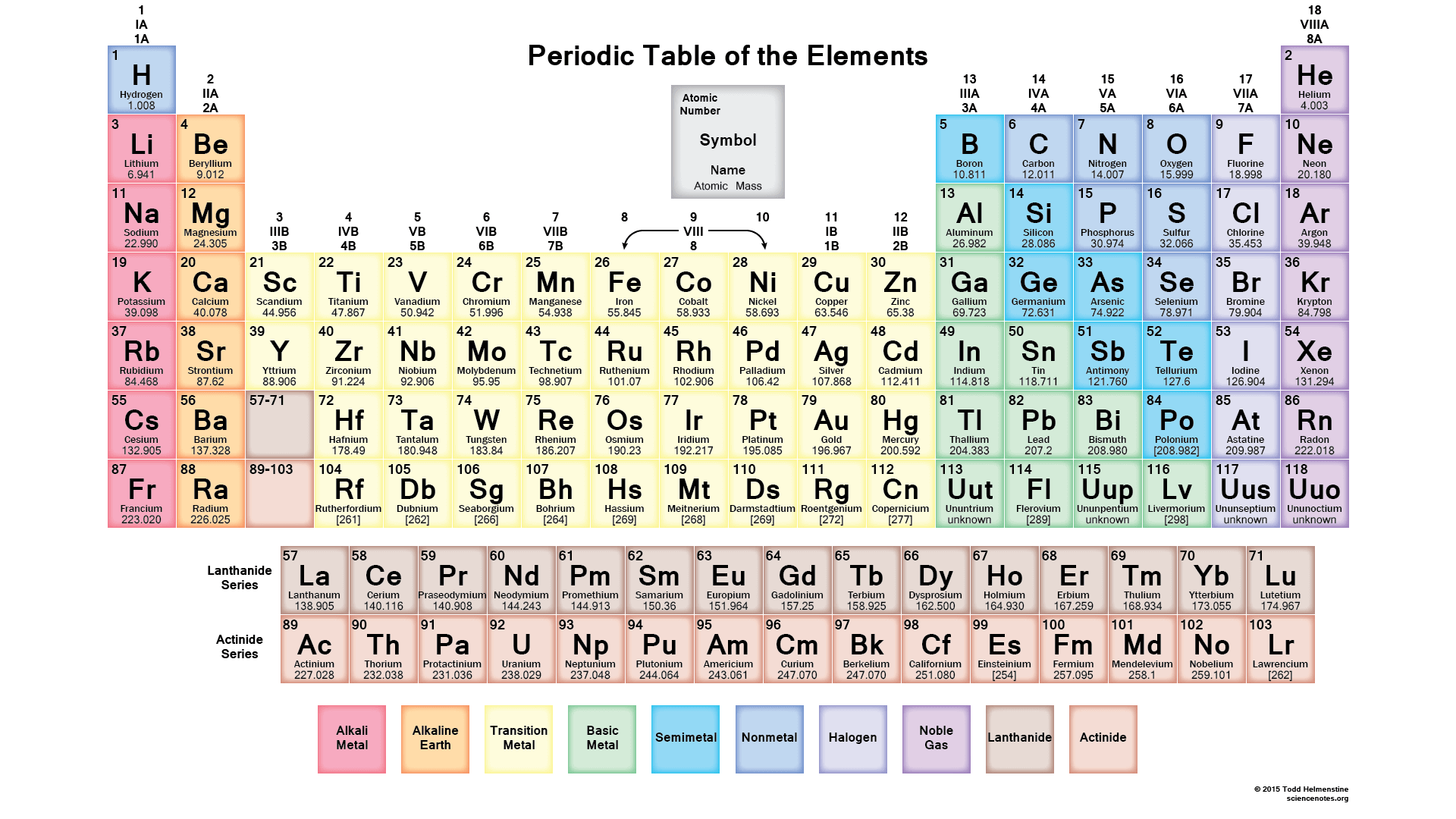
Which two elements share common characteristics based on the periodic table?

a)

Sodium and Magnesium

b)

Chlorine and Sulfur

c)

Argon and Neon

d)

Calcium and Bromine

25.

Metals are on the:

a)

Left side

b)

Right Side

c)

Stairstep

26.

Metalloids are on the:

a)

Left side

b)

Right Side

c)

Stairstep

27.

Nonmetals are on the:

a)

Left side

b)

Right Side

c)

Stairstep

28.

A student is studying a mystery substance. It breaks easily. It has a very dull luster. It doesn't conduct any electricity. What is the most likely substance this is?

a)

Metal

b)

Metalloid

c)

Nonmetal

29.

The same student works with a new substance. He concludes it conducts electricity very well. It has a very shiny luster. When he hammers it, it simply dents and flattens. What is the most likely substance type?

a)

Metal

b)

Metalloid

c)

Nonmetal

30.

The third substance the student works with is a little brittle. It is just a little shiny. When he tries to conduct electricity through it at first, it doesn't conduct, but upon heating up, it does start to allow electrons to flow. What is the most likely substance type?

a)

Metal

b)

Metalloid

c)

Nonmetal

31.
Sodium (Na) is found in group 
a)
1
b)
2
c)
3
d)
4
32.
Sodium (Na) is found in period 
a)
3
b)
2
c)
4
d)
1
33.
The atoms we study in 6th grade are neutral, which means they have the same number of
a)
protons and electrons
b)
protons and neutrons
c)
electrons and neutrons
34.
How many Hydrogen are in 4H2O?
a)
6
b)
8
c)
2
d)
4
35.
How many Oxygen are in H2O?
a)
1
b)
2
c)
0
d)
4
36.
How many Magnesium are in 10MgCl2?
a)
10
b)
5
c)
20
37.
2H2 + O2 ----> 2H2O What is the product?
a)
------>
b)
2H2O
c)
2H2+ O2
38.
2H2 + O--------> 2H2O What  are the reactants?
a)
----->
b)
2H2O
c)
2H2 +O2
39.
How many O's are in Al₂(SO₄)₃
a)
4
b)
12
c)
7
d)
24
40.
How many elements are in C6H12O6?
a)
1
b)
2
c)
3
d)
4
41.
How many atoms are there TOTAL in:
H2SO4
a)
6
b)
5
c)
7
d)
3
42.
A subscript is the small number below a(n) ________ that tells the number of _______ of that element.
a)
element symbol; atoms
b)
atom; element symbol
c)
subscript; protons
d)
compound; elements
43.

When a new substance forms as a result of a chemical reaction, what type of change has occurred?

a)

Chemical Change

b)

Physical Change

44.

Which is NOT an indication of a chemical change?

a)

Temperature Change

b)

Shape Change

c)

Formation of a precipitate

d)

Production of light

45.

What is the left part of a chemical equation called?

2H2 + O2 --> 2H2O

a)

Reactants

b)

Yields

c)

Products

d)

Chemical Equation

46.

What is the right part of a chemical equation called...

2H2 + O2 --> 2H2O

a)

Reactants

b)

Yields

c)

Products

d)

Chemical Equation

47.
Coal contains carbon and other elements. Carbon dioxide forms when coal burns in the presence of oxygen. Which of these is the best evidence that a chemical reaction occurs when coal burns?
a)
The shape of the coal changes
b)
Oxygen is present
c)
A new substance is produced
d)
Coal is made up of more than one element
48.
Is burning wood a chemical or physical change?
a)
chemical
b)
physical
49.
Is a a rusting bicycle a chemical or physical change?
a)
chemcial
b)
physical
50.
Is melting butter for popcorn a chemical or physical change?
a)
chemical
b)
physical
51.
A chemical reaction is balanced when
a)
both sides have the same elements
b)
Both sides have the same  number of atoms
c)
Same subscripts
d)
Same coefficients
52.
24 g of magnesium reacts with 38 g of fluorine to produce _____ g magnesium fluoride
a)
62 
b)
38
c)
24
d)
14
53.

32 g of Oxygen completely reacts with 8 g of Hydrogen to produce _____ g Water

a)

8

b)

12

c)

24

d)

40

54.
12g of Carbon react with 16g of Oxygen, how much carbon monoxide (CO) is formed? 
a)
28 g
b)
4g
c)
30g
d)
12g