wayground logo

Free Printable Worksheets

Font size

S
M
L
XL
Worksheets

Nuclear Chemistry Study Guide

Total questions: 70

Worksheet time: 49mins
Name
Class
Date
1.
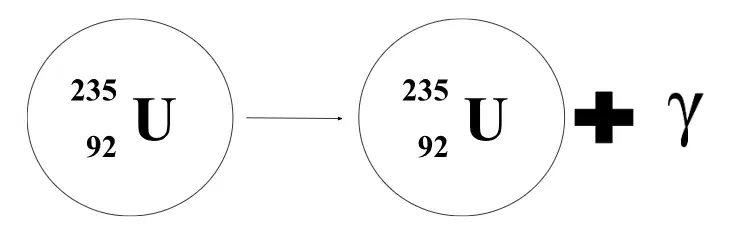
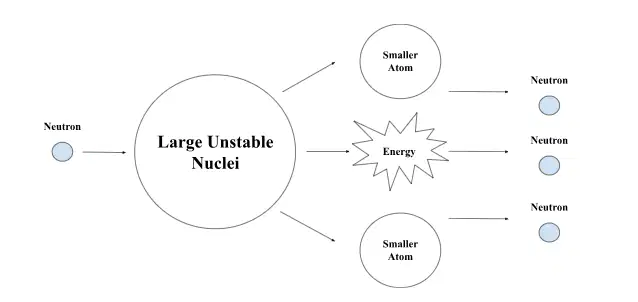
1. Identify the following nuclear process:
a)
Alpha Radiation
b)
Beta Radiation
c)
Gamma Radiation
d)
Nuclear Fission
e)
Nuclear Fusion
2.
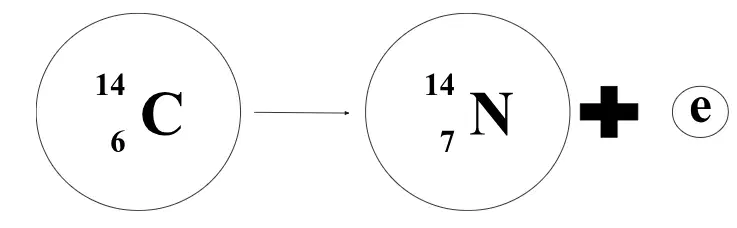
2. Identify the following nuclear process:
a)
Alpha Radiation
b)
Beta Radiation
c)
Gamma Radiation
d)
Nuclear Fission
e)
Nuclear Fusion
3.
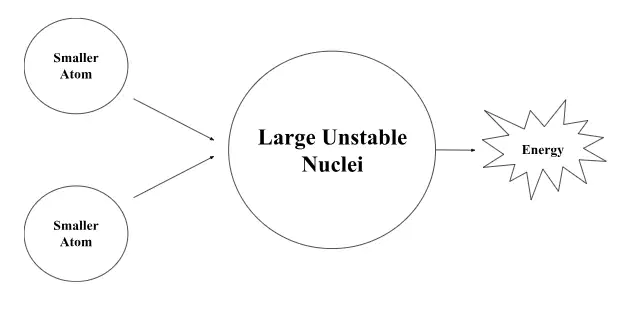
3. Identify the following nuclear process:
a)
Alpha Radiation
b)
Beta Radiation
c)
Gamma Radiation
d)
Nuclear Fission
e)
Nuclear Fusion
4.
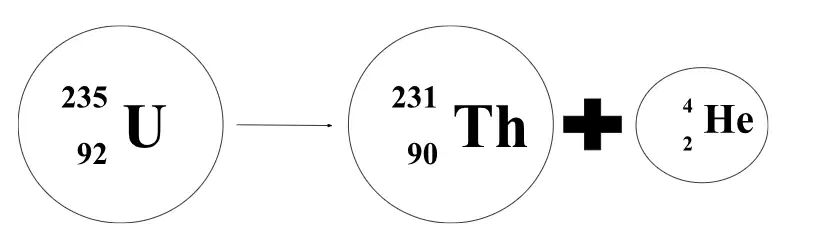
4. Identify the following nuclear process:
a)
Alpha Radiation
b)
Beta Radiation
c)
Gamma Radiation
d)
Nuclear Fission
e)
Nuclear Fusion
5.
5. Identify the following nuclear process:
a)
Alpha Radiation
b)
Beta Radiation
c)
Gamma Radiation
d)
Nuclear Fission
e)
Nuclear Fusion
6.
6. A group of students proposed four different models to show the fusion of Hydrogen to form Helium. Which model shows the process of nuclear fusion?
a)
A
b)
B
c)
C
d)
D
7.
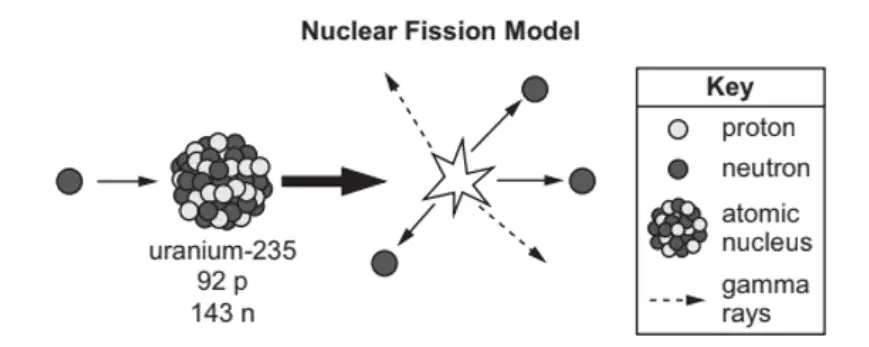
7. A student is modeling the fission of Uranium nuclei. The student started the model as shown in the diagram. Which two particles should the student add to the right-hand side of the model to complete the fission reaction?
a)
A
b)
D
c)
B
d)
C
e)
E
8.
8. Identify the type of nuclear process for the following:
a)
Fission
b)
Fusion
9.

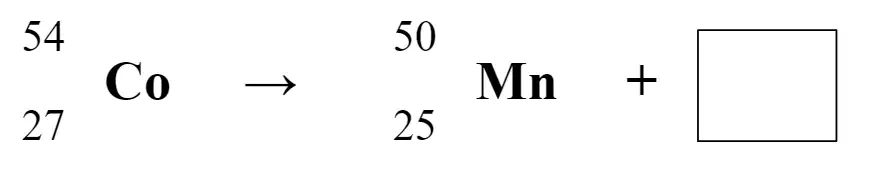
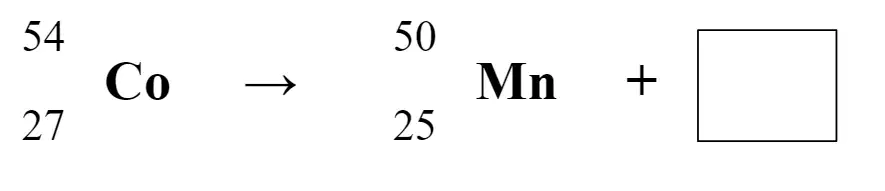
9. What is the atomic number of the missing radioisotope?

(a)  

10.

10. What is the mass number/atomic mass of the missing radioisotope?

(a)  

11.

11. What is the symbol of the missing radioisotope?

(a)  

12.
12. Identify the type of nuclear process for the following:
a)
Fission
b)
Fusion
13.

13. What is the atomic number of the missing radioisotope?

(a)  

14.

14. What is the mass number/atomic mass of the missing radioisotope?

(a)  

15.

15. What is the symbol of the missing radioisotope?

(a)  

16.
16. Identify the type of nuclear process for the following:
a)
Fission
b)
Fusion
17.

17. What is the atomic number of the missing radioisotope?

(a)  

18.

18. What is the mass number/atomic mass of the missing radioisotope?

(a)  

19.

19. What is the symbol of the missing radioisotope?

(a)  

20.
20. Identify the type of nuclear process for the following:
a)
Fission
b)
Fusion
21.

21. Identify the coefficient of the neutrons on the product side:

(a)  

22.
22. Identify the type of nuclear process for the following:
a)
Alpha
b)
Beta
c)
Gamma
23.

22. What is the atomic number of the missing radioisotope?

(a)  

24.

23. What is the mass number/atomic mass of the missing radioisotope?

(a)  

25.

24. What is the symbol of the missing radioisotope?

(a)  

26.
25. Identify the type of nuclear process for the following:
a)
Alpha
b)
Beta
c)
Gamma
27.

26. What is the atomic number of the missing radioisotope?

(a)  

28.

27. What is the mass number/atomic mass of the missing radioisotope?

(a)  

29.

28. What is the symbol of the missing radioisotope?

(a)  

30.
29. Identify the type of nuclear process for the following:
a)
Alpha
b)
Beta
c)
Gamma
31.

30. What is the atomic number of the missing radioisotope?

(a)  

32.

31. What is the mass number/atomic mass of the missing radioisotope?

(a)  

33.

32. What is the symbol of the missing radioisotope?

(a)  

34.
33. Identify the type of nuclear process for the following:
a)
Alpha
b)
Beta
c)
Gamma
35.
34. Identify the type of nuclear process for the following:
a)
Alpha
b)
Beta
c)
Gamma
36.

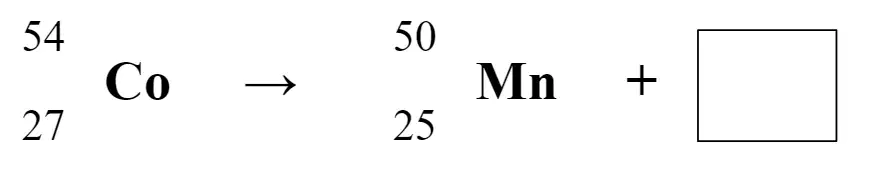
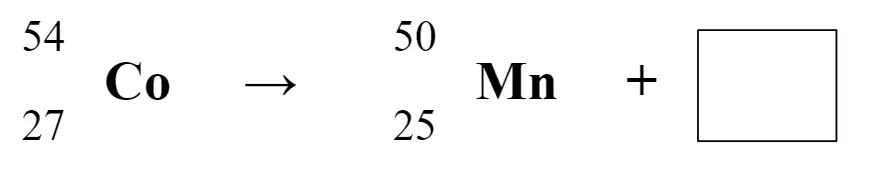
35. What is the atomic number of the missing radioisotope?

(a)  
37.

36. What is the mass number/atomic mass of the missing radioisotope?

(a)  
38.

37. What is the symbol of the missing radioisotope?

(a)  

39.
38. Identify the type of nuclear process for the following:
a)
Alpha
b)
Beta
c)
Gamma
40.

39. What is the atomic number of the missing radioisotope?

(a)  

41.

40. What is the mass number/atomic mass of the missing radioisotope?

(a)  

42.

41. What is the symbol of the missing radioisotope?

(a)  

43.
42. Identify the type of nuclear process for the following:
a)
Alpha
b)
Beta
c)
Gamma
44.

43. What is the atomic number of the missing radioisotope?

(a)  

45.

44. What is the mass number/atomic mass of the missing radioisotope?

(a)  

46.

45. What is the symbol of the missing radioisotope?

(a)  

47.

46. The half-life of Zn-71 is 2.4 minutes. If one had 100.0 g at the beginning, how many grams would be left after 7.2 minutes has elapsed? (Just put the NUMBER)

(a)  

48.

47. After a sample has gone through three half-lives, what fraction of that sample would be left? (Just put the NUMBER)

(a)  

49.

48. After a sample has gone through five half-lives, what percentage of that sample would be left? (Just put the NUMBER)

(a)  

50.

49. The half-life of Iodine-131 is 8.040 days. What percentage of an Iodine-131 sample will remain after 40.20 days? (Just put the NUMBER)

(a)  

51.

50. Barium-122 has a half-life of 2 minutes. A fresh sample weighing 80 g was obtained. If it takes 10 minutes to set up an experiment using Barium-122, how much Barium-122 will be left when the experiment begins? (Just put the NUMBER)

(a)  

52.

51. The half-life of Strontium-90 is 25 years. How much Strontium-90 will remain after 100 years if the initial amount is 4.0 g? (Just put the NUMBER)

(a)  

53.

52. What is the half-life of a 100.0 g sample of Nitrogen-16 that decays to 12.5 g of Nitrogen-16 in 21.6 sec? (Just put the NUMBER)

(a)  

54.

53. All isotopes of Technetium are radioactive, but they have widely varying half-lives. If an 800.0 g sample of Technetium-99 decays to 100.0 g of Technetium-99 in 639,000 years, what is its half-life? (Just put the NUMBER)

(a)  

55.

54. A 208 g sample of Sodium-24 decays to 13.0 g of Sodium-24 within 60.0 h. What is the half-life of this radioactive isotope? (Just put the NUMBER)

(a)  

56.

55. If the half-life of Iodine-131 is 8.10 days, how long will it take a 50.00 g sample to decay to 6.25 g? (Just put the NUMBER)

(a)  
57.
56. Check the three positive advantages of Nuclear Energy as an alternate source of energy.
a)
Improper disposal can cause water contamination
b)
Cleaner in forms of air pollutants
c)
Disposal problems
d)
Produces a significant amount of energy
e)
Provides about a million times more energy per pound than fuel
58.
57. Check the two negative advantages of Nuclear Energy as an alternate source of energy.
a)
Improper disposal can cause water contamination
b)
Cleaner in forms of air pollutants
c)
Disposal problems
d)
Produces a significant amount of energy
e)
Provides about a million times more energy per pound than fuel
59.
58. Which of the following is not true concerning an alpha particle?
a)
It is a helium nucleus.
b)
It contains two neutrons.
c)
It has a charge of +1.
d)
It has a mass of 4.
60.
59. The mass of a neutron is:
a)
Double the mass of a proton.
b)
In no comparison with an electron or a proton.
c)
About the same size as that of an electron.
d)
About the same size as that of a proton.
61.
60. Which type of radiation is effectively blocked by a piece of paper?
a)
Alpha
b)
Beta
c)
Gamma
d)
Delta
62.
61. The atomic number of a nucleus that emits a beta particle will ____________________.
a)
Increase by 2.
b)
Remain the same.
c)
Increase by one.
d)
Decrease by one.
63.
62. The most penetrating form of radiation is:
a)
Alpha Particles
b)
Beta Particles
c)
Gamma Radiation
d)
Both A and B
64.
63. A reaction in which two light nuclei combine to form a heavier nucleus is termed:
a)
Alpha Decay
b)
Beta Decay
c)
Fission
d)
Fusion
65.
64. When a Beta Particle is emitted, the mass number of a nucleus does what?
a)
Increases by one.
b)
Decreases by one.
c)
Decreases by four.
d)
Remains the same.
66.
65. Nuclear Power Plants generate electricity from what form of nuclear energy?
a)
Nuclear Fusion
b)
Nuclear Fission
c)
Combustion
d)
Radioactivity
67.
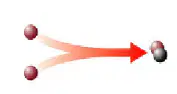
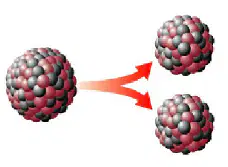
66. Identify the image as Nuclear Fission or Nuclear Fusion
a)
Fission
b)
Fusion
68.
67. Identify the image as Nuclear Fission or Nuclear Fusion
a)
Fission
b)
Fusion
69.
68. A group of students propose four different models to show the fusion of Hydrogen to form Helium. Which model shows the process of nuclear fusion? (The key to the models is shown to the right.)
a)
A
b)
B
c)
C
d)
D
70.
70. What is the mass of the products of a nuclear fission reaction compared to the mass of the original products?
a)
Greater
b)
The same.
c)
Less
d)
Varies according to the reaction