
 Worksheets
PIA Retest Quizizz
Total questions: 55
Worksheet time: 28mins

The diagram shows a reaction that forms a polymer from two monomers. What is this reaction called?
Glycolysis
Hydrolysis
Photosynthesis
Dehydration synthesis

Which chemical reaction is represented by the diagram below?
Dehydration synthesis of a dipeptide
Hydrolysis of a polypeptide
Dehydration synthesis of a lipid
Hydrolysis of a disaccharide
Which statement concerning simple sugars and amino acids is correct?
They are both wastes resulting from protein synthesis
They are both building blocks of starch
They are both needed for the synthesis of larger molecules.
They are both stored as fat molecules in the liver.
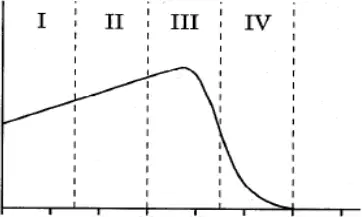
What is the optimum temperature for the enzyme?
0 degrees
37 degrees
55 degrees
60 degrees
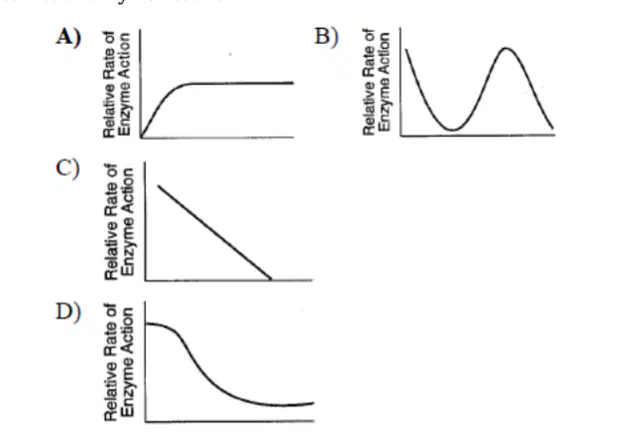
Which graph best represents the effect of an increasing substrate concentration and a constant enzyme concentration on the relative rate of enzyme action?
[Graph A]
[Graph B]
[Graph C]
[Graph D]
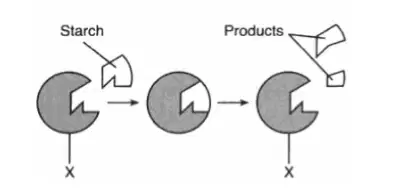
Base your answer to the following question on the diagram below and on your knowledge of biology. The Structure labeled X most likely represents a(n)
Antibody
Hormone
Enzyme
Substrate
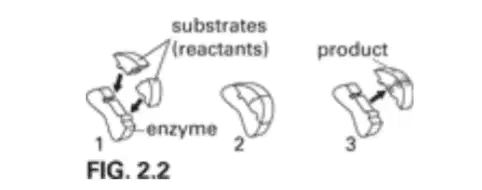
The lock-and-key model of enzyme function explains the specificity of enzymes. In the image below explain what happens after step 3?
The enzyme gets broken apart
The enzyme is no longer useful
The enzyme is able to bind to another product
The enzyme is reusable and can bind to a new substrate
Which of the following describes the induced fit model of enzyme activity?
The active site changes shape around the substrate to create the enzyme substrate complex
The substrate fits into the active site of the enzyme in a very specific way
the induced fit model is the same as the lock and key model
all of the above
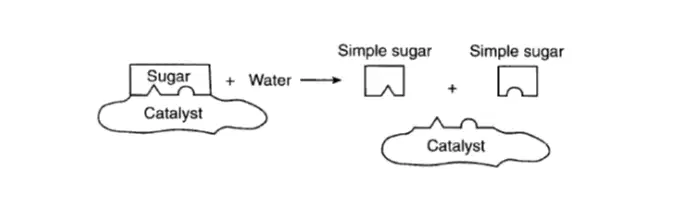
The diagram below illustrates a biochemical process that occurs in organisms. The substance labeled “catalyst” is also known as a(n)?
carbohydrate
antibody
inorganic compound
enzyme
Substance X is converted to substance Y in a metabolic reaction. Which statement best describes the role of an enzyme during this reaction?
The enzyme changes the pH of where the reaction is occurring.
The enzyme brings the energy needed for the reaction to occur.
The enzyme acts as solvent dissolving substance X in the reaction medium.
The enzyme increases reaction rate without being consumed.
An observation has been made that changing the pH in the environment surrounding an enzyme slows the rate at which the enzyme catalyzes the reaction. Which of the following best describes how a pH change can affect an enzyme?
The enzyme’s active site can change.
Energy is removed making it difficult to activate the enzyme.
New molecules can be added to the structure of the enzyme.
The enzyme can start to reaction with other enzymes.
Enzyme molecules normally interact with substrate molecules. Some medicines work by blocking the enzyme’s active site of bacteria, which slows down the toxicity of pathogens. What is the name of this molecule and why is this medicine effective?
The molecule is a noncompetitive inhibitor and it will resemble the substrate
The molecule is a competitive inhibitor and it will look drastically different from the substrate
The molecule is a noncompetitive inhibitor and it will look drastically different from the substrate
The molecule is a competitive inhibitor and it will resemble the substrate
The energy that must be absorbed for a chemical reaction to start is called
Start-up energy
Equilibrium
Activation energy
None of the above
Which group of organic compounds are enzymes included
Carbohydrates
Nucleic acids
Lipids
Proteins
Which of the following enzymes would digest a fat molecule?
Sucrose
Catalase
Lipase
Protease
You discover an enzyme that is able to break down two different substrates. What must be true about these two substrates?
Both substrates must have a similar structure
Both substrates must have a very different structure
Both substrates must be able to fit into the enzyme’s active site
Both A and C
Any substance that is acted upon by an enzyme is called
Coenzyme
Active site
Product
Substrate
An enzyme that builds a protein is unable to build a starch molecule. This fact is an indication that enzymes are:
Inhibiting
Specific
Catalytic
Synthetic
Which of the following chemicals would be classified as an enzyme?
Galactose
Manganese dioxide
Lipid
Protease
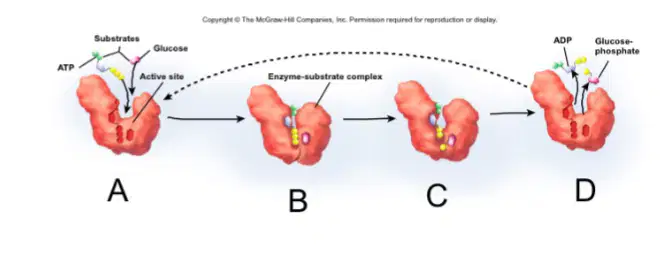
Using the picture below, which stage (A, B, C or D) are products released from the active site?
A
B
C
D
The area on the enzyme in which the chemical reaction will occur is termed the
Substrate
Active site
Enzymatic location
Catalytic site
What are the product(s) in the following reaction? PbO2 + 4HCl → PbCl2 + Cl2 + 2H2O
PbO2 and 4HCl
PbO2 and Cl2
PbCl2 and Cl2 and 2H2O
Pb and O and H and Cl
Proteins are macromolecules that are built from various combinations of monomers called
Nucleotides
Monosaccharides
Enzymes
Amino acids
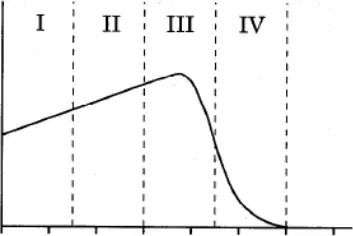
Based on the image below, what most likely is occurring to the enzyme at 60 degrees Celsius?
Enzyme died
Enzyme was used up
Substrate was added
Enzyme denatured
Competitive inhibitors work by
Competing with substrate for the active site
Competing with the enzyme for the active site
Competing with the products for the active site
Binding at a site other than the active site and changing the shape of the enzyme
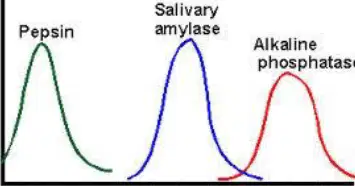
Using the image below, which enzyme prefers a basic environment?
Pepsin
Salivary amylase
Alkaline phosphatase
Galactase in a high concentration of galactose is unable to speed up the chemical reaction due to its active site not having the proper shape. This is most likely due to
Competitive inhibitor
Noncompetitive inhibitor
Not enough substrate
Too much substrate
Which characteristic is shared by all prokaryotes and eukaryotes?
Ability to store hereditary information
Use of organelles to control cell processes
Use of cellular respiration for energy release
Ability to move in response to environmental stimuli
Alveoli are microscopic air sacs in the lungs of mammals. Which statement best describes how the structure of the alveoli allows the lungs to function properly?
They increase the amount of energy transferred from the lungs to the blood.
They increase the flexibility of the lungs as they expand during inhalation
They increase the volume of the lungs, allowing more oxygen to be inhaled
They increase the surface area of the lungs, allowing efficient gas exchange.
Which statement best describes an effect of the low density of frozen water in a lake?
When water freezes, it contracts, decreasing the water level in a lake.
Water in a lake freezes from the bottom up, killing most aquatic organisms.
When water in a lake freezes, it floats, providing insulation for organisms below.
Water removes thermal energy from the land around a lake, causing the lake to freeze
Which statement correctly describes how carbon’s ability to form four bonds make it uniquely suited to form macromolecules?
It forms short, simple carbon chains
It forms large, inorganic, diverse molecules
It forms organic molecules by forming covalent bonds
It forms inorganic molecules by forming ionic bonds
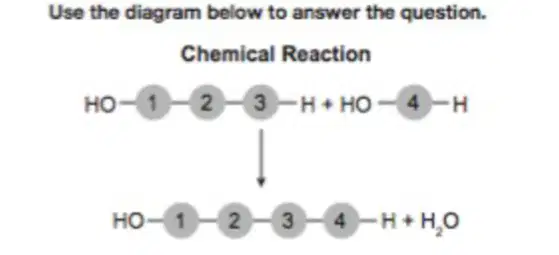
What reaction is shown in the diagram below?
Glycolysis
Hydrolysis
Photosynthesis
Dehydration synthesis
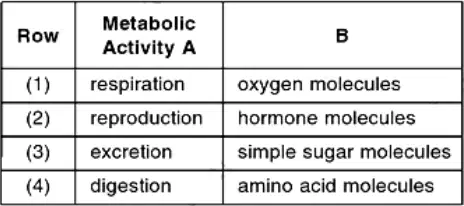
The diagram below represents one metabolic activity (labeled A) of a human forming the products labeled “B.” Letters A and B are best represented by which row in the chart?
respiration | oxygen molecules
reproduction | hormone molecules
excretion | simple sugar molecules
digestion | amino acid molecules
Which statement concerning simple sugars and amino acids is correct?
They are both wastes resulting from protein synthesis
They are both building blocks of a starch
They are both needed for the synthesis of a polymer
They are both stored as fat molecules in the liver
Water has many unique properties because it is ______________ due to the hydrogens having a ______________ charge and the oxygen having a ________________ charge.
Nonpolar, positive, negative
Polar, positive, negative
Nonpolar, negative, positive
Polar, negative, positive
A. ____________________________: a type of protein that acts as a biological catalyst that increase the rate of a chemical reaction without being consumed
Enzyme
Hormone
Lipid
Carbohydrate
Term given to an enzyme when its active site change and thus its function is altered. Temperature and pH are often causes of this.
Denaturation
Activation
Polymerization
Hydrolysis
C. ________________________________: a substance that decreases the rate of an enzyme reaction due to it blocking the active site. This substance resembles the structure of the substrate.
Competitive inhibitor
Noncompetitive inhibitor
Allosteric activator
Cofactor
D. ________________________________: a substance that decreases the rate of an enzyme reaction due to it changing the shape of the active site. This substance binds to the enzyme outside of the active site.
Noncompetitive inhibitor
Competitive inhibitor
Cofactor
Substrate
E. ________________________________: a specific region of an enzyme where a substrate binds.
Active site
Catalytic core
Binding pocket
Enzyme groove
F. ________________________________: the substance or reactant acted upon by an enzyme.
Substrate
Enzyme
Product
Catalyst
Complete the following chart for Carbohydrates: Monomers, Polymers, Functions, Elements.
Monomers: Monosaccharides; Polymers: Polysaccharides; Functions: Energy storage, structural support; Elements: C, H, O
Monomers: Amino acids; Polymers: Proteins; Functions: Enzyme catalysis, transport; Elements: C, H, O, N
Monomers: Nucleotides; Polymers: DNA/RNA; Functions: Genetic information storage; Elements: C, H, O, N, P
Monomers: Fatty acids; Polymers: Triglycerides; Functions: Long-term energy storage, insulation; Elements: C, H, O
Complete the following chart for Lipids: Monomers, Polymers, Functions, Elements.
Monomers: Glycerol and fatty acids; Polymers: Triglycerides, phospholipids; Functions: Long-term energy storage, insulation, cell membranes; Elements: C, H, O (sometimes P)
Monomers: Amino acids; Polymers: Proteins; Functions: Enzymes, structure; Elements: C, H, O, N, S
Monomers: Nucleotides; Polymers: DNA, RNA; Functions: Genetic information; Elements: C, H, O, N, P
Monomers: Monosaccharides; Polymers: Starch, cellulose; Functions: Quick energy; Elements: C, H, O
Complete the following chart for Nucleic Acids: Monomers, Polymers, Functions, Elements.
Monomers: Nucleotides; Polymers: DNA, RNA; Functions: Store and transmit genetic information; Elements: C, H, O, N, P
Monomers: Amino acids; Polymers: Proteins; Functions: Catalyze reactions; Elements: C, H, O, N, S
Monomers: Fatty acids; Polymers: Triglycerides; Functions: Energy storage; Elements: C, H, O
Monomers: Monosaccharides; Polymers: Polysaccharides; Functions: Provide energy; Elements: C, H, O
Complete the following chart for Proteins: Monomers, Polymers, Functions, Elements.
Monomers: Amino acids; Polymers: Polypeptides, proteins; Functions: Catalyze reactions, structural support, transport; Elements: C, H, O, N, S
Monomers: Nucleotides; Polymers: DNA, RNA; Functions: Store genetic information; Elements: C, H, O, N, P
Monomers: Fatty acids, glycerol; Polymers: Triglycerides, phospholipids; Functions: Energy storage, insulation; Elements: C, H, O
Monomers: Monosaccharides; Polymers: Polysaccharides; Functions: Energy source; Elements: C, H, O
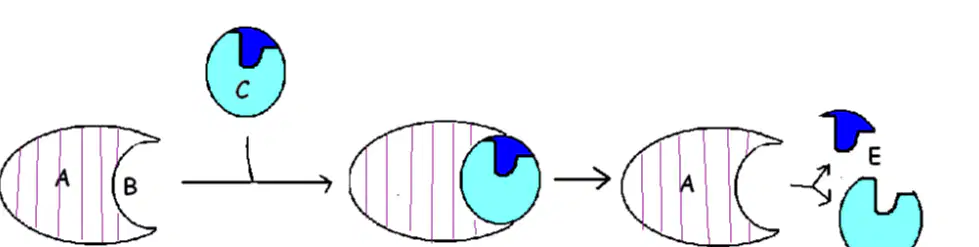
Label the following on the image below:
Enzyme
A
Active site
B
Substrate
C
Enzyme-substrate complex
D
Products
E

Appropriately label the X-Axis on the following graphs demonstrating the impact of various factors on enzyme reactions.
Enzyme Concentration
Enzyme Concentration
Substrate Concentration
Substrate Concentration
Inhibitor concentration
Inhibitor concentration
pH
pH
Temperature
Temperature
Prolonged periods of high fever are dangerous to humans because:
enzymes can become denatured and lose their function at high temperatures
enzymes work faster and improve bodily functions at high temperatures
high temperatures increase enzyme production in the body
enzymes become more stable and efficient at high temperatures
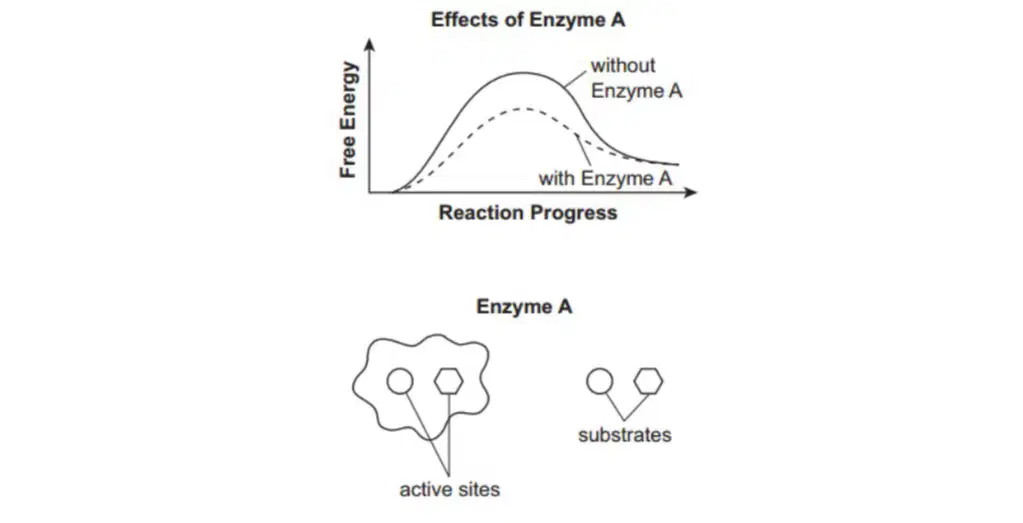
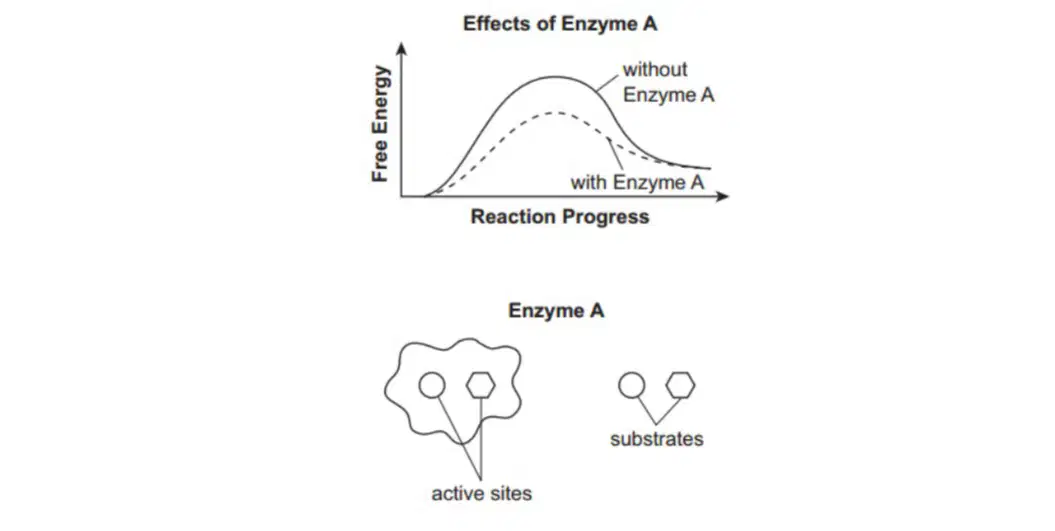
Use the image below to answer Part A and Part B:
[Diagram: Effects of Enzyme A on reaction progress and free energy, and schematic of Enzyme A with active sites and substrates]
Part A: Enzyme A acts as a catalyst in the reaction above by:
Lowering the activation energy and speeding up the reaction.
Increasing the activation energy and slowing down the reaction.
Consuming energy and making the reaction take longer.
Preventing substrate binding and stopping the reaction.
Conditions around an enzyme change and affect the shape of the enzyme’s active sites. Predict how this would affect the enzyme’s ability to catalyze the reaction.
The enzyme’s ability to catalyze the reaction would decrease because the substrate may no longer fit into the active site.
The enzyme’s ability to catalyze the reaction would increase because the active site becomes more flexible.
The enzyme’s ability to catalyze the reaction would remain unchanged regardless of the active site shape.
The enzyme would start catalyzing a completely different reaction due to the change in active site shape.
Prokaryotic cells are generally much smaller than eukaryotic cells. Identify a structural difference between prokaryotic cells and eukaryotic cells.
Prokaryotic cells lack a nucleus, while eukaryotic cells have a nucleus.
Prokaryotic cells have mitochondria, while eukaryotic cells do not.
Prokaryotic cells contain chloroplasts, while eukaryotic cells do not.
Prokaryotic cells have multiple linear chromosomes, while eukaryotic cells have a single circular chromosome.
B. Select two similarities between prokaryotic cells and eukaryotic cells.
Both have a cell membrane and contain genetic material.
Both have a nucleus and mitochondria.
Both are multicellular and have chloroplasts.
Both lack a cell wall and have vacuoles.
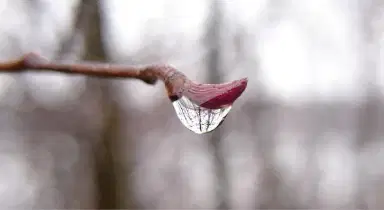
The diagram shows two properties of water. Which properties allow water to form a droplet on a tree branch?
Cohesion and adhesion
Evaporation and condensation
Density and solubility
Surface tension and boiling point
Your friend has an unusual friendship with a battery operated stuffed teddy bear. Your friend states that the bear is living because it can move on its own and generates heat. Using the characteristics of life covered in biology class, which of the following is NOT a valid reason why the teddy bear is NOT considered living?
It does not grow or develop.
It cannot reproduce.
It does not respond to stimuli.
It generates heat and moves on its own.
In the space below, put the following levels of organization in order from smallest to largest.
Organelle, Cells, tissue, organs, organ system, Organism
Organism, organ system, organs, tissue, Cells, Organelle
Cells, Organelle, tissue, organs, organ system, Organism
Organelle, tissue, Cells, organs, organ system, Organism

