
 Worksheets
SUB STRUCTURE
Total questions: 25
Worksheet time: 20mins
The substructure of a building refers to:
Elements above ground level
Structural components below ground level
Roof and wall systems
Mechanical and electrical installations
Which of the following is a primary function of a foundation?
To support the roof
To transfer building loads safely to the ground
To improve interior space
To reduce construction cost
Which of the following is NOT a type of shallow foundation?
Pad footing
Raft foundation
Strip footing
Bored pile foundation
Pile foundations are used when:
Soil at shallow depth is strong
Loads are light
Surface soil is weak and cannot support the building
No groundwater is present
Which pile material is MOST vulnerable to decay if exposed to air and moisture
RC pile
Steel pile
Timber pile
Composite pile
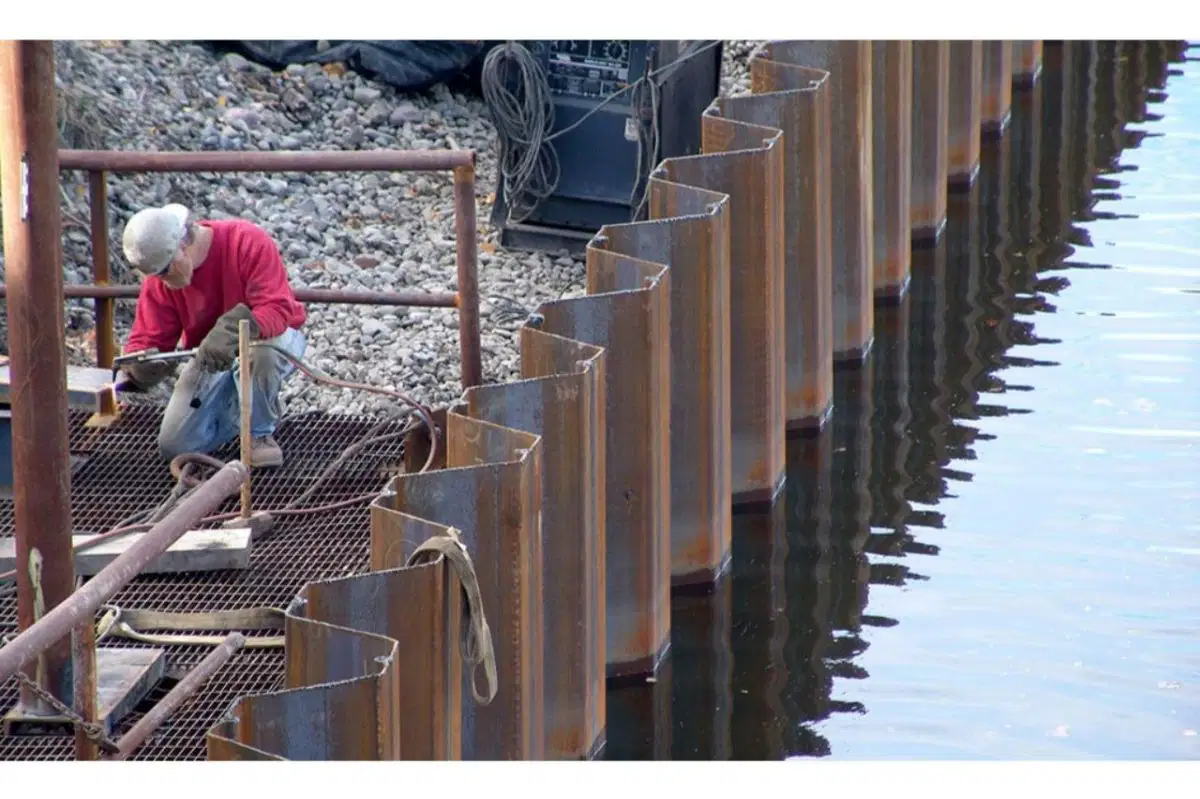
Name the type of piles
(a)
What is the main principle behind the load transfer of an end-bearing pile
Load is transferred through skin friction along the entire pile length
Load is transferred to a strong layer such as bedrock at the pile tip
Load is carried entirely by the surrounding soft soil
Load is supported by groundwater pressure
Friction piles are most suitable when:
A strong load-bearing layer is shallow and easily reachable
Load must be transferred directly to bedrock
No firm layer exists at a practical depth, and support must come from soil friction
The pile must resist only horizontal loads
Constructed by drilling a hole and filling it with concrete.


Bored piles are preferred in urban areas because they:
Produce minimal noise and vibration
re driven quickly into the ground
Do not require concrete
Are lighter than steel piles
Which key advantage enables bored piles to support heavy loads?
They use timber material
They can be constructed with large diameters
They are installed using small tools
They need no reinforcement
Driven piles can be installed faster because:
They require drilling mud
They do not require casing or excavation
They must be left to cure for 28 days
They are only used in soft soils
What is the main characteristic of Continuous Flight Auger (CFA) pile installation?
The pile is driven using a hammer
Concrete is pumped as the auger is withdrawn
A casing must be left permanently in the ground
The pile is constructed using timber only
The piles will corrode are the disadvantages of
Timber Piles
RC pile
Steel Piles
Bore Pile
The weight and type of a building affect foundation selection because:
Only shape of the building matters
Load does not affect foundation type
Lighter buildings always need deeper foundations
Heavier loads require foundations that transfer loads safely to the ground
Strip footings are generally used to:
Support a series of closely spaced columns or a load-bearing wall
Support a single isolated column
Act as a retaining wall
Reduce soil erosion
Pad footings are most suitable for:
Heavy multi-storey buildings on soft soil
Light structures with isolated columns
Bridges requiring deep foundations
Areas with high groundwater only
A strip footing is a continuous strip of concrete that spreads the load of a load-bearing wall or a row of closely spaced columns over a larger area of soil.
TRUE
FALSE
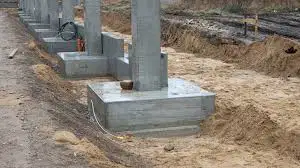
This is ...............
Strip footing
Pad footing
Stepped footing
Raft footing
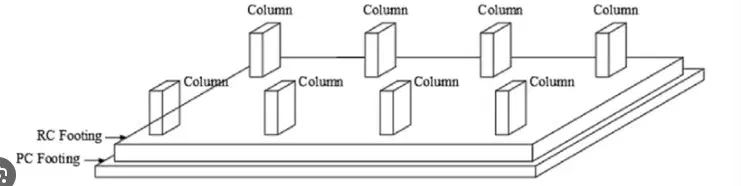
What type of footing shown in the picture
pad footing
raft footing,
pad footing
strip footing
Pile foundations can be categorized into four main types based on the material used. Which of the following correctly lists these material types?
Concrete, Steel, Timber
Steel, Plastic, Brick, Composite
Concrete, Masonry, Brick, Timber
Concrete, Steel, Timber, Composite

Name this type of pile
(a)
What is the main purpose of a deep foundation?
To support lightweight structures on strong soil
To transfer loads to deeper, stronger soil or rock layers
To reduce construction cost
To replace shallow foundations completely
Draw Pad foundation

A (a) foundation is a deep, watertight structure, like a large box or cylinder, that is sunk into the ground to provide a stable foundation for heavy buildings or bridges, especially in water or soft soil.

