
NEW
Font size
 Worksheets
Grade 5
Total questions: 47
Worksheet time: 24mins
For how many years was the Philippines under Spanish colonial rule, a period marked by significant cultural, social, and political changes that shaped the nation’s history?
More than three hundred years, during which various revolts and uprisings occurred as the locals sought independence from colonial rule, leading to a rich tapestry of resistance and resilience in Filipino culture.
Less than one hundred years, mostly in the northern islands, where Spanish influence was less pronounced, resulting in a unique blend of indigenous and colonial traditions.
About fifty years, mainly in the cities, where Spanish architecture and education systems were established, leaving a lasting legacy that can still be seen in the urban landscape of the Philippines today.
Exactly two hundred years, only in Luzon, which was the center of Spanish administration and control, influencing the political landscape and governance of the region.
Which aspects of Filipino culture, including language, customs, religion, and the arts, underwent significant changes with the arrival of the Spanish fleets in the 16th century, and how did these profound changes influence the daily lives, traditions, and social structures of the Filipino people over the years?
Language, custom, religion, and arts, which were significantly transformed and integrated into the local traditions, leading to a rich blend of indigenous and Spanish influences that shaped the identity of the Filipino people.
Only food and clothing styles, which saw some variations but remained largely traditional, reflecting a minimal impact from the Spanish colonization on the overall culture.
Just the way people built houses, which did not see much change due to the influence of the Spanish, indicating a strong adherence to pre-colonial architectural practices.
Only the way people traveled between islands, which continued to rely on traditional methods, suggesting that transportation methods were largely unaffected by foreign influences.
Before the arrival of the Spaniards in the Philippines, what were the key characteristics that defined the beliefs, lifestyles, and culture of early Filipinos? In particular, how did their spiritual practices, daily activities, and social structures reflect their connection to nature and their ancestors?
Primitive beliefs, lifestyles, and culture that were deeply rooted in nature and ancestral worship, showcasing a profound respect for the environment and the spirits of their forebears.
Advanced technology and modern cities that showcased a high level of urban development and innovation, indicating a society that was ahead of its time in terms of infrastructure and cultural sophistication.
European customs and traditions that were adopted and integrated into local practices, leading to a blend of cultures that transformed the social fabric of the community.
Spanish language and religion that significantly influenced the local culture and societal norms, marking a pivotal shift in the identity and practices of the Filipino people.
Which of the following is a Spanish word that Filipinos still use today in daily conversation, reflecting the historical influence of Spanish on the Filipino language and culture? This influence dates back to the Spanish colonization of the Philippines, which lasted for more than three centuries, and has left a lasting impact on various aspects of Filipino life, including language, cuisine, and traditions.
Mesa, which translates to 'table' in English, is commonly used in Filipino households and restaurants when referring to dining arrangements.
Bahay na bato, a traditional Filipino house that showcases the unique architectural style influenced by various cultures, particularly during the Spanish colonial period, is often seen in historical towns and is a symbol of Filipino heritage.
Sampaguita, a native flower that holds cultural significance and is often used in religious and ceremonial contexts, is cherished for its sweet fragrance and is frequently offered in prayers and rituals.
Tinikling, a folk dance that is recognized as a symbol of Filipino heritage and is often performed during celebrations, involves skillful movements and is accompanied by traditional music, reflecting the rich cultural tapestry of the Philippines.
How did Spanish friars play a significant role in helping to spread the Spanish language throughout the Philippines during the colonial period, particularly in terms of their educational and cultural contributions to the local communities?
They served as teachers to educate Filipinos in various subjects, including the Spanish language, thereby facilitating communication and cultural exchange, which was essential for the integration of Spanish culture into Filipino society.
They built only churches and did not interact with locals, which limited their influence on the local language and culture, resulting in a lack of meaningful exchange between the Spanish and Filipino communities.
They taught only Spanish songs and dances, focusing on cultural aspects rather than the language itself, which may have entertained the locals but did not significantly contribute to their understanding of the Spanish language.
They avoided teaching the local population, which hindered the spread of the Spanish language and created a barrier to effective communication between the Spanish authorities and the Filipino people.
What is considered the greatest legacy from Spain to the Philippines according to the passage, which highlights the various influences that Spain has had on Filipino culture and society over the centuries? In the context of the historical interactions between Spain and the Philippines, which have shaped the identity and traditions of the Filipino people, what specific aspect is regarded as the most significant contribution? This question seeks to explore the depth of Spanish influence, particularly in terms of cultural, religious, and social practices that have been integrated into Filipino life.
Christianity
Spanish food recipes
Spanish architecture only
Spanish sports
Which of the following is NOT a festival mentioned as influenced by Spanish traditions in the Philippines, a country known for its rich cultural heritage and diverse celebrations that reflect a blend of indigenous, colonial, and contemporary influences?
Ati-Atihan Festival, celebrated in January, is known for its vibrant street dancing and colorful costumes, where participants paint their faces with black soot and wear traditional attire, showcasing the rich cultural heritage of the Aeta people.
Santacruzan, held in May, is a religious-historical event that commemorates the search for the Holy Cross by Reyna Elena and her son, Emperor Constantine, featuring a procession of beautifully adorned women representing various virtues and historical figures.
Sinulog Festival, celebrated in Cebu City, is famous for its grand street parade and is held every January in honor of the Santo Niño, attracting thousands of tourists who come to witness the lively dance rituals and colorful floats that depict the history of Christianity in the Philippines.
Moriones Festival, observed during Holy Week, features men dressed as Roman soldiers and is celebrated in Marinduque, where locals reenact the story of Longinus, a Roman centurion who was said to have pierced the side of Christ, adding a unique cultural twist to the solemnity of the Holy Week.
Which two folk dances did Filipinos inherit from Spain, reflecting the rich cultural exchange and historical ties between the two nations, particularly during the Spanish colonial period that lasted for over three centuries?
Cariñosa and Pandanggo sa Ilaw, both of which showcase the vibrant traditions of Filipino dance and are often performed during festive occasions, highlighting the influence of Spanish culture on Filipino artistry.
Flamenco and Mazurka, which are popular in their respective cultures but not originally from the Philippines, illustrating the diverse dance forms that have emerged from different cultural backgrounds.
Tinikling and Singkil, which are traditional Filipino dances but have different origins, emphasizing the unique cultural heritage of the Philippines that is distinct from Spanish influences.
Pandanggo sa Ilaw and Tinikling, which are well-known Filipino dances but not inherited from Spain, showcasing the rich variety of dance traditions that exist within the Philippines.
What is the main influence of Spanish music and dance on Filipino folk dances, particularly in terms of how these influences have shaped the movements, rhythms, and overall cultural significance of the dances in the Philippines?
Filipino folk dances and their accompanying music are still fundamentally based on the graceful moves and intricate steps of Spanish dance, which have been seamlessly integrated into the local culture over centuries, creating a rich tapestry of artistic expression.
Filipino folk dances completely replaced Spanish dances, leading to a unique and distinct form of artistic expression that bears no resemblance to its Spanish roots.
Spanish music and dance had no influence on Filipino dances, as they developed independently from each other, maintaining their own unique traditions and styles.
Filipino dances are only influenced by tribal ceremonies and indigenous practices, with no regard for external influences such as Spanish traditions, thus preserving their original cultural essence.
Which of the following dance forms, known for their vibrant rhythms and cultural significance, is NOT mentioned as a popular dance with Spanish origin in the Philippines? The Philippines is a country celebrated for its rich cultural heritage, which includes a variety of traditional and contemporary dance forms that reflect its history and influences from various cultures. Among these dances, some have roots in Spanish traditions, while others are uniquely Filipino. Can you identify the dance that does not belong to the category of those with Spanish origins?
Tinikling
Flamenco
Mazurka
Cariñosa

As you take a moment to observe the captivating images of various traditional dances that are presented to you, focus particularly on the bottom left image. In this specific image, you will notice dancers who are elegantly adorned in beautiful ruffled dresses, showcasing their grace and poise. They are raising their arms in a fluid and graceful manner, embodying the essence of the dance. Your task is to identify which dance is being performed in this striking visual representation.
Flamenco Dance
Mazurka Dance
Pandanggo sa Ilaw
Cariñosa
Before the arrival of the Spanish colonizers in the Philippines, what type of houses did early Filipinos typically live in, reflecting their cultural practices and the resources available to them? These houses were not only a shelter but also a representation of their way of life, their adaptation to the environment, and the materials that were readily accessible in their surroundings.
Native nipa huts or small houses built on bamboo and palm leaves, which were well-suited to the tropical climate and local materials, allowing for ventilation and comfort in the humid weather.
Stone houses with tiled roofs, which were more durable and often used by wealthier families, showcasing their status and providing better protection against the elements.
Large wooden mansions that showcased the affluence of certain families in the community, often adorned with intricate carvings and designs that reflected their cultural heritage.
Concrete buildings with glass windows, which are a modern development and not representative of early Filipino architecture, as these materials were not available during the pre-colonial period.
What is the most famous architectural style from Spain that became particularly evident in the construction of Philippine churches during the Spanish colonial period? This style is renowned for its elaborate details, intricate designs, and grandeur, which reflect the artistic and cultural influences of that era. Can you identify this architectural style?
Baroque architecture
Gothic architecture
Modern architecture
Romanesque architecture
Which feature best describes Baroque architecture as seen in Spanish colonial churches in the Philippines, particularly in terms of its intricate designs and emotional depth, which often reflect the cultural and historical influences of the period?
Exploration of form, light, and shadow reflecting emotions, wealth, and power, creating a dramatic and awe-inspiring atmosphere that captivates the viewer and invites contemplation.
Simple and plain design with little decoration, focusing on functionality rather than aesthetic appeal, which contrasts sharply with the elaborate styles of the Baroque period.
Tall pointed arches and stained glass windows that allow colorful light to filter into the sacred spaces, enhancing the spiritual experience of the worshippers and adding to the overall grandeur of the architecture.
Use of bamboo and palm leaves for construction, emphasizing local materials and traditional building techniques that highlight the indigenous culture and environmental adaptation.
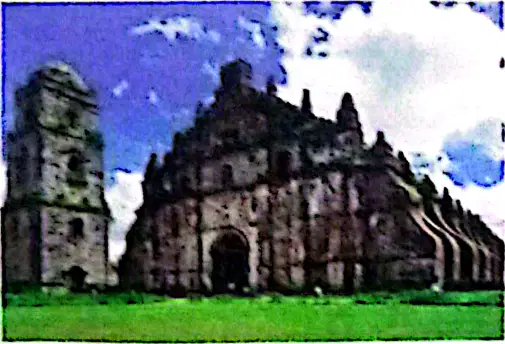
Look at the images of churches. Among these various architectural marvels, which specific church is prominently shown in the top left image, characterized by its massive stone structure and set against a picturesque blue sky background?
San Agustin Church in Paoay, Ilocos Norte
Interior of San Agustin Church
Miag-ao Church in Iloilo
Spanish colonial era street
What does the Bahay na Kubo, a traditional Filipino house made of bamboo and nipa palm, represent in the rural areas of the Philippines, where it is often seen surrounded by lush greenery and agricultural fields? This iconic structure, which has been a part of Filipino culture for generations, symbolizes more than just a place of residence; it embodies the values, traditions, and way of life of the Filipino people living in harmony with nature.
The simplicity of life, reflecting the humble and straightforward lifestyle of the rural Filipino people, who often prioritize community and family over material wealth.
The wealth of the city, which contrasts sharply with the modest living conditions found in the countryside, highlighting the disparities between urban and rural lifestyles.
The power of the government, which is often felt in urban areas but less so in rural communities, where local traditions and self-sufficiency prevail.
The influence of Spanish officials, whose architectural styles have left a lasting mark on Filipino culture, blending indigenous and colonial elements in the design of homes.
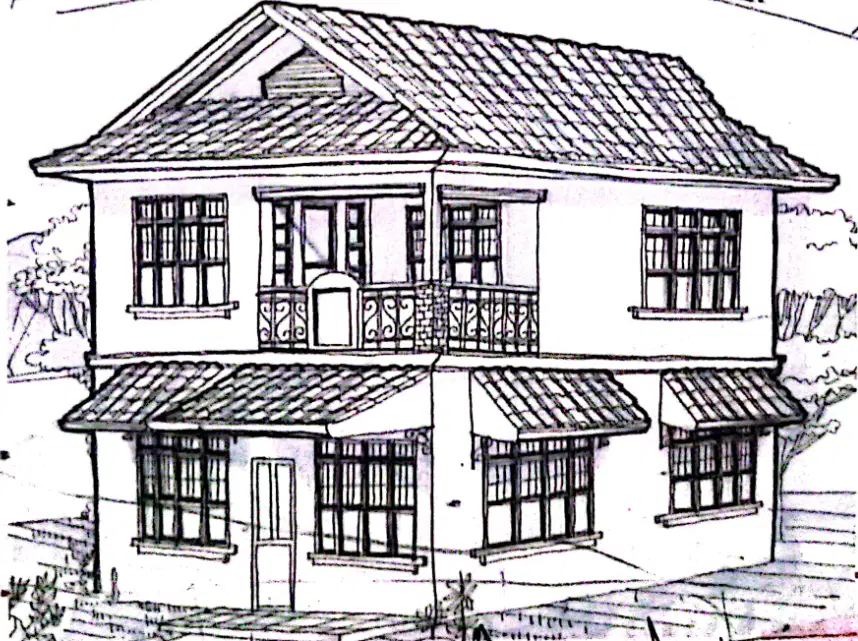
Based on the detailed drawing of the traditional Bahay na Bato, which is a well-known architectural style in the Philippines that showcases a unique blend of indigenous and colonial influences, which technique would best add texture to effectively show the stone material of the house in a visually appealing manner? This architectural style is characterized by its sturdy stone foundation, wooden upper floors, and intricate design elements that reflect the rich cultural heritage of the Philippines.
Using shading, thicker lines, and crosshatching
Using only light lines and no shading
Adding bright colors and patterns
Drawing with dotted lines only
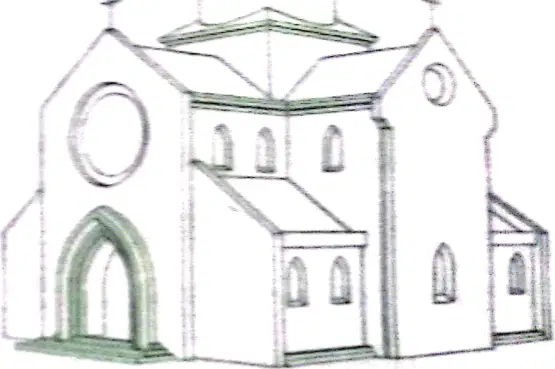
What is considered the greatest legacy from Spain in the Philippines, particularly as it is reflected in the stunning architecture of grand churches that can be found across the country? These churches not only showcase intricate designs that highlight the artistic skills of the time but also carry significant historical importance, representing the deep-rooted influence of Spanish colonization on Filipino culture and society.
Christianity
Trade routes
Rice farming
Traditional clothing
Which year did the Americans establish a military government in the Philippines after Spanish colonization ended, marking a significant shift in the governance of the islands?
1898, the year when the Treaty of Paris was signed, officially ending the Spanish-American War and transferring control of the Philippines from Spain to the United States
1901 with the arrival of the Thomasites, who were tasked with establishing a public education system and promoting American values in the newly acquired territory
1946 after independence, when the Philippines became a fully sovereign nation, officially ending American colonial rule
1910 during rapid urbanization, a period characterized by significant economic and social changes, as well as the development of infrastructure in the islands
What was one major change in the school curriculum during the American period compared to the Spanish period in the Philippines, particularly in terms of the subjects that were emphasized and the overall educational philosophy? Please elaborate on how this shift impacted the educational landscape and the students' learning experiences during that time.
Religion was removed from the curriculum, allowing for a more secular approach to education, which aimed to promote critical thinking and scientific inquiry among students.
Art was added as a main subject, reflecting a broader appreciation for creative expression and cultural development, encouraging students to explore their artistic talents and understand their cultural heritage.
Filipino language was no longer taught, which significantly impacted the preservation of local culture and identity, leading to a gradual decline in the use of native languages in formal education.
History was taught only by American teachers, which influenced the perspective and interpretation of historical events, often presenting a narrative that aligned with American values and viewpoints.
During the American period in the Philippines, which lasted from 1898 to 1946, how many years did the elementary level of education consist of, considering the various stages of learning that were implemented during that time to enhance the educational system and provide a structured approach to learning for Filipino children?
Seven years: four primary and three intermediate, which allowed students to build a strong foundation in basic subjects such as reading, writing, and arithmetic, essential for their future academic pursuits.
Six years: three primary and three intermediate, designed to equip students with essential skills for further education and to prepare them for the challenges of a rapidly changing society.
Eight years: four primary and four intermediate, providing a comprehensive educational experience for young learners, ensuring they were well-prepared for higher education and vocational training.
Five years: two primary and three intermediate, focusing on the fundamental aspects of education, which aimed to instill basic knowledge and skills necessary for everyday life.
Who were the Thomasites and what was their significant role in the educational development of the Philippines during the American colonial period, particularly in the context of the changes brought about by American governance and the introduction of a new educational system?
They were a dedicated group of teachers who arrived in 1901 with the mission to continue the educational efforts initiated by American soldiers, serving as the first formal educators for the Filipino people, and played a crucial role in establishing a public school system that emphasized English language instruction and modern educational practices.
They were a team of American architects who were responsible for designing various government buildings in Manila, contributing to the architectural landscape of the city, and their work reflected the American influence on urban planning during the early 20th century.
They were a collective of Filipino artists who actively promoted American art and culture through various exhibitions and public displays, helping to bridge cultural exchanges between the Philippines and the United States during a time of significant political change.
They were a group of Spanish priests who played a role in teaching religion in schools, influencing the spiritual education of the youth, and their presence was part of a broader educational framework that included both religious and secular instruction.
Which of the following structures or landmarks was NOT built or reconstructed during the American period in the Philippines, a time marked by significant changes and developments in the country's infrastructure, particularly in the areas of public health, urban planning, and recreational spaces? This period saw the introduction of various modern facilities and parks that aimed to enhance the quality of life for Filipinos, reflecting the influence of American culture and governance.
Ancient Spanish churches, which have stood for centuries and reflect the colonial history of the Philippines, were constructed long before the American period and serve as a testament to the country's rich cultural heritage.
Modern hospitals that were established to improve healthcare services for the Filipino population during the American period, aiming to provide better medical care and facilities to the citizens.
Luneta Park, a historical urban park that serves as a national monument and a popular gathering place for both locals and tourists, was developed during the American period to promote leisure and public events.
Burnham Park in Baguio City, designed by the American architect Daniel Burnham, which became a key recreational area for residents and visitors alike, showcasing the American influence on urban design and public spaces.
What was the main purpose of American architects and engineers going to Manila during the American period, particularly in terms of urban development and infrastructure improvement?
To start a comprehensive plan to modernize the city and enhance its infrastructure
To build only schools and hospitals, focusing solely on educational and health facilities
To reconstruct Spanish churches, preserving historical architecture while promoting cultural heritage
To teach art and culture to Filipinos, fostering a deeper understanding of American artistic influences
Look at the image of the Manila Hotel building, a prominent structure in the Philippines that has stood the test of time and is known for its historical significance. What does this iconic building represent about American influence in the Philippines, particularly in terms of architectural styles and cultural integration during the colonial period?
It shows how American architecture greatly influenced Philippine buildings, reflecting a blend of styles that emerged during the colonial period, showcasing the fusion of local and foreign design elements.
It was built by Spanish architects before American colonization, showcasing the historical architectural practices of the time and the transition of styles that occurred with the arrival of American influence.
It is an example of Filipino traditional design, representing the rich cultural heritage of the local population, and how these traditions were preserved even amidst foreign influences.
It was used only as a government office during the American period, highlighting its role in the administrative functions of the colonial government, and how it served as a symbol of American governance in the region.
Which two institutions were founded during the American colonial government in the Philippines, as shown in the images? These institutions played significant roles in the development of education and healthcare in the country.
The Philippine General Hospital (PGH) and the University of the Philippines (UP), both of which have contributed immensely to the healthcare and educational landscape of the nation.
The Manila Cathedral and the National Museum, which are important cultural and historical landmarks in the Philippines.
The Spanish Embassy and the Rizal Monument, representing the historical ties and national pride of the Filipino people.
The Burnham Park and the Luneta Park, which are popular recreational areas that reflect the country's rich history.
During which historical period did the construction of bungalow houses for common Filipino families begin, and what was a key feature of these houses?
During the American period; they were known for their simplicity in design, which made them accessible and practical for everyday living.
During the Spanish period; they were known for their elaborate decorations, reflecting the influence of Spanish colonial architecture.
During the Japanese period; they were known for their tall structures, which were designed to accommodate the needs of the time.
During the pre-colonial period; they were known for their use of bamboo, showcasing the indigenous materials available in the region.
Which Filipino painter, who was not only an uncle but also a significant mentor to the renowned artist Fernando Amorsolo, played a crucial role in introducing the decorated form of painting to his students at the prestigious University of the Philippines, thereby influencing the direction of Philippine art during the early 20th century?
Fabian dela Rosa
Manuel Baldemor, who is also a sculptor and printmaker
Fernando Amorsolo, who painted rural landscapes
Juan Luna, who is known for historical paintings
Which of the following paintings was created by the renowned Filipino artist Fabian dela Rosa, who is known for his significant contributions to Philippine art and culture, particularly during the early 20th century when he played a pivotal role in shaping the artistic landscape of the Philippines?
Women Working in the Rice Field, a piece that beautifully captures the essence of rural life and the hard work of women in agriculture, showcasing their resilience and dedication to their families and communities.
Antipolo, which shows a group of people in a rural setting, reflecting the vibrant community life in the Philippines, and highlighting the cultural traditions and social interactions that define Filipino society.
Homage to the Blessed Mother, which features a church and a crowd, symbolizing the deep religious devotion of the Filipino people, and illustrating the importance of faith and spirituality in their daily lives.
Planting Rice, which depicts farmers in a field, illustrating the importance of rice cultivation in Filipino society, and emphasizing the agricultural practices that sustain the livelihoods of many families in the country.
Look at the image showing several women working together in a rice field, diligently tending to the crops under the warm sun, their hands skillfully moving through the lush green plants. This scene is not just a depiction of agricultural labor; it reflects the deep connection between the women and the land, showcasing their hard work and dedication to sustaining their families and communities. Which painter is known for this beautiful and evocative artwork that captures the essence of rural life, highlighting the beauty and simplicity of everyday tasks in a vibrant and engaging manner?
Fabian dela Rosa, renowned for his vibrant depictions of Filipino culture, often portraying the daily lives and traditions of the Filipino people in his works.
Fernando Amorsolo, who painted rural landscapes with a unique and captivating style, is celebrated for his ability to infuse light and warmth into his scenes, making them come alive.
Manuel Baldemor, who uses geometric forms to express modern themes, often explores contemporary issues through his art, providing a contrast to traditional representations.
Juan Luna, who is famous for historical scenes that reflect the struggles of the Filipino people, captures the essence of national identity and pride in his powerful compositions.
Fernando Amorsolo, a renowned Filipino painter, is best known for his exceptional ability to capture the beauty of everyday life in the Philippines through his artwork. His paintings often depict scenes that reflect the rural landscapes of the country, showcasing the serene beauty of nature and the simplicity of daily activities. Which type of scenes is he most celebrated for painting that beautifully encapsulate the essence of life in the Philippines?
Rural landscapes in the Philippines that depict the serene beauty of nature and everyday life, often featuring farmers, rice fields, and traditional Filipino homes.
Geometric scenes of festivals and celebrations that showcase vibrant cultural traditions, highlighting the colorful attire and lively atmosphere of Filipino festivities.
Decorated forms of painting taught at the University that reflect academic influences, focusing on techniques and styles that are rooted in formal art education.
Historical events from Philippine history that illustrate significant moments in the nation's past, capturing the struggles and triumphs of the Filipino people through visual storytelling.
Which prestigious title was bestowed upon the renowned Filipino painter Fernando Amorsolo, in recognition of his significant and lasting contributions to the field of Philippine art? His works have not only showcased the beauty of the Philippines but have also greatly influenced the country's cultural landscape and artistic heritage.
National Artist for Painting
Professor at the University of the Philippines
Internationally known sculptor
UNICEF greeting card illustrator
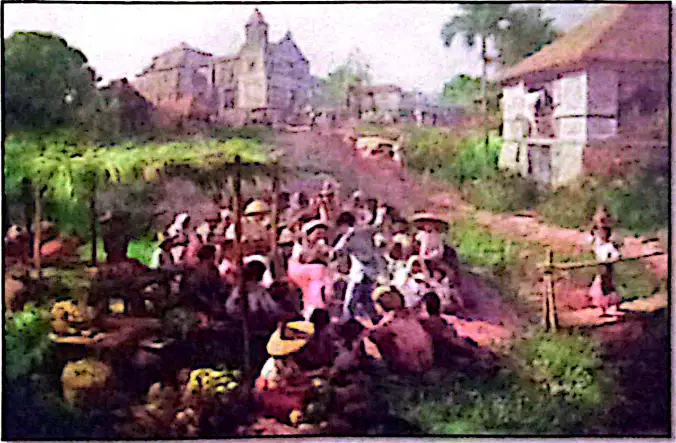
Look at the image showing a vibrant and lively group of people gathered outdoors, with a beautiful church standing majestically in the background. The scene is filled with vibrant colors and a lively atmosphere that truly captures the essence of community gatherings, where individuals come together to celebrate and share moments of joy. This stunning artwork is a beautiful painting by the renowned Filipino artist Fernando Amorsolo, who is celebrated for his exceptional depictions of Filipino life, culture, and landscapes. Can you identify the title of this remarkable painting?
Antipolo
Planting Rice, which shows farmers in a field
Women Working in the Rice Field, which features women in a rice field
Pahiyas Festival, which depicts a colorful celebration
Manuel Baldemor is a celebrated artist whose unique and vibrant works have gained international recognition. His art is not only appreciated in galleries but also reaches a wider audience through various mediums. One notable aspect of his acclaim is that his artworks are reproduced as greeting cards by a prominent organization known for its humanitarian efforts and unwavering support for children around the globe. Can you identify this organization?
UNICEF
National Museum of the Philippines, which displays art
University of the Philippines, which teaches art
Department of Education, which distributes textbooks
Which renowned Filipino artist is best known for his captivating paintings that utilize simplified geometric forms and vividly depict various scenes from his beloved hometown, including its people and their vibrant celebrations? His artwork showcases the rich culture and traditions that are deeply rooted in the community, reflecting the essence of Filipino life and heritage.
Manuel Baldemor
Fernando Amorsolo, who painted rural landscapes
Fabian dela Rosa, who taught decorated painting
Juan Luna, who is famous for historical scenes

Look at the image showing a colorful festival scene with many people and houses, which is vibrant and full of life, capturing the essence of a traditional celebration. This lively depiction is not just a mere representation of a festival; it embodies the rich cultural heritage and communal spirit of the event. The artist, Manuel Baldemor, is renowned for his ability to convey emotions and stories through his artwork. Which specific painting by this celebrated artist does this vibrant scene represent?
Pahiyas Festival
Homage to the Blessed Mother, which features a church and a crowd
Antipolo, which shows a rural gathering
Planting Rice, which depicts farmers in a field
Which painter is best matched with the following contribution: known for teaching decorated painting at the University of the Philippines, where he inspired many students with his unique techniques and artistic vision, and played a significant role in shaping the artistic landscape of the country during his time?
Fabian dela Rosa
Fernando Amorsolo, who painted rural landscapes
Manuel Baldemor, who uses geometric forms
Juan Luna, who is famous for historical scenes
Which of the following statements best describes the impact of colonial occupation in the Philippines according to the lesson? Consider the various aspects of society, culture, and economy that were influenced during this period, and think about how these changes have shaped the Philippines into what it is today.
The colonial occupation brought both positive and negative changes to the Philippines, including lasting culture and traditions that continue to influence Filipino society today, such as the integration of various foreign customs and practices that have enriched the local culture.
The colonial occupation only brought negative changes and destroyed Filipino culture, leading to a loss of identity and heritage that is still felt by many, as traditional practices and languages were suppressed in favor of colonial influences.
The colonial occupation had no impact on the Philippines, as the country remained unchanged in its cultural and social structures, suggesting that the indigenous ways of life continued unaffected despite foreign rule.
The colonial occupation made the Philippines a wealthy country, resulting in significant economic growth and prosperity for its citizens, which is often debated as many argue that wealth was concentrated among a few while the majority remained impoverished.
What significant gift did the Philippines receive from Spain during the colonial times, as mentioned in the lesson, which has had a lasting impact on the culture and society of the nation? This gift not only influenced the spiritual beliefs of the people but also played a crucial role in shaping the moral and ethical values that are prevalent in Filipino society today.
Christianity as a gift of faith, which shaped the spiritual landscape of the country and introduced various religious practices that are still observed by many Filipinos today.
Education as a gift of wisdom, which opened doors to knowledge and progress, leading to the establishment of schools and universities that have educated generations of Filipinos.
Trade as a gift of prosperity, which contributed to the economic development of the islands, fostering relationships with other nations and enhancing the local economy.
Independence as a gift of freedom, which allowed the nation to pursue its own path, ultimately leading to the establishment of a sovereign state and the development of a national identity.
Why are buildings, churches, and monuments built by foreign conquerors considered important landmarks in the Philippines, reflecting the rich tapestry of the nation's history and cultural evolution?
They are part of the stories that make up Philippine history and are recognized as important landmarks, serving as a testament to the country's diverse heritage and historical events.
They are only used for religious ceremonies and have no historical value, which diminishes their significance in the broader context of Philippine culture.
They are the oldest structures in the world, showcasing architectural styles that have influenced many generations.
They were built for entertainment purposes, which is often overlooked in discussions about their historical importance.
What does Intramuros symbolize in Philippine history, particularly in relation to the colonial period and its impact on the Filipino identity? Intramuros, often referred to as the "Walled City," served as the seat of power during the Spanish colonial era, and its walls tell a story of the complex interactions between colonizers and the indigenous population. How does this historical site reflect the broader themes of colonialism, resistance, and the evolution of Filipino identity?
The power of Spain over the Philippines, showcasing the colonial dominance and influence that shaped the nation's early history, as evidenced by the architecture and governance established within its walls.
The independence of the Philippines from Spain, representing the struggle and eventual triumph of the Filipino people in their quest for self-determination, which was symbolized by various uprisings and movements that sought to dismantle colonial rule.
The wealth of Filipino merchants, highlighting the economic activities and trade that flourished during the colonial era, particularly within the bustling markets and ports that were integral to the economy of Intramuros.
The unity of Filipino tribes, emphasizing the cultural and social bonds that existed among various groups in the archipelago, which were often tested and transformed during the colonial period as different cultures interacted within the confines of Intramuros.
Look at the images showing Intramuros, the historic walled city in Manila, and a traditional house built inside its fortified walls. Which statement is true about these structures that represent a significant part of Philippine history?
Intramuros was a symbol of Spanish power during the colonial period, and the houses built inside it were constructed during this time, reflecting the architectural styles and cultural influences that were prevalent in that era.
Intramuros served as a bustling marketplace, and the houses within its walls were built for traders, functioning as a central hub for commerce and exchange during its peak, where goods and services were traded.
Intramuros was once home to educational institutions, and the houses were utilized for educational purposes, providing a space for learning and intellectual growth within the community, fostering a culture of knowledge.
Intramuros was designed as a recreational park, and the houses were constructed for leisure activities, offering a serene place for relaxation and enjoyment amidst the rich historical backdrop of the city.
Why was the walled city of Intramuros in Manila, which was constructed during the Spanish colonial period, considered to be of great importance not only for its strategic military advantages but also for its profound symbolic significance in representing Spanish authority and control over the Philippines?
It served as the fortress of Spanish officials and was a symbol of power for Spain, representing the colonial authority and control over the Philippines, particularly during a time when the Spanish sought to establish their dominance in the region.
It was the main trading center for Filipino merchants, facilitating commerce and interaction between local and foreign traders, thus playing a crucial role in the economic landscape of the archipelago.
It was the location of the first Filipino government, marking a significant step in the political evolution of the nation, as it laid the groundwork for future governance and independence movements.
It was a place for Spanish officials to relax and enjoy leisure activities, providing a contrast to their official duties and responsibilities, and reflecting the lifestyle of colonial elites during that era.
Which two of the oldest churches in the Philippines, known for their historical significance and architectural beauty, are located inside the historic walled city of Intramuros, a site that has witnessed centuries of Philippine history and is a popular destination for both local and international tourists?
The Minor Basilica and Metropolitan Cathedral of the Immaculate Conception (commonly referred to as the Manila Cathedral) and the San Agustin Church, both of which have played important roles in the religious and cultural history of the country, serving as venues for significant events and celebrations throughout the years.
Santa Maria Church and Paoay Church, which are renowned for their unique architectural styles and historical importance, attracting visitors who appreciate their intricate designs and the stories they tell about the Philippines' colonial past.
Miag-ao Church and Santa Maria Church, both of which are recognized as UNESCO World Heritage Sites for their remarkable designs, showcasing the rich cultural heritage and artistry of Filipino craftsmen during the Spanish colonial period.
San Agustin Church and Miag-ao Church, which are celebrated for their stunning baroque architecture and rich histories, often drawing the attention of historians and architecture enthusiasts alike for their unique features and the narratives they embody.

Look at the images of the four Baroque Churches of the Philippines designated as UNESCO World Heritage Sites, which are renowned for their historical significance and architectural beauty. These churches not only reflect the rich cultural heritage of the Philippines but also showcase the intricate artistry and craftsmanship of their time. Among these remarkable structures, can you identify which church is located in the province of Ilocos Norte, known for its stunning architecture and historical importance?
Paoay Church
San Agustin Church
Manila Cathedral
Miag-ao Church
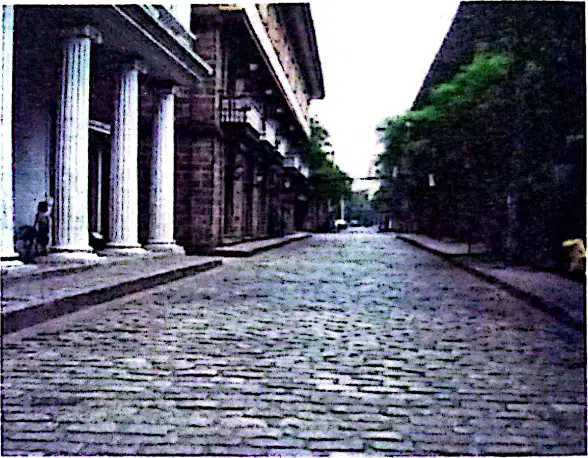
Which architectural style is prominently evident in the picturesque image of Calle Real, a historic street located within the walls of Intramuros, a significant and culturally rich area in Manila, Philippines? This area is renowned for showcasing the rich cultural heritage of the Philippines and was commonly utilized by Spanish officials during their colonial rule in the country. The image captures the essence of this architectural style, characterized by its unique features and historical significance.
Bahay na Bato
Modern Filipino
Neo-Gothic
Art Deco
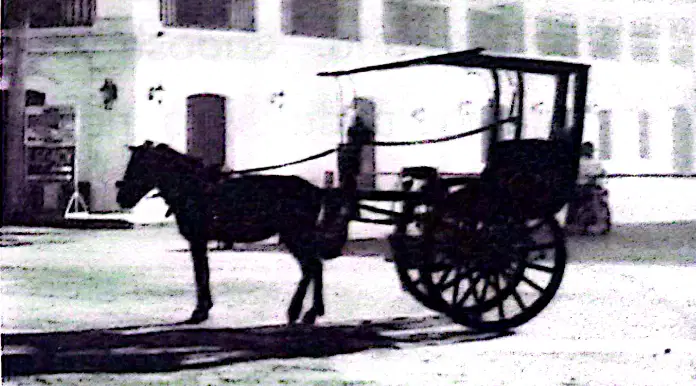
In creating a beautiful painting that features a traditional kalesa, which is a horse-drawn carriage commonly seen in the Philippines, prominently in the foreground while also showcasing a picturesque Vigan house, known for its unique architecture and historical significance, in the background, which artistic principle should you apply to effectively show depth and perspective in your artwork? This is crucial for making the scene more realistic and engaging for the viewer.
Use proper shadow and shades
Draw everything in one color
Ignore the background
Make the foreground blurry

