
 Worksheets
3rd Term Geography Quarterly exam
Total questions: 24
Worksheet time: 2hrs 0mins
What is the name of one of the main topic of the learning material for this test?
Political Organization and Administrative Structures in Europe & the World
Economic Development in Asia
History of Ancient Civilizations
Environmental Issues in Africa
When did the Cold War end?
Around 1990
Around 1980
Around 2000
Around 1970
Which large country split into smaller countries such as Ukraine and Estonia after 1990?
Soviet Union
Yugoslavia
Germany
France
The end of the Cold War led to the creation of new states in Europe and Asia. Which of the following best explains how this happened?
The end of the Cold War caused large countries like the Soviet Union and Yugoslavia to break up, resulting in the formation of new independent states such as Ukraine, Estonia, and Slovenia.
The end of the Cold War only affected countries in Africa.
The end of the Cold War had no impact on the borders of countries.
The end of the Cold War led to the merging of countries into larger empires.
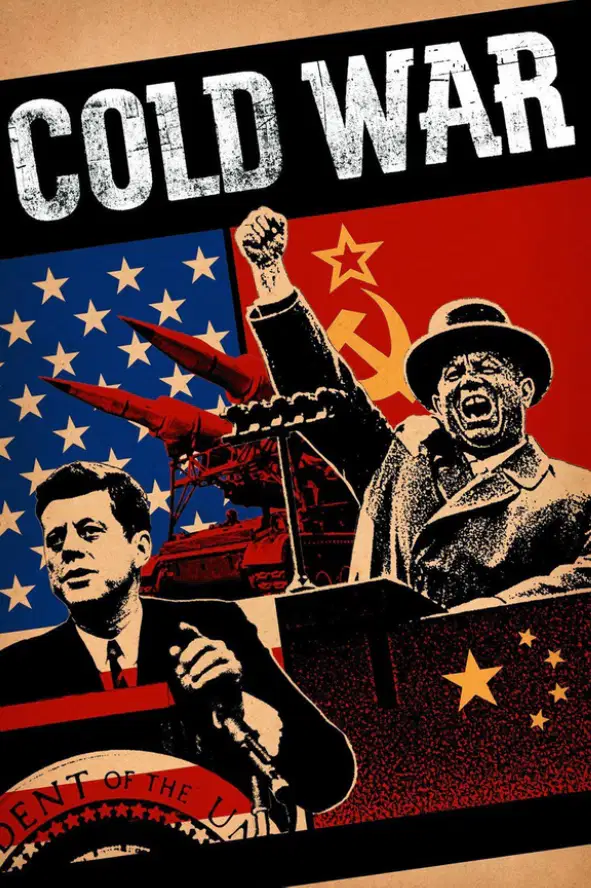
Which two countries were the main rivals during the Cold War?
USA and Germany
USA and USSR
USA and Japan
USA and China
The Cold War is described as a "rivalry" rather than a direct war because:
They never fought directly but competed in other areas like politics, armies, and space.
They fought many battles.
They were always allies.
They never competed in any way.
Which of the following countries is NOT listed as a member or participant in the CEI?
Russia
Ukraine
Belarus
Poland
Ukraine's participation in the CEI is described as:
Full member
Not involved at all
Participates in some activities, not a full member
Leading country
How does the United Nations help countries solve global problems?
By working as a big team where countries help each other
By forcing countries to follow one leader
By making countries compete against each other
By ignoring international issues
What does NATO stand for?
North Atlantic Treaty Organization
National Association of Treaty Officers
Northern Alliance Treaty Organization
New Atlantic Treaty Office
Countries might choose to join NATO for which of the following reasons?
To gain access to new markets
To ensure mutual protection and security
To improve their cultural heritage
To reduce their military spending
What does "UN" stand for and what is its main focus?
United Nations – world organization for peace and cooperation
United Nations – military alliance
United Nations – economic union
United Nations – environmental protection
Which organization consists of former Soviet countries cooperating?
CEI
CSCE
EU
UN
(DoK Level 3) Imagine a new environmental issue arises in the Baltic Sea. Which organization from the vocabulary list would most likely take the lead in addressing this issue, and why?
HELCOM, because it is focused on protecting the Baltic Sea environment.
NATO, because it is a military alliance.
EU, because it is a group of European countries.
UN, because it is a world organization for peace.
What is the primary purpose of economic integration among countries?
To create common markets and reduce trade barriers
To increase military cooperation
To promote cultural exchanges
To establish a single currency
What does OPEC stand for?
Organization of Petroleum Exporting Countries
Organization of Political and Economic Cooperation
Organization of People’s Economic Council
Organization of Public Education and Culture
Which association promotes political, economic, and cultural cooperation in Southeast Asia?
OIC
ASEAN
Arab League
OLP
What is the main focus of the Arab League?
To promote tourism in Arab nations
To work together on political and economic issues
To coordinate military actions
To establish a common currency
What does the OIC represent?
Non-Muslim countries
Muslim-majority countries worldwide
Countries in Southeast Asia
Oil-exporting nations
What is the purpose of the OLP?
To promote economic growth in Arab nations
To represent the Palestinian people
To coordinate oil policies
To enhance cultural cooperation
What does modernization refer to?
The process of maintaining traditional practices
The process of adopting new technologies and systems
The process of increasing military strength
The process of reducing trade barriers
What is the Japanese Economic Model known for?
Its focus on agriculture
Its industrial and technological approach leading to rapid economic growth
Its reliance on foreign aid
Its emphasis on tourism
What are Newly Industrialized Countries?
Nations that are fully developed
Nations moving from developing to developed status through industrialization
Countries that primarily rely on agriculture
Countries with no industrial base
What do repercussions refer to in an economic or political context?
The initial benefits of a policy
The consequences or effects resulting from major changes
The plans for future development
The agreements made between countries

