
 Worksheets
WG: PUSD CARES: Lesson 2: Equality & Cultural Appreciation Quiz
Total questions: 52
Worksheet time: 26mins

What is the main theme of the learning material shown in the image?
Identity: Celebrating and Appreciating Yourself & Others
Teamwork and Collaboration
Cultural Diversity and Inclusion
Personal Growth and Development
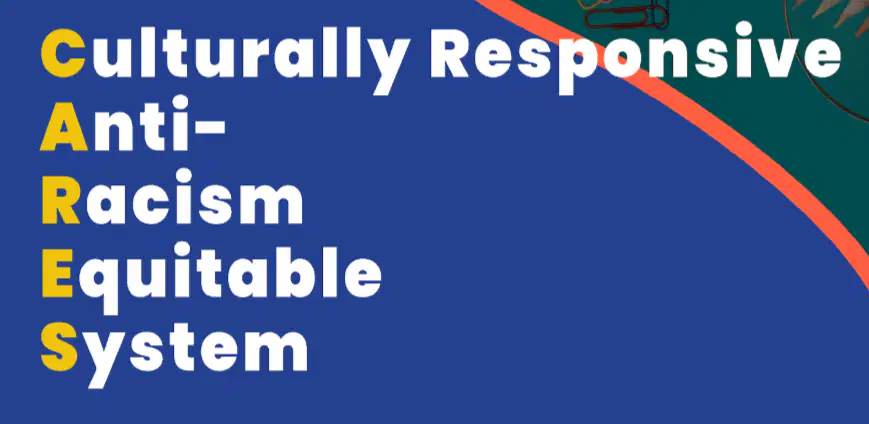
What does the acronym "CARES" stand for in the PUSD CARES initiative?
Community Awareness, Respect, Equality, Support
Culturally Responsive, Anti-Racism, Equitable System
Cultural Acceptance, Racial Equality, Systematic Change
Caring, Respectful, Equitable Solutions

Which school district is associated with the PUSD CARES initiative?
Pasadena Unified School District
Pomona Unified School District
Palmdale Unified School District
Paramount Unified School District

What is the primary focus of the PUSD CARES initiative?
Promoting sports and extracurricular activities
Encouraging cultural responsiveness, anti-racism, and equity
Providing financial aid to students
Supporting technological advancements in schools
What does it mean to be proud of both your individual identity and your cultural group?
It means valuing your personal achievements and cultural heritage equally.
It means ignoring your cultural background and focusing only on individuality.
It means prioritizing your cultural group over your personal identity.
It means rejecting both individual and cultural pride.
How can you express pride in your identity while respecting the culture of others?
By celebrating your identity and showing appreciation for other cultures.
By focusing only on your own culture and ignoring others.
By comparing your culture to others and proving its superiority.
By avoiding discussions about identity and culture altogether.
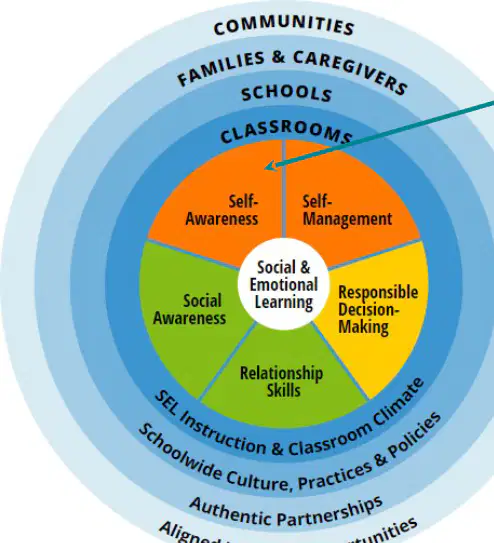
What is the primary focus of "Self Awareness" in Social Emotional Learning?
Understanding one's own emotions, thoughts, and values and how they influence behavior across contexts.
Managing relationships effectively and resolving conflicts.
Making responsible decisions based on ethical considerations.
Developing cultural and linguistic assets.
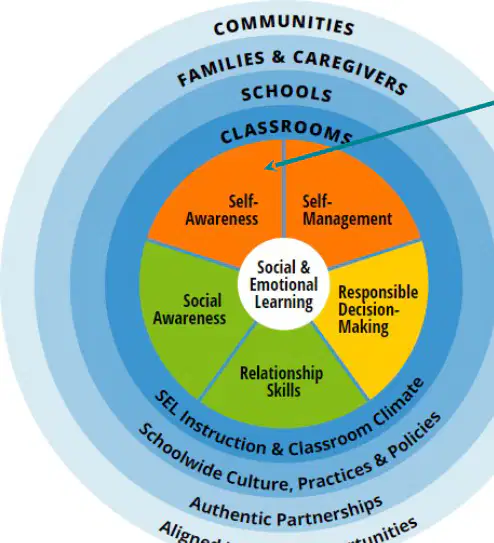
Which of the following is NOT a capacity included in Self Awareness?
Recognizing one's strengths and limitations.
Integrating personal and social identities.
Identifying one's emotions.
Managing classroom climate and instruction.
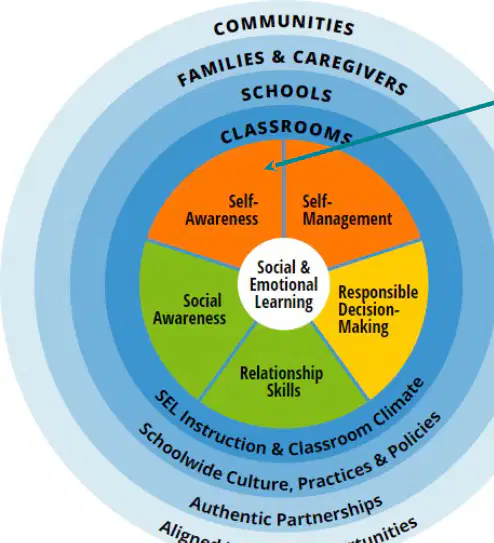
What does Self Awareness help individuals develop?
A well-grounded sense of confidence and purpose.
Skills to manage relationships effectively.
Strategies for making responsible decisions.
Techniques for improving classroom instruction.
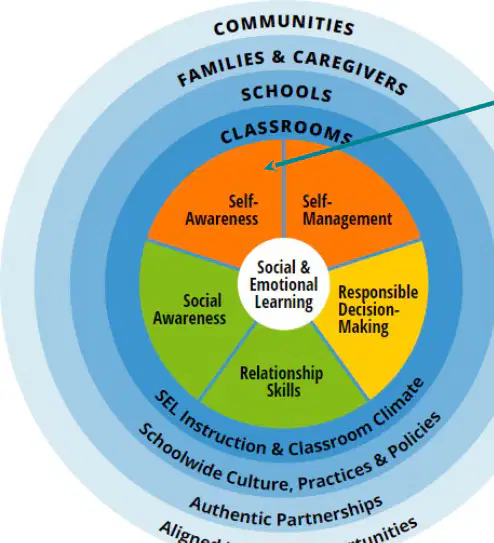
Which of the following is a key aspect of Self Awareness in Social Emotional Learning?
Identifying personal, cultural, and linguistic assets.
Developing relationship skills.
Making ethical decisions.
Managing emotions in stressful situations.
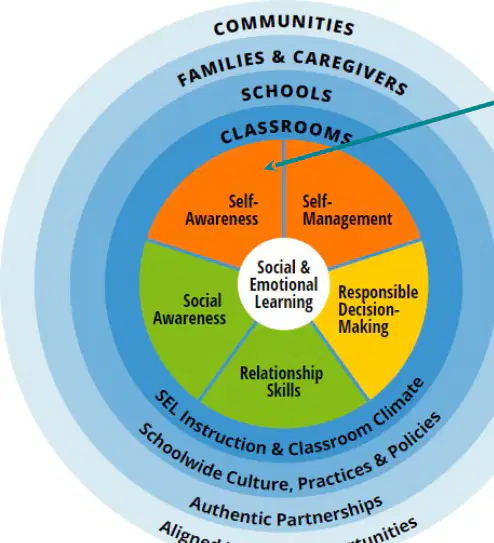
Which of the following is a component of Social Emotional Learning as shown in the diagram?
Self-Awareness.
Academic Achievement.
Physical Education.
Classroom Management.
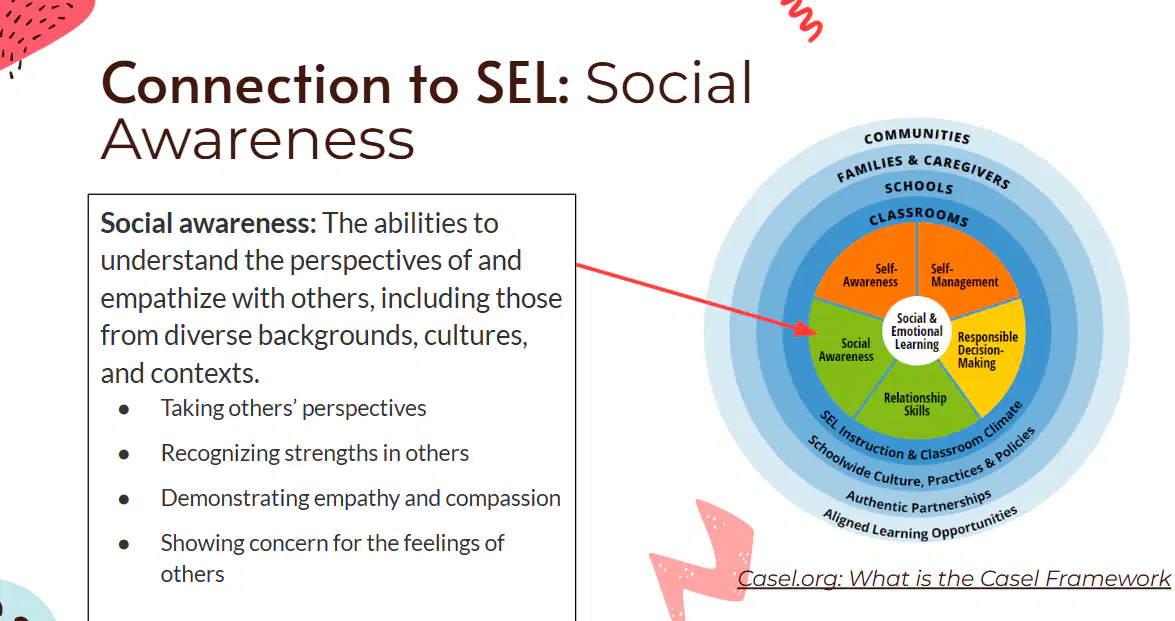
What is the definition of social awareness according to the provided material?
The ability to manage emotions and behaviors effectively.
The ability to understand the perspectives of and empathize with others, including those from diverse backgrounds, cultures, and contexts.
The ability to make responsible decisions based on ethical standards.
The ability to build and maintain healthy relationships.
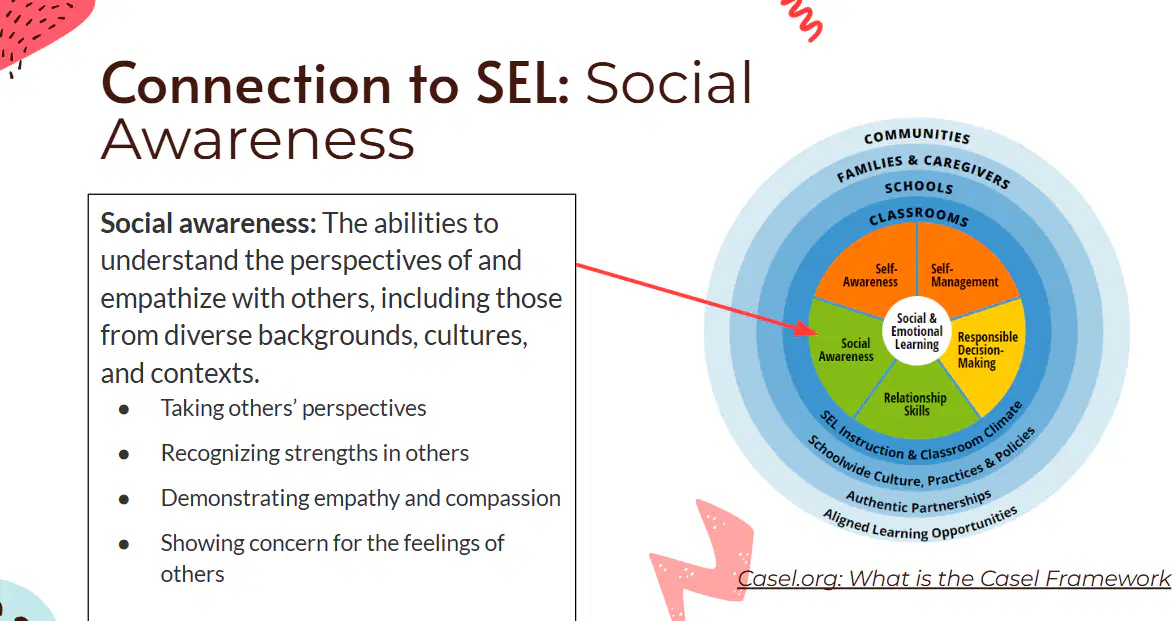
Which of the following is NOT a component of social awareness?
Taking others’ perspectives.
Recognizing strengths in others.
Demonstrating empathy and compassion.
Making responsible decisions based on ethical standards.
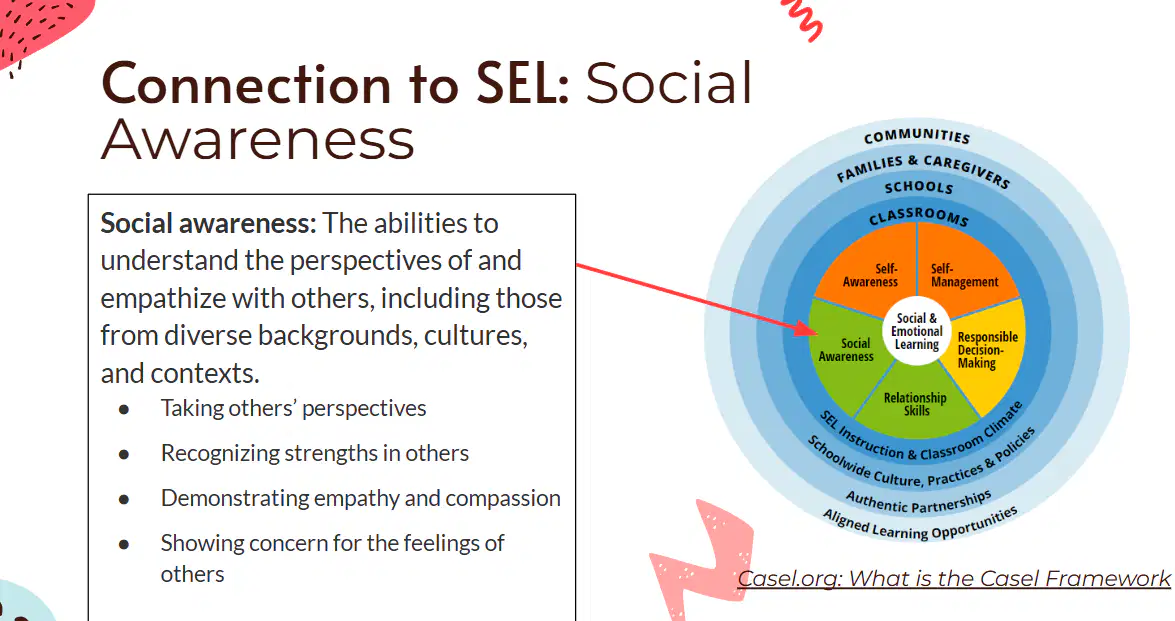
Which skill is emphasized in social awareness?
Showing concern for the feelings of others.
Managing emotions and behaviors effectively.
Setting and achieving personal goals.
Developing self-discipline.

What is the main focus of the CASEL framework in relation to social awareness?
Promoting academic success only.
Encouraging students to focus solely on self-management.
Developing social and emotional learning skills, including understanding diverse perspectives and empathy.
Focusing on schoolwide policies without individual development.
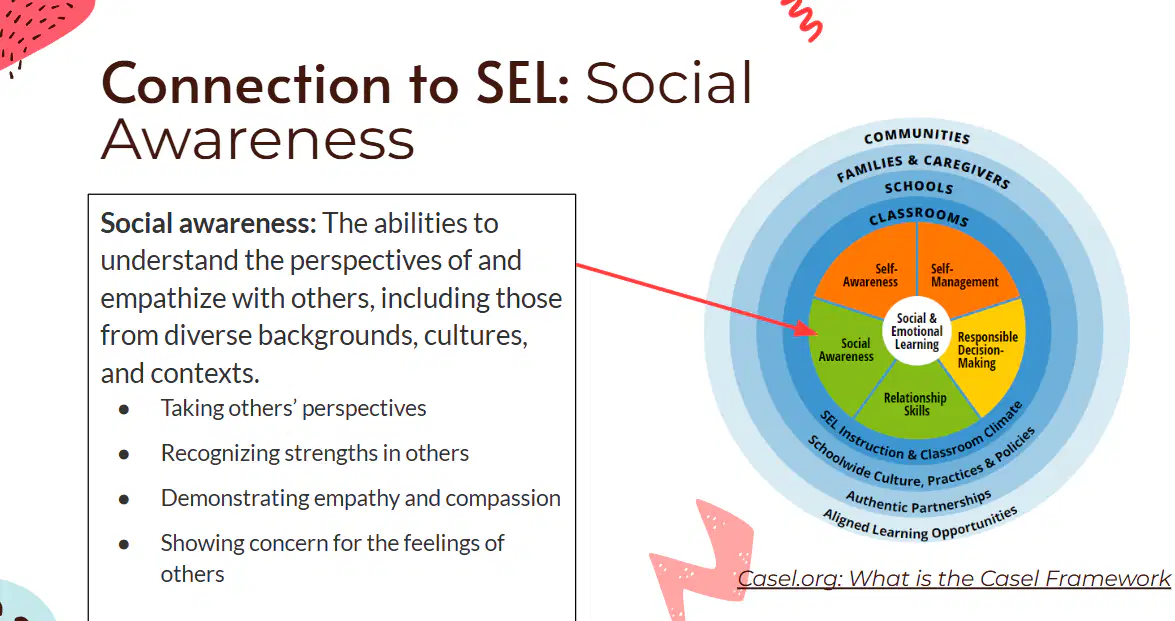
Which of the following is an example of demonstrating social awareness?
Ignoring the feelings of others.
Recognizing the strengths in others.
Focusing only on personal goals.
Avoiding interaction with people from diverse backgrounds.
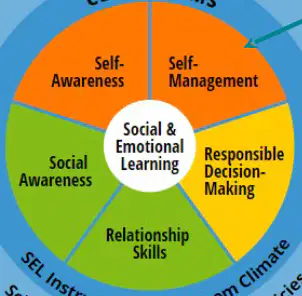
What is the primary focus of 'Self Management' in Social Emotional Learning?
Managing one's emotions, thoughts, and behaviors effectively to achieve goals and aspirations.
Understanding the emotions of others and building relationships.
Making responsible decisions in challenging situations.
Developing awareness of social norms and expectations.
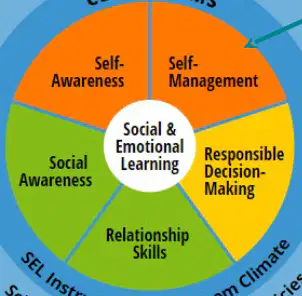
Which of the following is NOT a capacity included in Self Management?
Delaying gratification.
Managing stress.
Understanding social norms.
Feeling motivation and agency to accomplish goals.
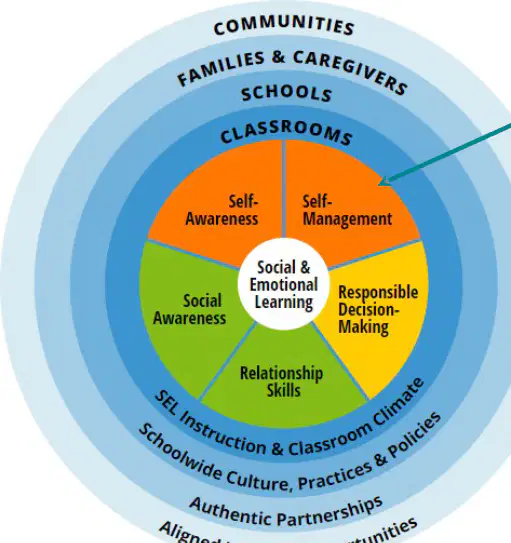
What does Social Emotional Learning aim to achieve in classrooms?
Aligned learning opportunities and authentic partnerships.
Developing self-discipline and motivation.
Building schoolwide culture and practices.
All of the above.
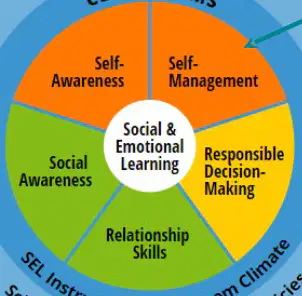
Which skill is associated with showing courage to take initiative?
Self-Awareness.
Self-Management.
Social Awareness.
Responsible Decision-Making.
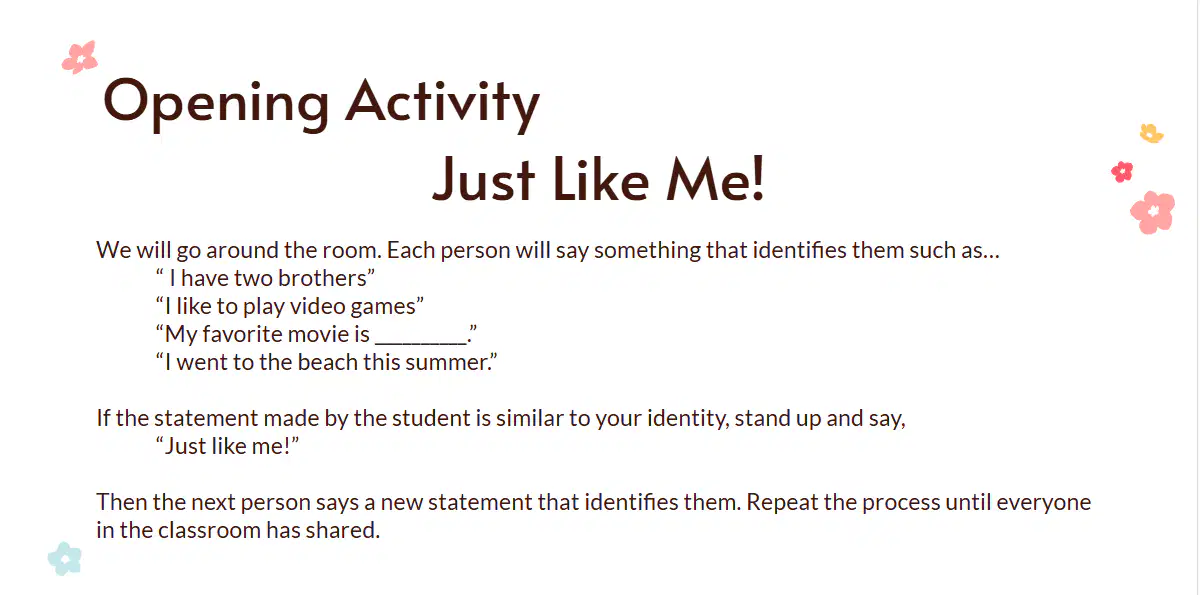
What is the main activity described in the "Just Like Me!" opening activity?
Sharing statements that identify oneself and finding similarities with others
Playing video games together
Watching movies as a group
Writing about summer vacations
What should a student say if they hear a statement that is similar to their identity during the activity?
Me too!
Just like me!
That's interesting!
I agree!
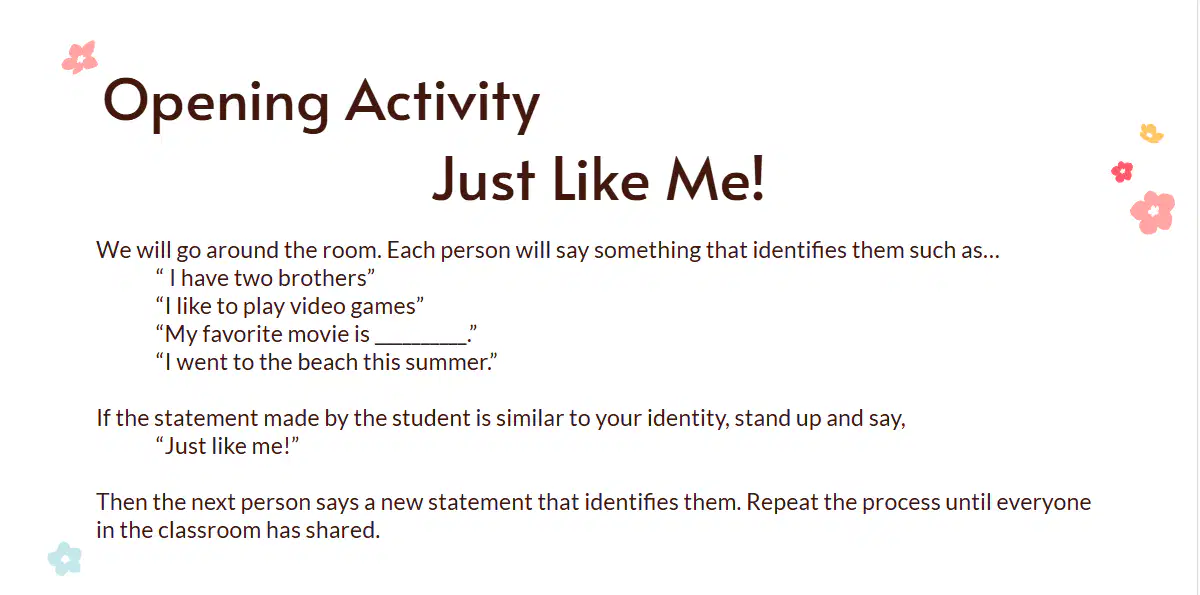
Which of the following is an example of a statement a student might share during the "Just Like Me!" activity?
I have two brothers
I like to play video games
My favorite movie is ________.
All of the above

What happens after a student says "Just like me!" during the activity?
The activity ends
The next person shares a new statement that identifies them
Everyone claps
The teacher gives feedback
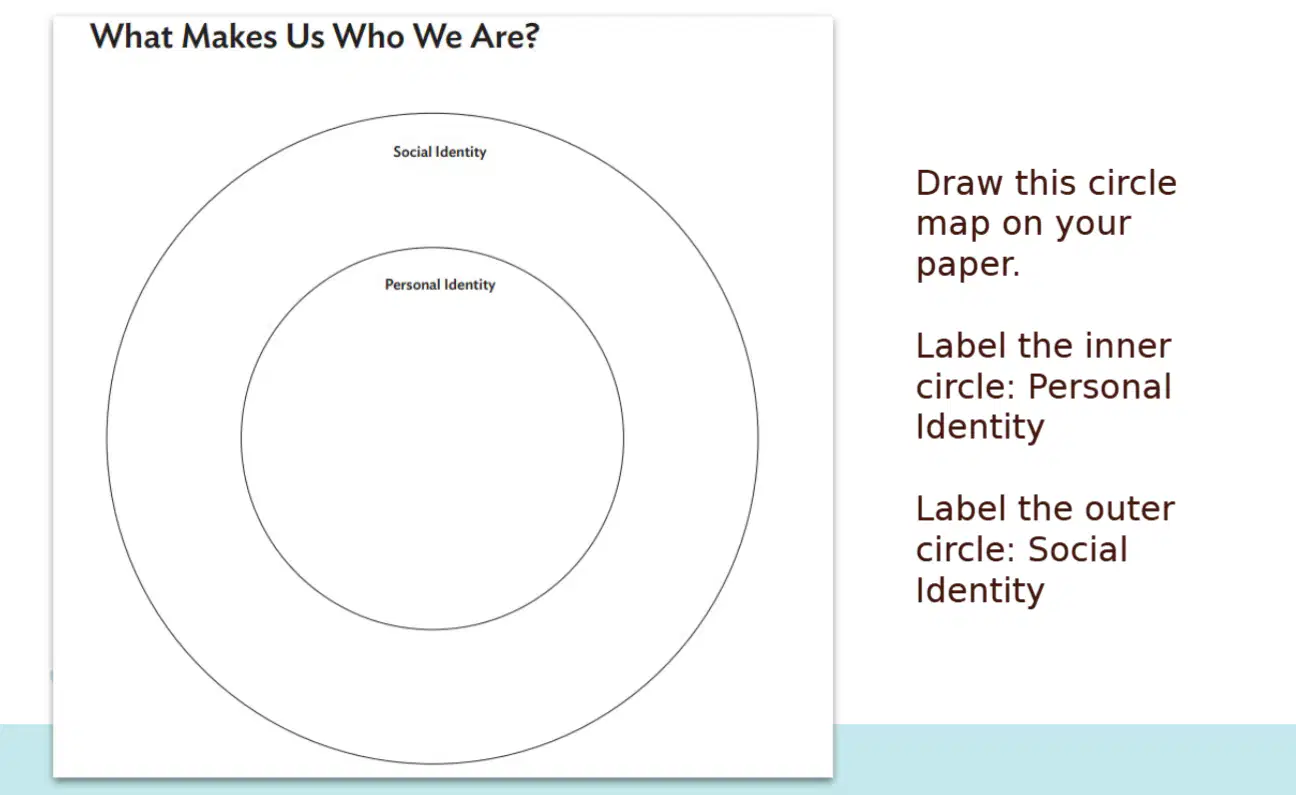
What does the inner circle in the diagram represent?
Social Identity
Personal Identity
Cultural Identity
Group Identity
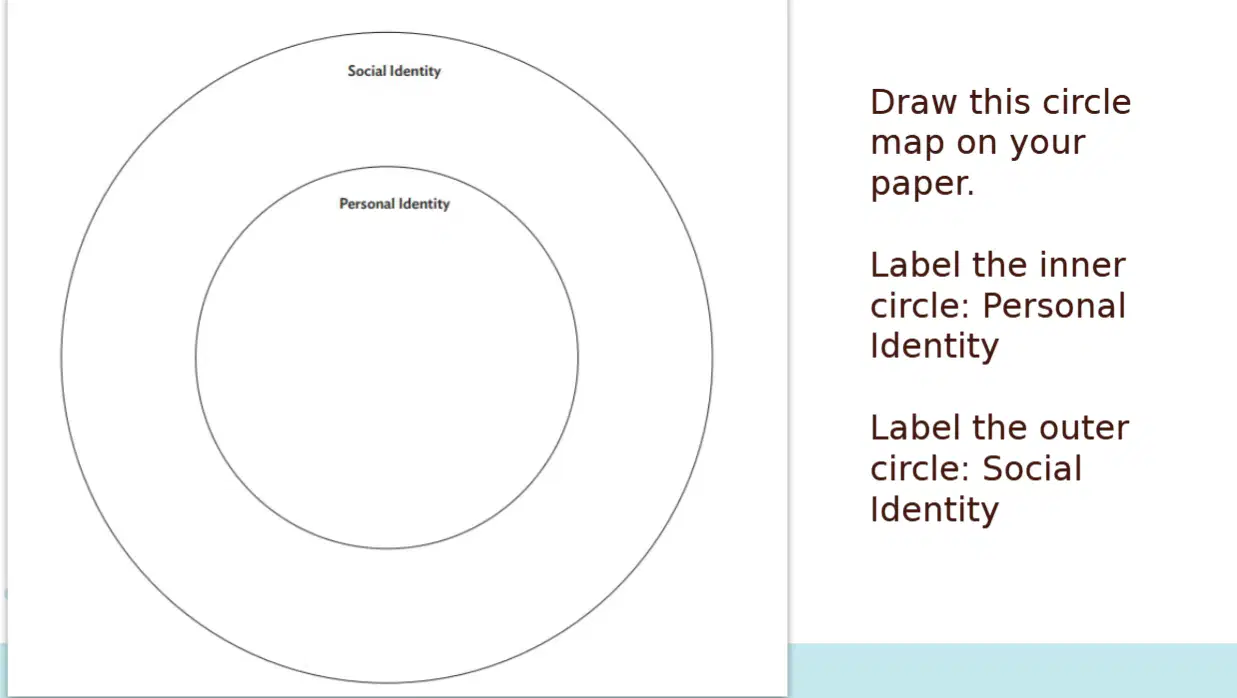
What does the outer circle in the diagram represent?
Personal Identity
Social Identity
Individual Identity
Emotional Identity

Which of the following is an example of Social Identity?
Your favorite hobby
Your family traditions
Your role in a community group
Your personal goals
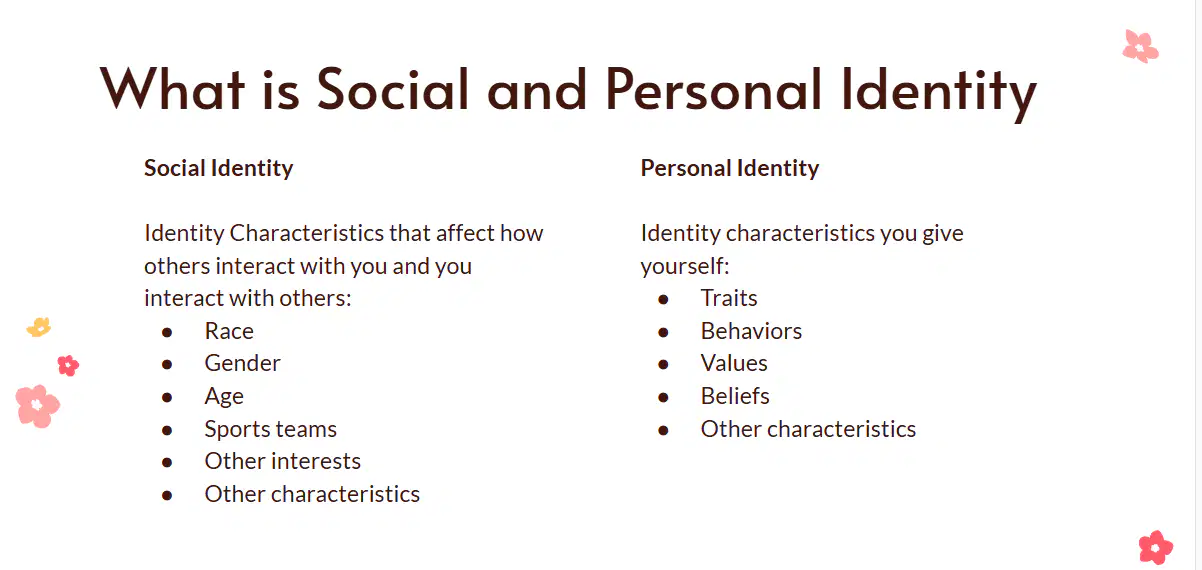
Which of the following is an example of Personal Identity?
Your nationality
Your favorite color
Your school name
Your neighborhood
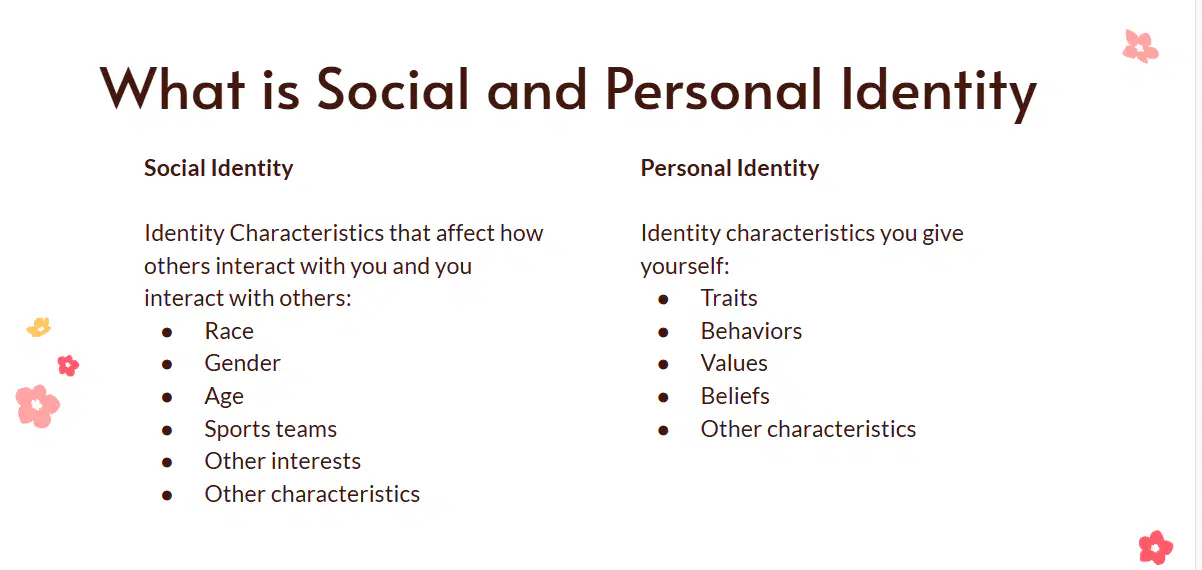
What is social identity?
Identity characteristics you give yourself
Identity characteristics that affect how others interact with you and you interact with others
Traits and behaviors you define for yourself
Beliefs and values you hold personally
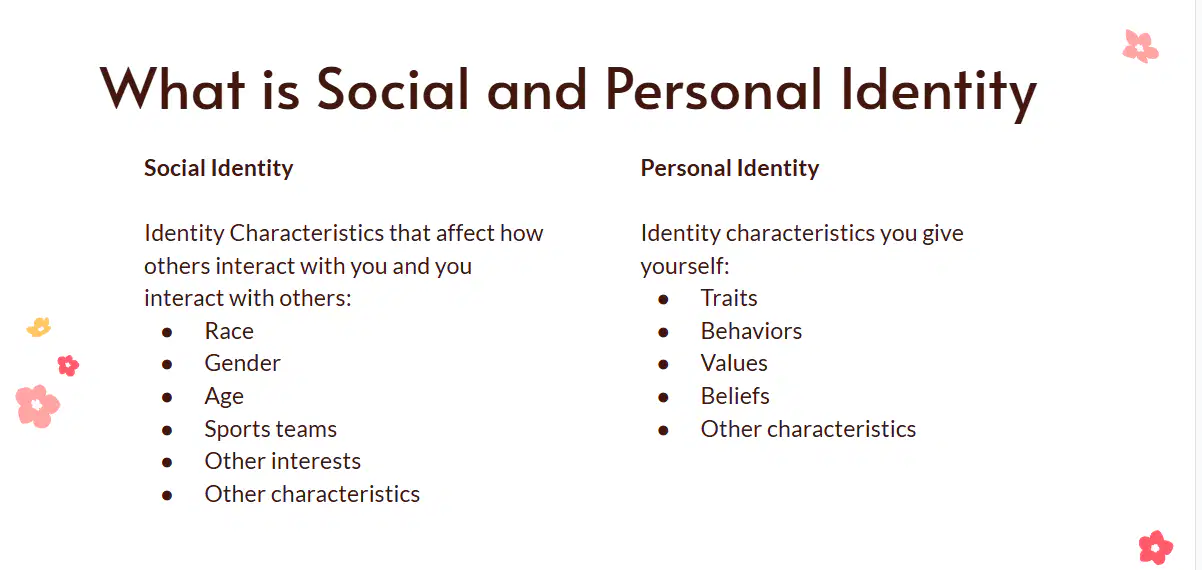
Which of the following is an example of social identity?
Traits
Behaviors
Race
Values
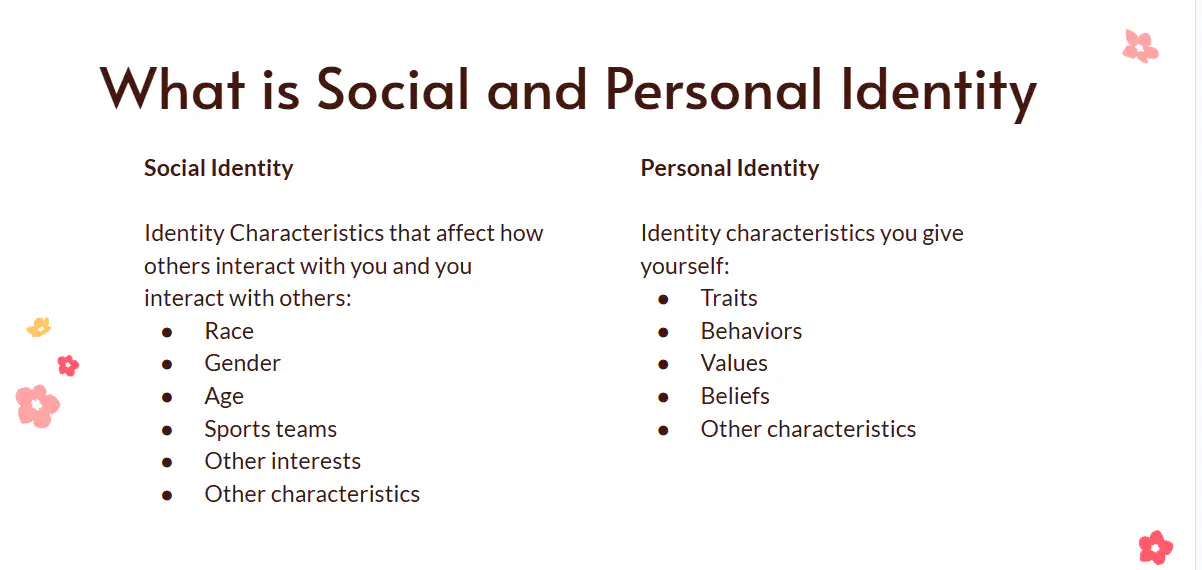
What is personal identity?
Identity characteristics that affect how others interact with you
Identity characteristics you give yourself
Characteristics based on sports teams and other interests
Characteristics based on age and gender
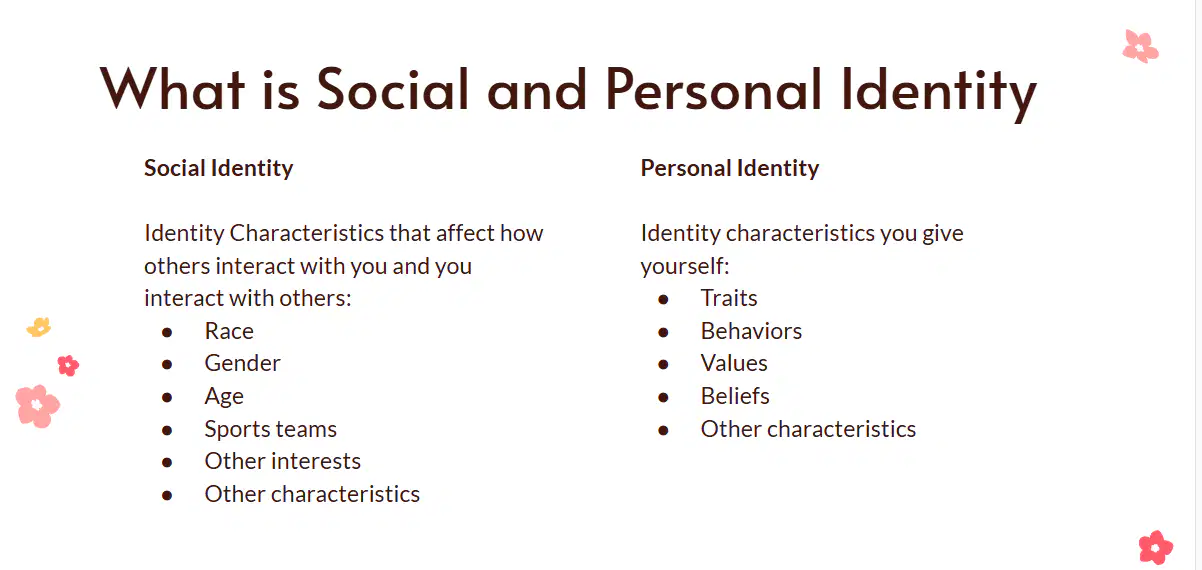
Which of the following is NOT an example of personal identity?
Traits
Sports teams
Values
Beliefs

How does social identity differ from personal identity?
Social identity is based on traits, while personal identity is based on race
Social identity is how others interact with you, while personal identity is what you define for yourself
Social identity is based on beliefs, while personal identity is based on sports teams
Social identity is based on values, while personal identity is based on gender
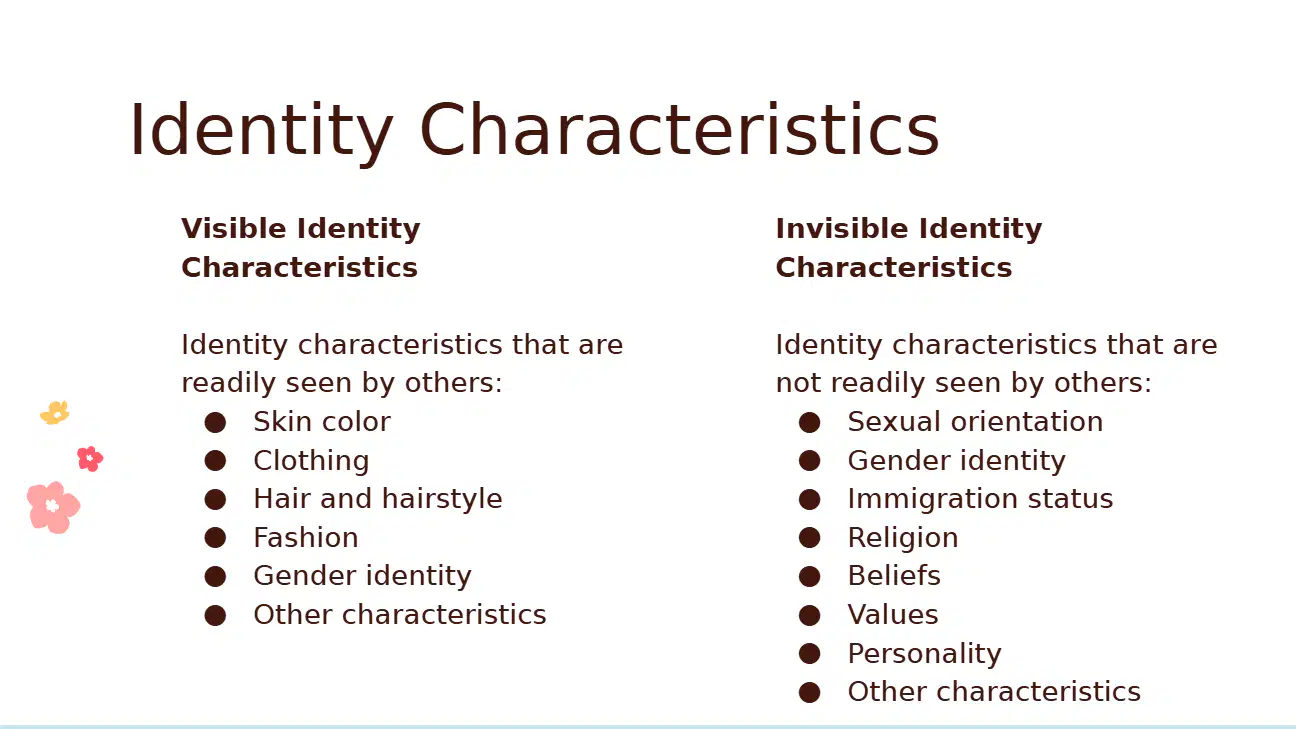
Which of the following is an example of a visible identity characteristic?
Skin color
Religion
Values
Immigration status

Which of the following is an example of an invisible identity characteristic?
Clothing
Hair and hairstyle
Sexual orientation
Fashion
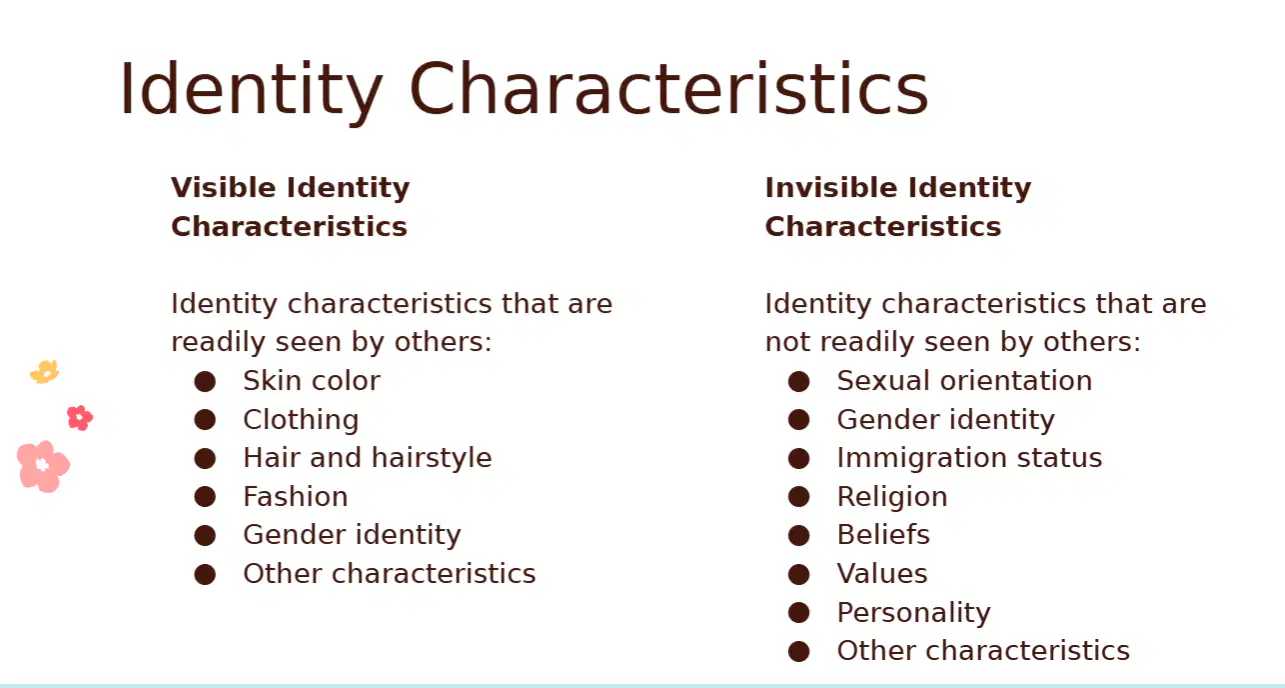
What is the main difference between visible and invisible identity characteristics?
Visible characteristics are related to personality, while invisible characteristics are related to fashion.
Visible characteristics are readily seen by others, while invisible characteristics are not.
Invisible characteristics are related to skin color, while visible characteristics are related to religion.
Invisible characteristics are always more important than visible characteristics.
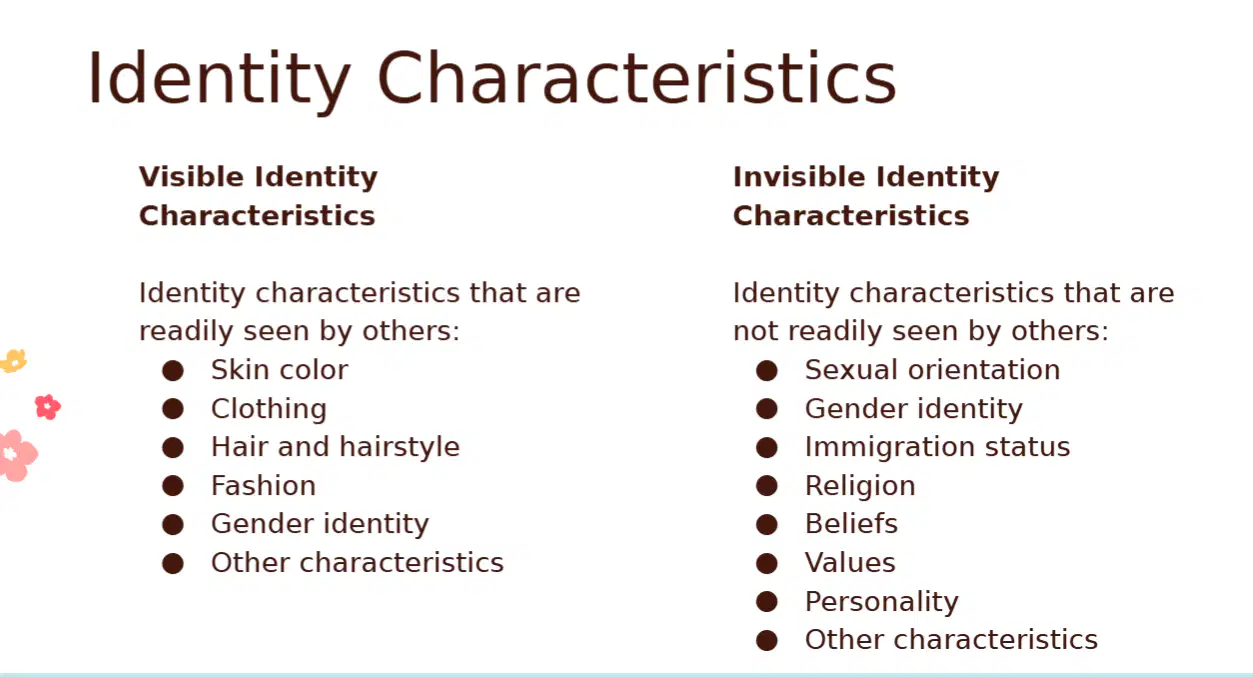
Which of the following is NOT a visible identity characteristic?
Fashion
Gender identity
Personality
Hair and hairstyle
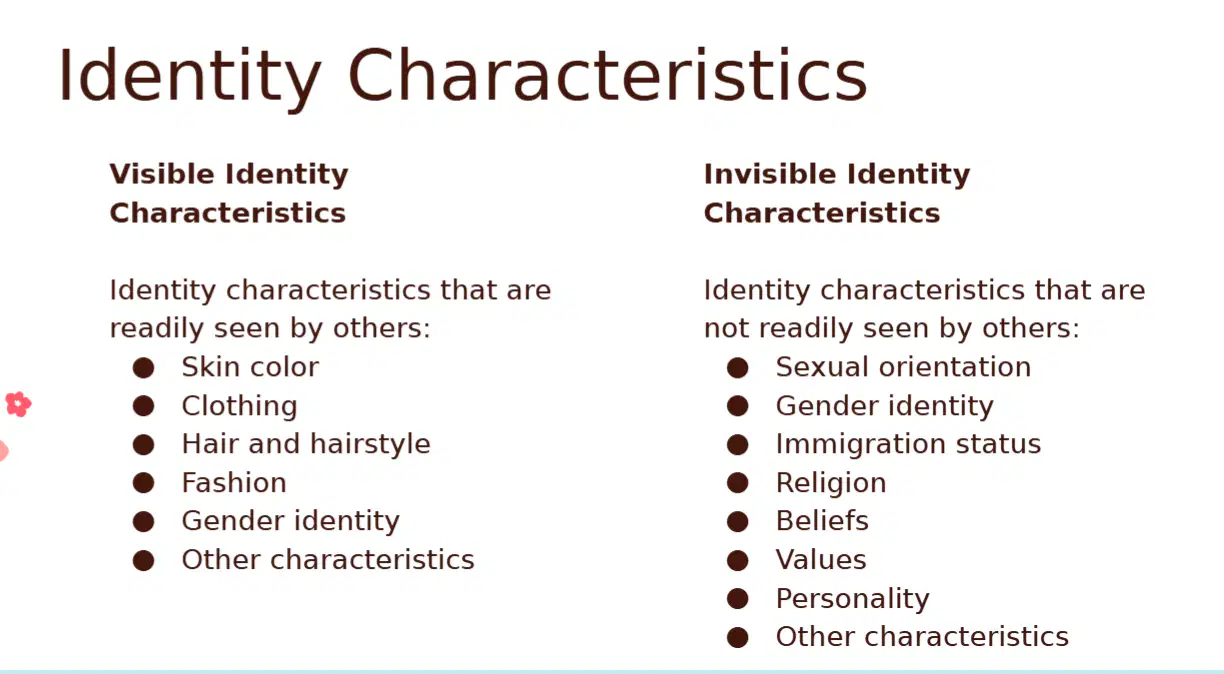
Which of the following is NOT an invisible identity characteristic?
Immigration status
Beliefs
Skin color
Values
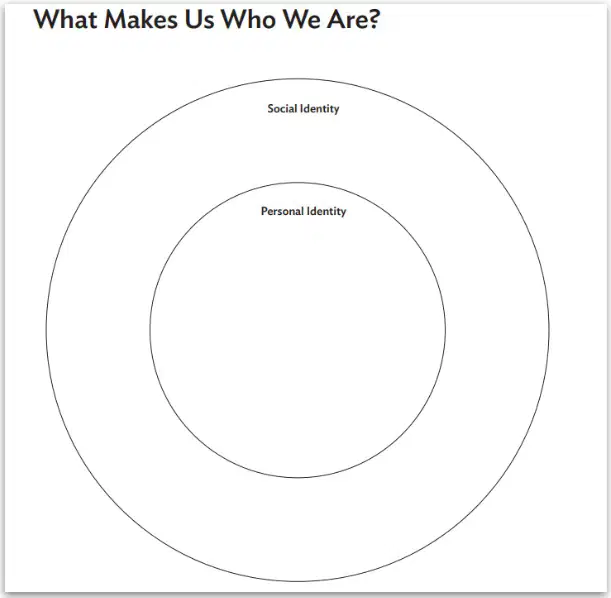
What are the two main components of identity represented in the circle map?
Social Identity and Cultural Identity
Personal Identity and Social Identity
Emotional Identity and Physical Identity
National Identity and Personal Identity
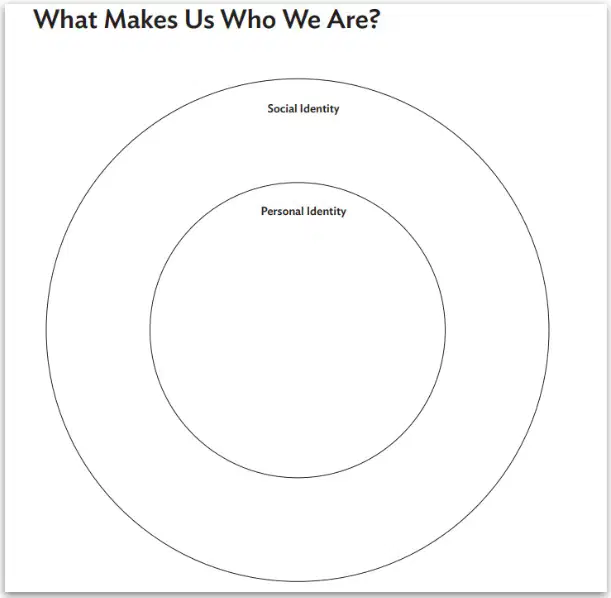
What does the inner circle in the diagram represent?
Social Identity
Cultural Identity
Personal Identity
Emotional Identity
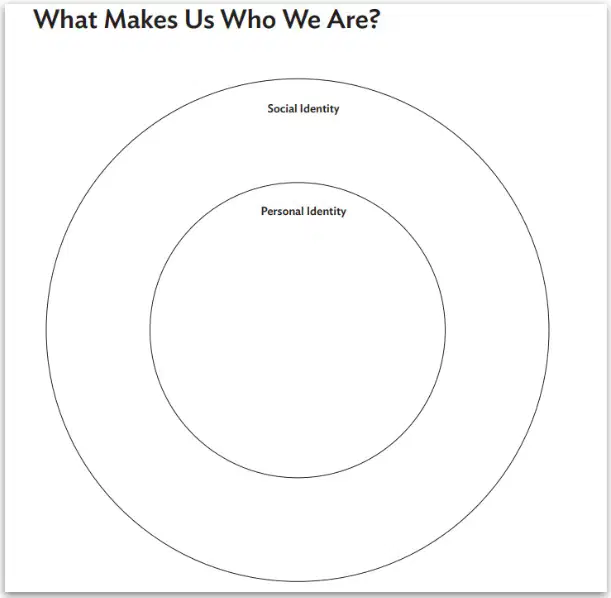
What activity is suggested in the image to help understand identity?
Write a story about your life
Fill out a circle map to represent your identity
Create a timeline of your achievements
Draw a picture of yourself
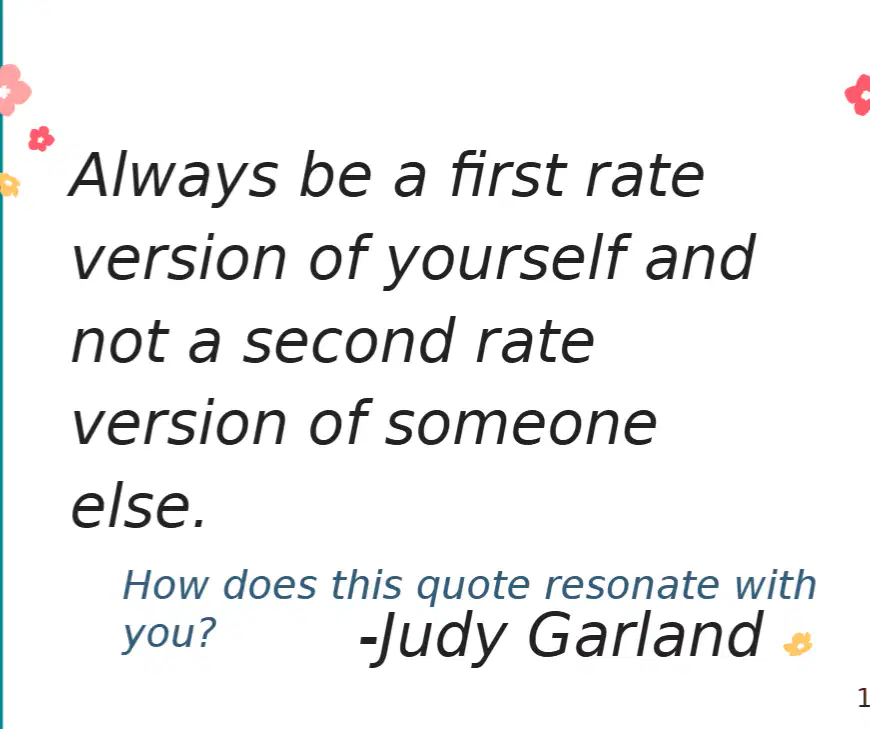
Who is the author of the quote, "Always be a first rate version of yourself and not a second rate version of someone else"?
Judy Garland
William Shakespeare
Albert Einstein
Maya Angelou
What is the main message of the quote, "Always be a first rate version of yourself and not a second rate version of someone else"?
Be yourself and strive to be the best version of you.
Copy others to achieve success.
Always compare yourself to others.
Focus on being average.
What does the quote encourage individuals to avoid?
Being a second rate version of someone else.
Striving for excellence.
Being unique.
Being confident.
How can this quote inspire students in their daily lives?
By encouraging them to embrace their individuality and focus on self-improvement.
By motivating them to copy successful people.
By teaching them to compete with others constantly.
By suggesting they follow trends to fit in.
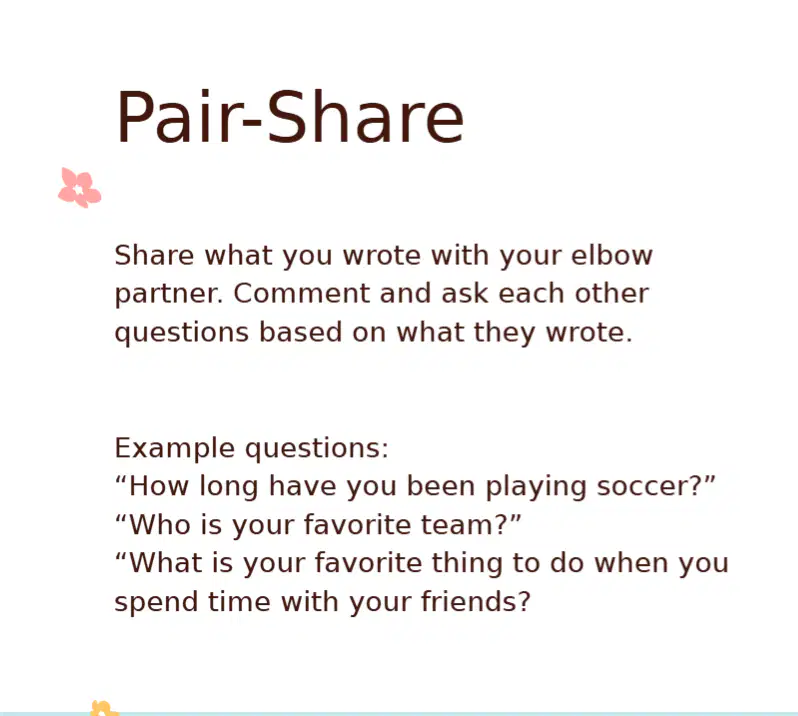
What is the main activity described in the 'Pair-Share' method?
Writing a story individually.
Sharing and discussing what you wrote with a partner.
Playing soccer with friends.
Asking questions about a book.
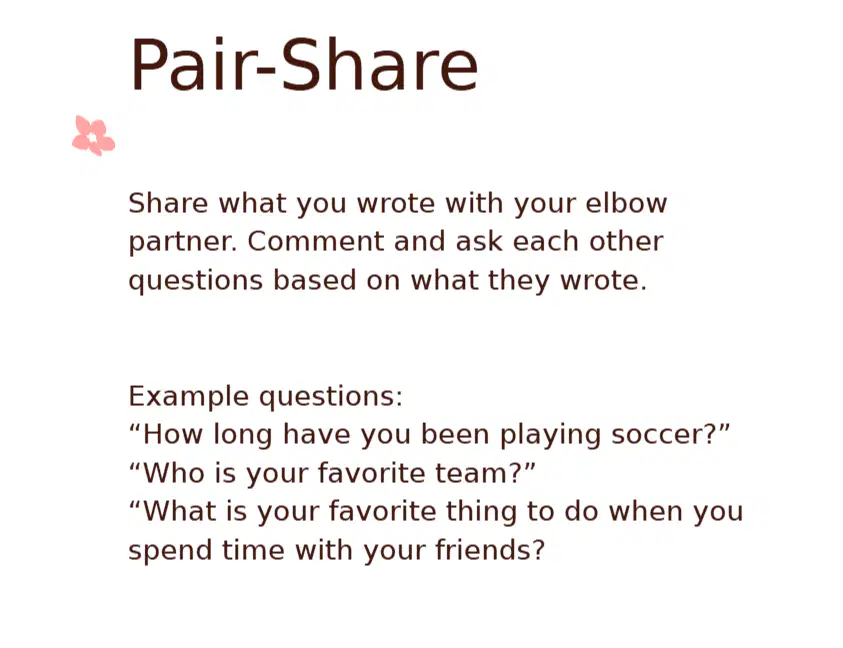
Which of the following is an example question provided in the 'Pair-Share' activity?
What is your favorite book?
How long have you been playing soccer?
What is your favorite subject in school?
What is your favorite color?
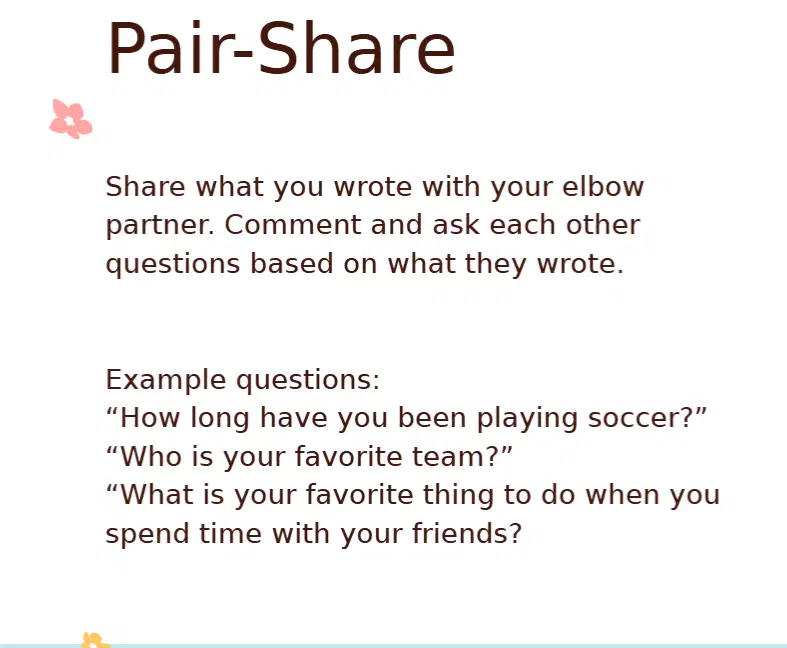
What is the purpose of commenting and asking questions in the 'Pair-Share' activity?
To practice writing skills.
To learn about your partner's thoughts and ideas.
To memorize facts.
To play games with your partner.
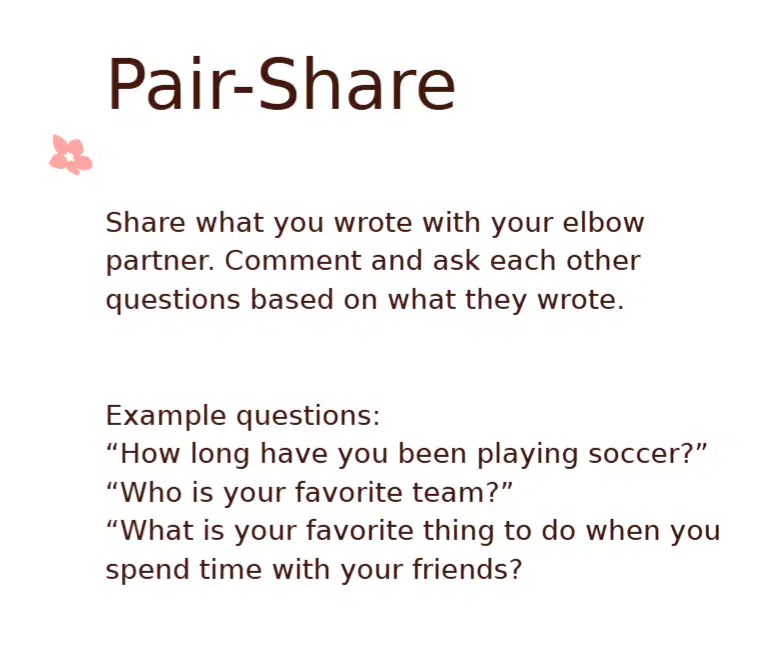
Which of the following is NOT an example question from the 'Pair-Share' activity?
Who is your favorite team?
What is your favorite thing to do when you spend time with your friends?
What is your favorite food?
How long have you been playing soccer?
What does recalling a time your friend was happy help you understand about them?
Their favorite color.
Their hobbies.
What makes them happy.
Their favorite food.

Why is it important to think about what makes your friend happy?
To understand their emotions better.
To know their favorite movie.
To learn their favorite subject in school.
To find out their favorite sport.
What is the key advice given in the text for interacting with others who might appear different?
Avoid interacting with them.
Focus on shared values while interacting.
Change your values to match theirs.
Ignore their differences completely.

