
 Worksheets
Year 09 Summer Revision Quiz
Total questions: 49
Worksheet time: 34mins
Why are electrical symbols used in circuit diagrams?
To make diagrams colorful
To identify different components
To show the age of components
To indicate the cost of components
What is the main function of a thyristor in an electrical circuit?
To store electrical energy
To act as a micro switch
To measure electrical current
To convert electricity into light
What is the function of the gate terminal in a thyristor?
Monitors the temperature of the thyristor
Provides power to the thyristor
Controls the triggering of the thyristor
Regulates the voltage in the thyristor

Which type of switch opens the circuit when pressed?
Push to Make
Push to Break
Slide Switch
Dimmer Switch

What component does the symbol represent?
Button Switch
Push to Make
Push to Break
toggle switch

In which position is the switch when the circuit is complete?
ON
OFF
Neutral
Standby
What does an LED do when electricity flows through it?
It heats up
It lights up
It makes a sound
It changes color

What is the symbol shown in the diagram commonly used to represent in electrical circuits?
Capacitor
Resistor
Inductor
Diode

What is the correct name for this component?
Transistor
Resistor
Thyristor
Thermistor

What are the parts of a thyristor?
Anode, Cathode, and Gate
Battery, Resistor, and LED
Switch, Diode, and Bulb
PCB, Resistor, and Capacitor
What component does the symbol represent?
Button Switch
Push to Make
Push to Break
toggle switch
What safety issues must be taken into consideration when Soldering
Sparks
Noise
Heat
Bright Lights
Organize these products to indicate which can be created using vacuum forming and which products require a different manufacturing process


A successful vacuum former should have;
Gently sloping sides
Vent holes in indented areas
Slightly rounded top corners
Slightly rounded bottom corners
What are the limitations of vacuum forming?
Wide range of material options
Unlimited detail and complexity
Easy to form sharp corners
Some limitations of vacuum forming include limited detail and complexity, difficulty in forming sharp corners, and limited material options.
How is the excess material trimmed in vacuum forming?
Using a sharp cutting tool or a machine
Using a blowtorch to melt it off
Using a pair of scissors
Using a hammer to break it off
What are the key factors to consider for successful vacuum forming?
Color of the material
Size of the mold
Type of cooling fan used
Material, mold design, heating, and cooling process
What safety considerations must be taken when using a vacuum former?
High pressure from vacuum
Hot element and plastic
The mold melting
The noise from the pump

Reorder the following steps within the vacuum forming process, indicating where they are carried out from start to finish

Mould is made from MDF

Mould is placed in vacuum former

Plastic sheet clamped on top

Heat applied. Plastic becomes Flexible

Mold raised. Vacuum on, Plastic Formed
Which of the following should NOT be worn in the workshop during practical tasks?
Safety shoes.
Loose clothes and ties.
Watches and jewelry.
Hearing protection.
When you have finished with a tool you must put it back where it belongs
TRUE
FALSE
The yellow lines on the floor are there to see how many people can fit inside them
TRUE
FALSE
Only the teacher is responsible for keeping the workshop safe
TRUE
FALSE

drillpress
bandsaw
cordless drill
drill
Why is it important to keep the workshop floor clean and free of debris?
To prevent distractions
To make the workshop look nice
To prevent tripping hazards
To improve the smell of the workshop

What is the reason you would wear protective goggles?
Because they look cool.
To see better.
To protect your eyes from sparks or anything that might fly into them.
To stop sweat from dripping onto your face.

Name the tool shown.
Bevel edge chisel
Mortise Chisel
Gouge
Scribing gouge

Name the tool shown.
Mallet
Claw hammer
Pein Hammer
Metal working hammer

Name the tool shown.
Hacksaw
Wood saw
Coping saw
Scroll saw

Name the tool shown.
Cross headed screwdriver
Bradawl
Spanner
Flat headed screwdriver
Label the parts of the drill press
Emergency stop
On/off switch
Fence
Key chuck
Depth stop
Guard
Table
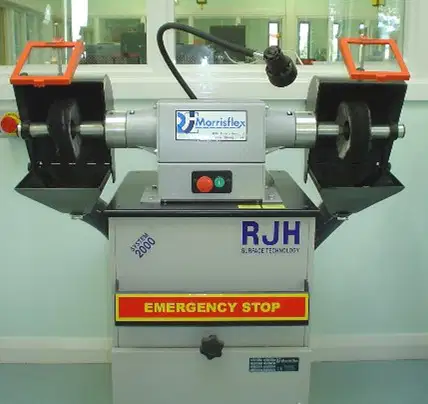
What material is not suitable to use on the pedestal
(a)

What angle should the work table be set in relation to the sanding belt?
180 degrees
90 degrees
45 degrees
270 degrees
Which element do Ferrous metals contain?
Iron
Copper
Lead
Gold
Copper
Aluminium
Brass
Zinc

Which metal is commonly used in the manufacture of electrical wire?
Aluminium
Copper
Brass
Mild Steel
Most ferrous metal are also _______________making them useful in motor and electric appliance
magnetic
Durable
tensile strength
mellable

true
false

The amount of mining needed to extract aluminum from ore can be reduced if people...
Recycle
Use lead instead of aluminum
Burn less fossil fuels
Use less plastic

