
NEW
Font size
 Worksheets
Microsomes and Their Biological Applications
Total questions: 10
Worksheet time: 5mins
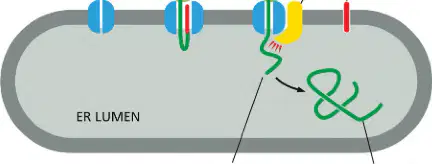
What happens to the signal sequence after the protein is directed into the RER lumen?
It is retained in the protein.
It is cleaved by a signal peptidase.
It is translated into another protein.
It is exported out of the cell.
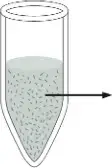
What is the significance of adding microsomes from the RER during the experiment?
It prevents protein translation.
It ensures the secreted protein has the correct size.
It degrades the protein.
It removes the signal sequence before translation.
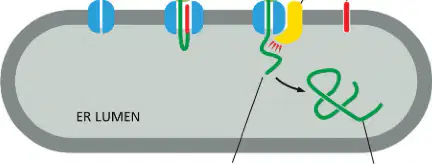
What is an example of a protein that undergoes this process in the RER?
Pre-insulin
Pre-prolactin
Pre-collagen
Pre-keratin
What happens to the SRP and its receptor after delivering the ribosome to the translocator?
They are degraded.
They are recycled.
They remain attached to the ribosome.
They bind to the nascent protein.

What is the function of the protein translocator in the RER?
It cleaves the signal sequence.
It binds to the SRP receptor.
It facilitates the translocation of the nascent protein into the ER lumen.
It slows down translation.

What is the Sec61 complex in the context of protein translocation?
A signal recognition particle.
A signal sequence-gated aqueous channel.
A ribosome receptor.
A signal peptidase.

Which two gates are essential for synthesizing transmembrane proteins in the membrane?
Transmembrane gate and lateral gate.
Ribosome gate and signal sequence gate.
ER lumen gate and plug gate.
Signal sequence gate and transmembrane gate.
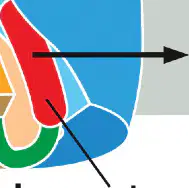
What is the role of the lateral gate in the gated channel structure?
To synthesize proteins in the ER lumen.
To facilitate the integration of transmembrane proteins into the membrane.
To block the signal sequence from entering the channel.
To close the channel when the plug is removed.

What is the final structure of a mature multipass transmembrane protein in the ER membrane?
A single transmembrane segment spanning the ER membrane
A protein with multiple transmembrane segments embedded in the ER membrane
A protein entirely located in the cytosol
A protein entirely located in the ER lumen

What is the role of transmembrane segments in the formation of multipass transmembrane proteins?
They allow the protein to remain in the cytosol
They help the protein pass through the ER lumen without embedding
They anchor the protein within the ER membrane
They prevent the protein from interacting with the ER membrane

