
 Worksheets
Information Retrieval Quiz
Total questions: 60
Worksheet time: 30mins
What is the primary goal of Information Retrieval (IR) in a digital library setting where users are looking for specific research papers among thousands of documents?
To store multimedia data efficiently.
To provide efficient methods for users to access relevant information from large and diverse collections of data.
To create recommendation systems for digital libraries.
To manage unstructured data without documentation.
Aditi is looking for information on the best hiking trails in her area. She enters a query into a search engine to find relevant information.
A user entering a query into a system to find relevant information.
A software program creating multimedia content.
A system storing data without retrieval capabilities.
A library cataloging books manually.
Aanya is working on a project that involves searching for various types of information online. She needs to understand what type of data is most relevant for her research. What type of data does Information Retrieval primarily deal with?
Structured data only.
Textual and multimedia data.
Physical documents.
Audio files exclusively.
During a technology conference, a panel of experts is discussing various applications of Information Retrieval. One of the panelists, Eesha, mentions several common uses of this technology. However, she mistakenly includes an application that is not typical. Which of the following does she incorrectly identify as a typical application of Information Retrieval?
Web search engines.
Digital libraries.
Content recommendation systems.
Manual data entry systems.
How can Information Retrieval be defined?
As a process of storing data without retrieval capabilities.
As a software program that deals with the organization, storage, retrieval, and evaluation of information from document repositories.
As a system for creating multimedia content.
As a manual process of cataloging books.
Eesha is developing a search engine for a library. She needs to understand the process of Information Retrieval Generation. What is the primary purpose of the "Index" in this process?
To store user feedback for ranking documents
To create an inverted file for efficient searching
To manage the database directly
To perform text operations for logical view
Aanya is working on a project that involves managing a large collection of documents. She needs to ensure that the system can efficiently handle the storage and retrieval of these documents. Which module in the Information Retrieval Generation process is responsible for managing the Text Database?
User Interface
Query Operations
DB Manager Module
Ranking
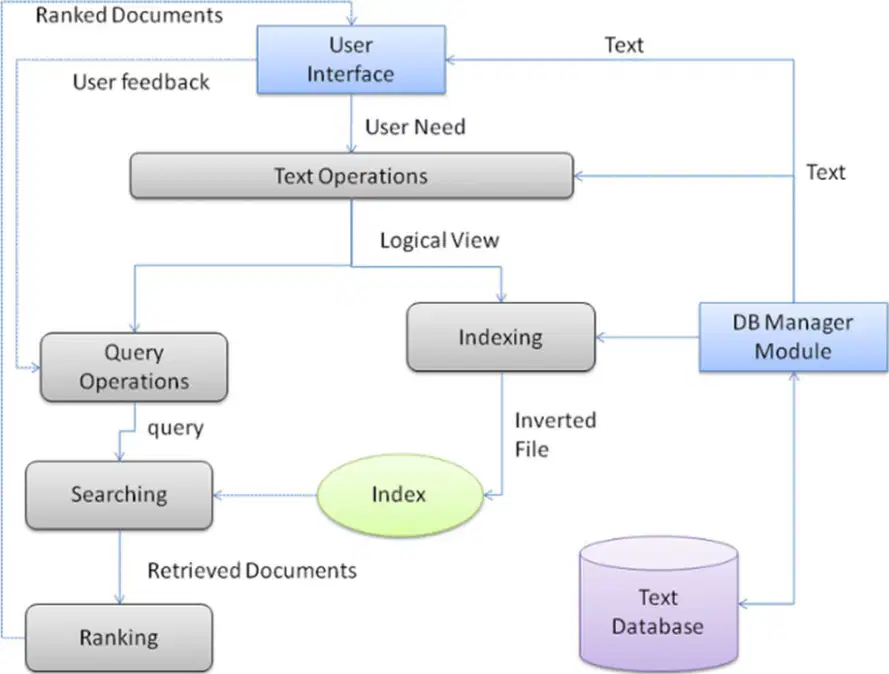
Aarush is using a search engine to find information on a specific topic. After entering his query, the search engine retrieves a list of documents. What is the role of "Ranking" in the Information Retrieval Generation process?
To organize retrieved documents based on relevance
To perform logical text operations
To index the database for efficient retrieval
To manage user feedback
How does "User Feedback" contribute to the Information Retrieval Generation process?
It helps in creating the inverted file
It assists in ranking documents based on user needs
It directly manages the database
It performs query operations
During a visit to the local library, Anika noticed that the books were organized in a systematic way, making it easy for her to find what she was looking for. She learned that this organization was based on a classification system. What is the significance of the Dewey Decimal Classification system in the history of information retrieval?
It was the first system to organize books in libraries systematically.
It introduced the concept of web-based information retrieval.
It was developed during the Cranfield experiments.
It marked the beginning of contextual information retrieval.
In a library meeting, the head librarian discusses the importance of organizing information for easy retrieval. She mentions the bibliographic database systems that were developed in the early 20th century. Which systems does she refer to?
Dewey Decimal Classification and Cranfield Experiments
Universal Decimal Classification and Library of Congress Classification
Internet/Web Information Retrieval and Contextual Information Retrieval
Cranfield Experiments and Dewey Decimal Classification
In the 1950s and 1960s, a group of researchers at Cranfield University, led by Ananya, aimed to enhance the way information was retrieved from vast databases. What was the primary focus of the Cranfield experiments conducted during this period?
To develop the Dewey Decimal Classification system
To evaluate and improve information retrieval systems systematically
To create bibliographic databases for libraries
To introduce contextual information retrieval methods
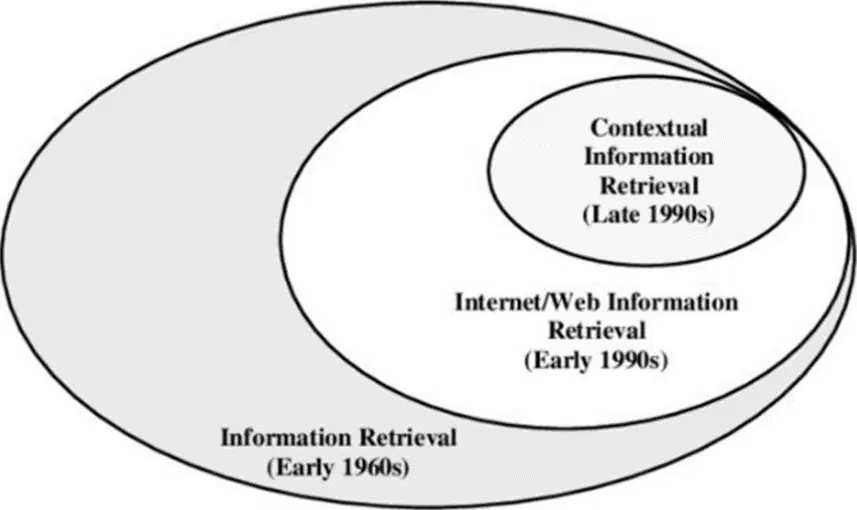
Aarush is researching for his school project on information retrieval systems. He comes across two different approaches: one that focuses on understanding the context of information and another that deals with web-based systems. What is the primary difference between contextual information retrieval and Internet/Web information retrieval?
Contextual information retrieval focuses on organizing books, while Internet/Web retrieval focuses on bibliographic databases.
Contextual information retrieval emphasizes understanding the context of information, while Internet/Web retrieval focuses on web-based systems.
Internet/Web retrieval was developed during the Cranfield experiments, while contextual retrieval was developed in the early 20th century.
Contextual information retrieval is based on the Dewey Decimal system, while Internet/Web retrieval is based on the Universal Decimal Classification.
In a university seminar on information retrieval, a professor discusses the evolution of search algorithms. During the lecture, she highlights a pivotal figure from the 1960s who introduced the vector space model and the concept of term weighting, which laid the foundation for modern information retrieval models. Who is this influential figure?
George Boole
Gerard Salton
Archie
Tim Berners-Lee
Asher is searching for specific documents in a large database. He wants to ensure that he retrieves only the most relevant documents. Which Boolean operators should he use in his search to achieve precise document retrieval?
AND, OR, NOT
IF, ELSE, THEN
PLUS, MINUS, MULTIPLY
TRUE, FALSE, MAYBE
In a tech conference, a group of developers is discussing the latest advancements in information retrieval systems. One developer mentions the SMART Information Retrieval System and its innovative features. What innovative features were introduced by the SMART Information Retrieval System?
Hyperlinks and web crawling
Stemming and relevance feedback
Boolean operators and term weighting
FTP indexing and menu-based systems
During a tech history class, Myra was discussing the evolution of search engines. She asked her classmates to identify an early search engine that was designed to index and retrieve documents from digital databases before the World Wide Web became popular.
Archie
Bing
Yahoo
In the late 1970s, Avani was a librarian at a local library that decided to adopt Online Public Access Catalogs (OPACs). She noticed that patrons were struggling to find books and resources in the traditional card catalog. What was the primary purpose of the OPACs that Avani's library implemented?
To create digital books
To allow users to search and access library resources electronically
To develop search engines for the internet
To replace physical libraries with virtual ones

Prisha is working on a project that involves organizing a large collection of research papers. She needs to ensure that the papers are structured in a way that makes them easily retrievable based on specific queries. What is the primary purpose of document modeling in Information Retrieval (IR) models?
To convert information needs into relevant documents
To represent a set of documents in a structured format
To match query models with document models
To generate queries based on user needs
In the context of IR models, what does the matching process (d,q) involve?
Comparing document models with query models to find relevant documents
Generating queries based on user information needs
Structuring documents for easier retrieval
Representing user needs in a query model

Avyaan is trying to find the best restaurant in his city. He uses a search engine to look for options. What is the role of query modeling in IR models?
To structure a set of documents
To represent user information needs in a query format
To match document models with relevant documents
To generate document models for retrieval
In a digital library project, what is the primary function of the acquisition step in the Information Retrieval (IR) model?
Indexing free-text terms and controlled vocabulary.
Selecting documents and objects from web resources using web crawlers.
Representing interdependencies between terms.
Creating probabilistic relevance models.
In a digital library, Eesha is tasked with organizing a vast collection of research papers. Which of the following methods would best exemplify representation in the Information Retrieval (IR) model?
Web crawlers collecting data from web resources.
Indexing free-text terms and controlled vocabulary.
Treating terms as independent in models without term interdependencies.
Using probabilistic relevance models for uncertain inference.
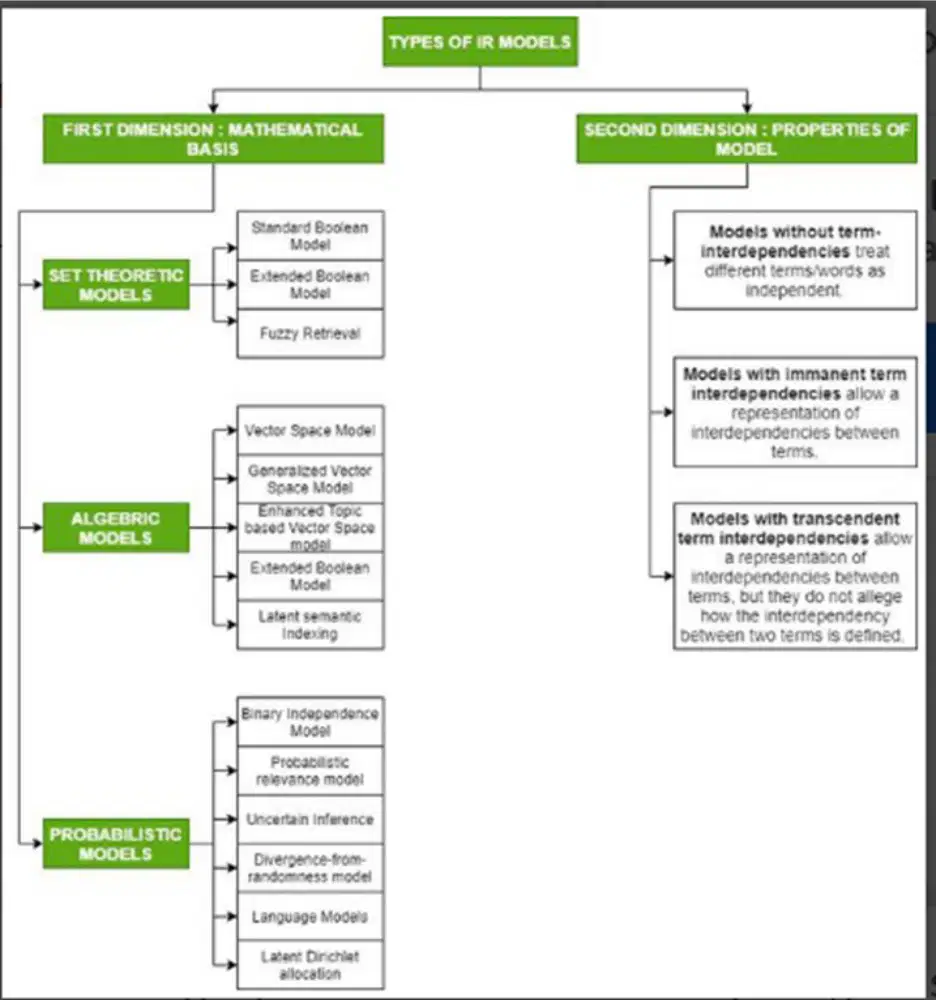
In a university seminar, Advait is discussing different types of mathematical basis models used in Information Retrieval (IR). He asks the attendees, "Which of the following is NOT a type of mathematical basis model in IR?"
Standard Boolean Model.
Generalized Vector Space Model.
Binary Independence Model.
Fuzzy Retrieval Model.
In a library, Aisha is tasked with creating a comprehensive summary of a new collection of research papers. What does abstracting in information retrieval involve for her?
Summarizing and bibliographic description containing author, title, sources, data, and metadata.
Organizing files sequentially and inverted.
Querying databases using formal statements.
Identifying and retrieving data from a database management system.
Aarav is conducting research on various subjects and needs to gather information from different sources. He encounters several characteristics of information retrieval. Which of the following is NOT a characteristic of information retrieval?
Retrieves information about a subject.
Small errors are likely to go unnoticed.
Has a well-defined structure and semantics.
Deals with textual information from document repositories.
In a library, Aditi is trying to find a book on artificial intelligence. She notices that the library uses two different methods to organize its books: sequential and inverted file organization. What is the main difference between these two methods?
Sequential organizes files by document data, while inverted organizes files by term and list of records under each term.
Sequential organizes files by metadata, while inverted organizes files by author.
Sequential organizes files by keywords, while inverted organizes files by user queries.
Sequential organizes files by database management systems, while inverted organizes files by textual information.
When Sneha types a question into a search engine to find information about her favorite book, what happens in the information retrieval system?
The system uniquely identifies a single object in the collection.
The system matches the query with several objects, possibly with different degrees of relevancy.
The system retrieves data from a database management system.
The system organizes files sequentially and inverted.

Akhil is trying to find a specific book in a library. He uses an information retrieval system that helps him locate books based on their content and context. Meanwhile, Ishaan is using a data retrieval system to find a book by its exact title. What is the primary difference between the information retrieval system Akhil is using and the data retrieval system Ishaan is using?
Information retrieval systems provide exact matches, while data retrieval systems provide approximate matches.
Information retrieval systems use probabilistic models, while data retrieval systems use deterministic models.
Information retrieval systems focus on browsing, while data retrieval systems focus on searching.
Information retrieval systems convey semantics of required information, while data retrieval systems convey constraints satisfied by objects.
Imagine Kabir is trying to find a specific book in a vast library. He needs to formulate a query that accurately reflects the constraints of the book he is looking for, such as the author, genre, and publication year. Which of the following best describes Kabir's task in this information retrieval system?
Translating information into a query to convey constraints satisfied by objects.
Searching for exact matches in a database system.
Browsing through information without searching.
Using a deterministic model to retrieve data.
Imagine Aditi is looking for a new book to read. Instead of searching for specific titles or authors, she is browsing through the shelves at her local bookstore. What does this example of Aditi browsing instead of searching illustrate in the context of an information retrieval system?
The user is using a probabilistic model.
The user is interacting with the semantics of required information.
The user is conveying constraints satisfied by objects.
The user is performing a deterministic search.

Prisha is searching for information on the best programming languages to learn for web development. She uses an information retrieval system to find relevant articles. Which type of model is used in this system?
Deterministic model.
Probabilistic model.
Exact match model.
Relevance-based model.

Alisha is searching for information on the best restaurants in her city using an online search engine. How are the results typically ordered in this information retrieval system?
By exact matches.
By relevance.
By constraints satisfied by objects.
By browsing patterns.
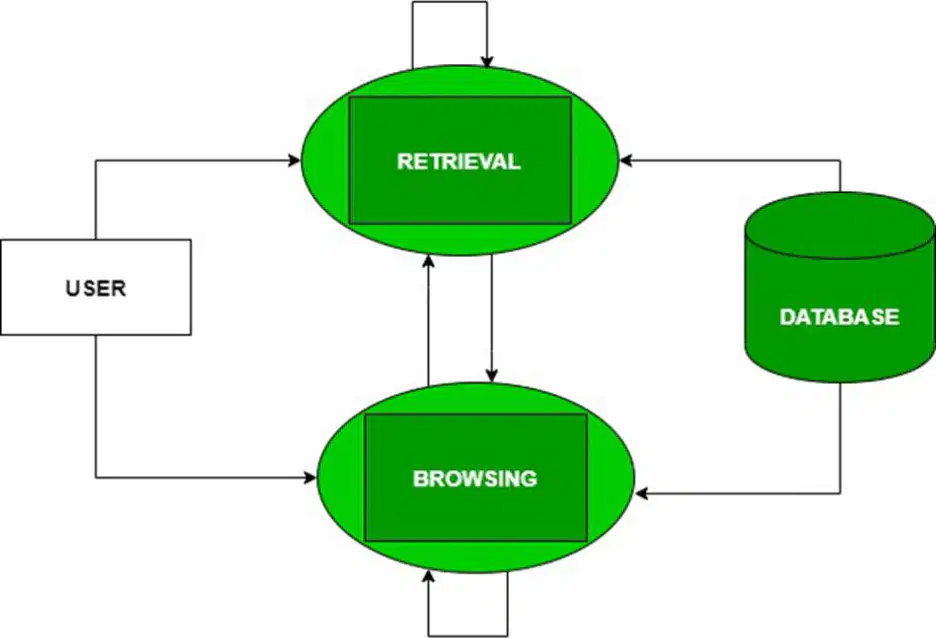
Riya is working on a project that involves managing a large collection of documents. She needs to find a way to make the information more accessible and easier to navigate. What is the purpose of text operations in modern document representation?
To increase the complexity of document representation.
To reduce the complexity of document representation from full text to a set of index terms.
To add more stopwords to the document.
To eliminate keywords from the document.
Aarav is a librarian at a local library, and he is tasked with improving the library's information retrieval system. He recalls that the primary focus of first-generation information retrieval systems in libraries was to enhance the way users find information. What was this primary focus?
Searching by subject heading and keywords.
Automation of previous technologies and search based on author name and title.
Categorization of hierarchies for indexes.
Elimination of stopwords from documents.
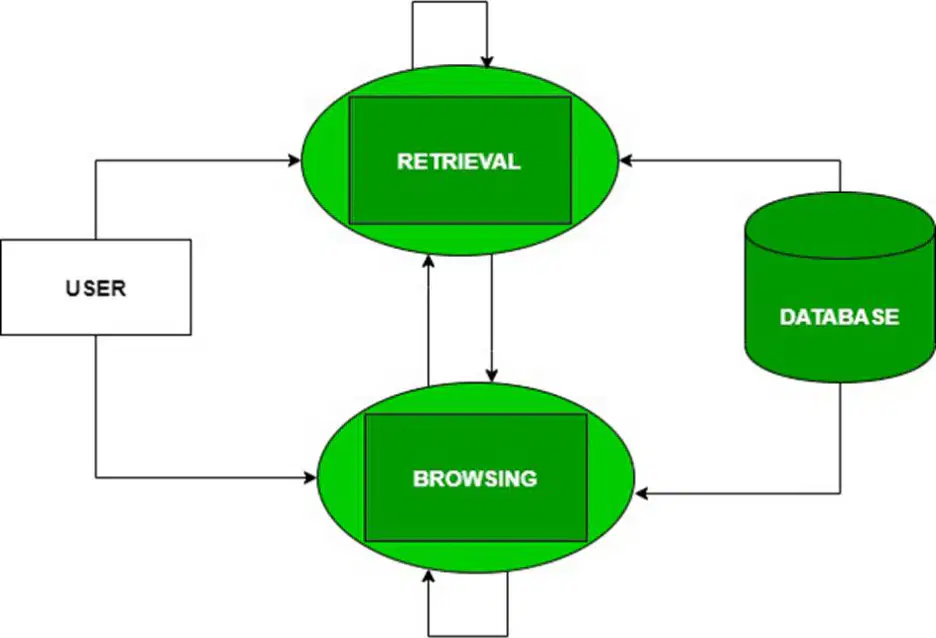
Tara is using a modern information retrieval system to find documents related to her research. She wonders about the logical view of how these documents are represented in the system.
Representing documents through a set of index terms or keywords.
Representing documents by adding more stopwords.
Representing documents by eliminating all keywords.
Representing documents by focusing solely on full text.
Alisha is searching for information on the best practices for digital marketing. She uses an information retrieval system to find relevant articles and resources. What is one of the advantages of information retrieval systems?
They often fail to understand the context of a user’s query.
They provide highly accurate and relevant search results.
They raise privacy and security concerns.
They lead to information overload.
Siya is searching for the best resources to prepare for her upcoming exams, but she finds it difficult to locate the most useful and relevant material among the vast amount of information available online. Which disadvantage of information retrieval systems is she experiencing?
Lack of context.
Privacy and security concerns.
Information overload.
Maintenance challenges.
In a digital library, Riyaan is tasked with designing the software architecture for an Information Retrieval (IR) system. What is a key feature he should focus on to ensure the system is effective?
It ensures biases in search results.
It provides a structured framework for retrieving relevant information.
It raises privacy and security concerns.
It fails to handle increasing data volumes.
In a large organization, Mira is tasked with evaluating the effectiveness of their information retrieval system. During her assessment, she identifies several benefits of the system. However, she also discovers a significant drawback. Which of the following is NOT an advantage of information retrieval systems?
Efficient access to vast amounts of data.
Personalization of search results.
Scalability to handle increasing data volumes.
Bias and fairness in search results.
Avani is managing an information retrieval system for her company. She often faces challenges in keeping the system up-to-date and effective. What challenge is she likely encountering?
Information overload.
Maintenance challenges.
Lack of context.
Personalization of results.
Imagine Aisha is using an online shopping platform that remembers her past purchases and browsing history. How does this platform tailor search results to her individual preferences and behaviors?
By ensuring scalability.
By using user profiling and personalization techniques.
By reducing information overload.
By providing graphical interfaces.
What is a major privacy concern in information retrieval systems?
They fail to understand the context of a user’s query.
They often access sensitive user data.
They require regular updates and adjustments.
They exhibit biases in search results.
What is the primary goal of the software architecture of an Information Retrieval (IR) system?
To ensure biases in search results.
To provide free access to publish on a larger medium.
To ensure efficiency, scalability, and maintainability.
To raise privacy and security concerns.
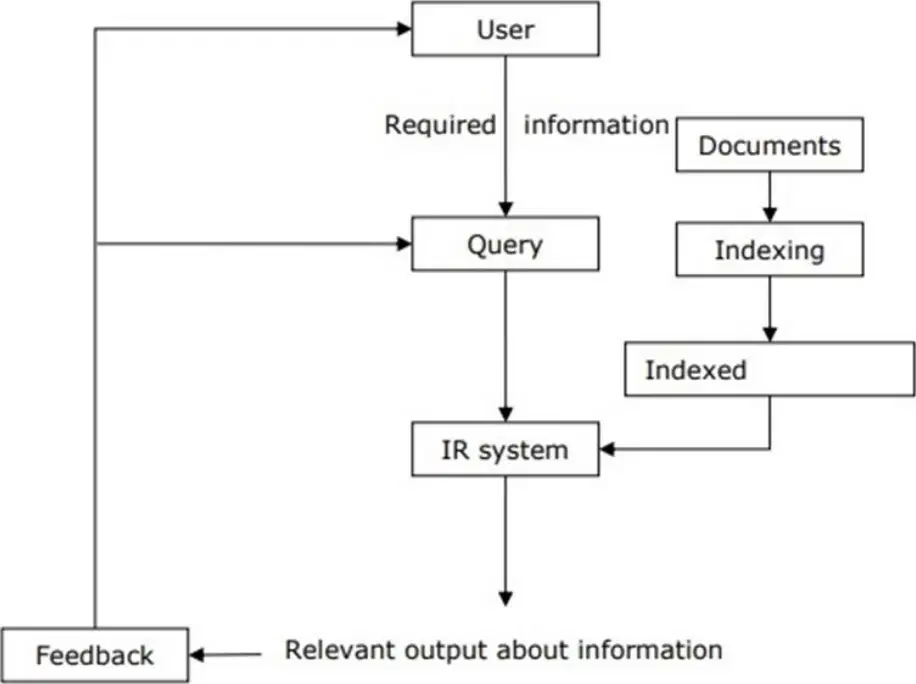
What is the primary function of an Information Retrieval (IR) system?
To store all documents in a database.
To retrieve only relevant documents based on user requirements.
To create new documents for users.
To delete irrelevant documents from the system.
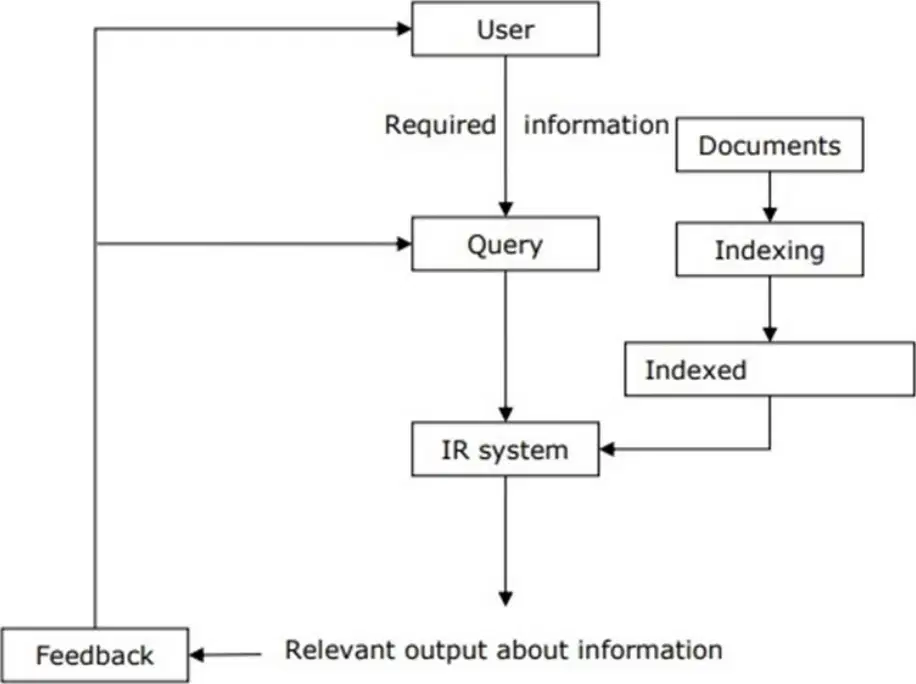
Which step in the Information Retrieval (IR) process involves organizing documents for efficient retrieval?
Query generation.
Indexing.
Feedback collection.
Document deletion.
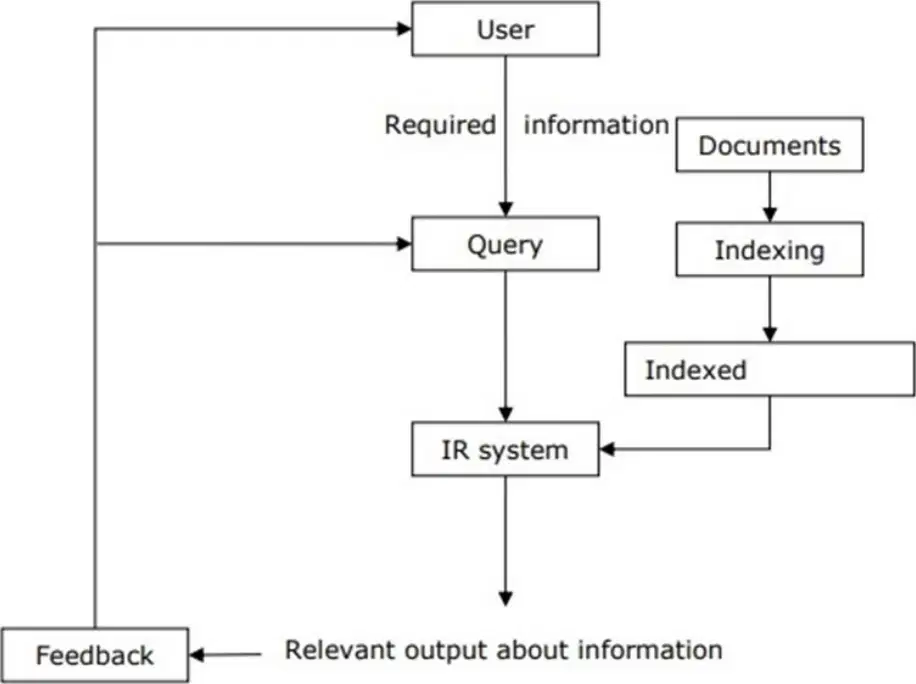
In the Information Retrieval (IR) process, what role does feedback play?
It helps refine the query for better results.
It deletes irrelevant documents.
It stores the retrieved documents permanently.
It creates new documents for the user.
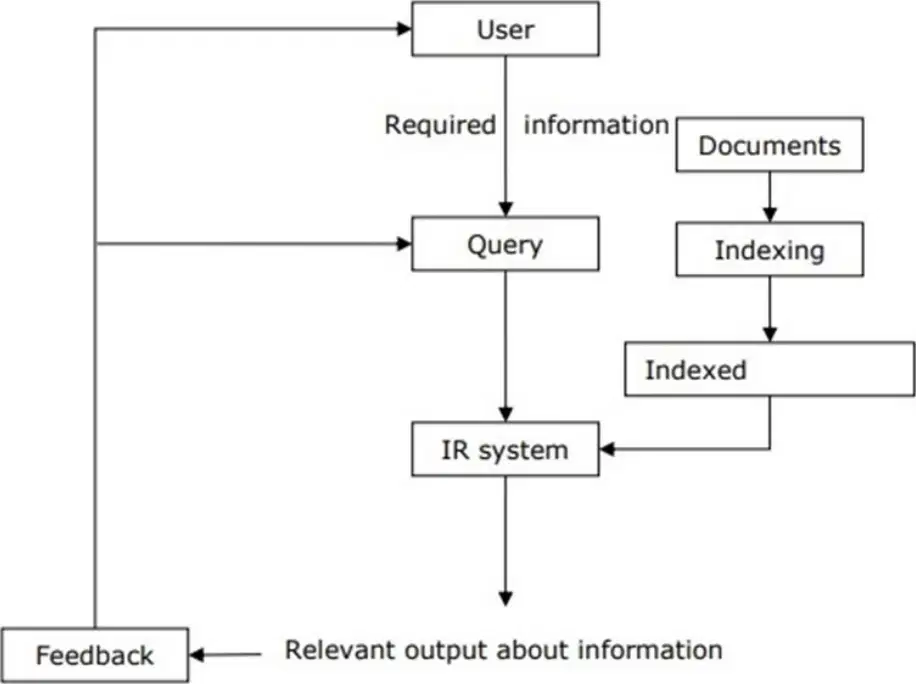
What is the term used for documents that satisfy the user's requirements in the Information Retrieval (IR) process?
Indexed documents.
Relevant documents.
Feedback documents.
Query documents.
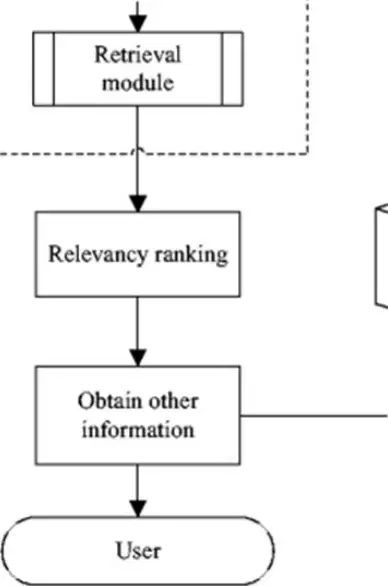
What is the primary function of the "Retrieval module" in the ranking process diagram?
To analyze the user's query
To rank the relevancy of information
To retrieve relevant information based on the query
To store the user's query in the forward index phase
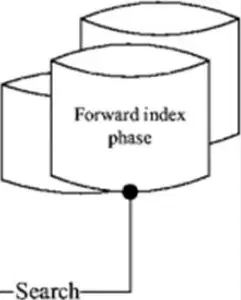
Which phase in the ranking process diagram is responsible for storing indexed data for future searches?
Query analysis phase
Forward index phase
Relevancy ranking phase
Retrieval module phase
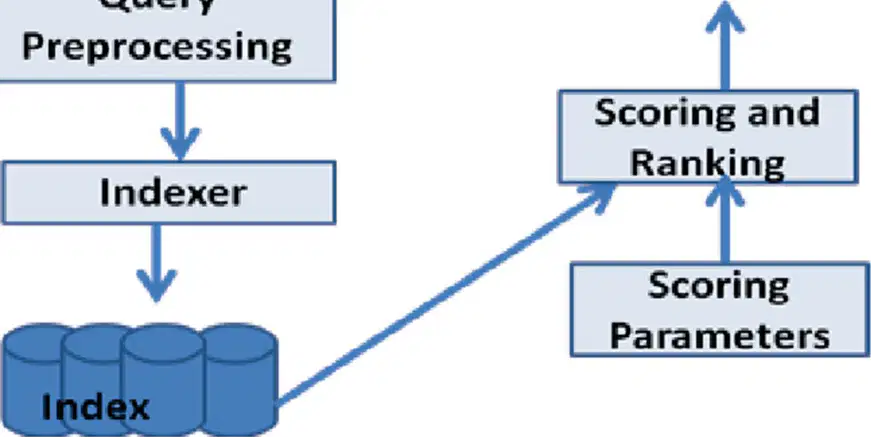
What is the primary purpose of indexing in an Information Retrieval (IR) system?
To analyze the content of documents in detail.
To transform documents into searchable data structures.
To evaluate the merit and worth of documents.
To rank documents based on user preferences.
Which of the following is NOT a main issue in Information Retrieval (IR)?
Document and Query Indexing.
Query Evaluation.
System Evaluation.
Linguistic Analysis of Content.
What is the role of evaluation in Information Retrieval (IR)?
To create document surrogates for representation.
To systematically determine merit, worth, and significance using criteria.
To transform user queries into searchable data structures.
To rank documents based on scoring parameters.
Which of the following is an example of simple meta-information used in Information Retrieval (IR)?
Linguistic analysis of content.
Author, title, and subject of a document.
Scoring parameters for ranking.
Query preprocessing steps.
Why are indexes important in the Information Retrieval (IR) process?
They help in ranking documents based on user preferences.
They are used to make the search faster.
They evaluate the merit and worth of documents.
They transform user queries into document surrogates.
What is the main goal of Document and Query Indexing?
To create a visual representation of data.
To find important meanings and create an internal representation.
To store documents in a database.
To improve the speed of data retrieval.
Which factor is NOT considered in Document and Query Indexing?
Accuracy to represent semantics.
Exhaustiveness.
Facility for a computer to manipulate.
User feedback.
In the retrieval model, what issue does "uncertainty" refer to?
Lack of clarity in user queries.
Difficulty in representing true semantics of objects like images and videos.
Inefficiency in time and space.
Errors in document indexing.
What does "vagueness" in Information Retrieval (IR) indicate?
Lack of clarity in the information required by the user.
Errors in document storage.
Difficulty in representing multimedia data.
Inefficiency in system evaluation.
What is the purpose of System Evaluation in Information Retrieval?
To determine the efficiency of the system related to time and space.
To improve document indexing accuracy.
To reduce uncertainty in query representations.
To enhance multimedia data retrieval.

