

wayground logo

Free Printable Worksheets

Font size

S
M
L
XL
Worksheets

World History BM #2 Study Guide

Total questions: 41

Worksheet time: 21mins

Name
Class
Date
1.

Which of the following best describes why Hammurabi's Code was written?

a)
To promote trade and economic growth in Babylon.
b)
To create a historical record of Hammurabi's reign.
c)
To document religious beliefs and practices of the time.
d)
To establish laws for justice and order in society.
2.


Why was the concept of the Mandate of Heaven useful for rulers of China?

a)
The Mandate of Heaven was a military strategy to conquer neighboring states.
b)
The Mandate of Heaven was useful for rulers as it legitimized their authority and justified their rule based on moral governance.
c)
The Mandate of Heaven was a tax policy that increased revenue for the rulers.
d)
It was a religious doctrine that promoted isolationism in China.
3.


Fact #1: The Romans were usually tolerant of other religions and allowed people to worship their old gods.

Fact #2: The Romans persecuted Christians, sometimes outright banning them and massacring them in public.

What key detail explains the apparent contradiction in these two facts?

a)

The Christians had historically oppressed the Romans and they wanted revenge

b)

The Christians were often violent and considered a threat

c)

The Christians refuse to say the Emperor was a god

d)

The Christians had outrageous religious rituals like sacrificing children

4.


Which city was the capital of the Byzantine Empire until it fell in 1453?
a)
Athens
b)
Rome
c)
Constantinople
d)
Cairo
5.

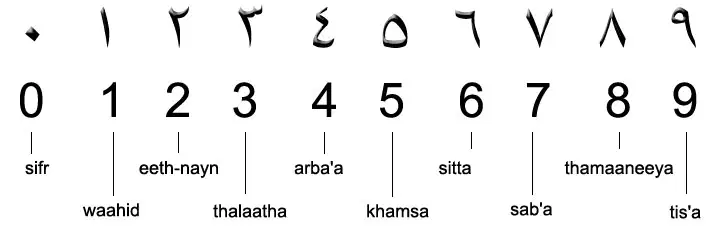
One of the markers of this culture's importance to intellectual history is that we still call these...

a)
Roman numerals
b)
Greek letters
c)
Chinese characters
d)
Arabic numerals
6.

In the system of feudalism, lords made deals with vassals by giving them some of their ___ in exchange for ___.

a)
gold; political favors
b)
resources; trade agreements
c)
land; military service
d)
wealth; agricultural support
7.


What tool did Medieval Pope's use to make rebellious kings and other leaders obey the Church's authority?

a)
Crusade
b)
Excommunication
c)
Papal Bull
d)
Inquisition
8.

Choose TWO of the following that were true about Christian worship according to the Catholic Church in the Middle Ages.

a)
Singing hymns was discouraged during services.
b)

The liturgy was conducted in Latin.

c)

The Eucharist was the central focus of worship.

d)
The sermon was the main part of the service.
9.

Due to the Black Death there was a (a)   which caused prices to rise.

10.


In Europe, a long-term effect of the Crusades was?

a)
Decreased religious tolerance.
b)
Increased military conflicts.
c)
Decline in agricultural production.
d)
Increased trade and cultural exchange.
11.

Evaluate how the relationship between the Church and state shaped medieval European government.

a)
State leaders were entirely independent of the Church's influence.
b)
The Church's authority significantly influenced the governance and political structures of medieval Europe, leading to a complex relationship marked by both cooperation and conflict.
c)
The Church had no impact on political decisions in medieval Europe.
d)
The Church and state operated in complete harmony without any disputes.
12.

What was one major effect of increased trade in medieval Europe?

a)
Urbanization and the rise of a middle class.
b)
Increased feudal obligations for peasants.
c)
Decline in agricultural production.
d)
Strengthening of monastic power and influence.
13.

Which of the following was an economic result of the Crusades?

a)
Increased taxation on the peasantry.
b)
Decline in agricultural production in Europe.
c)
Reduction of trade routes to the East.
d)
Increased trade and economic growth in Europe.
14.

Which factor most contributed to the fall of both the Aztec and Inca Empires?

a)
Cultural assimilation and trade.
b)

Invasions by European conquistadors

c)
Internal strife and civil wars.
d)
Natural disasters and famine.
15.

Which of the following was a shared religious belief among the Maya, Aztec, and Inca?

a)

Monotheism centered on one, all powerful God

b)

Belief in the power of blood sacrifice to restore balance to the world

c)

Worship of ancestors and legendary rulers to appease their spirits and protect against evil

d)

They must settle where an eagle perching on a cactus is clutching an eagle in its talons

16.

Analyze how economic prosperity led to cultural and political change in Florence.

a)
Economic prosperity in Florence led to a cultural flourishing and the rise of influential political families, transforming governance and promoting humanism.
b)
Political instability fostered a lack of cultural development and economic hardship.
c)
Cultural stagnation led to economic growth and the rise of authoritarian rule.
d)
Economic decline resulted in a stagnant culture and weakened political structures.
17.

Evaluate how Renaissance achievements reflected a shift in European thought.

a)
Renaissance achievements led to a decline in scientific inquiry and critical thinking.
b)
Renaissance achievements emphasized religious dogma and tradition in European thought.
c)
Renaissance achievements marked a shift towards humanism and empirical inquiry in European thought.
d)
Renaissance achievements focused solely on artistic expression without intellectual growth.
18.

What was the main focus of Renaissance humanism?

a)
The promotion of religious dogma and faith.
b)
The exploration of medieval art and architecture.
c)
The emphasis on scientific experimentation and technology.
d)
The study of classical texts and human potential.
19.

How did the invention of the printing press contribute to the spread of Renaissance ideas?

a)
The printing press limited access to Renaissance literature.
b)
The printing press had no impact on cultural ideas.
c)
The printing press only spread religious texts during the Renaissance.
d)
The printing press contributed to the spread of Renaissance ideas by making literature and new concepts widely accessible.
20.

Which of John Calvin’s teachings most influenced later Protestant movements?

a)
Salvation through good works.
b)
The importance of church tradition.
c)

The idea of a disciplined, moral life

d)
Baptism as a means of grace.
21.

How did Elizabeth I’s religious policies differ from her father’s?

a)
Elizabeth I enforced strict Catholicism, unlike Henry VIII's lenient approach.
b)
Elizabeth I favored Puritanism, while Henry VIII supported Protestant extremism.
c)
Elizabeth I's policies were more extreme, contrasting with Henry VIII's moderate stance.
d)


She compromised to a moderate Protestant Church to maintain stability.

22.


 What was the primary goal of the Catholic Counter Reformation?

a)
To promote Protestant beliefs and practices.
b)
To strengthen the power of Protestant leaders.
c)
To eliminate all forms of religious reform.
d)
To reform the Catholic Church and counter the Protestant Reformation.
23.

Which statement best explains the goals of Spanish conquistadors in the Americas?

a)
To establish trade routes and alliances.
b)
To conquer native tribes and claim territory.
c)
To promote indigenous cultures and traditions.
d)
To seek wealth, land, and spread Christianity.
24.

Which example shows the cultural impact of the Columbian Exchange?

a)
The arrival of tomatoes in Asia.
b)
The export of corn to Australia.
c)

The spread of European languages and Christianity to the Americas

d)
The spread of chocolate to Africa.
25.

How did improvements such as the astrolabe and caravel contribute to European exploration?

a)
Improvements like the astrolabe and caravel enhanced navigation and ship design, facilitating longer and more accurate voyages during European exploration.
b)
The astrolabe and caravel had little impact on the speed of exploration efforts.
c)
These tools were mainly developed for land navigation rather than sea voyages.
d)
The astrolabe and caravel were primarily used for military purposes during exploration.
26.

Which was a major effect of the slave trade on African societies?

a)
Depopulation and social disruption in African societies.
b)
Cultural exchange and integration among tribes.
c)
Increased population stability in regions.
d)
Economic growth in African societies.
27.

Under the Tokugawa Shogunate, what was Japan’s policy toward foreign trade and contact?

a)
Japan's policy was to welcome foreign influence and ideas.
b)
Japan encouraged extensive foreign trade and relations.
c)
Japan maintained open trade with all nations.
d)
Japan's policy was isolationist, limiting foreign trade and contact.
28.

 Evaluate how Ming and Qing isolationist policies shaped China’s global position by the 19th century.

a)
Isolationist policies allowed China to become a technological leader by the 19th century.
b)
Ming and Qing isolationism resulted in a strong military presence in Asia by the 19th century.
c)
Ming and Qing policies enhanced China's trade relations with Europe by the 19th century.
d)
Ming and Qing isolationist policies led to China's technological stagnation and vulnerability to foreign powers by the 19th century.
29.

 How did geography influence the power of the Ottoman Empire?

a)
Geography influenced the Ottoman Empire by providing control over crucial trade routes and facilitating military expansion.
b)
Geography limited the Ottoman Empire's access to resources and trade.
c)
Geography had no significant impact on the Ottoman Empire's military strategies.
d)
Geography isolated the Ottoman Empire from neighboring regions and cultures.
30.

Which architectural masterpiece was built under the Mughal Empire in India?

a)
Hawa Mahal
b)
Red Fort
c)
Qutub Minar
d)
Taj Mahal
31.

How did Galileo’s discoveries challenge traditional European thought?

a)
Galileo's findings reinforced the geocentric model and supported traditional beliefs.
b)
His work confirmed the Earth as the center of the universe and dismissed heliocentrism.
c)
Galileo's observations had no impact on European thought or scientific understanding.
d)
Galileo's discoveries challenged traditional European thought by supporting the heliocentric model and undermining the geocentric view.
32.

Which Enlightenment philosopher’s ideas were most likely to be seen as a challenge to the power of the Church?

a)
Jean-Jacques Rousseau
b)
Thomas Hobbes
c)
John Locke
d)
Voltaire
33.

How were the goals of Peter the Great and Louis XIV similar?

a)
Both aimed to centralize power and modernize their states.
b)
Both aimed to strengthen the power of the nobility and aristocracy.
c)
Both promoted religious tolerance and diversity in their nations.
d)
Both focused on expanding their territories through war.
34.

When Thomas Jefferson wrote the Declaration of Independence in 1776, he borrowed heavily from the_______ philosophers such as John Locke and Jean Jacques Rousseau.

a)
Baroque
b)
Enlightenment
c)
Romanticism
d)
Renaissance
35.


Why was Napoleon popular with the people of France even though he had taken control in a coup d'état?

a)

the people wanted a strong leader with a clear vision to restore order

b)
He prioritized foreign alliances over national interests.
c)
He maintained the monarchy and restored the old regime.
d)
He focused on military expansion and ignored domestic issues.
36.

How did industrialization change economies in Great Britain, Germany, and Japan?

a)
Industrialization focused on agriculture, reducing urbanization and modernization in Great Britain, Germany, and Japan.
b)
Industrialization transformed economies from agrarian to industrial, boosting production, urbanization, and modernization in Great Britain, Germany, and Japan.
c)
Industrialization led to a decline in manufacturing, causing economic stagnation in Great Britain, Germany, and Japan.
d)
Industrialization maintained agrarian economies, limiting production and urban growth in Great Britain, Germany, and Japan.
37.

Analyze how the ideas of Adam Smith and Karl Marx influenced industrial societies.

a)
Adam Smith focused on labor rights and social welfare, while Karl Marx emphasized individualism and competition.
b)
Adam Smith supported socialism and government control, while Karl Marx endorsed free markets and capitalism.
c)
Adam Smith and Karl Marx both advocated for communism and collective ownership in industrial societies.
d)
Adam Smith promoted capitalism and free markets, while Karl Marx critiqued capitalism and advocated for socialism, influencing industrial societies in terms of economic systems and labor rights.
38.

What were some of the major social effect of rapid urbanization during the Industrial Revolution?

a)
Major social effects included the rise of a working class, increased poverty and crime, and the emergence of social movements.
b)
Strengthening of traditional family structures and community ties.
c)
Decline in urban population and migration to rural areas.
d)
Increased agricultural productivity and rural prosperity.
39.

Which of the following was a similarity between Germany under Bismarck and Japan during the Meiji Restoration?

a)
Both focused on military expansion and imperialism.
b)
Both pursued rapid industrialization and modernization.
c)
Both emphasized traditional agrarian practices and feudalism.
d)
Both rejected foreign influence and isolationism.
40.

How did imperialism contribute to long-term instability in African regions?

a)
Imperialism contributed to long-term instability in Africa by creating arbitrary borders, disrupting local governance, and fostering economic dependency.
b)
Imperialism led to the establishment of democratic institutions in Africa.
c)
Imperialism improved economic self-sufficiency and trade relations.
d)
Imperialism strengthened local governance and unity among tribes.
41.


What was a common cause shared by the Boxer Rebellion in China and the Indian Revolt of 1857 in India?

a)
Anti-foreign sentiment and resistance against imperialism.
b)
Desire for economic cooperation with foreign nations.
c)
Support for colonial powers and their policies.
d)
Promotion of cultural exchange and understanding.