
 Worksheets
Cells Study Guide
Total questions: 54
Worksheet time: 27mins
Identify the scientist described: used the word cell, observed cork trees under a microscope, did not know their true function.
Robert Hooke
Anton van Leeuwenhoek
Matthias Schleiden
Rudolph Virchow
Theodore Schwann
Identify the scientist described: developed microscopes to see greater magnification and observed and described red blood cells.
Robert Hooke
Anton van Leeuwenhoek
Matthias Schleiden
Rudolph Virchow
Theodore Schwann
Identify the scientist described: said that all plant tissues are made of cells, emphasized that the cell is the basic building block of plants, and indicated the importance of the nucleus.
Robert Hooke
Anton van Leeuwenhoek
Matthias Schleiden
Rudolph Virchow
Theodore Schwann
Identify the scientist described: proposed the latest piece of modern cell theory stating that all cells come from preexisting cells.
Robert Hooke
Anton van Leeuwenhoek
Matthias Schleiden
Rudolph Virchow
Theodore Schwann
Identify the scientist described: stated that all animal tissue is made of cells.
Robert Hooke
Anton van Leeuwenhoek
Matthias Schleiden
Rudolph Virchow
Theodore Schwann
Select all items that are functions of cells.
Metabolism
Response
Homeostasis
Locomotion of the whole organism
Growth
Select all items that are functions of cells.
Reproduction
Nutrition
Defense
Weather forecasting
Energy production
Select the statements that are parts of the modern cell theory.
All organisms are composed of cells
Cells are the basic building blocks of life
All cells come from preexisting cells
Cells are visible without magnification
Cells cannot grow
Which part of the modern cell theory was added last, and by whom?
All organisms are composed of cells
Cells are the basic building blocks of life
All cells come from preexisting cells (Virchow)
Which organelle is described: surrounds the plant cell and maintains cell shape and structure; present only in plants; one present along the outside of each plant cell.
Cell wall
Cell membrane
Vacuole
Chloroplast
Which organelle is described: the “gatekeeper” that controls what goes in and out of the cell; present in all cells; made of phospholipid bilayer; controls cell transport.
Cell membrane
Cell wall
Nucleus
Golgi apparatus
Which organelle is described: gel-like fluid that supports the cell organelles and holds them in place; present in all cells.
Cytoplasm
Nucleus
Vacuole
Lysosome
Which organelle is described: the “control center” of the cell; one found in the center of animal cells and usually off-center in plant cells; holds DNA.
Nucleus
Mitochondrion
Ribosome
Chloroplast
Which organelle is described: a place where materials are processed and moved around the cell; one present in all cells; rough version has ribosomes on it, smooth version does not.
Endoplasmic reticulum
Golgi apparatus
Ribosome
Lysosome
Which organelle is described: makes protein for the cell; many present throughout all cells; observed as tiny circles.
Ribosome
Mitochondrion
Endoplasmic reticulum
Vacuole
Which organelle is described: packages and transmits cellular material throughout all cells; one present.
Golgi apparatus
Endoplasmic reticulum
Lysosome
Cell wall
Which organelle is described: storage space for water, waste, food, and other cellular material; one present in plant cells (central) and many present in animal cells.
Vacuole
Cytoplasm
Lysosome
Chloroplast
Which organelle is described: the “powerhouse” of the cell that breaks down food to make energy; has folded inner membrane.
Mitochondrion
Chloroplast
Nucleus
Golgi apparatus
Which organelle is described: makes food for plant cells only; many present; contains chlorophyll.
Chloroplast
Mitochondrion
Vacuole
Ribosome
Which organelle is described: responsible for digestion and waste removal; many present.
Lysosome
Golgi apparatus
Cell membrane
Cytoplasm
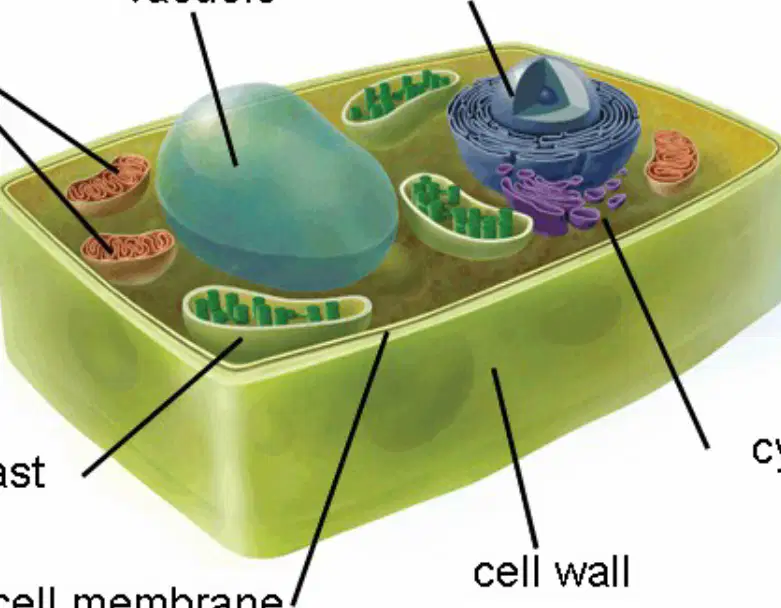
Label the following cell. In the pictured plant cell, which structure is the rigid outer boundary surrounding the cell?
Cell membrane
Cell wall
Nucleus
Vacuole
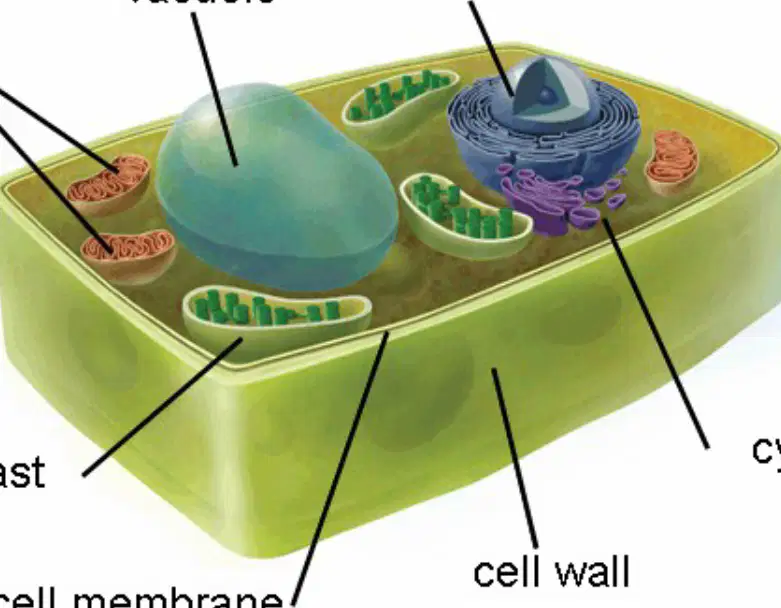
Label the following cell. In the pictured plant cell, which structure controls the cell’s activities and contains genetic material?
Chloroplast
Mitochondria
Nucleus
Vacuole
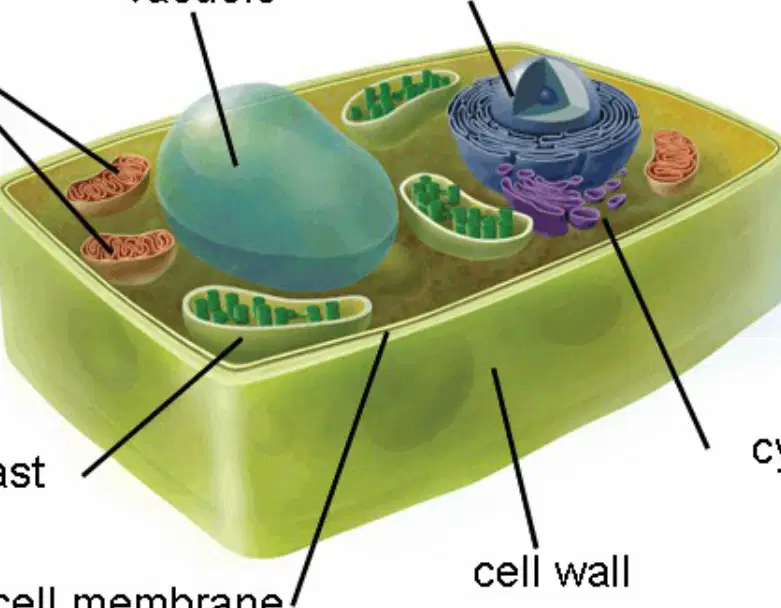
Label the following cell. In the pictured plant cell, which structure carries out photosynthesis?
Mitochondria
Chloroplast
Vacuole
Cell membrane
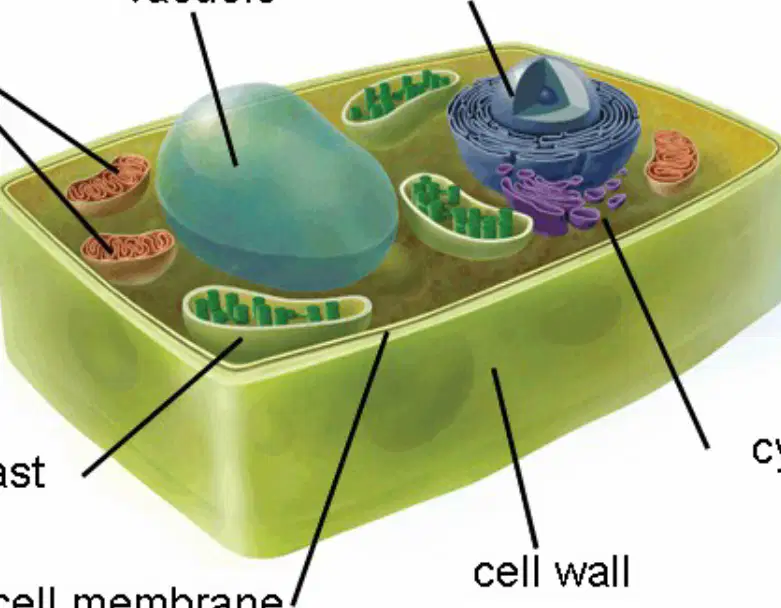
Label the following cell. In the pictured plant cell, which structure stores water and helps maintain turgor pressure?
Nucleus
Vacuole
Cell membrane
Mitochondria
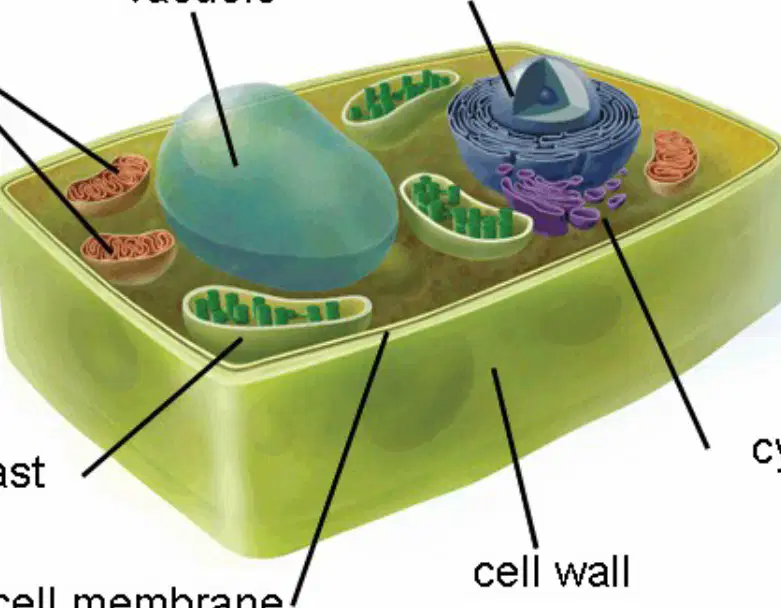
Label the following cell. In the pictured plant cell, which structure forms a flexible boundary that regulates entry and exit of substances?
Cell membrane
Cell wall
Chloroplast
Mitochondria
What is the cell membrane made up of?
Protein fibers
Phospholipid bilayer
Cellulose plates
Chitin sheets
In a phospholipid, which part is polar and hydrophilic?
The tails
The heads
The entire molecule is nonpolar
Neither heads nor tails
In a phospholipid, which part is nonpolar and hydrophobic?
The heads
The tails
Both heads and tails
Neither heads nor tails
The cell membrane is selectively permeable—what does this mean?
All substances can freely pass in both directions
No substances can pass at any time
The membrane allows some molecules to enter or exit while restricting others
Only water can pass through the membrane
What type of transport is required to move particles against the concentration gradient?
Passive transport
Simple diffusion
Active transport
Osmosis
What is significant about transport against the concentration gradient?
It happens without energy
It requires ATP and often uses transport proteins
It only moves water
It cannot occur in living cells
Passive transport is best described as which of the following?
Movement of materials through the membrane without using cellular energy
Movement that always requires ATP
Transport of large particles only
A process limited to plants
Which statement describes simple diffusion?
A passive transport that requires a protein channel
A passive transport where small molecules move from high to low concentration without added energy
An active transport that uses ATP
Movement of water across a membrane only
Which statement describes facilitated diffusion?
Passive transport that requires a protein channel for molecules to cross
Active transport that uses ATP
Movement of water only
Transport that occurs against the concentration gradient
Which statement describes active transport?
Requires energy in the form of ATP to move substances
Requires no energy and uses only diffusion
Moves water across a membrane
Occurs only in the chloroplast
Which statement describes osmosis?
Diffusion of water molecules across a selectively permeable membrane
Active transport of sugars using ATP
Movement of gases through a protein pump
Endocytosis of large particles
During endocytosis, what does the cell membrane do?
Forms a channel for ions
Changes shape to engulf a particle, forming a vacuole inside the cell
Expels contents to the outside of the cell
Creates new mitochondria
Which process expels large particles from a cell by fusing a vacuole with the cell membrane?
Endocytosis
Exocytosis
Osmosis
Facilitated diffusion
Exocytosis requires which of the following?
No energy
Only a protein channel
Energy (ATP)
Only occurs in plants
Which statement best describes the compound light microscope?
Uses electrons to magnify up to 1,000,000×
Requires light to pass through the specimen and is used to view objects at the cellular level
Designed to reflect light and view at low magnification only
Cannot exceed 40× magnification
Which statement best describes the electron microscope?
Uses light to pass through the specimen up to 400×
Uses electrons to magnify and can view molecules at the atomic level
Is also called a dissection microscope
Only used for living specimens
Which statement best describes the stereo microscope?
Also called a dissection microscope and used to view at low magnification with reflected light
Requires electrons to magnify
Used only to view atomic-scale structures
Cannot zoom beyond 10×
What is the typical zoom range of a compound light microscope?
1×–10×
10×–40×
40×–400×
10×–400×
Identify the low power of magnification when the eyepiece is 10× and the objective is 4×.
10×4=40×
10×10=100×
10×40=400×
4×10=14×
Identify the medium power of magnification when the eyepiece is 10× and the objective is 10×.
10×4=40×
10×10=100×
10×40=400×
10×1=10×
Identify the high power of magnification when the eyepiece is 10× and the objective is 40×.
10×4=40×
10×10=100×
10×40=400×
40×10=40×
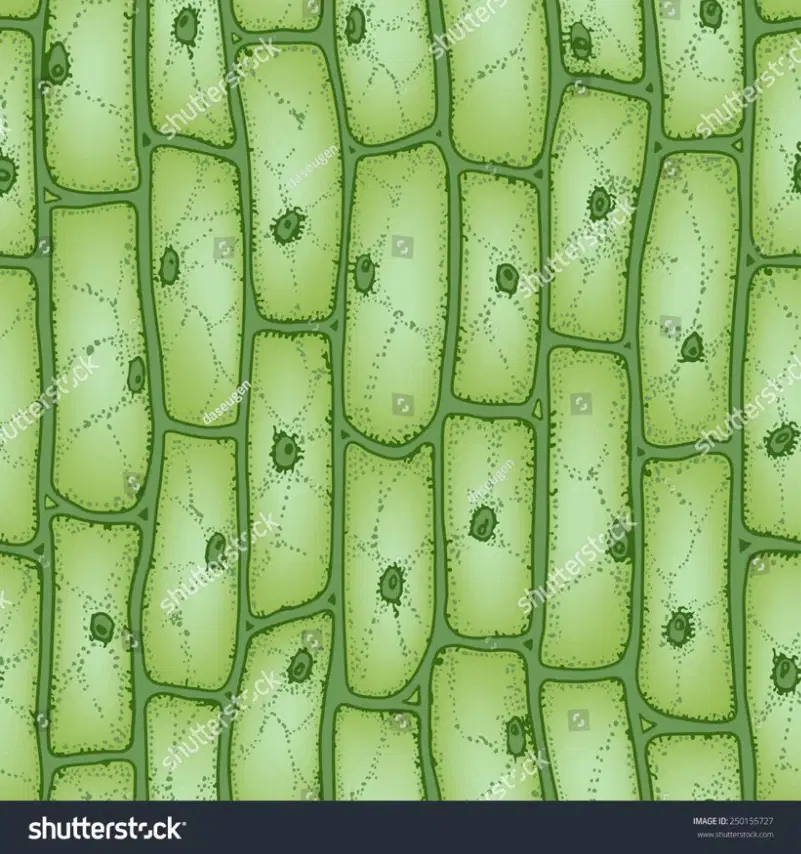
Identify the following as plant or animal cell: the image shows rectangular cells with cell walls arranged like bricks.
Plant cell
Animal cell
Bacterial cell
Fungal spore
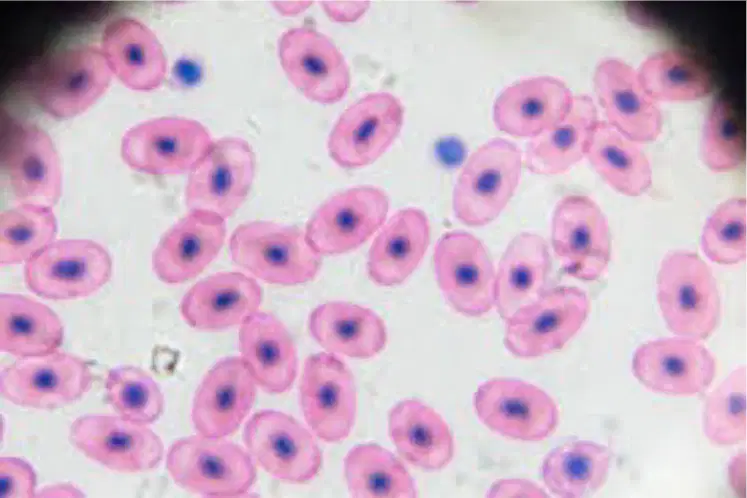
Identify the following as plant or animal cell: the image shows many pink circular cells without cell walls.
Plant cell
Animal cell
Bacterial cell
Protist
Photosynthesis is the process by which a cell captures energy in sunlight and uses it to make food. Which balanced description of inputs and products matches this process?
Carbon dioxide + water produce glucose and oxygen
Glucose + oxygen produce carbon dioxide, water, and ATP
Water alone turns into oxygen
ATP combines with carbon dioxide to form glucose
Cellular respiration is the process by which cells obtain energy from glucose. Which description of inputs and products matches this process?
Carbon dioxide + water produce glucose and oxygen
Glucose + oxygen produce carbon dioxide, water, and ATP
ATP + oxygen produce glucose
Water turns into glucose
Where does cellular respiration occur in eukaryotic cells, according to the worksheet?
Only in the chloroplast
In the mitochondria and the cytoplasm
In the vacuole
Only in the nucleus
Where does photosynthesis occur in plant cells, according to the worksheet?
Mitochondria
Chloroplast
Cytoplasm
Nucleus
Which organisms use each process, as described in the worksheet?
Only plants perform both photosynthesis and cellular respiration
All organisms perform cellular respiration, while plants perform photosynthesis
Only animals perform cellular respiration
Neither plants nor animals perform photosynthesis
How are photosynthesis and cellular respiration related, based on the worksheet description?
They are unrelated and occur in separate organisms only
The waste products of one are used in the other; the processes rely on each other
They happen only at night
Both produce glucose as their primary waste

