
 Worksheets
CPR and Emergency Response Procedures
Total questions: 20
Worksheet time: 10mins
What is the first thing you do when you notice someone may be having a medical emergency?
Call 911
Check the scene for safety
Tape and shout to check for consciousness
Begin chest compressions
How do you know if the victim is in need of CPR?
Ask them if they are breathing
Look, listen and talk to them
Ask their friend if they are breathing
Look for Breathing and Unresponsiveness
Once the victim is determined unresponsive, what should you do next?
Call 911 and begin Chest Compressions
Call 911 and wait for EMS
Begin compressions and hope someone walks by
If you can, take the victim to the hospital
Chest Compressions should be done....
slow and inconsistent
never ever
Hard and Fast
Soft and quiet
When performing Hands-Only CPR, how many times should you push in the center of the chest during a one minute period?
about 50 times
100-120 times
130-150 times
over 200 times
When do you stop pushing on the victim's chest during Hands-only CPR?
5 minutes
10 minutes
15 minutes
Until you cannot go on or an AED arrives
What should the positioning of your hands look like?
heel of one hand on center of chest and lower half of breastbone, with the other hand on top
make a fist and cup the other hand on top
flat hand with fingers interlocked
hands in a claw shape with fingers bent in
T or F NEVER turn off or remove AED pads until EMS arrives, even if victim become responsive.
True
False
A portable device that checks the heart rhythm. If needed, it can send an electric shock to the heart to try to restore a normal rhythm.
CPR
Hands-Only CPR
AED
ACT
What is the correct pad placement when using an AED?
On a bear chest, upper left, lower right
On a clothed chest, upper left, lower right
On a bear chest, upper right, lower left
On a clothed chest, upper right, lower left
What do you need to tell the 911 operator?
Your birthday
Your age
Your location
Your CPR experience
Which is the correct order?
Do CPR until the AED arrives, then start using the AED.
Wait for the AED before you start CPR.
Do CPR until you are exhausted, then use the AED.
Never use CPR unless an AED is available.
After an AED delivers a shock, you should:
take a 5 minute break
stop CPR
call for more help
continue CPR
Why is it important to stand clear and not touch the person while the AED is analyzing or defibrillating
The AED will turn itself off
You or someone else could be injured by the shock
you might prevent the AED from analyzing the heart rhythm properly
both B and C
When you come upon a scene and you believe there is a medical emergency, you should :
always check the scene first to make sure it is safe for you to help
get to the victim as quickly as possible to start CPR
wait until EMS gets there before you help
run away
True or False: Cardiac arrest and a heart attack are the same thing.
true
false
maybe
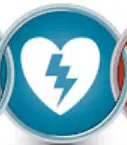
This symbol: means-
start CPR
EMS response
use AED
hospital care
These warning signs- chest discomfort, shortness of breath, nausea, light headedness, sweating, and jaw pain are signs of:
cardiac arrest
a stroke
a heart attack
the flu

