
 Worksheets
Oedipus Rex, PArt 2 Quizs
Total questions: 20
Worksheet time: 15mins
Aristotle noted in his book *Poetics* that all effective tragedies evoke what he called catharsis.
A process of emotional release and purification
A method of character development
A technique for plot construction
A form of comedic relief
Two emotions often built up and released in cathartic tragedy are pity and fear because they are easy to build up and easy to empathize with. Other emotions, like happiness and sadness, are also possible, but pity and fear are the most common.
Pity and fear are the most common emotions built up and released in cathartic tragedy.
Happiness and joy are the primary emotions in cathartic tragedy.
Sadness and anger are the easiest emotions to empathize with in tragedy.
Fear and excitement are the most common emotions in cathartic tragedy.

Peripeteia - sudden change in the situation.
A plot twist that results in a positive change of circumstances.
A sudden change in the situation that marks the climax of the story.
A moment of comic relief in a tragic narrative.
A character's journey from bad to good.
The function of the Chorus in Greek tragedy.
The Chorus serves as the voice of the community, commenting on the action, expressing collective emotions, and guiding the audience’s response to the unfolding tragedy.
The Chorus primarily acts as a character in the play, influencing the plot directly.
The Chorus provides background information about the characters and setting without any commentary.
The Chorus serves as a musical interlude, providing entertainment between scenes.
Jocasta begs Oedipus to stop pursuing the truth.
Jocasta urges Oedipus to continue his search for the truth about his origins.
Jocasta pleads with Oedipus to abandon his search for the truth about his origins.
Jocasta encourages Oedipus to confront his past without hesitation.
Jocasta insists that Oedipus should ignore the truth about his origins.
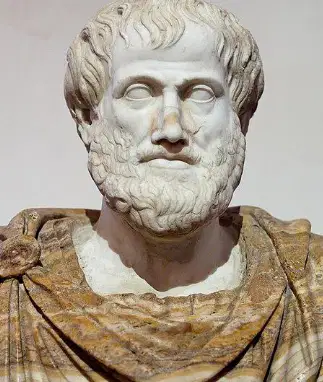
Image of Aristotle's statue.
What is Aristotle known for?His contributions to mathematics and physics.
His concept of catharsis in tragedies.
His invention of the scientific method.
His role in the development of modern psychology.

People seek out literature, plays, and movies that evoke sadness.
Sad stories can provide emotional CATHARSIS.
Sad stories are always the most popular.
Sad stories are less relatable than happy ones.
Sad stories are only for certain audiences.
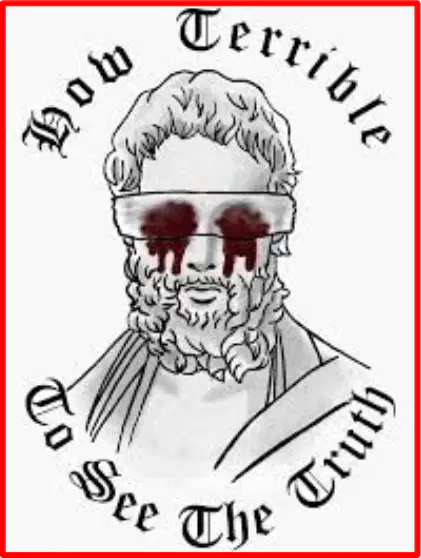
Feelings of pity for Oedipus arise when significant events occur.
Jocasta kills herself.
Oedipus blinds himself.
Oedipus says goodbye to his daughters.
Oedipus wins a battle.
End Result: By the end of the play, the tragic hero realizes his/her own error, accepts its tragic consequences, and is humbled. The audience feels both pity and fear for the tragic character. They pity the hero and fear the same fate.
The tragic hero undergoes self-awareness, accepts their fate, and evokes pity and fear in the audience, creating a cathartic experience.
The tragic hero remains oblivious to their mistakes and does not evoke any emotions in the audience.
The tragic hero is celebrated for their achievements, leading to a joyful conclusion for the audience.
The tragic hero escapes the consequences of their actions, leaving the audience feeling indifferent.

The Continuing Allure of Greek Tragedies
They focus solely on historical events.
They explore universal themes such as fate, human suffering, and moral dilemmas.
They are primarily comedies that entertain audiences.
They are only relevant to ancient Greek culture.
Messenger from Corinth brings news: Polybus is dead and Oedipus has inherited the throne.
Oedipus becomes king after defeating Polybus in battle.
Polybus's death leads to Oedipus inheriting the throne, marking a significant turn in the prophecy's unfolding.
Oedipus inherits the throne due to a family dispute.
The news from Corinth is about the birth of Oedipus's children.
Oedipus Rex
A famous comedy written by Sophocles.
A famous tragedy written by Sophocles, exploring themes of fate, free will, and the search for truth.
A historical novel about ancient Greece.
A modern play about family dynamics.
Oedipus now knows who he really is.
Oedipus uncovers the truth about his identity and origins.
Oedipus is unaware of his true parentage.
Oedipus believes he is a hero of Thebes.
Oedipus is searching for his lost family.
Oedipus requests Creon to exile him and care for his daughters.
Oedipus asks Creon to banish him, bury Jocasta, and ensure the well-being of his daughters, Antigone and Ismene.
Oedipus requests Creon to take care of his kingdom and protect his daughters.
Oedipus demands Creon to find a new husband for his daughters, Antigone and Ismene.
Oedipus instructs Creon to exile him and take over the throne.
Violence in Greek Theatre always occurred offstage and was reported through a messenger.
This approach allowed plays to focus on conflicts, themes, and character development.
Stage gore was preferred over imagination in Greek Theatre.
Violence was depicted graphically on stage to shock the audience.
The use of messengers was a way to avoid any form of violence.
Oedipus is happy at first but fearful to return because his mother is still alive.
Oedipus feels only joy and has no fears about returning.
Oedipus experiences mixed emotions, feeling joy initially but fear due to the possibility of the prophecy involving his mother still coming true.
Oedipus is indifferent about returning and does not care about the prophecy.
Oedipus is only fearful and does not feel any happiness about his situation.
The Messenger reports Jocasta's suicide and Oedipus blinding himself.
Jocasta takes her own life, and Oedipus blinds himself using her brooches after discovering the truth about their relationship.
Jocasta is killed by Oedipus in a fit of rage, leading him to blind himself.
Oedipus blinds himself in a moment of despair after losing Jocasta to another man.
Jocasta and Oedipus decide to leave Thebes together after the tragic events.
Messenger explains to Oedipus that he shouldn’t worry because he was adopted.
The messenger reveals to Oedipus that he was adopted, which changes his understanding of the prophecy and his lineage.
Oedipus learns that he is the biological son of the king and queen of Thebes.
The messenger tells Oedipus that he is destined to rule Thebes forever.
Oedipus discovers that he has a twin brother who was lost at birth.
Hubris as a common tragic flaw in Greek tragedies.
Excessive humility leading to a character's downfall.
A character's excessive pride that defies the gods or fate, resulting in their downfall.
A tragic hero's ability to overcome fate and achieve greatness.
The theme of love and sacrifice in Greek tragedies.
Jocasta realizes who Oedipus really is.
Jocasta comes to the shocking realization of Oedipus's true identity.
Jocasta believes Oedipus is a hero of Thebes.
Jocasta thinks Oedipus is her long-lost brother.
Jocasta suspects Oedipus of treachery against the crown.

