
 Worksheets
BSP3153 CHAPTER 4 PART B
Total questions: 47
Worksheet time: 2hrs 21mins
Using the following outline of topics—Structure, Processing, Additives, and Application/Testing condition—analyze how each factor can influence polymer properties. Provide one concise mechanism or effect for each factor (e.g., how chain architecture affects modulus, how cooling rate alters crystallinity, how plasticizers change flexibility, how testing temperature shifts measured toughness).

The course learning outcome states: "Describe the type of properties, structure-properties, processing-properties, additives-properties and properties-application relationship." Explain what is meant by a "structure-properties relationship" in polymers and illustrate with a clear example that links a structural feature to a specific property and application relevance.
According to the stated expectations, students should be able to: identify important types of polymer properties and justify their importance; explain how structure, processing and additives influence properties; and describe applications in light of property influence. Synthesize these expectations into a short plan for evaluating a new polymer for a target application, specifying the properties to examine, the structural or processing variables to adjust, the additives to consider, and how testing conditions will be chosen to reflect application needs.
List and briefly explain the main categories used to describe polymer properties: mechanical properties, chemical resistance, electrical properties, weathering properties, polymer degradation, and flammability (thermal) properties. Clarify what each category signifies for material performance.

Which listed property category most directly governs a polymer’s suitability as an electrical insulator in devices, and why? Choose one and justify in one to two sentences.
Explain why the study of polymer properties is important by paraphrasing the five aims shown: determining suitable applications, selecting the most suitable material per application, establishing specialty and weakness, relating properties with structure, and improving existing properties.

A white, curved insert used in orthopaedic implants is shown. Identify the polymer named in the slides that is used for this biomedical part and state two reasons given for its selection.

Describe two biomedical applications of UHMWPE mentioned, specifying the implant components where it is used.
Considering the property categories, which combination best explains UHMWPE’s suitability for articulating surfaces in hip and knee implants? Provide a short rationale linking properties to performance.

Differentiate weathering properties from polymer degradation in one to two sentences, focusing on how each relates to environmental exposure and long-term performance.

If you were selecting a polymer for a corrosive chemical processing component, which property category would you prioritize and what specific performance would you look for? Answer concisely.
Explain why low density is considered an advantage of polymeric materials, and relate it to the strength-to-weight ratio for engineering applications.
Describe how the ease of processing and the ability to modify properties provide practical advantages when selecting polymers for manufacturing.
Discuss why polymers often exhibit good corrosion and chemical resistance compared with many metals, and identify how this impacts service life and maintenance costs.
Polymers are noted for good electrical properties (insulator, semiconductor). Provide two distinct application benefits that arise from this versatility.
Analyze the two helmets shown: one is an older metal combat helmet (left), and the other is a modern military-style helmet with integrated straps (right). Explain how the adoption of polymer materials in the modern helmet can improve performance compared to traditional metallic designs, addressing at least weight, impact energy management, corrosion resistance, and wearer ergonomics.
The images show two vintage computing/calculating machines with hard outer casings and keys. Discuss why polymers became favored for housings and keys in computing devices compared to earlier materials, considering manufacturability, electrical properties, longevity, and user interaction.
Compare the protective gear shown: historical metal armor with chainmail (left) and a modern bullet-resistant vest worn by a security professional (right). Explain how polymer-based materials transformed personal protection, focusing on energy absorption mechanisms, mobility, and multi-threat protection.
List and explain the four broad categories that influence polymer properties. For each category, briefly describe the kind of effect it can have on performance or behavior (e.g., mechanical, thermal, processing response).
Using the given structural focus, explain how the type of bonding within a polymer affects its macroscopic properties. Include the roles of covalent backbone bonds and secondary interactions in your answer.
Define crystalline content in polymers and analyze how varying crystallinity alters property outcomes. Connect your explanation to its influence on Tm and Tg as stated in the material.
Distinguish between Tm and Tg for polymers and explain why both temperatures are highlighted as structural influencers of properties.
From the list of structural determinants, explain how molecular weight and its distribution influence polymer structure and, consequently, properties.
Describe how the arrangement of atoms in repeating units and the overall chain structure contribute to polymer structure. Give examples of arrangements that would raise or lower crystallinity and how that feeds back into properties.
Integrate the section’s message: Provide a clear causal chain showing how structural factors (bonding type, crystallinity content, Tm and Tg) ultimately influence measured polymer properties under application or testing conditions.
Using the diagram titled “General Overview,” explain how specific structural elements—arrangement of atoms, arrangement of the repeating unit, molecular weight and molecular weight distribution (MW and MWD), chemical constituent, and chain structure—collectively influence crystallinity and transition temperatures (Tm, Tg), and how these, together with processing technique, additives, and conditions of testing, determine polymer properties. Reference the visual relationships shown in the figure.
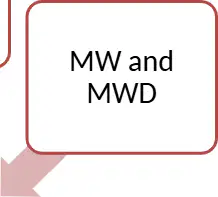
Analyze why molecular weight distribution (MWD) is depicted as a structural factor in the overview and predict its impact on polymer crystallinity and thermal transitions (Tm and Tg). Use the relationships indicated by the arrows to justify your reasoning.
The overview separates processing technique, additives, and conditions of testing from intrinsic structural features. Discuss how each of these non-structural factors can modify observed polymer properties even when the base structure remains unchanged, according to the diagram’s flow.
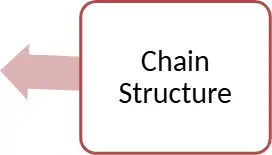
Explain the role of chain structure as presented in the diagram and contrast its expected influence on crystallinity versus thermal transition temperatures. Base your answer on the depicted link from chain structure to the central ‘Structure’ hub and onward to crystallinity, Tm, and Tg.
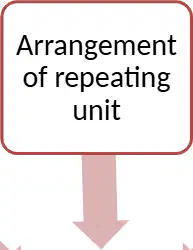
Using the visual, propose how changing the arrangement of the repeating unit could affect downstream polymer properties. Include at least two plausible outcomes on crystallinity and on either Tm or Tg, and relate them to the final properties arrow.
The diagram shows pendant groups of different sizes (benzene ring, methyl, chlorine, fluorine, hydrogen) alongside typical polymers (polystyrene, polypropylene, vinyls, fluorocarbons, polyethylene). Based on this information, which pendant group most strongly contributes to chain stiffening in the resulting polymer, and why? Provide a brief explanation that connects group size to polymer rigidity.

Which polymer is most associated with a benzene ring pendant group according to the visual: polystyrene, polypropylene, vinyls, fluorocarbons, or polyethylene?
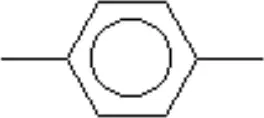
According to the text, poly(ethylene terephthalate) (PET) is a stiffer molecule than poly(ethylene adipate) (PEA). Explain the structural reason provided, using the terminology of pendant/side groups and flexibility.
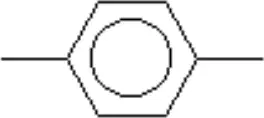
Using the structural fragments shown (p-phenylene, amide, sulfone, carbonyl), explain how incorporating any of these groups as pendant or backbone units can influence polymer stiffness and intermolecular interactions. Focus on at least two groups and compare their effects.
Refer to the two polymer repeat-unit diagrams. Identify which structure corresponds to poly(ethylene adipate) and which corresponds to poly(ethylene terephthalate). Justify your identification by pointing out the presence or absence of a benzene ring in the repeat unit.
Discuss how the presence of a benzene ring in the repeat unit of PET affects chain mobility compared to the aliphatic CH2 chain in PEA. Relate your answer to the concept of stiffening groups and rotational freedom.
From the pendant group list and typical polymers, infer which polymer would likely have the highest chain flexibility among the options provided and briefly justify: polystyrene, polypropylene, vinyls, fluorocarbons, polyethylene.
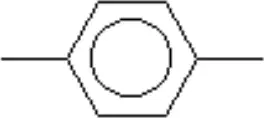
Explain how the size of pendant/side groups influences glass transition behavior in polymers, using benzene-ring-containing polymers versus those with small substituents like hydrogen or fluorine as contrasting examples.
Explain how cis-1,4-polyisoprene and trans-1,4-polyisoprene differ in chain symmetry and how this difference governs their ability to crystallize and the resulting material properties.
Natural rubber and gutta-percha are both polyisoprenes. Identify which one is predominantly cis-1,4-polyisoprene and which is predominantly trans-1,4-polyisoprene, and state their contrasting macroscopic properties.
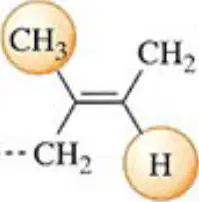
Describe the structural feature shown in the diagram: cis-polyisoprene versus trans-polyisoprene repeating units. Relate the arrangement around the double bond to the polymer’s source materials mentioned.
Using the polymer chain sketches provided, explain why natural rubber does not crystallize easily whereas gutta-percha does.
Summarize the relationship between stereochemistry (cis vs trans) and molecular weight as stated for gutta-percha compared with rubber.
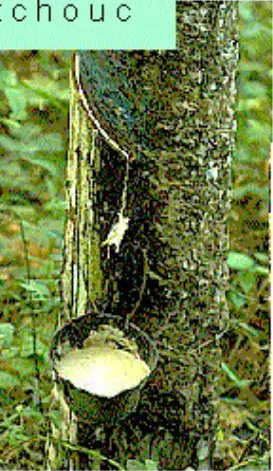
Explain how the natural sources depicted relate to the polymer stereochemistry and resulting materials shown in the diagrams.
Provide a mechanistic rationale for why a cis arrangement in 1,4-polyisoprene leads to amorphous behavior compared to a trans arrangement.
Discuss the term caoutchouc in the context of the provided material, including its stereochemical identity and main botanical source.

Explain how the polymer repeat structures drawn for caoutchouc and gutta-percha reflect their cis or trans configurations and connect these structures to observed mechanical properties.

