
 Worksheets
Welcome to Design Principles!
Total questions: 50
Worksheet time: 25mins
Opening Circle: Identify the purpose of sharing a design you find visually appealing.
To discuss personal preferences in design
To critique design flaws
To learn about design history
To analyze technical aspects
What is balance in design? Fill in the blank: Balance is the distribution of _______ in a design.
visual weight
color
texture
shape
Fill in the blank: Symmetrical Balance means _______ elements on both sides.
equal
different
random
uneven

Which type of balance is shown in the image?
Symmetrical
Asymmetrical
Think-Pair-Share: Which of the following is an example of balance?
A person standing on one leg without falling
A person running quickly
A person jumping high
A person sitting down
What does unity create between design elements?
Conflict
Harmony
Confusion
Separation
Which of the following is NOT a way unity is achieved in design?
A) Matching colors
B) Organic integration of elements
C) Clear visual relationships
D) Random placement of elements

Refer to the image labeled 'Example of unity'. Does this image demonstrate harmony between design elements?
True
False
Refer to the image labeled 'Example lacking unity'. Does this image demonstrate harmony between design elements?
True
False
Compass Points Activity: Unity in design makes me feel:
Connected and harmonious
Confused and disorganized
Isolated and detached
Uninspired and bored
Contrast highlights differences between _________.
design elements
color schemes
art styles
textures
Contrast can be created through: 1. ________ variations
Color
Shape
Texture
Size
Contrast can be created through: 2. ________ differences
Size
Color
Texture
Shape
Contrast can be created through: 3. ________ changes
Texture
Color
Shape
Size
Contrast can be created through: 4. ________ variations
Shape
Texture
Color
Size
What is the purpose of using contrast in design?
To make everything look the same
To draw attention and create visual interest
To hide important elements
To reduce differences between elements
Which of the following is NOT a way to create contrast?
Color variations
Size differences
Texture changes
Ignoring shape variations
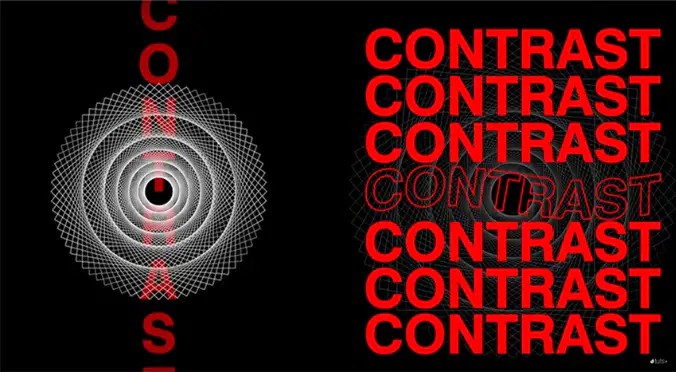
Refer to the image showing the word 'CONTRAST' in different styles. What design principle is being demonstrated in this image?
Contrast
Alignment
Repetition
Proximity
What is the definition of 'Repetition' in design?
Repeating a single design element
Repeating multiple design elements
Using different design elements
Changing design elements frequently
What is the definition of 'Pattern' in design?
A) Repeating a single design element
B) Repeating multiple design elements
C) Using only one color
D) Changing design elements frequently
Fill in the blank: Repetition means ______ a single design element.
repeating
removing
ignoring
distorting
Fill in the blank: Pattern means repeating ______ design elements.
multiple
random
unique
single
Which of the following is a benefit of repetition and pattern in design?
Creates consistency
Makes design confusing
Reduces brand identity
Removes visual rhythm
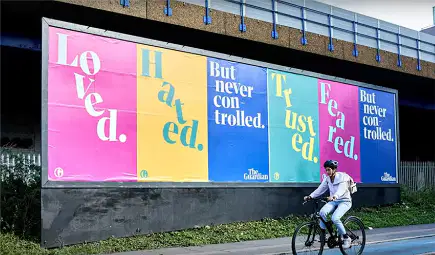
Which image is an example of repetition?
The image with colorful posters and a cyclist
The image with umbrellas and chairs
Both images
Neither image
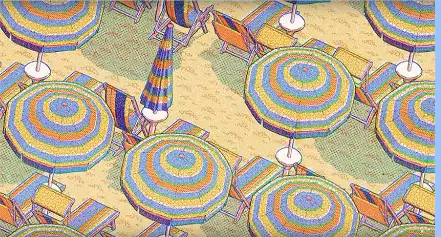
Which image is an example of pattern?
The image with colorful posters and a cyclist
The image with umbrellas and chairs
Both images
Neither image
What is the definition of Movement in art? Fill in the blank: Movement is the path viewer's eyes take through a ________.
composition
color
texture
shape
What is the definition of Rhythm in art? Fill in the blank: Rhythm is the visual tempo created by ________ elements.
repeated
random
isolated
contrasting
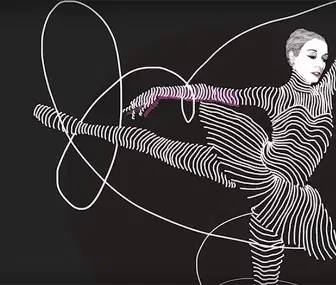
Which of the following images is an example of Movement?
The image labeled 'Movement example' (dancer with flowing lines)
The image labeled 'Rhythm example' (zebra with stripes)
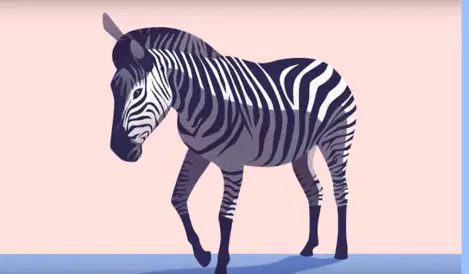
Which of the following images is an example of Rhythm?
The image labeled 'Movement example' (dancer with flowing lines)
The image labeled 'Rhythm example' (zebra with stripes)
Select two techniques for creating movement and rhythm in a composition.
Repetition and alternation
Symmetry and static balance
Monochrome color scheme and stillness
Centralized focus and isolation
What does 'Emphasis' do in design?
Draws viewer to specific design elements
Makes elements less noticeable
Removes elements from design
Adds random colors
Which of the following is NOT a strategy for creating emphasis in design?
Size variation
Color contrast
Unique positioning
Repetition of elements
Fill in the blank: One strategy for creating emphasis in design is ________ variation.
size
color
texture
alignment
Fill in the blank: Using ________ contrast is a strategy to create emphasis in design.
color
shape
texture
size

Back-to-Back, Face-to-Face: Which of the following strategies can be used to create emphasis in a design?
Size variation, color contrast, unique positioning, isolation of elements
Repetition, symmetry, monotone color scheme, central alignment
Minimalism, grid layout, muted colors, equal spacing
Uniform size, analogous colors, standard positioning, grouping elements
What is 'Proportion' about in design?
Color schemes
Element relationships
Font styles
Page margins
Which of the following is NOT a key consideration of proportion?
A) Relative size of elements
B) Hierarchy of importance
C) Visual weight distribution
D) Texture of elements
Fill in the blank: An example of proportion in design is the _______ being larger than the photo caption.
headline
border
margin
footer

Which design principle is illustrated by the headline being larger than other text elements?
Contrast
Proportion
Alignment
Repetition
Fill in the blank: ______ is the cohesiveness between design elements.
Harmony
Contrast
Balance
Emphasis
Fill in the blank: ______ is creating visual interest in design.
Variety
Repetition
Alignment
Proximity
Which of the following is NOT a component of balance in design?
A) Similar elements
B) Contrasting components
C) Random placement
D) Keeps design engaging and dynamic
Fill in the blank: Balance in design involves ______ elements.
Similar
Contrasting
Random
Unrelated
Fill in the blank: Balance in design keeps the design ______ and dynamic.
engaging
boring
static
confusing

Which image is an example of harmony in design?
The image with repeating business cards
The image with various shapes and colors
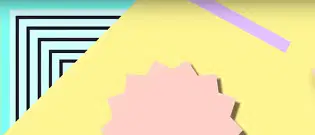
Which image is an example of variety in design?
The image with repeating business cards
The image with various shapes and colors
Design principles work together by:
Creating a cohesive and effective design.
Focusing only on color schemes.
Ignoring user experience.
Applying rules randomly.
Reflection Question: Select the principle you find most interesting.
Principle of Reflection
Principle of Refraction
Principle of Diffraction
Principle of Superposition
Reflection Question: Identify a place where you have seen these principles in real life.
In a classroom setting
On a television show
In a fictional book
In a video game
Closing Reflection
How might you apply the knowledge gained from your design thinking journey?
By using design thinking to solve real-world problems
By ignoring the principles of design thinking
By avoiding collaboration and creativity
By not reflecting on the process

