
 Worksheets
Church History Chapters 3-5 Review
Total questions: 61
Worksheet time: 2hrs 34mins
When was the Edict of Milan signed?
AD 313
AD 325
AD 380
AD 361
When was the Edict of Thessalonica signed?
AD 313
AD 325
AD 380
AD 361
The Edict of Milan...
...legalized Christianity throughout the Roman Empire.
...illegalized paganism throughout the Roman Empire.
...established Christianity as the official religion of the Roman Empire.
...illegalized Christianity throughout the Roman Empire.
The Edict of Thessalonica...
...legalized Christianity throughout the Roman Empire.
...illegalized paganism throughout the Roman Empire.
...established Christianity as the official religion of the Roman Empire.
...illegalized Christianity throughout the Roman Empire.
Who signed the Edict of Milan?
Emperor Constantine
Emperor Theodosius
Emperor Julian
Emperor Galerius
Who signed the Edict of Thessalonica?
Emperor Constantine
Emperor Theodosius
Emperor Julian
Emperor Galerius
Name for someone who as a Christian practices the faith apart from the Church of Rome.
Pagan
Heretic
Apostate
Schismatic
Name for someone who renounced their faith.
Pagan
Heretic
Apostate
Schismatic
Name for someone whose beliefs as a Christian are at odds with the truth.
Pagan
Heretic
Apostate
Schismatic
The earliest disciples of Jesus referred to the faith as...
Catholicism
The Way
Christianity
Judaism
Name the three emperors under whom the largest Christian persecutions took place and the centuries when they occurred (Hint: Remember the 3 D's...).
Describe at least three criticisms or misunderstandings the Romans held concerning the Christians.
Describe the conversion of Constantine. What happened that caused Constantine to become a Christian (catechumen) and on what occasion?
Early Christian heresy teaching that the material world is evil and created by the demiurge; escape from bodily existence is salvation.
Manichaeism
Marcionism
Docetism
Montanism
Early Christian heresy teaching that Christians (and especially clergy) who renounce their faith condemn themselves and cannot be readmitted into the church.
Sabellianism
Modalism
Patripassionism
Montanism
Early Christian heresy teaching that Jesus had no material body and that he only "seemed" to suffer and die on the cross, but did not actually do so.
Sabellianism
Marcionism
Docetism
Montanism
Early Christian heresy teaching that God assumes the roles of Father, Son, and Holy Spirit successively throughout history.
Sabellianism
Ebionism
Modalism
Patripassionism
Early Christian heresy teaching that the god of the Old Testament is the evil demiurge and that Jesus came to save us from the constraints of the law of the OT by preaching the gospel.
Sabellianism
Marcionism
Patripassionism
Montanism
In your own words, explain how one could respond to the claim that the material world and bodily existence are evil. Consider the ideas of St. Irenaeus and St. Augustine in formulating your response.
Council held to address the heresy of Apollinarianism, or the idea that Jesus lacks a human soul (and therefore is not fully human).
First Council of Nicaea
First Council of Constantinople
Council of Ephesus
Council of Chalcedon
Council held to address the heresy of Arianism, or the idea that Jesus is not fully God but only like God or semi-divine.
First Council of Nicaea
First Council of Constantinople
Council of Ephesus
Council of Chalcedon
Council held to address the heresy of Monophysitism, or the idea that Jesus' full divinity completely consumes and transforms his humanity.
First Council of Nicaea
First Council of Constantinople
Council of Ephesus
Council of Chalcedon
Council held to address the heresy of Nestorianism, or the idea that Jesus is divided into two, completely separate natures or persons, one human and one divine.
First Council of Nicaea
First Council of Constantinople
Council of Ephesus
Council of Chalcedon
Describe briefly what is an "ecumenical council." Define the term and explain what they can and cannot permanently decide.
Considered the "hero(es)" or biggest proponent(s) of orthodoxy at the Council of Chalcedon.
Sts. Alexander and Athanasius
Sts. Gregory of Nyssa, Gregory of Nazianzen, and Basil of Caesarea
St. Cyril of Alexandria
Pope St. Leo the Great
Considered the "hero(es)" or biggest proponent(s) of orthodoxy at the First Council of Constantinople.
Sts. Alexander and Athanasius
Sts. Gregory of Nyssa, Gregory of Nazianzen, and Basil of Caesarea
St. Cyril of Alexandria
Pope St. Leo the Great
Considered the "hero(es)" or biggest proponent(s) of orthodoxy at the Council of Ephesus.
Sts. Alexander and Athanasius
Sts. Gregory of Nyssa, Gregory of Nazianzen, and Basil of Caesarea
St. Cyril of Alexandria
Pope St. Leo the Great
Considered the "hero(es)" or biggest proponent(s) of orthodoxy at the First Council of Nicaea.
Sts. Alexander and Athanasius
Sts. Gregory of Nyssa, Gregory of Nazianzen, and Basil of Caesarea
St. Cyril of Alexandria
Pope St. Leo the Great
Philippians 2:5-11: 5 Have this mind among yourselves, which was in Christ Jesus, 6 who, though he was in the form of God,[a] did not count equality with God a thing to be grasped, 7 but emptied himself,[b] taking the form of a servant,[c] being born in the likeness of men. 8 And being found in human form he humbled himself and became obedient unto death, even death on a cross. 9 Therefore God has highly exalted him and bestowed on him the name which is above every name, 10 that at the name of Jesus every knee should bow, in heaven and on earth and under the earth, 11 and every tongue confess that Jesus Christ is Lord, to the glory of God the Father.
Explain how Philippians 2 was used in order to defend orthodoxy at the First Council of Nicaea. Quote the passage in support of your response.
Explain in your own words the general significance of this passage. What does Philippians 2 tell us about who God is, or what kind of God he is?
Mark 14: 32-42: 32 And they went to a place which was called Gethsem′ane; and he said to his disciples, “Sit here, while I pray.” 33 And he took with him Peter and James and John, and began to be greatly distressed and troubled. 34 And he said to them, “My soul is very sorrowful, even to death; remain here, and watch.”[a] 35 And going a little farther, he fell on the ground and prayed that, if it were possible, the hour might pass from him. 36 And he said, “Abba, Father, all things are possible to thee; remove this cup from me; yet not what I will, but what thou wilt.” 37 And he came and found them sleeping, and he said to Peter, “Simon, are you asleep? Could you not watch[b] one hour? 38 Watch[c] and pray that you may not enter into temptation; the spirit indeed is willing, but the flesh is weak.” 39 And again he went away and prayed, saying the same words. 40 And again he came and found them sleeping, for their eyes were very heavy; and they did not know what to answer him. 41 And he came the third time, and said to them, “Are you still sleeping and taking your rest? It is enough; the hour has come; the Son of man is betrayed into the hands of sinners. 42 Rise, let us be going; see, my betrayer is at hand.”
Explain how a modalist Christian might interpret this passage.
Explain how an orthodox Christian such as St. Maximus the Confessor would interpret this passage.
The councils of Second and Third Constantinople largely dealt with the heresy of...
Monothelitism/Monoenergism
Monophysitism/Miaphysitism
Nestorianism
Arianism
When was the Council of Chalcedon held?
AD 325
AD 381
AD 431
AD 451
When was the First Council of Constantinople held?
AD 325
AD 381
AD 431
AD 451
When was the First Council of Nicaea held?
AD 325
AD 381
AD 431
AD 451
When was the Council of Ephesus held?
AD 325
AD 381
AD 431
AD 451
Explain the heresy of Pelagianism. What did Pelagius teach concerning sin and human nature, and how did St. Augustine respond to these teaching? Be specific.
When did the (Western) Roman Empire fall?
AD 410
AD 476
AD 1453
AD 452
Describe at least three of the theorized causes of Rome's collapse in the West.
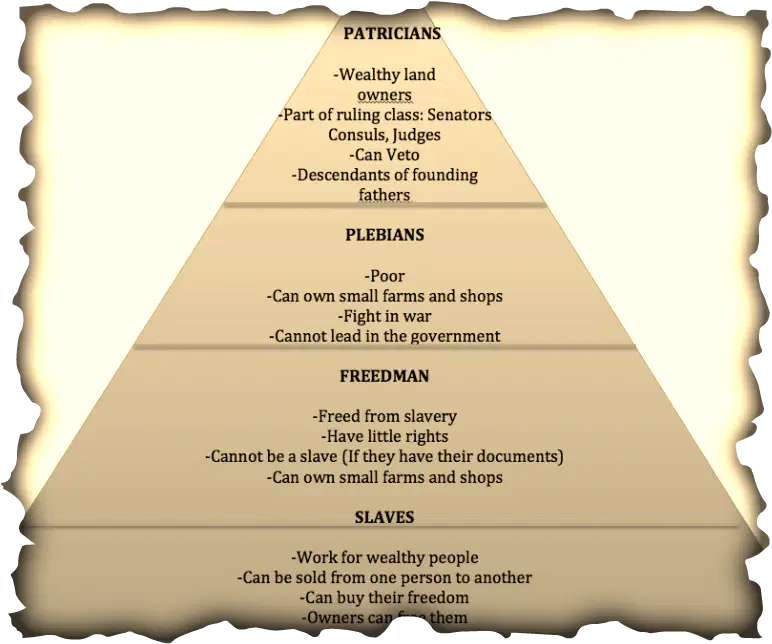
Compare and contrast early medieval society and Roman society. What is similar? What is different?
Who were Leo the Great and Gregory the Great? List at least two notable accomplishment for each of them.
As the Roman empire in the West collapsed, what institution(s) became more central to the social fabric of early medieval society? Be sure to describe in details how said institution(s) helped organize society and the role(s) they played.
Meaning "law"; the moral and spiritual practices of Muslims.
Koran (Qur'an)
Sunnah
Sharia
Jihad
Meaning "recitation"; the holy book of Islam.
Koran (Qur'an)
Sunnah
Sharia
Jihad
Meaning "habit"; the collection of oral teachings (hadiths) in Islam.
Koran (Qur'an)
Sunnah
Sharia
Jihad
Meaning "struggle"; a spiritual struggle against sin (primarily).
Koran (Qur'an)
Sunnah
Sharia
Jihad
Describe who Muhammed is and how Islam began.
Giving all of one's wealth to charity
Which of the following are pillars of Islam?
Refraining from drinking or smoking
Fighting in defense of the faith (jihad)
Fasting every day during the month of Ramadan
Giving a reasonable amount of one's wealth to charity
Not eating pork
Which of the following are pillars of Islam?
Praying five times every day
Paying taxes (jizya)
Memorization of the Koran and daily recitation
Making a confession of faith in God and in his prophet Muhammed
Lying in order to avoid martyrdom
The city where Muslims believe the prophet ascended to heaven.
The city where the first Muslims fled and established the first Islamic state.
The city where Islam began.
Describe the relationship between Muslims and the people of the book, according to the Koran.
Describe how Islam and the Koran relate themselves historically and theologically to the other Abrahamic religions (Christianity and Judaism).
For what reason(s) did the Sunni and Shia split occur in Islam?
What does the Catholic Church teach concerning Islam?
The words "Islam" (the religion) and "Muslim" (a follower of Islam) both have the same root, meaning what?
In your own words, explain why the first six ecumenical councils and their pronouncements on doctrine should matter to Christians. In other words, why are the teachings of these councils significant?
Describe the relationship between church and state in the fourth century. How did this relationship change in the West with the fall of Rome? Compare this relationship to that of Islam; how did early Muslims see the relationship between religion and the state in comparison?
Compare and contrast how Christians and Muslims understand their scriptures. In other words, what do Muslims think the Koran is, and what do Christians think the Bible is?

