
 Worksheets
Nutrition
Total questions: 70
Worksheet time: 35mins
Fill in the blank: ________ is how the body uses food to maintain health.
Nutrition
Digestion
Respiration
Circulation
Fill in the blank: ________ is a necessary substance that provides energy, promotes growth and health and helps regulate metabolism.
Nutrient
Vitamin
Mineral
Fiber
Fill in the blank: ________ are cards that list the resident’s name and information about special diets, allergies, likes and dislikes, and other dietary instructions.
Diet cards
Meal tickets
Allergy forms
Preference sheets
Fill in the blank: ________ are diets prescribed for people who have certain illnesses, conditions, or food allergies. Also called special or modified diets.
Therapeutic diets
Balanced diets
Vegetarian diets
Low-carb diets
Fill in the blank: ______ is essential for life and is found in liquids and water-rich foods.
Water
Salt
Sugar
Oxygen
Proteins are essential for ______ growth and repair. Fill in the blank.
tissue
bone
muscle
cell
Minerals are found in small amounts in the body. Which of the following is a mineral?
Calcium
Vitamin C
Protein
Carbohydrate
Fats are a source of energy and help with the absorption of some ______. Fill in the blank.
vitamins
proteins
minerals
carbohydrates
Carbohydrates are a source of ______.
energy
protein
vitamins
fats
Which of the following vitamins are water soluble and not stored in the body?
Vitamin A
Vitamin D
Vitamin B
Vitamin E
A well balanced diet helps maintain muscle and skin tissues, prevent pressure ulcers, and promotes the healing of ______. Fill in the blank.
wounds
bones
teeth
hair
Which change in the elderly can affect nutrition?
Dentures, tooth loss, or poor dental health
Improved vision
Increased muscle mass
Enhanced hearing
Unintended weight loss is a serious problem for the elderly.
True
False
Which of the following is a guideline for preventing unintended weight loss in the elderly?
Ignore warning signs
Report observations and warning signs to the nurse
Limit food options
Rush residents while eating
Fill in the blank: Food should look, taste, and ______ good.
smell
feel
hear
see
Encourage residents to eat; talk ______ about food.
positively
negatively
rarely
quietly
Honor food likes/dislikes is a guideline for preventing unintended weight loss.
True
False

Offer different kinds of foods and beverages to residents.
True
False
Help residents who have trouble ______.
self-feeding
walking
reading
sleeping
Fill in the blank: To monitor residents' nutrition, you should ________.
Record meal/snack intake.
Ignore meal/snack intake.
Only ask residents about their meals.
Monitor only water intake.
Fill in the blank: Oral care should be given ________.
before and after meals.
only at bedtime.
once a week.
only in the morning.
Fill in the blank: Residents should be positioned ________ for feeding.
upright
sideways
prone
supine
Fill in the blank: If a resident has low appetite or seems sad, you should ________.
ask about it.
ignore it.
give them medication without asking.
tell other residents about it.
Which professional orders diets according to the information on diet cards?
Nurse
Doctor
Chef
Resident
What information will a diet (or meal) card contain?
Resident name
Allergies
Type of diet
Consistency of food
Thickness of liquids
Fill in the blank: The diet card will contain the resident's _______.
name
age
address
favorite food
Which of the following is NOT listed as a type of diet on a diet card?
AHA
Renal
Carbohydrate Controlled
Gluten Free
What are the consistencies of food mentioned on a diet card?
Pureed, mechanical soft, soft
Hard, crunchy, liquid
Fried, baked, steamed
Raw, cooked, frozen
Fill in the blank: Thickness of liquids on a diet card can be ______ thick, honey thick, or pudding thick.
nectar
water
juice
syrup
What is a Therapeutic Diet?
A diet for athletes
A special diet ordered by the physician to treat disease
A diet for weight loss
A diet for children
A Therapeutic Diet is made up of special food types and amounts of foods that help treat the person's ________ condition.
medical
financial
social
educational
A Therapeutic Diet is considered a medical treatment just like checking vital signs.
True
False
What is a pureed diet? Fill in the blank: A pureed diet consists of food blended to a _______ consistency. This diet is for a person who cannot chew.
smooth
chunky
liquid
crispy
Any food can be pureed.
True
False
Pureed food may look unappealing.
True
False
Which of the following statements is true about a pureed diet?
It is for people who can chew easily.
It consists of food blended to a smooth consistency.
Only fruits can be pureed.
Pureed food always looks appealing.

What are thickened liquids?
Liquids that have a thickener added, ordered for a person who has difficulty swallowing
Liquids that are frozen
Liquids that are carbonated
Liquids that are colored
What does 'Nectar Thick' mean?
A) A little thicker than water
B) As thick as honey
C) As thick as pudding
D) The same as water

How are 'Nectar Thick' liquids usually consumed? Fill in the blank: Drink from a ___, often no straws.
cup
bowl
plate
spoon
What is the consistency of 'Honey Thick'?
Consistency of honey
Consistency of water
Consistency of pudding
Consistency of juice
Which is thicker: Honey Thick or Nectar?
Honey Thick
Nectar
Water
Juice
True or False: Honey Thick liquids pour quickly and do not require a spoon.
True
False

What is the consistency of 'Pudding Thick'?
Consistency of pudding, spoon can stand up in the cup
Consistency of water, flows easily
Consistency of honey, slowly pours
Consistency of juice, thin and runny

You need to use a spoon for Pudding Thick liquids.
True
False
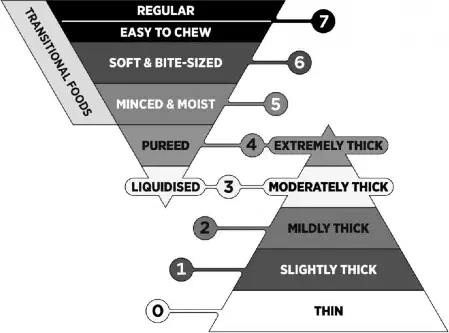
What is the purpose of the IDDSI Framework?
To provide a common terminology for describing food textures and drink thicknesses to improve safety for individuals with swallowing difficulties.
To standardize medical equipment used in hospitals.
To regulate the pricing of pharmaceutical drugs.
To develop new surgical techniques for treating swallowing disorders.
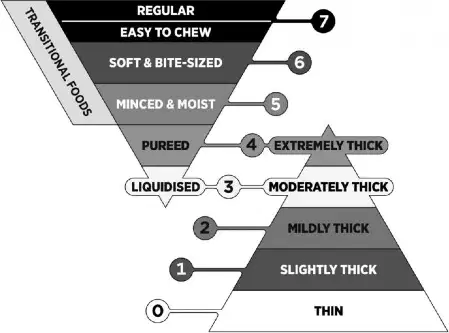
Which IDDSI level corresponds to 'Thin' drinks?
0
1
2
3
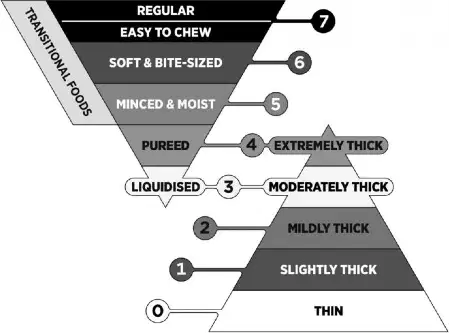
Which IDDSI level is described as 'Extremely Thick'?
Level 4
Level 1
Level 2
Level 3
Some residents’ care plans may include instructions to use nutritional supplements. NAs should know the following points about these supplements: The care plan will include instructions on _______.
preparation
storage
disposal
transportation
Some residents’ care plans may include instructions to use nutritional supplements. NAs should know the following points about these supplements: If a resident does not want to drink the supplement, what should the NA do?
A) Insist that the resident drink it
B) Ignore the resident's wishes
C) Report this to the nurse
D) Discard the supplement
According to the instruction, what must you make sure of?
The resident gets any tray with any food.
The right resident gets the right tray with the right food.
The resident gets the wrong tray with the right food.
The right resident gets any tray with any food.
According to the guidelines for preparing the resident for meals, what should be done to ensure the resident is comfortable and clean?
Toileted prior to meal, hands and face washed, good oral hygiene
Resident should be left alone before meals
Only oral hygiene is necessary before meals
Meals should be served without any preparation
What should be in place for the resident before meals?
Dentures in, glasses on, and clean, hearing aids in
Shoes polished
Bed made
TV turned on
Providing clothing protectors as needed is part of preparing the resident for meals.
True
False
What should be checked regarding the resident's position before meals?
Make sure resident is positioned correctly
Ensure resident is lying flat on the bed
Check if resident is facing away from the table
Confirm resident is standing up
Which of the following is NOT listed as a step in preparing the resident for meals?
Hands and face washed
Good oral hygiene
Resident positioned incorrectly
Dentures in
Fill in the blank: Before meals, the resident should be ______ prior to meal.
toileted
bathed
dressed
medicated
Fill in the blank: Feed a resident the way you would want to be _____
fed
ignored
left
forgotten
Fill in the blank: Offer assistance in an unobtrusive way. Don’t offer help where none is _____
needed
expected
offered
possible
Fill in the blank: Be guided by the resident’s _____
wishes
schedule
diet
location
Fill in the blank: Don’t control the resident’s food choices. Respect their _____
individuality
authority
property
schedule
Fill in the blank: Don’t _____ residents.
rush
ignore
disturb
bother
Fill in the blank: Sit with residents. Don’t stand _____ them.
above
beside
behind
near
Fill in the blank: Assist _____ person at a time.
one
two
every
any
Fill in the blank: Identify ______ foods for residents.
pureed
fried
spicy
frozen
Fill in the blank: Offer ______ at intervals between solid foods.
liquids
snacks
vitamins
desserts
Fill in the blank: Use a ______ if a person is allowed.
straw
fork
spoon
napkin
Fill in the blank: Offer liquids that meet the resident’s ______.
preferences
temperature
diet
schedule
Residents who need minimal assistance may be able to feed themselves but have difficulty setting up their meals. Which of the following is NOT a task they may need help with?
Putting on clothing protectors
Unwrapping or uncovering drinks
Opening milk cartons
Cooking a full meal
Residents who need minimal assistance may need help with placing straws in beverages.
True
False
Fill in the blank: When feeding the resident with total assistance, you should fill the spoon ________ and offer from the tip of the spoon.
half full
to the brim
completely
barely

