
 Worksheets
CA #1 Review
Total questions: 31
Worksheet time: 2hrs 55mins

Abiotic or Biotic?
Water
Abiotic factor
Biotic factor
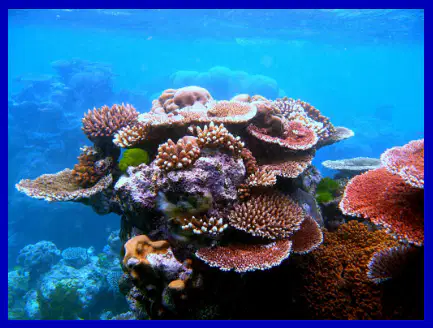
Abiotic or Biotic?
Coral
Abiotic factor
Biotic factor
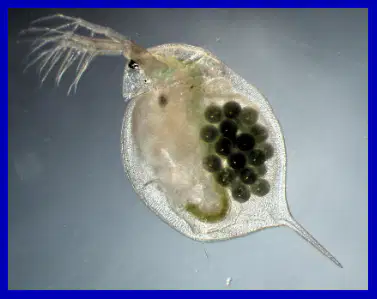
Abiotic or Biotic?
Daphnia (Water Fleas)
Abiotic factor
Biotic factor
Select all of the examples of ABIOTIC factors that can disturb an ecosystem.
Lightning strikes a forest and starts a wildfire.
Algae starts to grow (bloom) in a body of water.
Acid rain weathers away limestone rock.
Mold starts to grow and spread.
Select all of the examples of BIOTIC factors that can disturb an ecosystem.
A new invasive species arrives.
Flash flooding washes away nutrients in soil.
A disease caused by bacteria spreads among plants.
Predators compete for the same food source.
Which of the following would help maintain and enrich the biodiversity of the ecosystem in your home garden?
A Koi pond with fish
A swingset
Outdoor lights
Animals and insects such as squirrels and bees
Determine which of the following options makes the most sense to maintain the biodiversity of your home garden.
Plant 10 trees of the same species around your whole backyard.
Plant a variety of trees in the same area of your backyard.
Plant a diverse variety of trees, shrubs, and grasses throughout your front and backyard.
Plant beautiful flowers around your walkway.
African Elephant populations have decreased because of poaching for illegal ivory trade. What is the effect of the overhunting of these animals on the ecosystem?
The organisms on which these animals prey will decrease in number.
The habitat where these organisms live will be destroyed.
Competition will increase among the animals.
The balance among different species in the ecosystem will be disturbed.
Many animals and plants are in danger of extinction. Extinction is the complete disappearance of a species.
Choose the statements below that could put a population at risk for extinction. Select all that apply.
The creation of national parks.
Humans cutting down trees to build houses & introducing new invasive species to an area.
Small populations of organisms with limited diversity.
Creating hunting limits.
Climate change leading to an increase in temperatures.
An ecosystem with biodiversity is better able to support life and can provide more types of food, shelter, and resources for the organisms living there. Having many species may also increase an ecosystem's ability to handle stress or damage. If one species is wiped out by a disaster or disease, another species may be able to fill the same role in the ecosystem. How might biodiversity help a coral reef? Select the THREE best choices.
It provides the reef’s organisms with more types of food and shelter.
It makes the reef's ecosystem more likely to recover from a natural disaster, such as a storm.
It could help the reef’s ecosystem adjust if one of its species goes extinct.
It protects the reef from ever being stressed or damaged by humans.
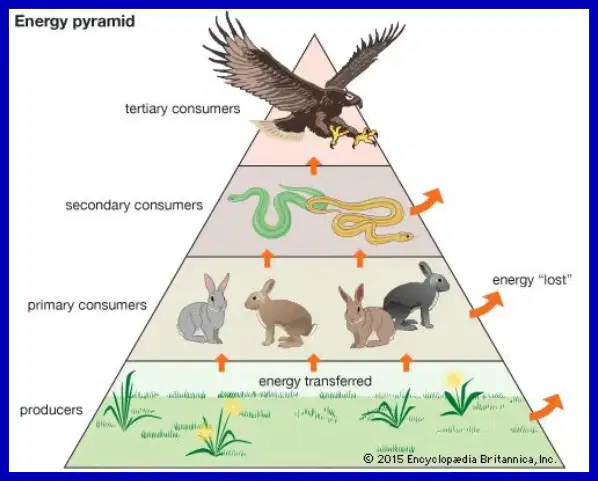
Does the amount of energy transferred between trophic levels increase or decrease up the food chain?
Increase
Decrease
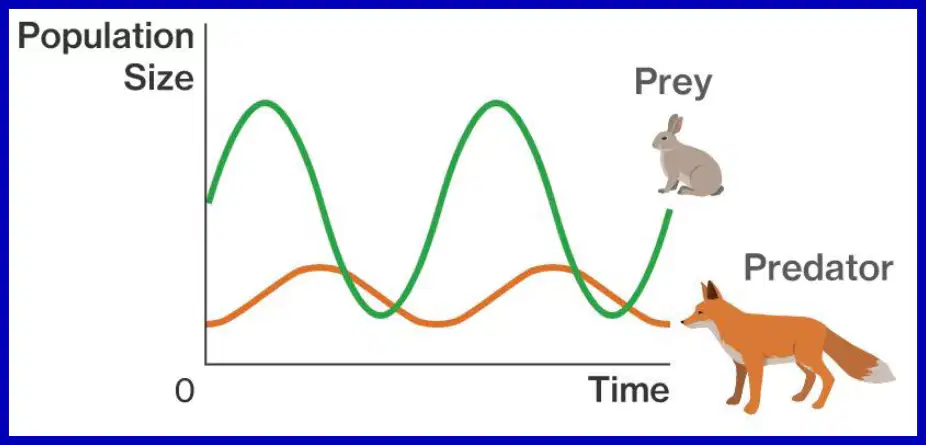
As the population of foxes increases, the rabbit population ____. Use the predator–prey graph showing rabbit (prey) population size in green and fox (predator) population size in orange over time to determine the relationship.
increases
decreases
remains constant
fluctuates independently of foxes

This food chain shows organisms in an estuary ecosystem. If the population of bottlenose dolphins decreases, the population of bull sharks will likely ______, and the population of silver perch will likely ______.
increase; increase
increase; decrease
decrease; increase
decrease; decrease

Given the food web, find a food chain that correctly shows the flow of energy from a producer to a decomposer.
Silver maple→ Black bear → Parasol fungus
Persimmon tree → Gray Fox → Bolete fungus
Silver maple→ Beaver → Parasol fungus
Persimmon tree → Pine vole → Black racer → Bolete fungus
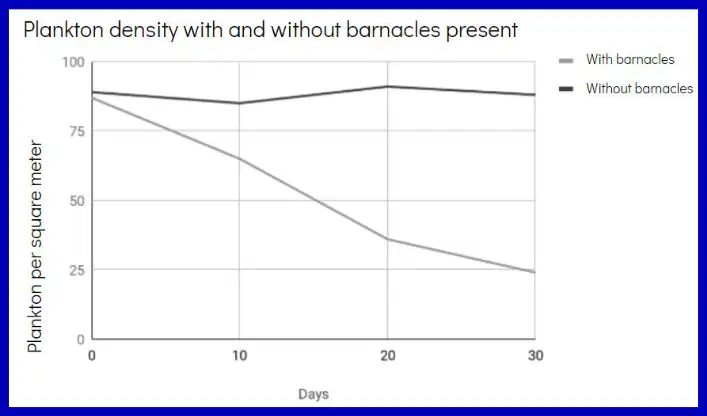
A scientist conducts an experiment to determine the effect of barnacles on plankton in tide pools. She added barnacles to half of her tidepools and did not have barnacles in the other tidepools. She recorded the average number of plankton per square meter. Which of the following statements represents the data illustrated in the graph?
The plankton population declined in the presence of barnacles because they have a mutualistic relationship.
Barnacles declined in population because they compete for food with plankton.
Barnacles and plankton have a predator–prey relationship, so the presence of plankton declined where barnacles were introduced.
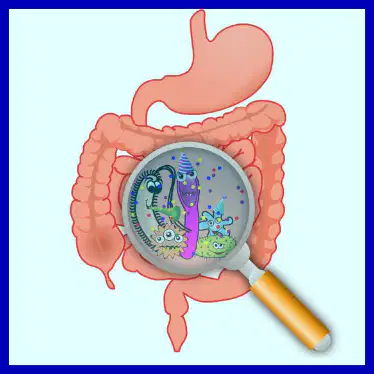
Bacteria in your gut get food from you and you get vitamins that the bacteria produce. This type of relationship is
mutualism
commensalism
parasitism
competition
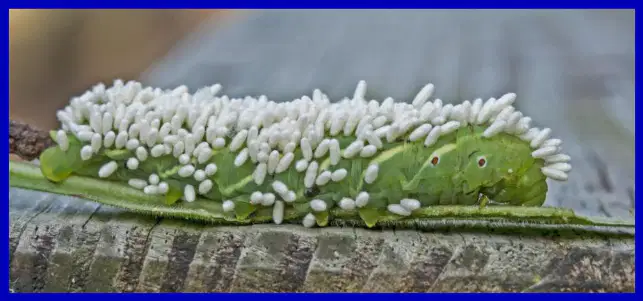
A wasp lays its eggs on a caterpillar and once the eggs hatch they will burrow into the caterpillar’s body and eat the caterpillar to stay alive. This type of relationship is
parasitism
mutualism
commensalism
predation
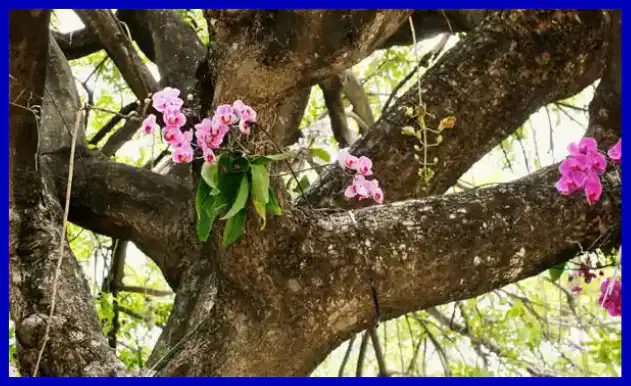
Orchids grow on the branches of trees and receive adequate sunlight and nutrition but they do not harm the tree in any way. Based on this description, identify the type of relationship.
Mutualism
Parasitism
Commensalism
Competition
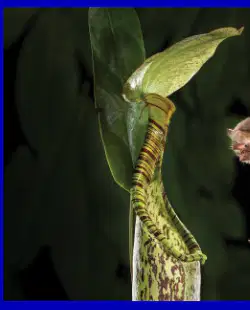
Tropical pitcher plants can get nutrients from the feces of woolly bats. A woolly bat roosts in the upper part of the plant’s trap, gaining protection from predators and bad weather, while the plant absorbs nutrients from the bat’s waste. Based on this description, identify the type of relationship.
Mutualism
Commensalism
Parasitism
Predation
Foxes and wolves both eat rabbits. What do you predict will happen if the population of rabbits declines?
Competition between the foxes and wolves will increase because their shared resource is more scarce.
Competition between the foxes and wolves will increase because there are fewer rabbits to eat them.
Competition between the foxes and wolves will increase because there is more of the shared resource for them to compete for.
Organisms that break down wastes and dead organisms and return raw materials to the environment.
Omnivores
Carnivores
Decomposers
Herbivores
Two parents produce offspring that will share characteristics of both parents.
Adaptation
Community
Reproduce/Procreate
Population
The great variation of life on Earth. It increases the stability of a species, helps ecosystems adjust to disturbances, and increases the productivity of an ecosystem.
Population
Ecosystem
Adaptation
Biodiversity
Biotic and abiotic factors that determine the carrying capacity of an ecosystem. They restrict the growth of populations.
Limiting factors
Competition
Population
Species
Maximum population size of a species that can be sustained by that specific environment based on the resources available.
Species
Carrying capacity
Limiting factor
Population
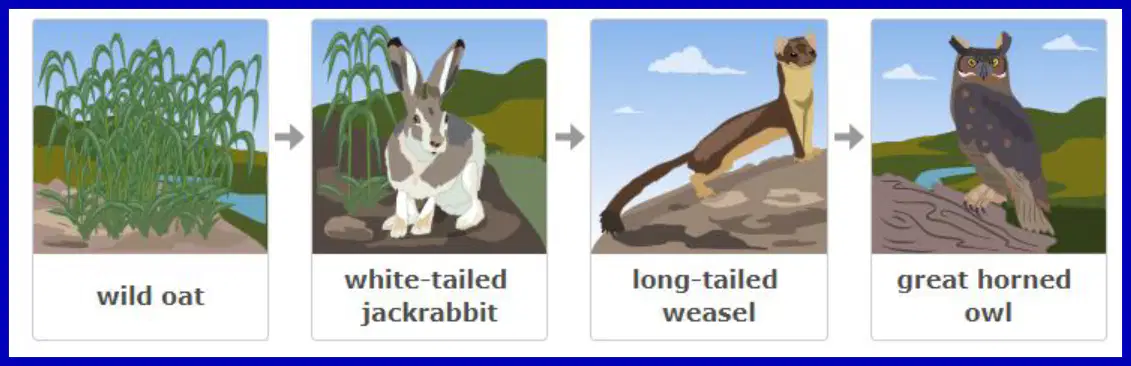
Below is a food chain from a grassland ecosystem in Wyoming: wild oat → white-tailed jackrabbit → long-tailed weasel → great horned owl. Use the information in the food chain to choose the option that correctly fills both blanks: "The producer in this food chain is the _____. It is eaten by the _____."
wild oat; white-tailed jackrabbit
white-tailed jackrabbit; long-tailed weasel
wild oat; long-tailed weasel
great horned owl; long-tailed weasel
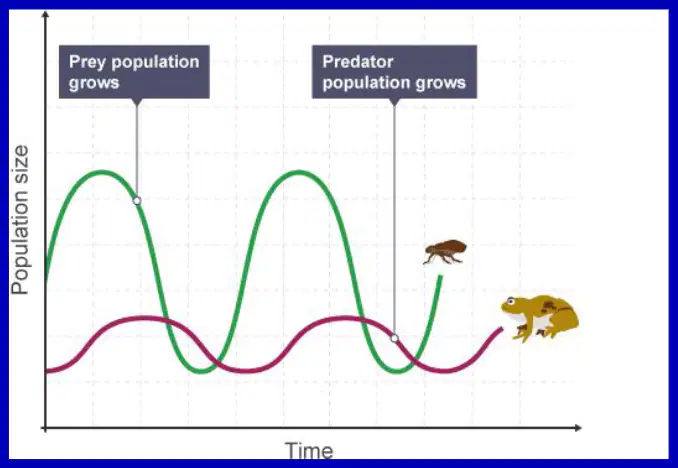
Decreased frog population leads to _____ fly populations because there are fewer predators hunting them.
increased
decreased
stable
randomly fluctuating
A tropical coral reef is a type of ecosystem in the ocean. Corals provide shelter for fish, crabs, eels, and many other organisms. These coral reef organisms are prey for larger animals, such as sea turtles, sharks, and dolphins. Most of these organisms need tropical coral reefs in order to survive and reproduce. When the ocean becomes more acidic, the coral populations decrease. Based on the passage, would this change lead to a positive or negative effect on the ecosystem?
Positive effect on the ecosystem
Negative effect on the ecosystem

Which model accurately describes the cycling of matter and flow of energy through the ecosystem?
A
B
C
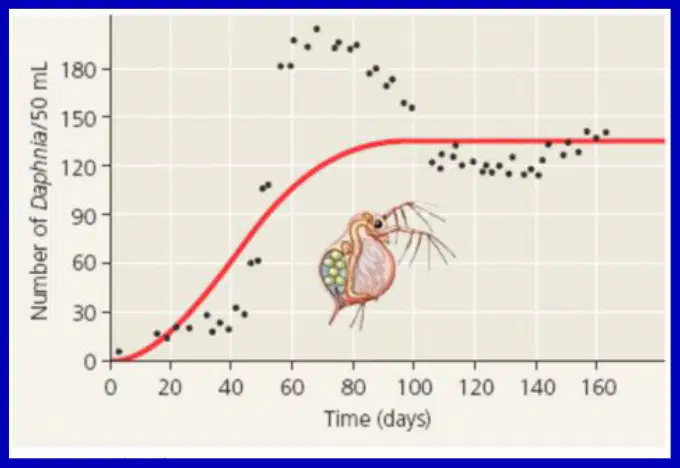
The graph shows changes in the population size of water fleas over 6 months. Estimate the carrying capacity for the water flea population shown.
30 Daphnia/50 mL
90 Daphnia/50 mL
130 Daphnia/50 mL
180 Daphnia/50 mL
The sixth mass extinction is driven by human activity. Agriculture is responsible for 90% of global deforestation and accounts for 70% of the planet’s freshwater use, devastating the species that inhabit those places. Where and how food is produced is one of the biggest human-caused threats to species extinction and our ecosystems. To make matters worse, unsustainable food production and consumption are significant contributors to greenhouse gas emissions that are causing temperatures to rise. The climate crisis is causing everything from severe droughts to more frequent and intense storms. Increased droughts and floods have made it more difficult to maintain crops and produce sufficient food in some regions.
Which of the following claims is supported by evidence in the article? Select all that apply.
The increase in habitat temperatures has led to severe droughts and intense storms.
Unsustainable food production is the only factor responsible for species extinction.
Crops are evolving and becoming immune to climate change.
Global climate change negatively affects ecosystems.
Food production impacts ecosystems by contributing to species extinction.

