
 Worksheets
Week 11 Nutrition PathoPharm
Total questions: 40
Worksheet time: 20mins
Recall: Which list best represents the three major components highlighted in the normal digestive process?
Digestive system, alimentary canal, accessory organs
Respiratory system, tracheal canal, accessory muscles
Nervous system, spinal canal, accessory neurons
Urinary system, renal canal, accessory ducts
Skill/Concept: In the context of the gastrointestinal tract, which structure is part of the alimentary canal rather than an accessory organ?
Pancreas
Gallbladder
Esophagus
Salivary glands

Recall: The stomach is described as having two muscular rings. Which pair correctly names them?
Cardiac sphincter and ileocecal valve
Esophageal sphincter and pyloric sphincter
Anal sphincter and duodenal sphincter
Tricuspid sphincter and mitral sphincter

Skill/Concept: Which statement best distinguishes the roles of the stomach’s two sphincters during normal digestion?
The esophageal sphincter regulates chyme entering the duodenum; the pyloric sphincter prevents acid reflux into the esophagus.
The esophageal sphincter prevents backflow from the stomach into the esophagus; the pyloric sphincter controls passage of gastric contents into the small intestine.
Both sphincters open simultaneously to allow rapid transit of food through the stomach.
The pyloric sphincter allows food into the esophagus; the esophageal sphincter releases bile into the stomach.

Strategic Thinking: Chief cells are noted in the stomach. Based on their location and function within digestion, which inference is most supported?
Chief cells primarily line the esophagus to neutralize acid before swallowing.
Chief cells in the stomach contribute to chemical digestion by secreting substances that initiate protein breakdown.
Chief cells are accessory organs that store bile for fat emulsification.
Chief cells are part of the alimentary canal that mechanically churns food in the small intestine.
Recall: What is the primary mechanism leading to gastroesophageal reflux disease (GERD) as described here?
Hypercontraction of the esophageal musculature
Loosening of the sphincter between the esophagus and stomach
Ulceration of the gastric mucosa
Infection of the lower esophagus
Skill/Concept: Which scenario best illustrates a factor commonly associated with GERD according to this overview?
A patient with obesity experiencing frequent acid reflux
An athlete with high aerobic fitness reporting rare indigestion
A teenager with normal BMI and occasional heartburn after spicy food
A patient with iron deficiency anemia and no digestive complaints
Strategic Thinking: A clinician evaluates a patient with recurrent heartburn and a body mass index (BMI) indicating obesity. Based on this overview, which initial pathophysiological explanation should guide counseling about why reflux occurs?
Increased gastric acid production due to high BMI
Delayed gastric emptying unrelated to sphincter function
Loosening of the esophagogastric sphincter permitting reflux
Inflammation from Helicobacter pylori infection causing esophageal spasms
GERD management often includes nonpharmacologic measures. Which option best represents a nonpharmacologic approach rather than a medication-based treatment?
Using proton pump inhibitors daily
Elevating the head of the bed and avoiding late-night meals
Taking over-the-counter antacids after each meal
Starting a prescription H2 receptor antagonist
A patient asks how ulcers might be prevented without drugs. Based on non-pharm strategies aligned with GERD care, which plan is most appropriate?
Increase caffeine and alcohol to stimulate digestion
Quit smoking, limit NSAID use, and choose smaller, low-acid meals
Use high-dose aspirin daily for cardioprotection
Lie flat immediately after eating to reduce discomfort
Recall: Which drug class directly suppresses gastric acid secretion by inhibiting the gastric proton pump?
Antacids
H2-receptor blockers
Proton pump inhibitors
Prokinetic agents
Application: A patient has frequent heartburn and needs rapid, short-term symptom relief while awaiting a clinic visit next week. Based on common GERD strategies, which option is most appropriate for immediate relief?
Begin a proton pump inhibitor expecting full effect within minutes
Use an antacid for quick neutralization of acid
Schedule anti-reflux surgery immediately
Start an H2-receptor blocker to permanently cure GERD

Strategic thinking: For a patient with persistent GERD symptoms despite optimized medication trials, which next step aligns with standard management pathways?
Increase antacid use indefinitely without reassessment
Switch from H2-receptor blockers to proton pump inhibitors and consider surgical evaluation if symptoms persist
Stop all medications to avoid masking symptoms
Use H2-receptor blockers and antacids together as a definitive cure
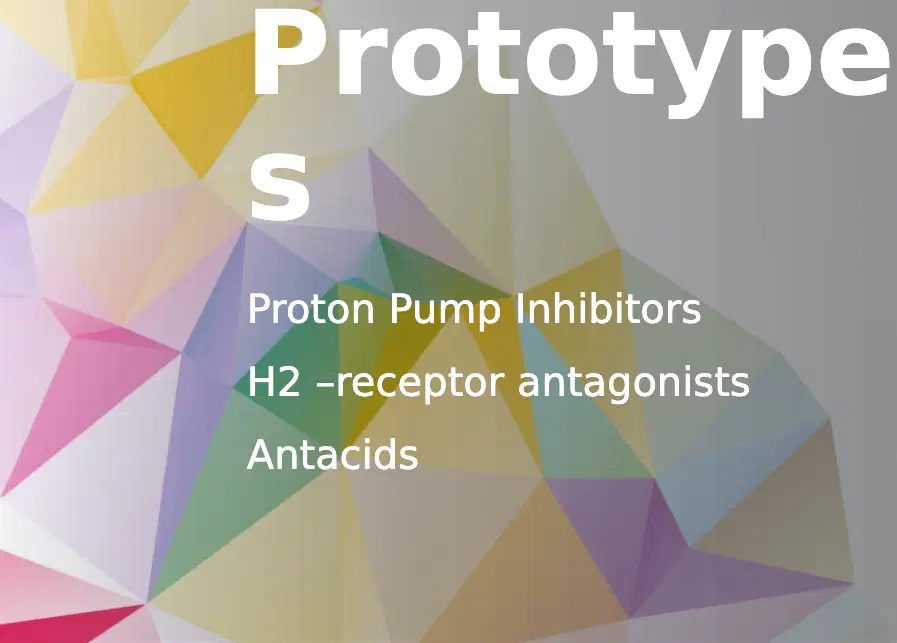
Based on the listed prototype classes for managing GERD, which category targets the gastric proton pump to suppress acid secretion?
Antacids
H2-receptor antagonists
Proton Pump Inhibitors
Prokinetic agents
A patient with mild, intermittent GERD symptoms wants rapid symptom relief without altering histamine signaling. Which prototype drug class from the list is the most appropriate initial choice?
Proton Pump Inhibitors
H2-receptor antagonists
Antacids
Antibiotics targeting H. pylori
Which statement best describes the mechanism of action of omeprazole?
Blocks H2 receptors in parietal cells to reduce acid production
Neutralizes gastric acid directly via alkaline buffering
Irreversibly inhibits the proton pump to reduce acid secretion in the stomach
Stimulates mucus secretion protecting the gastric lining
For omeprazole administration, which instruction is correct?
Take with a high-fat meal to increase absorption
Crush the tablet to aid swallowing
Administer on an empty stomach and do not chew, divide, or crush tablets
Avoid taking with antacids due to severe interaction
A patient asks how quickly omeprazole begins to work. What is its typical onset time?
15 minutes
1 hour
2 hours
6 hours
Which adverse effect is associated with omeprazole therapy?
Bronchospasm
Constipation
Headache
Photosensitivity
Compare time-course profiles: Which pairing correctly matches drug and duration of effect?
Omeprazole: 6–12 hours; Famotidine: 72 hours
Omeprazole: 72 hours; Famotidine: 6–12 hours
Omeprazole: 2–3 hours; Famotidine: 1 hour
Omeprazole: 30–60 minutes; Famotidine: 2 hours
Which statement correctly identifies famotidine’s pharmacologic class and mechanism?
Proton pump inhibitor; reduces acid secretion by inhibiting H+/K+ ATPase
H2 receptor antagonist; blocks H2 receptors in the stomach to reduce acid production
Antacid; neutralizes luminal acid through chemical buffering
Prostaglandin analog; increases mucus and bicarbonate secretion
A patient with chronic kidney disease (CKD) is prescribed famotidine. What is the most appropriate consideration?
Use with caution due to renal considerations
Avoid coadministration with antacids only
Increase dose because clearance is enhanced
No special precautions are needed
Which factor may interact with famotidine and affect its effectiveness?
Concurrent vitamin B12 intake and smoking
High-protein diet alone
Concurrent calcium supplementation only
Daily exercise
Which time parameter correctly matches famotidine?
Onset: 1 hour; Peak: 2 hours
Onset: 30–60 minutes; Peak: 2–3 hours
Onset: immediate; Peak: 30 minutes
Onset: 2 hours; Peak: 6 hours
Strategic scenario: You need rapid relief for heartburn but also sustained suppression of gastric acid for several days. Based on the given profiles, which regimen best fits these goals?
Use famotidine alone because it has a 72-hour duration and fast onset
Start omeprazole alone because it peaks at 2 hours and lasts 6–12 hours
Begin with famotidine for quicker onset, then continue omeprazole for longer duration
Avoid both drugs due to headache risk
Recall: Which statement best describes the mechanism of action of aluminum hydroxide as an antacid?
It inhibits gastric acid secretion by blocking proton pumps
It neutralizes stomach acid by raising the pH of the stomach contents
It increases mucus production to protect the gastric lining
It accelerates gastric emptying to reduce acid exposure
Skill/Concept: A patient on multiple medications needs aluminum hydroxide. According to administration guidance, when should the antacid be taken relative to other medications?
At the same time as other medications to enhance absorption
At least 2 hours before or after other medications
Only immediately after meals
Only at bedtime to avoid interactions
Recall: What adverse effect is most commonly associated with aluminum hydroxide therapy?
Diarrhea
Constipation
Hypoglycemia
Photosensitivity
Strategic Thinking: A patient presents with heartburn and suspected small bowel obstruction. Based on contraindications listed for aluminum hydroxide, what is the most appropriate action?
Start aluminum hydroxide and monitor bowel sounds closely
Avoid aluminum hydroxide due to a listed contraindication
Use a higher dose of aluminum hydroxide to overcome obstruction
Combine aluminum hydroxide with a stimulant laxative
Skill/Concept: Which timing profile correctly pairs onset, peak, and duration for aluminum hydroxide?
Onset 5–10 minutes; peak 1 hour; duration 6–8 hours
Onset 20–40 minutes; peak 30 minutes; duration 2–3 hours
Onset immediate; peak 5 minutes; duration 30 minutes
Onset 60 minutes; peak 2 hours; duration 12 hours
Recall: Identify the therapeutic and pharmacologic classes correctly associated with aluminum hydroxide.
Therapeutic: anti-inflammatory; Pharmacologic: proton pump inhibitor
Therapeutic: anti-heartburn drug; Pharmacologic: antacid
Therapeutic: antibiotic; Pharmacologic: H2 receptor antagonist
Therapeutic: antiemetic; Pharmacologic: mucosal protectant
Recall: Which diagnosis was made for John after consulting his doctor based on persistent heartburn, acid reflux, and burning chest sensation worsening after meals and when lying down?
Peptic ulcer disease
Gastroesophageal reflux disease (GERD)
Irritable bowel syndrome
Asthma exacerbation
Skill/Concept: Sarah reports burning chest discomfort after meals, worse at night when lying down, sometimes radiating to the throat with a sour taste. Which feature most strongly supports reflux as the mechanism?
Pain improves with deep breathing exercises
Sour taste in the mouth from throat radiation
Chest pain triggered by cold exposure
Pain localized only to the right lower quadrant
Skill/Concept: Both John and Sarah tried over‑the‑counter antacids. What is the most accurate characterization of antacid effects described in these cases?
Provide durable symptom control and prevent recurrence
Offer temporary relief without addressing persistent symptoms
Are contraindicated for all adults
Worsen reflux immediately after use
Strategic Thinking: Sarah learns she is 20 weeks pregnant. Considering her reflux symptoms and the case details, which initial nonpharmacologic step is most appropriate to recommend first?
Increase intake of spicy and fatty foods to build tolerance
Lie down right after meals to rest the esophagus
Elevate the head of the bed and avoid late‑night meals
Begin high‑dose aspirin for symptom control
Strategic Thinking: John’s GERD symptoms persist despite antacids and he has polycystic kidney disease. Which next management consideration is most appropriate given the case context?
Continue antacids indefinitely without reassessment
Initiate therapy guided by a clinician (e.g., acid suppression) while considering renal history
Advise intense exercise immediately after meals to reduce reflux
Stop all fluids to minimize gastric volume
Read the case summary: A 52-year-old male reports frequent heartburn, especially after large meals or when lying down at night. He describes a burning sensation in his chest that sometimes radiates into his throat and occasional regurgitation of sour-tasting fluid. His provider diagnoses gastroesophageal reflux disease (GERD) and prescribes a daily oral medication to be taken every morning before breakfast. Which symptom most directly supports the GERD diagnosis in this case?
Burning chest sensation radiating into the throat
Intermittent knee pain after exercise
Pruritic rash on the forearms
Dry cough only during winter months
Based on the provider’s instructions, when should Mr. Johnson take his prescribed GERD medication to optimize symptom control?
Every morning before breakfast
Only after large evening meals
Twice daily with lunch and dinner
As needed when heartburn starts
Mr. Johnson experiences heartburn after large meals and when lying down at night. Which plan best applies the concept of medication adherence and symptom triggers to reduce his GERD symptoms?
Take the medication every morning before breakfast and avoid late, large meals
Skip the morning dose and take the pill only when symptoms are severe
Increase the dose on weekends and lie down after eating to test efficacy
Take the medication at night after lying down to check for quick relief


