
 Worksheets
Grade 8 2nd tri
Total questions: 218
Worksheet time: 6hrs 34mins

Because electron pairs repel each other molecules tend to
dismantle
divide
take a specific form or shape
dance
VSEPR stands for Valence Shell Electron Pair Repulsion
True
False

Electron pairs repel each other as far away as possible
True
False

Besides covalent bond, lone pairs of electrons can also be counted as electron domains.
True
False
How many Covalent bonds does ammonia have?
1
2
3
4
5
How many lone pairs of elctrons does ammonia have?
1
2
3
4
5
adding the covalent bonds to the number of lone pairs, How many electron domains does ammonia have?
1
2
3
4
5

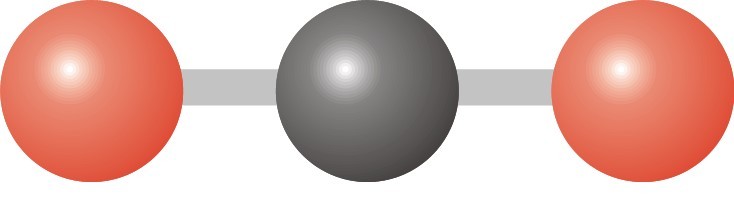
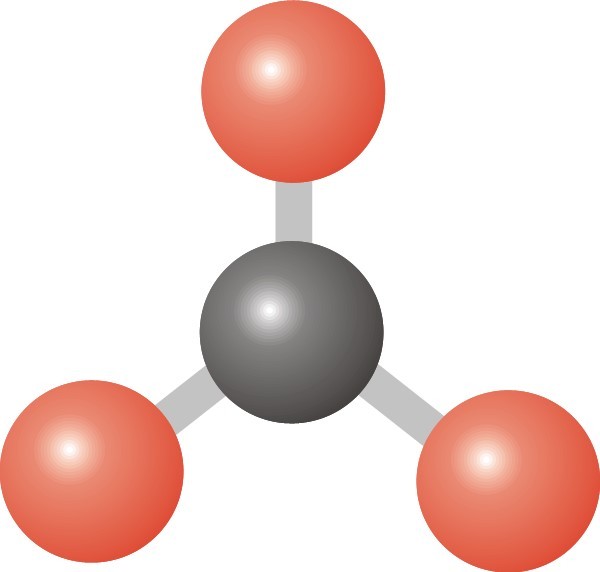
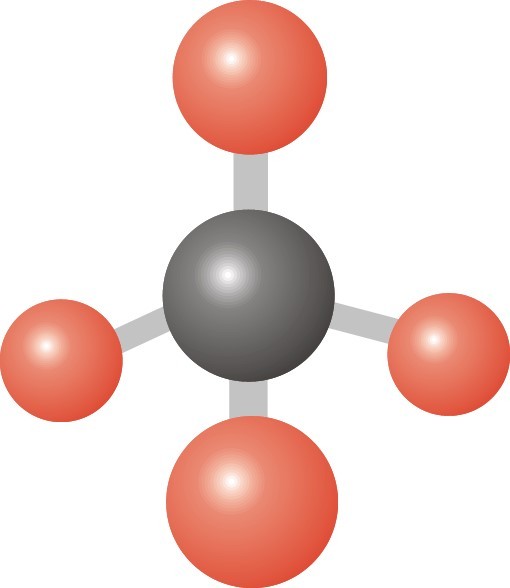
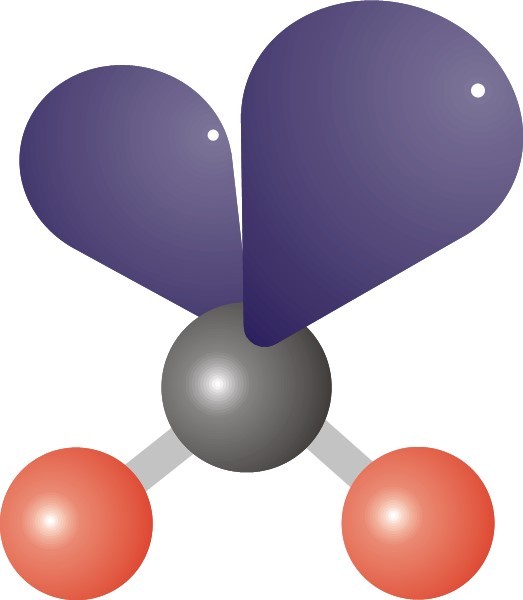
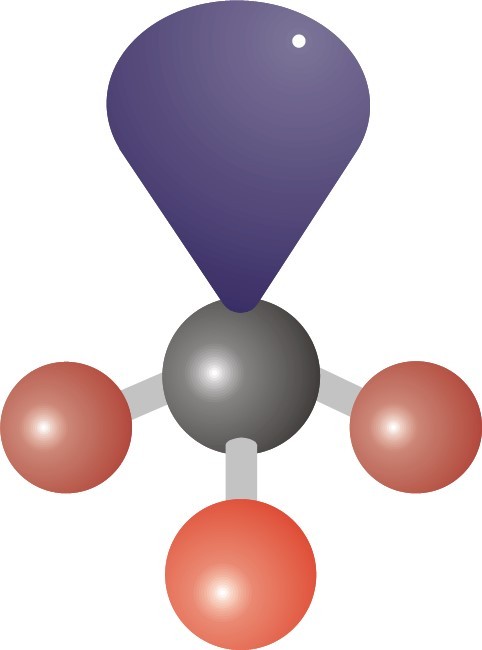
What shape would PH3 have?
Trigonal Planar
Trigonal pyramidal
Bent
Linear


What does VSEPR stand for?
Valence Shell Electron Pair Repulsion
Virtual Shell Electron Pair Repulsion
Volatile Shell Electron Pair Repulsion
Valence Shell Electron Pair Regulation
What is the main idea behind VSEPR theory?
Electron pairs repel each other and arrange themselves to maximize repulsion.
Electron pairs attract each other and arrange themselves to maximize attraction.
Electron pairs repel each other and arrange themselves to minimize repulsion.
Electron pairs do not interact with each other and arrange themselves randomly.
What does the VSEPR theory predict?
The VSEPR theory predicts the shape and geometry of molecules.
The VSEPR theory predicts the electrical conductivity of molecules.
The VSEPR theory predicts the boiling point of molecules.
The VSEPR theory predicts the color of molecules.
What is the shape of a molecule with linear molecular geometry?
Straight line
Circle
Square
Triangle
How many electron pairs are present in a molecule with trigonal planar molecular geometry?
4
2
3
1
What is the bond angle in a molecule with trigonal planar molecular geometry?
120 degrees
180 degrees
90 degrees
60 degrees
What is the shape of a molecule with tetrahedral molecular geometry?
Square
Linear
Planar
Pyramid
How many electron pairs are present in a molecule with tetrahedral molecular geometry?
3
2
1
4
What is the bond angle in a molecule with tetrahedral molecular geometry?
90 degrees
120 degrees
180 degrees
109.5 degrees
What is the molecular geometry of a molecule with 2 bonding pairs and 2 lone pairs of electrons?
trigonal planar
tetrahedral
linear
bent
What is the molecular geometry of a molecule with 3 bonding pairs and 1 lone pair of electrons?
What is the molecular geometry of a molecule with 4 bonding pairs and 0 lone pairs of electrons?
trigonal planar
linear
octahedral
tetrahedral
What is the molecular geometry of a molecule with 5 bonding pairs and 0 lone pairs of electrons? (use the simulation)
octahedral
tetrahedral
trigonal bipyramidal
linear
What is the molecular geometry of a molecule with 6 bonding pairs and 0 lone pairs of electrons? (use the simulation)
octahedral
trigonal bipyramidal
tetrahedral
linear
What is the molecular geometry of a molecule with 2 bonding pairs and 3 lone pairs of electrons? (use the simulation)
trigonal bipyramidal
linear
tetrahedral
octahedral
What does VSEPR stand for?
Valence Shell Electron Pair Repulsion
Virtual Shell Electron Pair Repulsion
Volatile Shell Electron Pair Repulsion
Valence Shell Electron Pair Regulation
What is the main idea behind VSEPR theory?
Electron pairs repel each other and arrange themselves to maximize repulsion.
Electron pairs attract each other and arrange themselves to maximize attraction.
Electron pairs repel each other and arrange themselves to minimize repulsion.
Electron pairs do not interact with each other and arrange themselves randomly.
What does the VSEPR theory predict?
The VSEPR theory predicts the shape and geometry of molecules.
The VSEPR theory predicts the electrical conductivity of molecules.
The VSEPR theory predicts the boiling point of molecules.
The VSEPR theory predicts the color of molecules.
What is the shape of a molecule with linear molecular geometry?
Straight line
Circle
Square
Triangle
How many electron pairs are present in a molecule with trigonal planar molecular geometry?
4
2
3
1
What is the bond angle in a molecule with trigonal planar molecular geometry?
120 degrees
180 degrees
90 degrees
60 degrees
What is the shape of a molecule with tetrahedral molecular geometry?
Square
Linear
Planar
Pyramid
How many electron pairs are present in a molecule with tetrahedral molecular geometry?
3
2
1
4
What is the bond angle in a molecule with tetrahedral molecular geometry?
90 degrees
120 degrees
180 degrees
109.5 degrees
What is the molecular geometry of a molecule with 2 bonding pairs and 2 lone pairs of electrons?
trigonal planar
tetrahedral
linear
bent
What is the molecular geometry of a molecule with 3 bonding pairs and 1 lone pair of electrons?
What is the molecular geometry of a molecule with 4 bonding pairs and 0 lone pairs of electrons?
trigonal planar
linear
octahedral
tetrahedral
What is the molecular geometry of a molecule with 5 bonding pairs and 0 lone pairs of electrons? (use the simulation)
octahedral
tetrahedral
trigonal bipyramidal
linear
What is the molecular geometry of a molecule with 6 bonding pairs and 0 lone pairs of electrons? (use the simulation)
octahedral
trigonal bipyramidal
tetrahedral
linear
What is the molecular geometry of a molecule with 2 bonding pairs and 3 lone pairs of electrons? (use the simulation)
trigonal bipyramidal
linear
tetrahedral
octahedral
What is a metallic bond?
A bond where electrons are shared equally
A bond where electrons are transferred
A bond where electrons move freely around positively charged metal ions
A bond where atoms stick together with glue
Which of these materials is known for having metallic bonds?
Glass
Wood
Iron
Plastic
What property of metals is due to metallic bonding?
Brittleness
Flexibility
Transparency
Electrical conductivity
Why are metals typically good conductors of electricity?
Because they have no electrons
Because their electrons are fixed in place
Because their electrons move freely
Because they have a lot of non-metallic elements
What happens to the electrons in a metallic bond?
They are shared equally between atoms
They are transferred from one atom to another
They move freely around the metal
They form covalent bonds
Which metal is often used to make jewelry and is known for its shiny appearance due to metallic bonding?
Gold
Aluminum
Iron
What makes metals malleable (able to be hammered into shapes)?
Their rigid electron bonds
Their flexible electron sea
Their high melting points
Their non-conductive nature
Which of these is NOT a characteristic of metals due to metallic bonding?
High melting points
Good electrical conductivity
Brittle texture
Shiny surface
Which of these metals is used in making airplanes and is known for being both strong and lightweight?
Lead
Gold
Aluminum
Silver
What happens when you heat a metal?
It becomes a gas
Its metallic bonds become stronger
Its electrons move faster, making it more conductive
It turns into a non-metal
Metallic bonding is...
a type of covalent bond.
a type of ionic bond.
an attraction between positive ions and a sea of electrons.
A metallic bond is a bond between ________.
nonmetals
metals
transition metals
metalloids
Which of the following is NOT a property of metals?
Hard
Can conduct electricity
Very brittle (breaks easily)
Malleable (can bend without breaking)
What do electrons do in a metallic bond?
They stay on the metal atom.
They are transferred from atom to atom.
They form a covalent bond with another atom.
They float around freely.
What is meant by the term "sea of electrons"?
It's what we call all the free floating electrons in a metal.
It's what we call electrons that are floating in a liquid.
It's the total number of electrons in a metal atom.
It's the total number of electrons in the ocean.
Why are metals good conductors of electricity?
The electric current can easily travel along the surface of the metal because it is smooth.
A negative charge can easily push the sea of electrons in one direction, making a current.
Metals attract electricity.
Metals are malleable.
Why are metals malleable? (They can bend without breaking.)
Metals are very smooth.
Metals have a sea of electrons.
The sea of electrons form a strong metallic bond.
Even though the metal ions repel each other, the electron sea holds all the atoms in place.

What do we call electrons that move freely in a metallic bond?
sea of electrons
lone electrons
unpaired electrons
covalent electrons

What property of metals is the image describing?
malleable (bend without breaking)
ductile (stretched into a wire)
conductive (can conduct electricity)
shiny

What property of metals is being shown in figure 1(b) in the image?
malleable (bend without breaking)
ductile (stretched into a wire)
conductive (can conduct electricity)
shiny
What is the one thing responsible for a metal being malleable, ductile, and conductive?
metal atoms
its covalent bonds
its valence electrons
its sea of free-floating electrons
________________________ have the strongest intermolecular forces of attraction.
Dipole- Dipole
Dispersion
Hydrogen Bonds
covalent bond
London forces
hydrogen bond
dipole-dipole attraction

Which type of IMF is responsible for the attraction pictured above?
Dipole-Dipole Interaction
Hydrogen Bonds
Covalent Bond
Ionic Bond

Which type of IMF is responsible for the attraction pictured above?
Dipole-Dipole Interaction
Ion-Dipole Interaction
Hydrogen Bonds
Covalent Bond
Ionic Bond
Intermolecular forces are attractions between ______.
Cations and anions
Atoms within a molecule
Neighboring molecules
Protons and electrons
Which type of intermolecular force occurs between two molecules that have polar covalent bonds?
dipole-dipole interactions
london dispersion forces
there are no intermolecular forces in this situation
Hydrogen bonds are a specific type of...
dipole-dipole interaction
london disperion
What type of intermolecular force would act on molecules held together by nonpolar covalent bonds?
dipole-dipole interactions
london dispersion forces
hydrogen bonding
Which type of intermolecular force relies on an "induced dipole"?
dipole-dipole interactions
london dispersion forces
hydrogen bonding

Is the bond in HCl polar or nonpolar? (Hint, in molecules with EN differences larger than .04, the bond is nonpolar)
polar
nonpolar
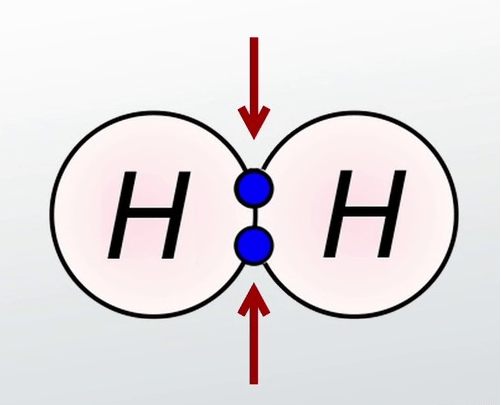
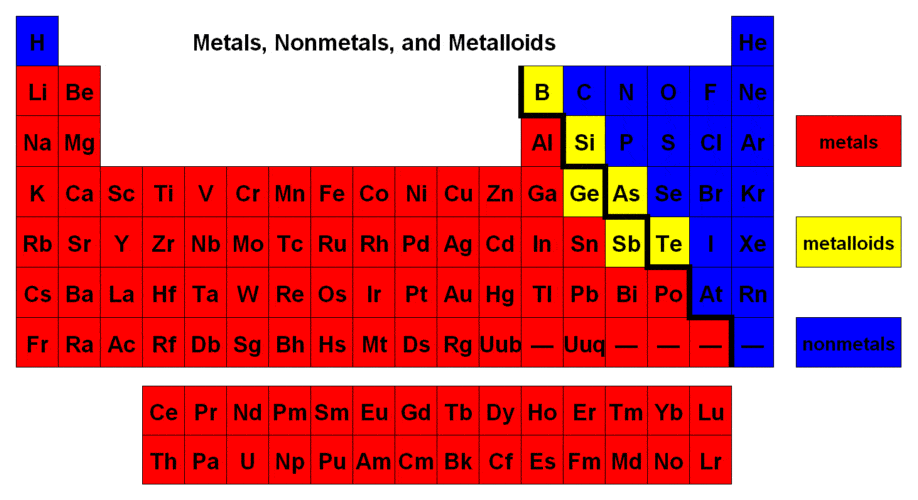
In a polar covalent bond, electrons are shared:
equally
unequally
between two metals
between a metal and a non-metal

Which of these has london dispersion forces? (Hint, london dispersion happens between molecules that contain nonpolar covalent bonds)
I2
NH3
OCl2
SH2

Consider the molecule NH3. Think about its EN difference, and if the covalent bond in it is polar or nonpolar. What type of intermolecular force would happen between these molecules?
Dispersion Force
Dipole dipole
Hydrogen bonding

Consider CO2. Calculate the EN difference between the two elements. What intermolecular forces would happen between CO2 molecules?
London Dispersion Forces
Dipole dipole interactions
Hydrogen bonding
Would H2O molecules hydrogen bond with each other?
yes
no

Consider the EN difference between H and S. Would H2S molecules hydrogen bond with each other?
yes
no

Consider the EN difference between H and F. Does HF have hydrogen bonding?
yes
no

Consider the EN difference between H and Cl. What type of intermolecular forces would act between HCl Molecules?
Dipole-dipole interactions
London dispersion forces
Hydrogen Bonding

Consider the EN difference between C and H. What type of intermolecular forces work between CH4 molecules?
london dispersion forces
dipole-dipole interactions
hydrogen bonding

Consider the EN difference between N and H. What type of intermolecular forces would act between NH3 molecules?
London Dispersion Forces
Dipole-Dipole Interactions
Hydrogen Bonds
Why can ammonia gas be easily liquefied and helium can not?
Ammonia has strong intermolecular forces of attraction
The critical temperature of ammonia is very high
Helium has weak intermolecular forces of attraction
All of the above
Which is a property of water that is a result of its hydrogen bonding??
Water has an unusually high boiling point.
Ice floats in liquid water.
Water has high surface tension.
all of the above
Hydrogen bonds increase the melting and (a) points of polar covalent compounds.
In water, hydrogen bonds hold together
hydrogen and oxygen atoms in different molecules.
hydrogen atoms in the same molecule.
hydrogen and oxygen atoms in the same molecule.
hydrogen atoms in different molecules.
Hydrogen fluoride is a liquid unlike other hydrogen halides since:
hydrogen fluoride molecules associate due to hydrogen bonding
fluorine is highly reactive
hydrogen fluoride is the weakest acid of all hydrogen halides
none of the above
What is surface tension caused by?
gravity
covalent bonds
intermolecular forces
adhesion
intramolecular force
In a polar bond, the atom that is more electronegative attracts the shared electrons more strongly. This results in it having a partial (a) charge.
(a) covalent compounds have a partial negative charge on one side and a partial positive charge on the other side.
In a water molecule, the hydrogen side of the molecule has a slightly (a) charge.
Liquid ethylene (C2H2) molecules are nonpolar and do not experience hydrogen bonding, liquid water (H2O) molecules are polar and experience hydrogen bonding. Which liquid will have a higher boiling point?
water
ethylene
water and ethylene have the same boiling point
Which of the following has the highest boiling point?
HBr
HI
HF
HCl
Hydrogen bonds _______as compared to the covalent bonds.
are weaker
have fluctuating strengths
are of equal strength
are stronger
The correct ranking of bonds or forces in order from strongest to weakest is:
covalent bond, van der Waals force, hydrogen bond
van der Waals force, hydrogen bond, covalent bond
hydrogen bond, covalent bond, van der Waals force
covalent bond, hydrogen bond, van der Waals force
Hydrogen bonds are very strong bonds.
true
false
The unusually higher boiling point of hydrogen fluoride compared to hydrogen chloride is due to
hydrogen bonds between the molecules
polar character of the molecule
the linear structure of the molecules
ionic bonds between the molecules
Polar molecules tend to have lower boiling points than nonpolar molecules.
true
false
Intermolecular hydrogen bonding is present in salicylic acid.
true
false
Water is a polar compound.
true
false
Water’s extremely strong hydrogen bonding causes the high boiling point of water.
true
false
Methylamine is a derivative of ammonia. In methylamine, the hydrogen bond is present between hydrogen and nitrogen.
true
false
What is your favorite part of chemistry?
A substance that is formed as the result of a chemical reaction is a __________________
Product
Reactant
Starters
Enders
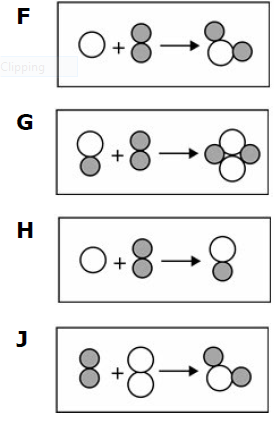

How many atoms in all are in a molecule of serotonin?
C10H12N2O

H2 + O → H2O
2HgO → 2Hg + O2
Al + O2 → 2Al2O3
In a _______ change, a substance changes into a different substance
physical
chemical
Which of these is NOT a sign a chemical change has occurred?
color change
temperature change
bubble formation
cutting material
In a chemical reaction, bonds are broken and new bonds are formed that create new substances. The bonds that are broken are called what?
reactants
products
The Law of Conservation of Mass states
that matter exists in all states and reacts the same
that matter can only be changed into new substances by introducing a catalyst
that matter exists in the same state throughout any chemical change
that matter cannot be created or destroyed
SELECT 2: Which of the following 2 are chemical reactions?
sugar dissolving in water
water turning into steam
burning wood
mixing baking soda and vinegar
tearing paper
SELECT ALL THAT APPLY: Why is it important that chemical equations are always balanced?
Matter cannot be created
Matter cannot be destroyed
Matter can only be rearranged
Matter doe
In a chemical equation, the products are found on the ______ side of the arrow
right
left
In a chemical equation, the reactants are found on the _____ of the arrow
right
left
An ending substance that is made during a chemical reaction
reactant
product
A starting substance that is part of a chemical reaction
Reactant
Product
A process in which atoms rearrange to form new substances
chemical reaction
chemical formula
science
Select the pair of words that correctly displays the general FORMAT for writing chemical equations
products --> reactants
products --> products
reactants--> products
reactants --> reactants
The total mass of the reactants is 18.4g. What would the total mass of the products be? (NOTE: Refer to the Law of Conservation of Mass)
18.4g
9.2g
4.6g
36.8g
Reactant 1 is 4 grams, reactant 2 is 2 grams. How many total grams is the product?
4 grams
2 grams
6 grams
10 grams

What type of reaction involves the breaking down of a substance into simpler substances?
Single Displacement Reaction
Double Displacement Reaction
Synthesis Reaction
Decomposition Reaction

What type of reaction involves 2 substances combining to form 1 new compound?
Decomposition Reaction
Single Displacement Reaction
Double Displacement Reaction
Synthesis Reaction

What type of reaction involves one element replacing another element in a compound?
Single Displacement Reaction
Double Displacement Reaction
Synthesis Reaction
Decomposition Reaction
What type of reaction involves ions from 2 compounds exchanging places to form 2 completely new compounds?
Single Displacement Reaction
Double Displacement Reaction
Synthesis Reaction
Decomposition Reaction

What are the reactants in the chemical equation pictured?
CH4 and CO2
CH4 and O2
CO2 and H2O
O2 and H2O

What are the products of the chemical reaction pictured?
CH4 and CO2
CH4 and O2
CO2 and H2O
O2 and H2O
What type of chemical reaction is this one?
Al(OH)3 --> Al2O3 + H2O
Decomposition
Combustion
Synthesis
Single Replacement
What type of chemical reaction is this one?
CUO + CO2 --> CuCO3
Decomposition
Combustion
Synthesis
Single Replacement
What type of chemical reaction is this one?
Ca + MgCl2 --> CaCl2 + Mg
Decomposition
Combustion
Synthesis
Single Replacement
What type of reaction is illustrated below?
2HI --> H2 + I2
synthesis
decomposition
single replacement
double replacement
What type of reaction is illustrated below?
Zn + H2S --> ZnS + H2
synthesis
decomposition
single replacement
double replacement
3KOH + H3PO4 --> K3PO4 + 3H2O
Combination
Decomposition
Single replacement
Double replacement
Which of the following reactions is classified as a combustion reaction?
Which of the following is an example of a combination reaction?
In which type of reaction does a single element replace another element in a compound?
Displacement reaction
Double Displacement reaction
Which of the following is an example of a double displacement reaction?
The reaction between hydrochloric acid and sulfuric acid
The reaction between iron (III) oxide and carbon monoxide
The reaction between potassium hydroxide and nitric acid
The reaction between silver nitrate and sodium chloride
Which reaction type often involves a metal reacting with an acid to produce hydrogen gas?
Which of the following is NOT a characteristic of a combustion reaction?
Oxygen is a reactant
A single product is formed
Energy is released in the form of heat and light
What type of reaction occurs when iron reacts with oxygen to form iron(III) oxide?
Combination reaction
Which characteristic is unique to combustion reactions?
In a combination reaction, what typically happens to the reactants?
Which characteristic is common to both displacement and double displacement reactions?
What is the mass of 1 mole of nitrogen gas?
56.0 g
28.0 g
14.0 g
12.0 g
The relative molecular mass of calcium hydroxide is
40.1
57.1
74.1
91.1
An oxide of sulfur contains equal percentages by mass of sulfur and oxygen. The formula of the oxide is
SO
SO2
SO3
SO4
Element X forms an acid with the formula H3XO4. The relative molecular mass of acid is 98.0. What is the relative atomic mass of X?
81.0
34.0
33.0
31.0
What is the mass of aluminium contained in 204 g of aluminium oxide?
27 g
54 g
108 g
150 g
One mole of hydrogen and one mole of ammonia have the same
mass in grams
number of molecules
number of atoms
relative molecular mass
The number of molecules in 1 mole of a gas is z. What is the number of oxygen molecules in 8 g of oxygen gas?
8z
z
0.5z
0.25z
How many molecules are there in 6 dm3 of carbon dioxide (measured at r.t.p.)?
1.51 x 10²³
6.02 x 10²³
12.04 x 10²³
2.41 x 1024
How many atoms are contained in 32 g of methane, CH4?
6.02 x 10²³
1.20 x 1024
2.40 x 1024
6.02 x 1024
Which amount contains the largest mass?
1 mole of water molecules
0.25 mole of magnesium oxide
10 moles of hydrogen atoms
6 dm3 of sulfur dioxide gas at r.r.p.
2Na + 2H2O --> 2NaOH + H2, how many grams of hydrogen are produced if 120. g of sodium and 80. g of water are available?
The number of moles of 50g CaCO3 (M=100)
0.1
5
0.5
0.05
Volume of 2 moles of oxygen gas
24 dm3
12 dm3
48 dm3
48 cm3
Concentration of 5dm3 dilute hydrochloric acid (number of moles of HCl is 0.5 mol)
0.01 mol/cm3
0.1 mol/cm3
2.5 mol/cm3
25 mol/cm3
The right formulae used to calculate the number of moles?
n = m/M
n = V/24
n = VxCM
n = 24xV
Valency of Al is 3, valency of O is 2. What is the formula of compound formed from Al and O
Al2O3
Al3O2
AlO
3Al2O
The charge of NO3 in compound Ca(NO3)2
1-
2-
1+
2+
What is the meaning of "100g of 10% HCl solution"?
the solution contain 10g HCl and 90g H2O
the solution contain 90g HCl and 10g H2O
the solution contain 100g HCl
the solution does not contain water
2 mol of Mg reacts with 2 mol of HCl solution following the equation:
Mg + 2HCl --> MgCl2 + H2
What is the limiting reagent in this reaction?
Mg
HCl
MgCl2
H2
1 mol of CaCO3 reacts to form 0.6 mol of CaO following the equation:
CaCO3 --> CaO + CO2
What is the percentage yield of this reaction?
60%
160%
100%
80%
Determine the value of x and y in the equation:
Na2CO3 + xHCl --> yNaCl + CO2 + H2O
x=1, y=2
x=2, y=2
x=2, y=1
x=1, y=1
Iron reacts with hydrochloric acid. What are products of this reaction?
FeCl2, H2
FeCl3, H2
FeCl2, H2O
FeCl, H2O
What is the chemical symbol for the metals sodium, potassium, lead, and zinc, respectively?
Na, K, Fe, Zn
S, P, Fe, Zn
Na, K, Pb, Zn
Na, P, Pb, Zn
Something that can make you smile immediately


Relative molecular mass of CO2 (C=12, O=16)
44
32
24
56

