
Font size
 Worksheets
Term 1 Final Exam Review (25-26)
Total questions: 42
Worksheet time: 32mins
What is the main role of a hypothesis in the process of scientific investigation?
To summarize previous research
To guide the design of experiments and predict possible results
To publish findings in scientific journals
To record observations during an experiment
What is the best description of a scientific theory?
A random idea about how something works.
A thoroughly tested and widely accepted explanation for a set of observations.
A simple observation of a natural event.
A prediction that has not been tested.
How does a scientific theory differ from a scientific law?
A. A theory provides an explanation for observations, while a law describes patterns found in nature.
B. A theory describes patterns found in nature, while a law explains observations.
C. Both theories and laws explain why things happen.
D. Both theories and laws describe what happens.
An atom of nickel has a mass number of 58 and an atomic number of 28. Which statement correctly describes the number of protons and neutrons in a nickel atom?
The atom has 28 protons and 30 neutrons.
The atom has 58 protons and 28 neutrons.
The atom has 28 protons and 28 neutrons.
The atom has 30 protons and 58 neutrons.
Grace tears a sheet of paper into two pieces. Is this change physical or chemical?
It is a chemical change because the size changes.
It is a physical change because the process is reversible.
It is a chemical change because there is no phase change.
It is a physical change because there is no reaction.
Noah wants to show that matter is conserved during a physical change. Which procedure could he use?
Find the mass of a piece of ice. Let the ice melt. Find the mass of the liquid water.
Find the mass of a cup of water. Boil the water. Find the mass of the water that remains.
Find the mass of an apple. Cut the apple and remove the core. Find the mass of the remaining apple.
Find the mass of a raw egg. Cook the egg. Find the mass of the cooked egg.
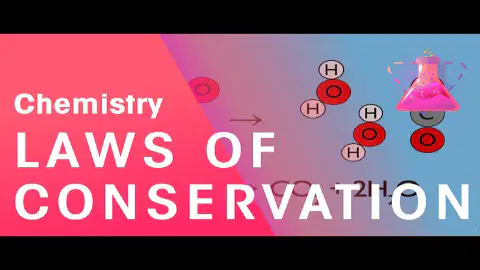
Hydrogen reacts with oxygen to form water. If the total mass of hydrogen and oxygen used is 36 grams, what will be the total mass of water produced?
18 grams
72 grams
36 grams
54 grams
Which of the following best describes a saltwater solution?
element
homogeneous mixture
compound
pure substance
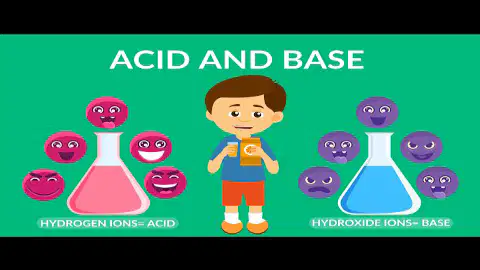
Noah is testing the pH of different liquids in his science class. He wants to find out which pH value indicates that a substance is neutral. What pH value should Noah look for?
0
7
14
10
Which two tissues are responsible for transporting water and nutrients in plants?
roots and stems
xylem and phloem
leaves and seeds
Which part of a plant is responsible for absorbing water and minerals from the soil and helps to anchor the plant as well?
leaves
roots
stems
What are the essential components plants use during photosynthesis?
water and oxygen
carbon dioxide and light
water, carbon dioxide, and light
only light
Which process takes place in the mitochondria and produces ATP from glucose using oxygen?
fermentation
cellular respiration
photosynthesis
Which structure in a plant is mainly responsible for absorbing sunlight for photosynthesis?
leaf
stem
root
petal
According to the Law of Conservation of Mass (Matter), Matter cannot be (a) or (b) , it can only be (c) . This means however many atoms of an element we have before a reaction must be (d) to the number after a reaction.
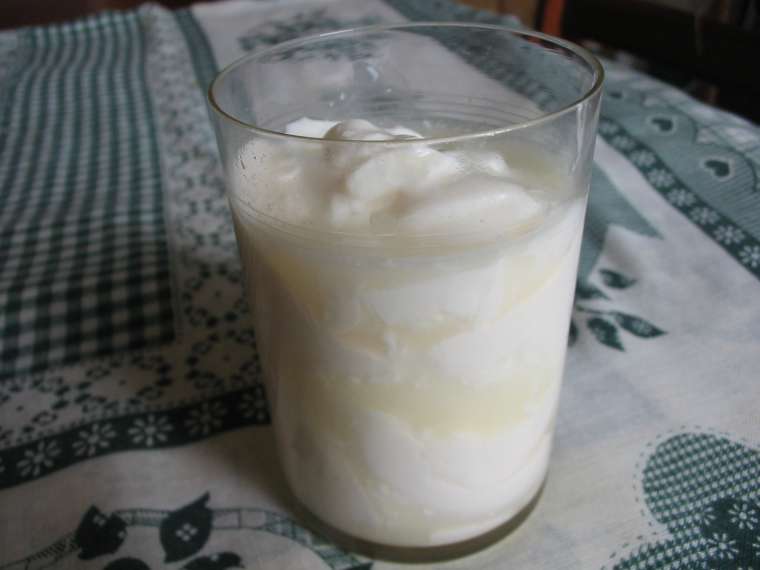
Olivia and Mason were having a science experiment in the kitchen. Olivia left a glass of milk on the counter overnight as part of their experiment. The next day, they discovered it had gone sour. This is a (a) change.
Physical
Chemical

In heat transfer, heat always flows from the _______________ substance to the _______________ substance.
Hotter to colder
Colder to hotter
Hotter to hotter
Colder to colder
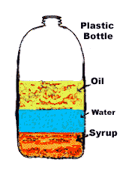

Mixture or Not?
Mixture
Not a Mixture
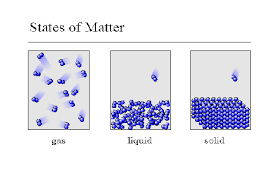

In which state are the distances between the particles greatest?
Both gas and liquid
Liquid
Gas
Solid


The vertical (up and down) columns in the Periodic Table are called
groups
towers
periods
atomic numbers
A physical change (a)
A chemical change (a)

Which substances are reactants in this chemical equation?
AgNO3 and Cu
Cu(NO3)2 and Ag
AgNO3 and Cu(NO3)2
Cu and Ag
Two or more atoms joined together make up a _____.
compound
molecule
solution

Carbon dioxide is a compound.
True
False
Protons are
Negative
Positive
No charge
Atomic Number
Neutrons have
Negative
Positive
No charge
Atomic Number
What is the difference between the biotic and abiotic factors?
Biotic factors are living things and abiotic factors are nonliving things.
Biotic factors are nonliving things and abiotic factors are living things.

A family needs 10 Newtons of force to lift a box to the top of a 2 meter shelf. How much work do they do? (a)
Which of the following is NOT one of the things a machine can do?
Changes the amount of force required.
Changes the distance over which the force is exerted.
Changes the direction of the force.
Changes the amount of work done.

