
 Worksheets
Phases of the Moon and Light Observation Quiz
Total questions: 13
Worksheet time: 7mins
What evidence should you collect to explain where the Moon receives its light?
Evidence about the source of the Moon's light
Evidence about the Moon's temperature
Evidence about the Moon's gravity
Evidence about the Moon's size
If you observe a foil-wrapped ball and an unwrapped ball under a light, what might you notice about how each appears?
Both balls will glow on their own
Only the foil-wrapped ball will reflect light
The unwrapped ball will be brighter than the foil-wrapped ball
Neither ball will reflect any light
How could the "Foil Moon" investigation help explain how the Moon receives its light?
It shows that the Moon creates its own light
It demonstrates that the Moon reflects light from another source
It proves the Moon is made of foil
It shows that the Moon absorbs all light
Approximately what percentage of sunlight is reflected off the Moon's surface?
50%
25%
12%
80%
Explain why the Moon is still the brightest object in our night sky even though it only reflects about 12% of the sunlight.
Because the Moon is closer to Earth than other objects.
Because the Moon produces its own light.
Because the Moon is made of shiny metal.
Because the Moon is larger than the Sun.
What is the length of the lunar phases cycle?
29.5 days
15 days
365 days
7 days
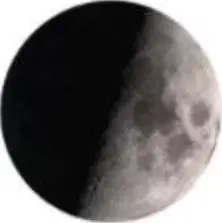
During which phase does more of the Moon’s near side become lit each night?
Waxing phases
Waning phases
New moon
Third quarter
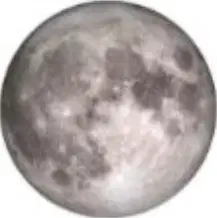
If you observe the Moon during the second week of its cycle, which phase are you most likely seeing?
Full Moon
New Moon
Third Quarter
First Quarter
Why is the Moon not visible from Earth during the new moon phase?
The Moon’s near side is completely dark.
The Moon is behind the Sun.
The Moon is too far away.
The Moon is fully lit.
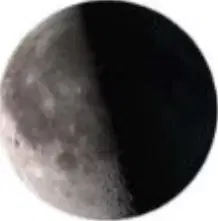
During which week does the lit part of the Moon become smaller until only the eastern half is lit?
Third Quarter
First Quarter
Full Moon
New Moon
Which phase of the Moon is not visible from Earth?
Full moon
New moon
First quarter
Waxing gibbous
Which lunar phase occurs after the waxing gibbous phase?
Waning crescent
Full moon
Third quarter
First quarter
Strategically, why is the new moon phase not visible from Earth?
The Moon is behind the Sun.
The shadowed part of the Moon faces Earth, so no sunlight is reflected toward us.
The Moon is too far away.
The Moon is blocked by clouds.

