
 Worksheets
Anatomy of the Constitution
Total questions: 24
Worksheet time: 2hrs 56mins
Which statement best explains the purpose of the Preamble to the U.S. Constitution?
It lists detailed laws for each branch of government.
It introduces the Constitution and explains the purpose of the new government.
It establishes the Supreme Court and defines judicial review.
It sets the qualifications for senators and representatives.
The phrase “We the People” in the Preamble highlights which key idea?
Federal supremacy over state laws
Direct democracy with no representatives
Self-government led by the citizens
Military leadership guiding national policy
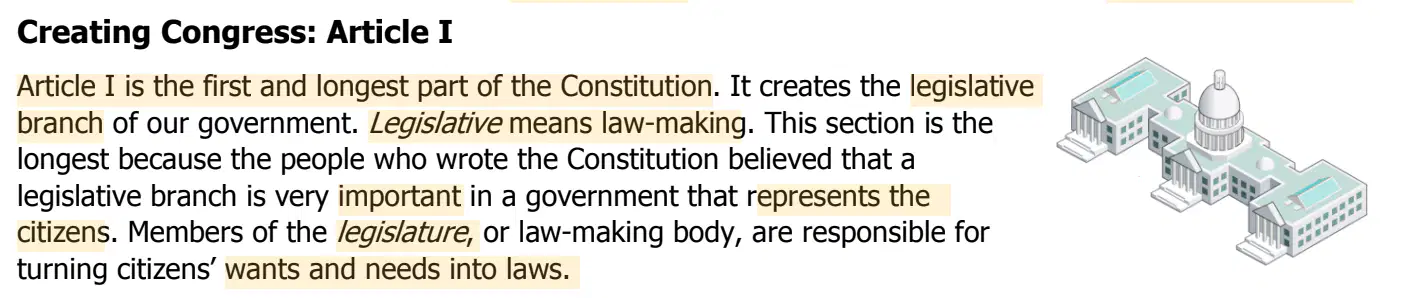
Article I of the Constitution creates which branch of the federal government?
Executive branch
Judicial branch
Legislative branch
State governments
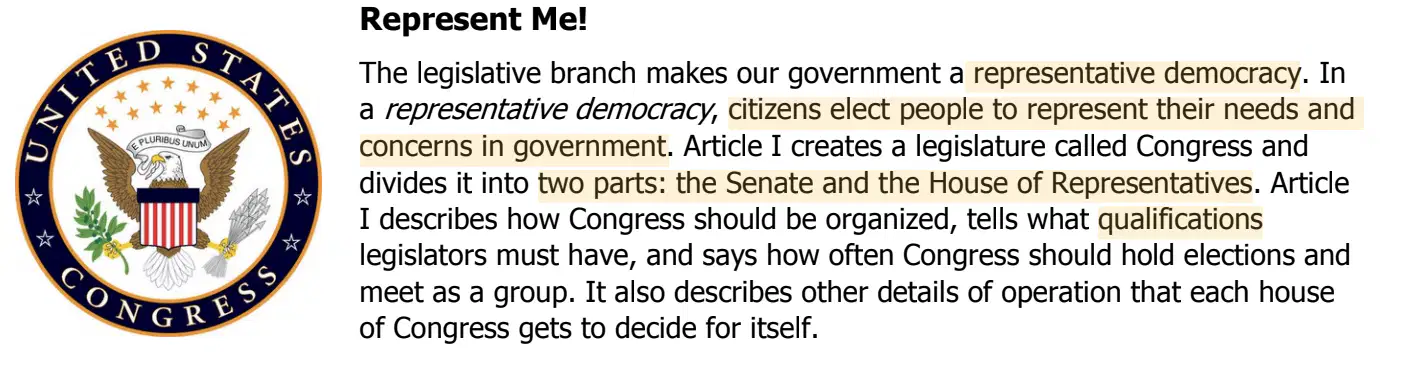
In a representative democracy, how are citizens’ needs and concerns brought into government?
Citizens vote directly on every law at national meetings.
Citizens elect officials to represent them in Congress.
State governors appoint members to federal offices.
Federal judges collect public feedback during trials.
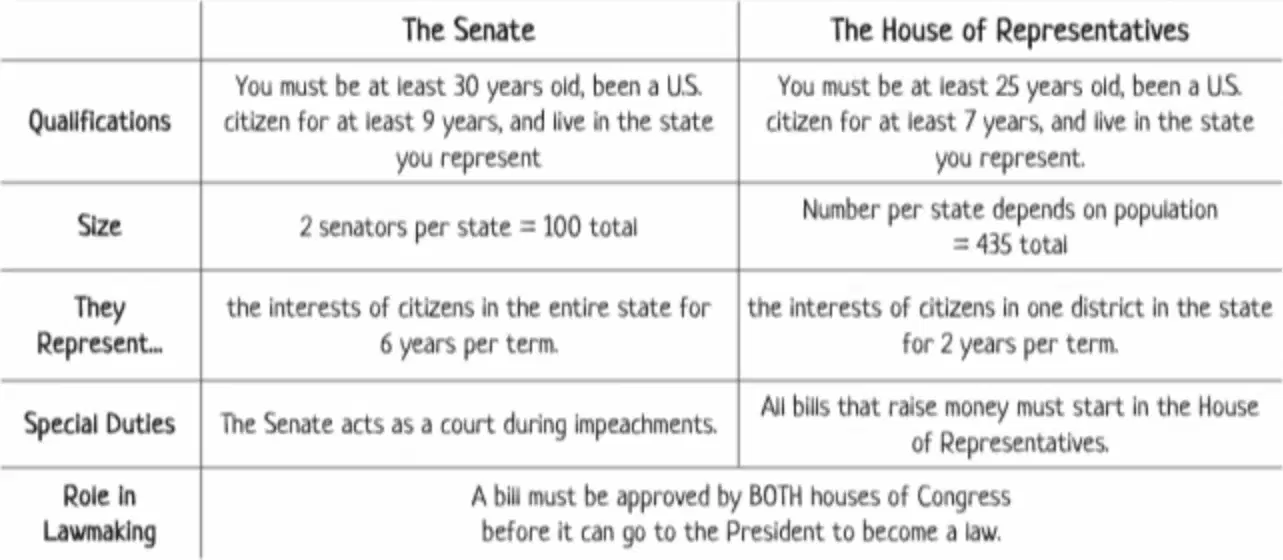
According to Article I, which statement correctly compares qualifications for service in the Senate and the House of Representatives?
Senators must be at least 25 years old; representatives must be at least 30.
Senators must have been U.S. citizens for at least 7 years; representatives for at least 9 years.
Both senators and representatives must be at least 30 years old and have lived anywhere in the U.S.
Senators must be at least 30 and citizens for 9 years; representatives must be at least 25 and citizens for 7 years, and both must live in the state they represent.
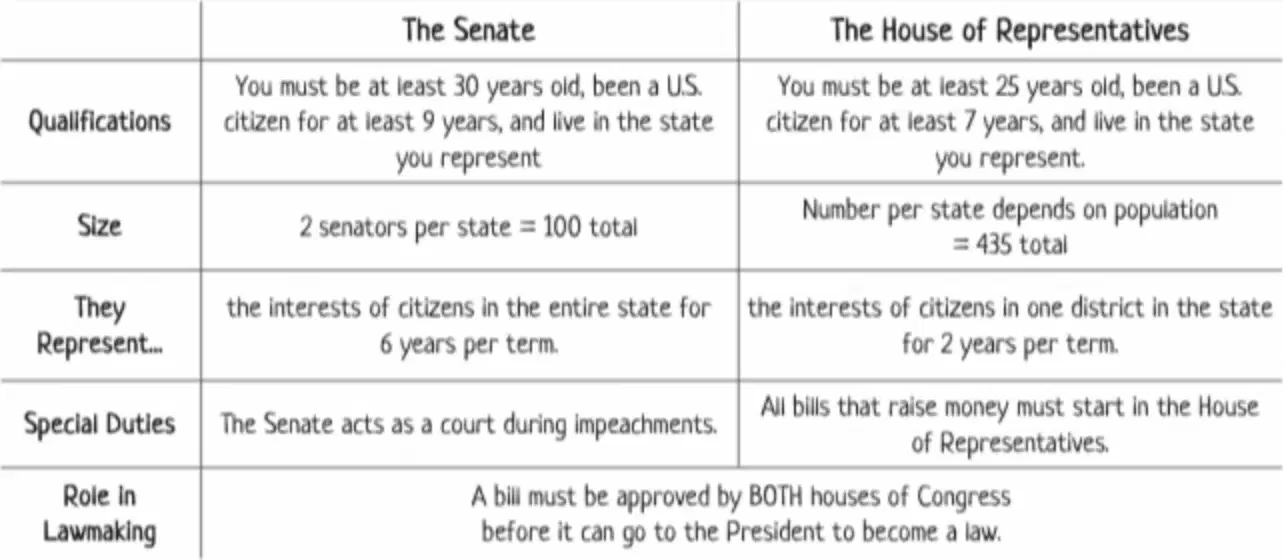
Which duty is unique to the House of Representatives during lawmaking, as described in Article I?
Conducting impeachment trials as a court
Starting all bills that raise money
Confirming presidential appointments
Reviewing state constitutions for compliance
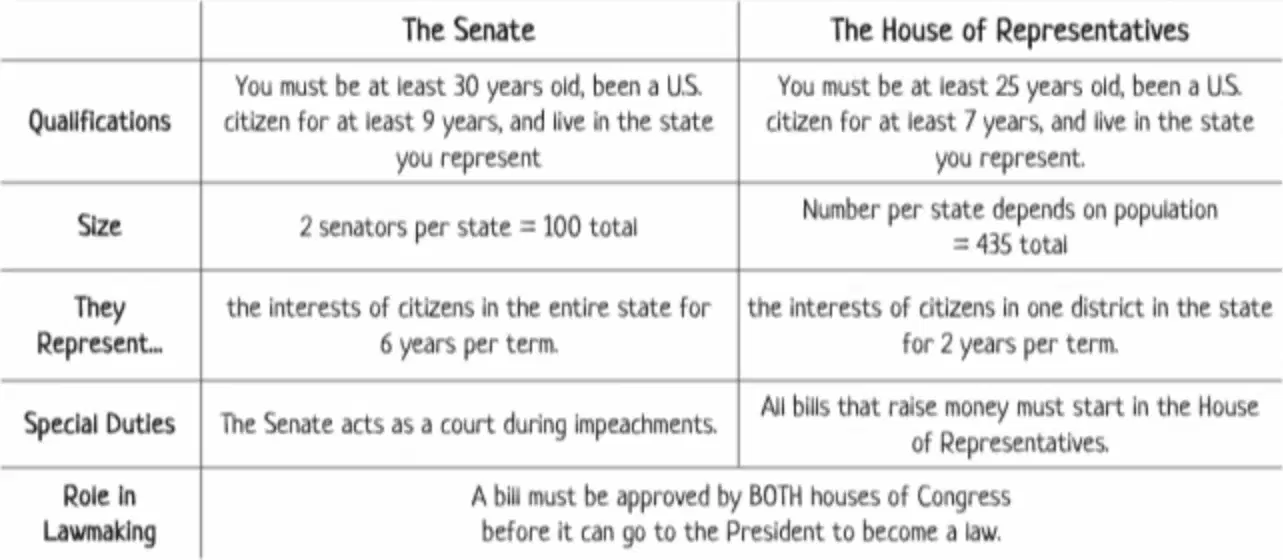
A bill becomes a law only after which step, according to Article I’s description of Congress’s role in lawmaking?
It is approved by the Senate alone and sent to the President.
It passes the House and is automatically enacted without the President.
It is approved by both houses of Congress before going to the President.
It is signed by the Speaker of the House and the Chief Justice.
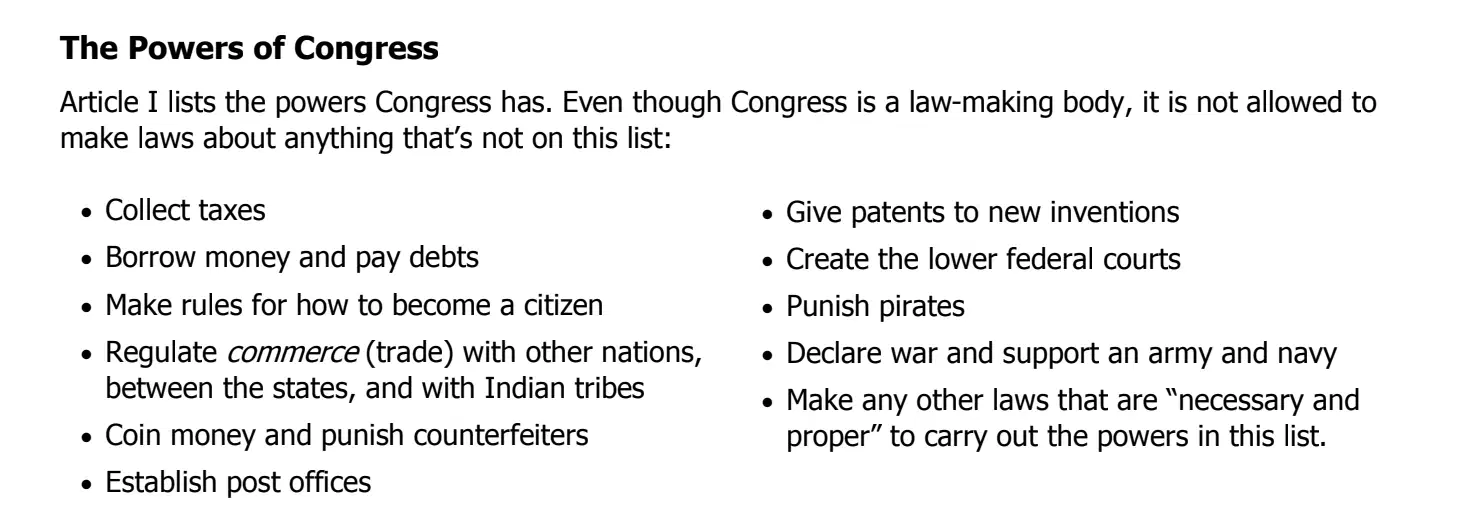
According to Article I, Congress can regulate commerce. Which of the following best matches what that means in this context?
Manage trade with other nations, between the states, and with Indian tribes
Control only international trade and leave state trade unregulated
Set prices for all goods sold within every state
Run private businesses involved in imports and exports
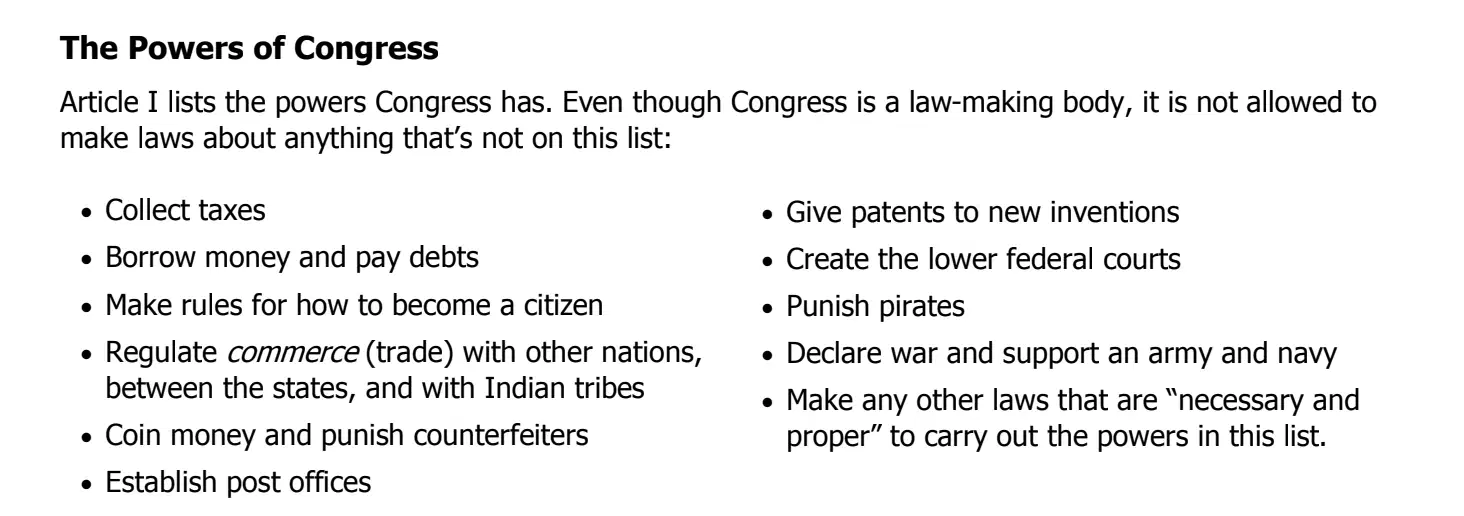
Which power is explicitly listed as a power of Congress under Article I?
Declare war and support an army and navy
Veto laws passed by states
Appoint Supreme Court justices
Conduct foreign trials
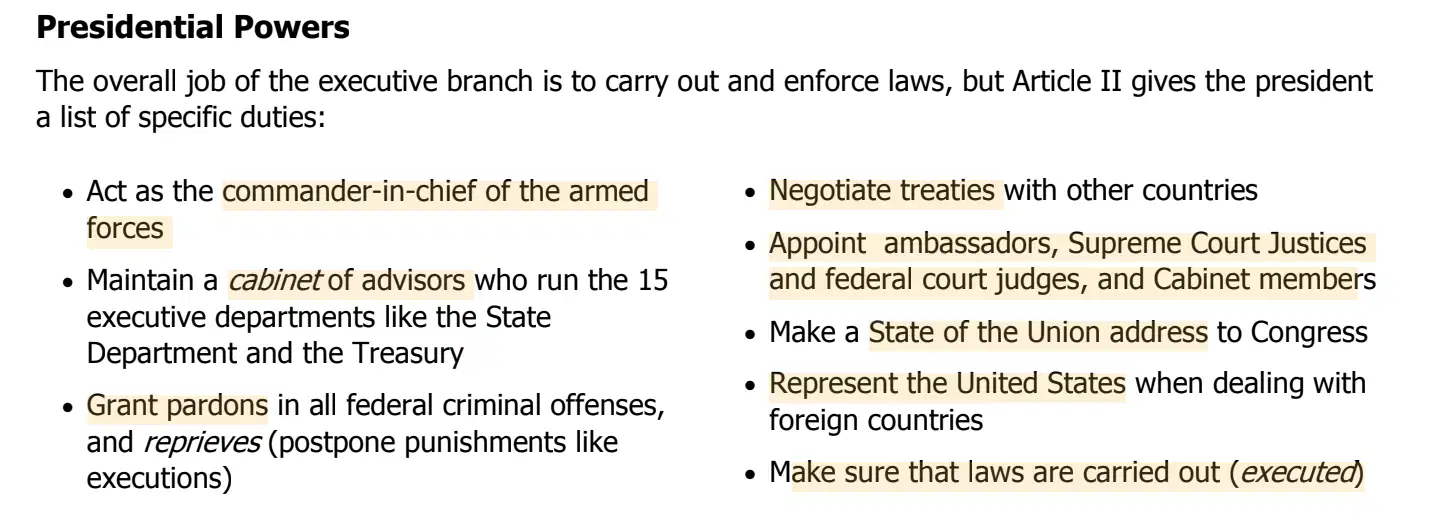
Article II describes the job of the executive branch. Which statement best captures its overall role?
Execute, or carry out, laws and manage the government’s day-to-day operations
Write federal laws and create new courts
Interpret laws and decide if they have been followed in specific cases
Amend the Constitution without Congress
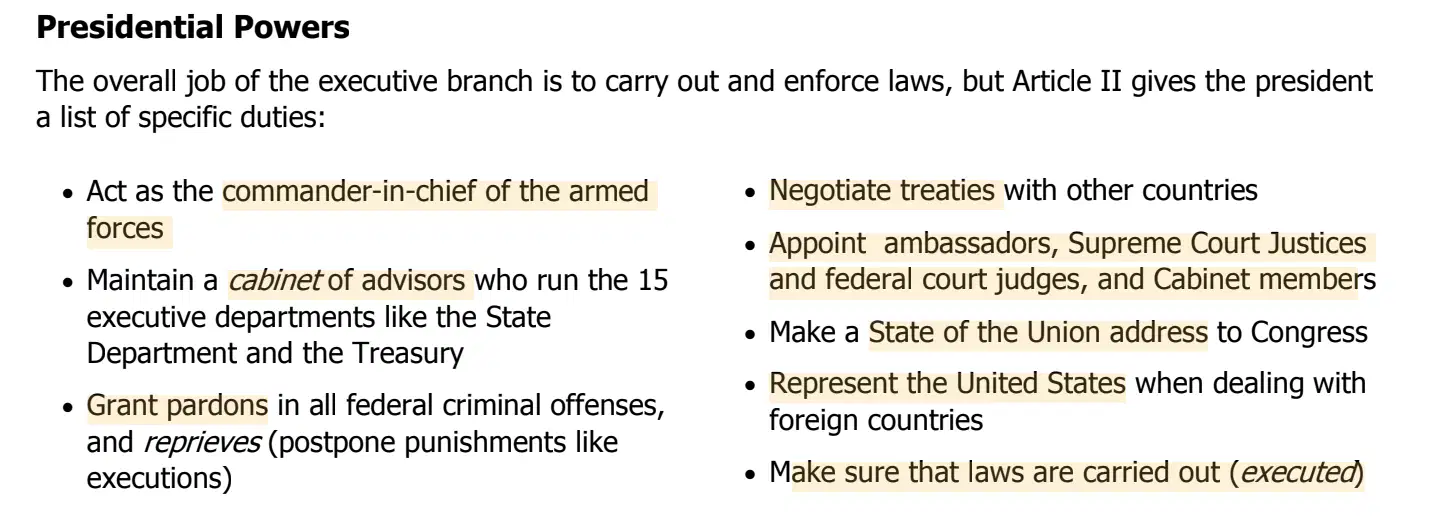
Which of the following is a specific presidential duty named in Article II?
Serve as commander-in-chief of the armed forces
Coin money and punish counterfeiters
Establish post offices across the nation
Make rules for how to become a citizen
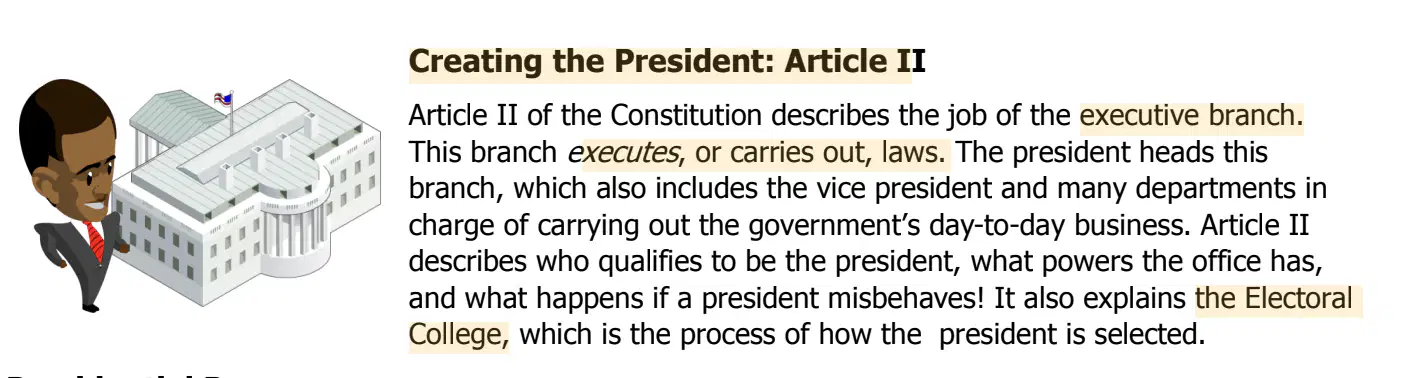
The Electoral College is explained in Article II. What is its main purpose as described in the material?
It is the process by which the president is selected
It is the group that writes executive orders
It is the court that tries federal crimes
It is the committee that approves treaties
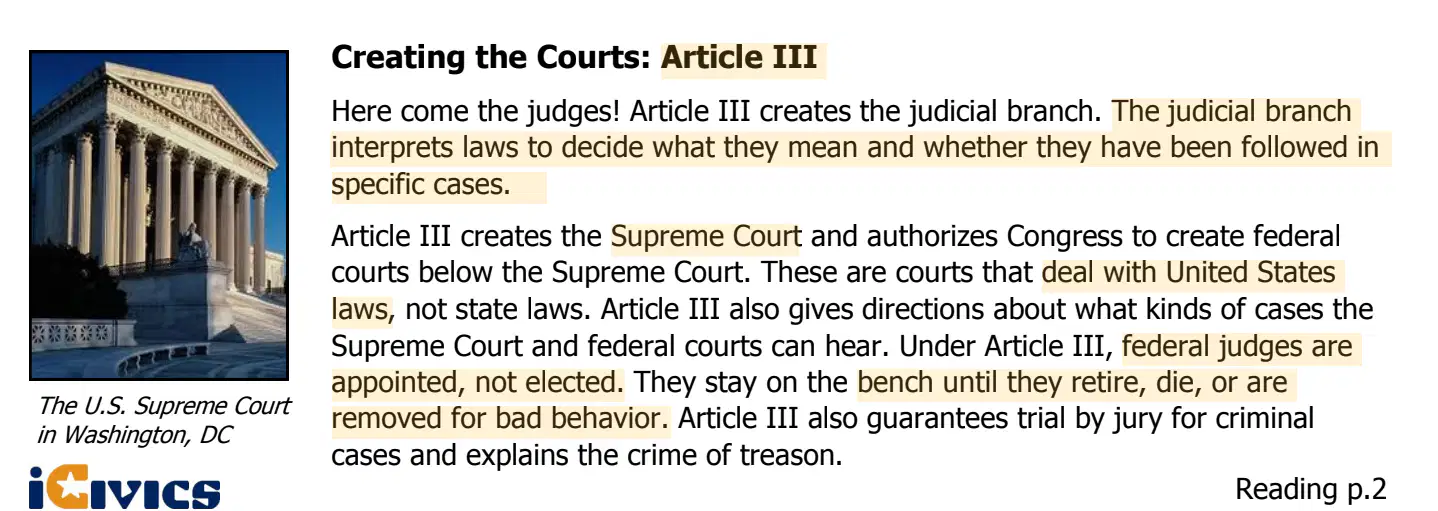
Under Article III, how do federal judges, including Supreme Court justices, obtain and hold their positions?
They are appointed, not elected, and they serve until they retire, die, or are removed for bad behavior
They are elected by popular vote for fixed six-year terms
They are chosen by state governors and must rotate every two years
They are appointed for ten-year terms and must be reconfirmed
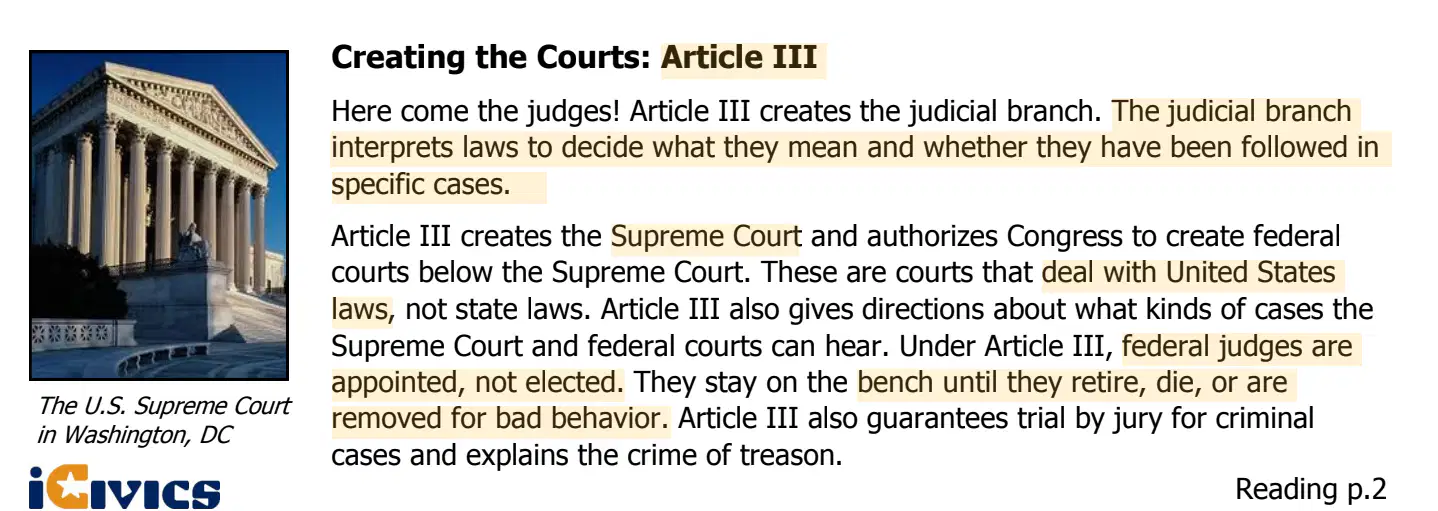
Which statement accurately describes a function of the judicial branch under Article III?
Interpret laws to decide what they mean and whether they have been followed in specific cases
Negotiate treaties with other countries and appoint ambassadors
Collect taxes and borrow money to pay debts
Make a State of the Union address to Congress
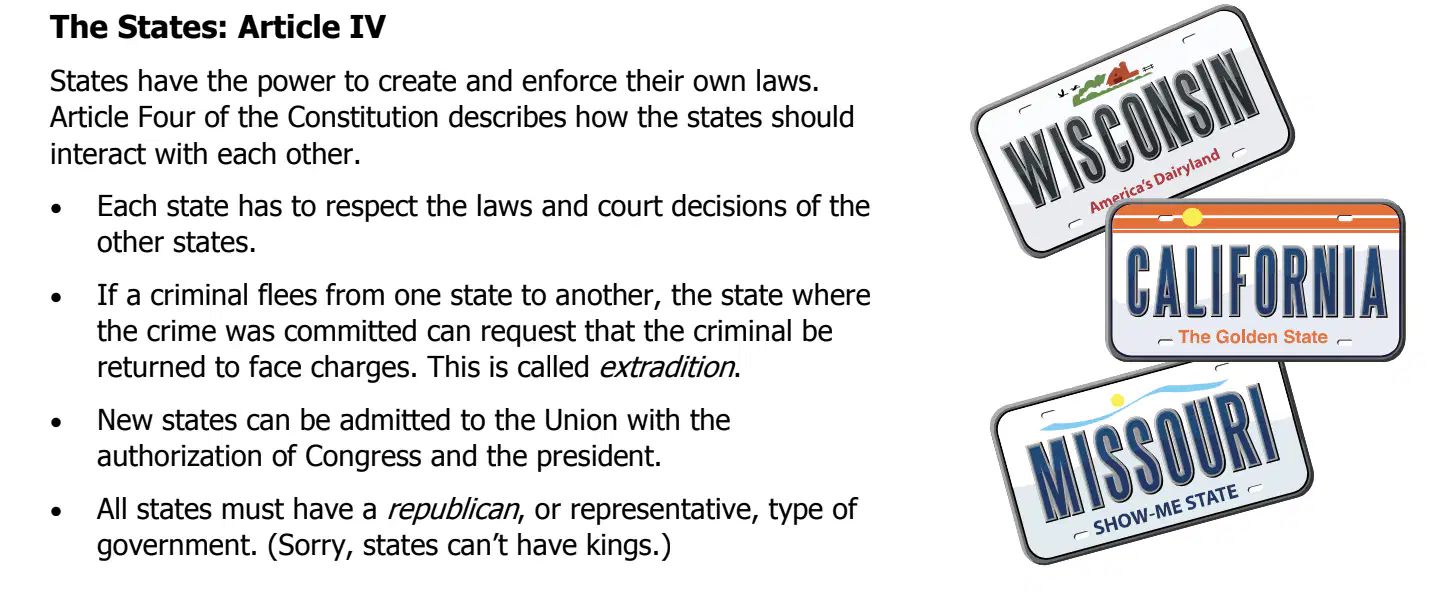
Article IV outlines how states should interact. Which statement best describes extradition under Article IV?
A state may refuse to recognize another state's court decisions if it disagrees.
A state where a crime was committed can request a fleeing criminal be returned from another state to face charges.
States can create kings who decide when criminals are transferred between states.
Only the federal government can order a person moved from one state to another for any reason.
Article V addresses changing the Constitution. Based on the section, what is the most accurate characterization of the amendment process?
It is easy and can be done by a single member of Congress.
It is difficult and requires formal approval beyond a simple request.
It happens automatically every ten years without debate.
It can be started only by the president through executive order.

Article VI includes the supremacy clause. When a state law conflicts with a federal law, what happens according to Article VI?
The state law stands because states share power equally with the national government.
Both laws are canceled, and Congress writes a new one immediately.
Federal law wins because the laws and treaties of the U.S. government are the supreme law of the land.
A state court decides which law to follow based solely on local opinion.
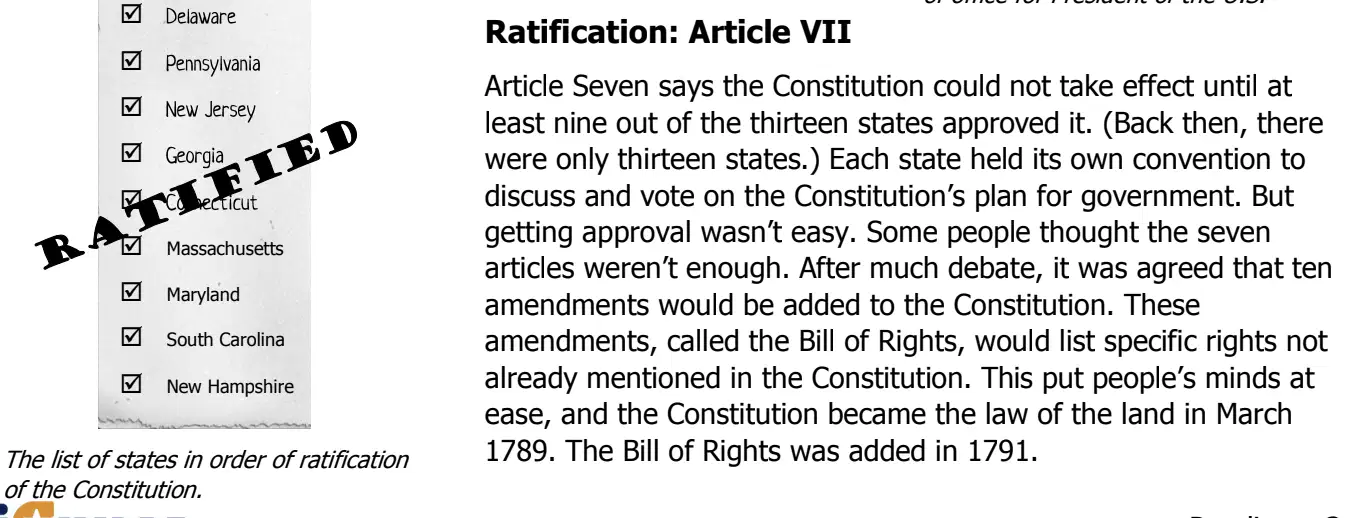
Article VII explains how the Constitution took effect. What was required for ratification, and why were amendments like the Bill of Rights added?
Approval by all thirteen states; to give the president unlimited power.
Approval by at least nine of the thirteen states; to list specific rights not already mentioned and ease public concerns.
Approval by a majority of the U.S. population; to shorten the Constitution for easier reading.
Approval by the Supreme Court; to remove limits on state governments.
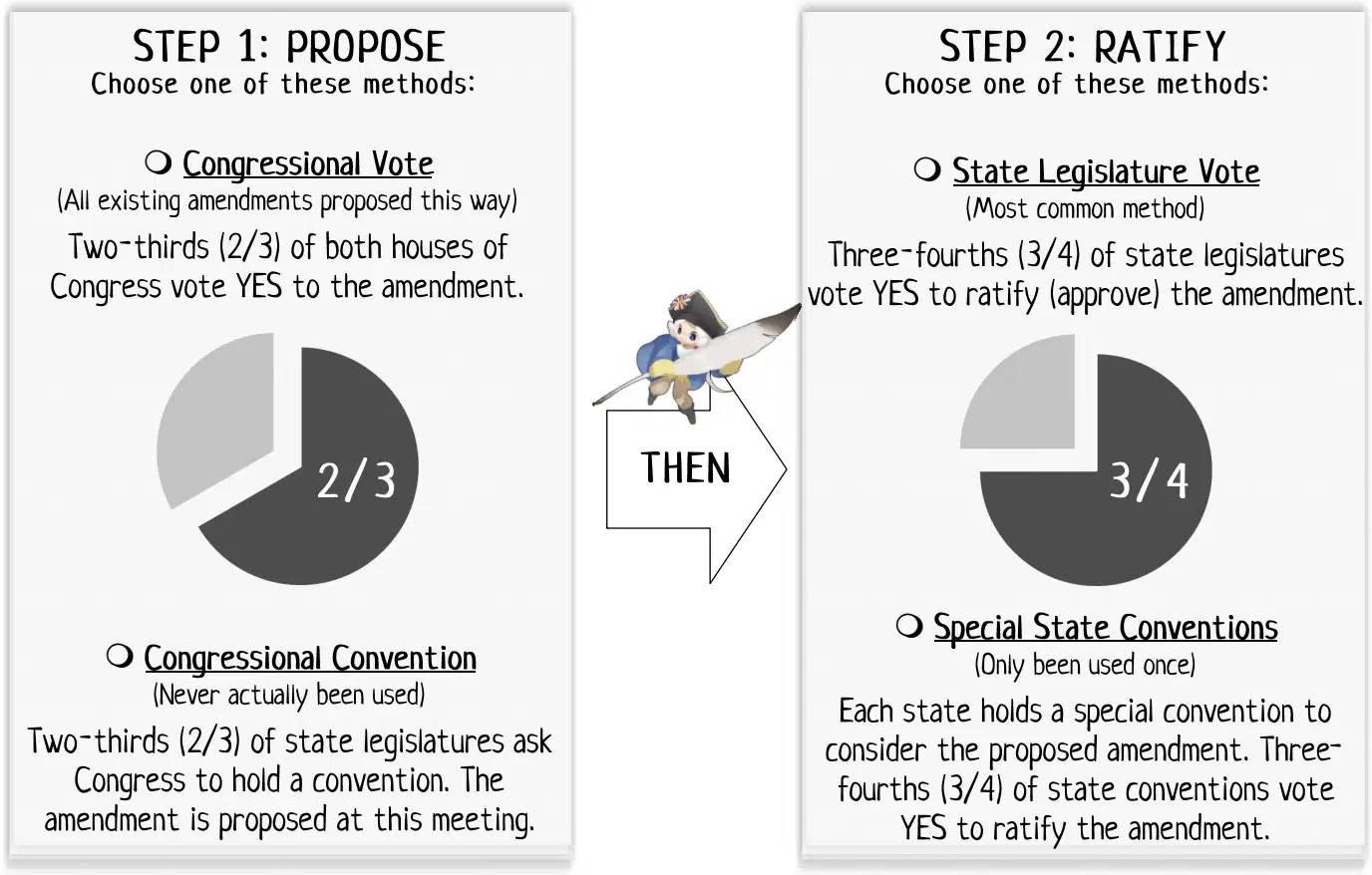
According to the section, what is the most common way an amendment to the U.S. Constitution is proposed?
By a two-thirds vote in both houses of Congress
By a majority vote of state legislatures
By a national popular vote
By presidential proclamation
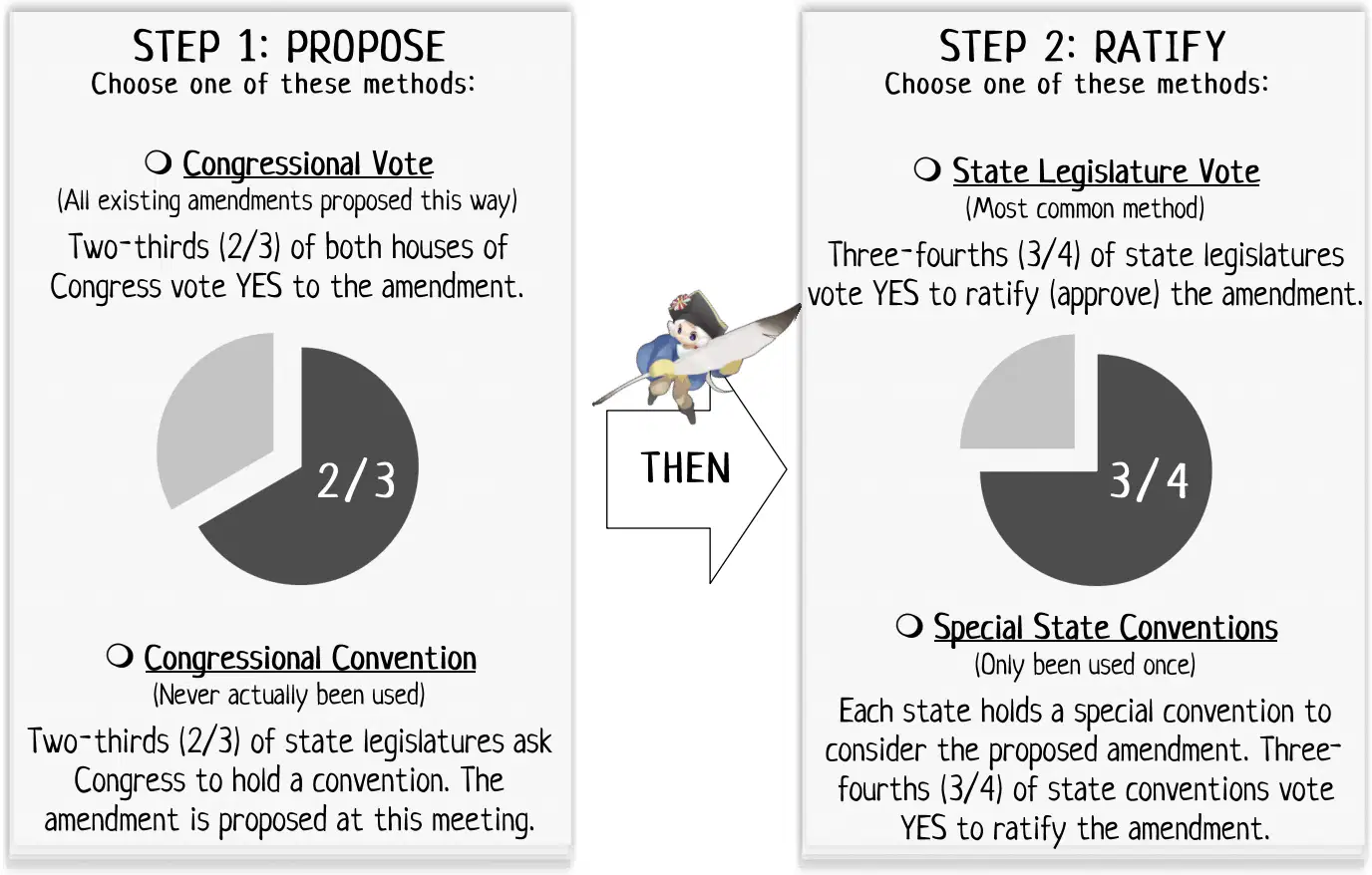
Which ratification method has been used most often to approve proposed amendments to the U.S. Constitution?
Ratification by a simple majority of state legislatures
Ratification by three-fourths of state legislatures
Ratification by a national referendum
Ratification by the U.S. Supreme Court

The constitutionality of a law is decided by which branch of government?
Legislative
Judicial
Executive
Administrative
What is Federalism?
The idea that the national government shares
power with the state governments.
The idea that a all governments should have three branches.
The idea that the national government should be a republic.
The idea that the national government should be a democracy.
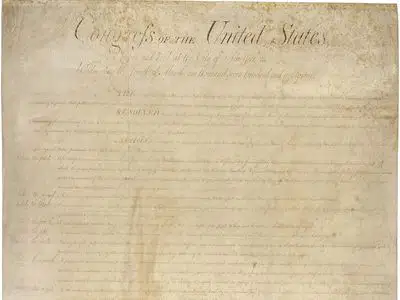
What are the first 10 Amendments to the Constitution called?

