wayground logo

Free Printable Worksheets

Font size

S
M
L
XL
Worksheets

Punnett Square

Total questions: 125

Worksheet time: 4hrs 46mins

Name
Class
Date
1.

What belongs in the last box?

a)

RR

b)

Rr

c)

rr

d)

ff

2.
T - tall and t = short
In the punnett square below, what belongs in the missing square
a)
tt
b)
Tt
c)
Bb
d)
TT
3.

Look at the punnett square shown. What allele pair would replace the "?"

a)

WW

b)

Ww

c)

ww

4.

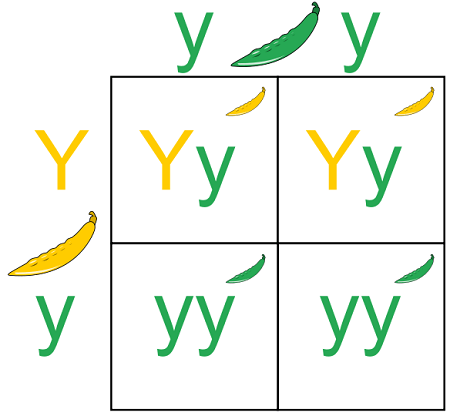
What belongs in Box 4?

a)

Y

b)

YY

c)

Yy

d)

yy

5.

Look at the punnett square. What is the probability that the offspring would have homozygous alleles for the trait?

a)

100%

b)

75%

c)

50%

d)

25%

e)

0%

6.
Both parents in this Punnet square
a)
are homozygous dominant
b)
are homozygous recessive
c)
are heterozygous
d)
have blue eyes
7.

What is the probability & phenotype of the offspring? (A-Brown hair; a-blond hair)

a)

50% Brown Hair and 50% Blond Hair

b)

25 % Brown Hair and 75% Blond Hair

c)

75 % Brown Hair and 25% Blond Hair

d)

0% Brown Hair and 100% Blond Hair

8.

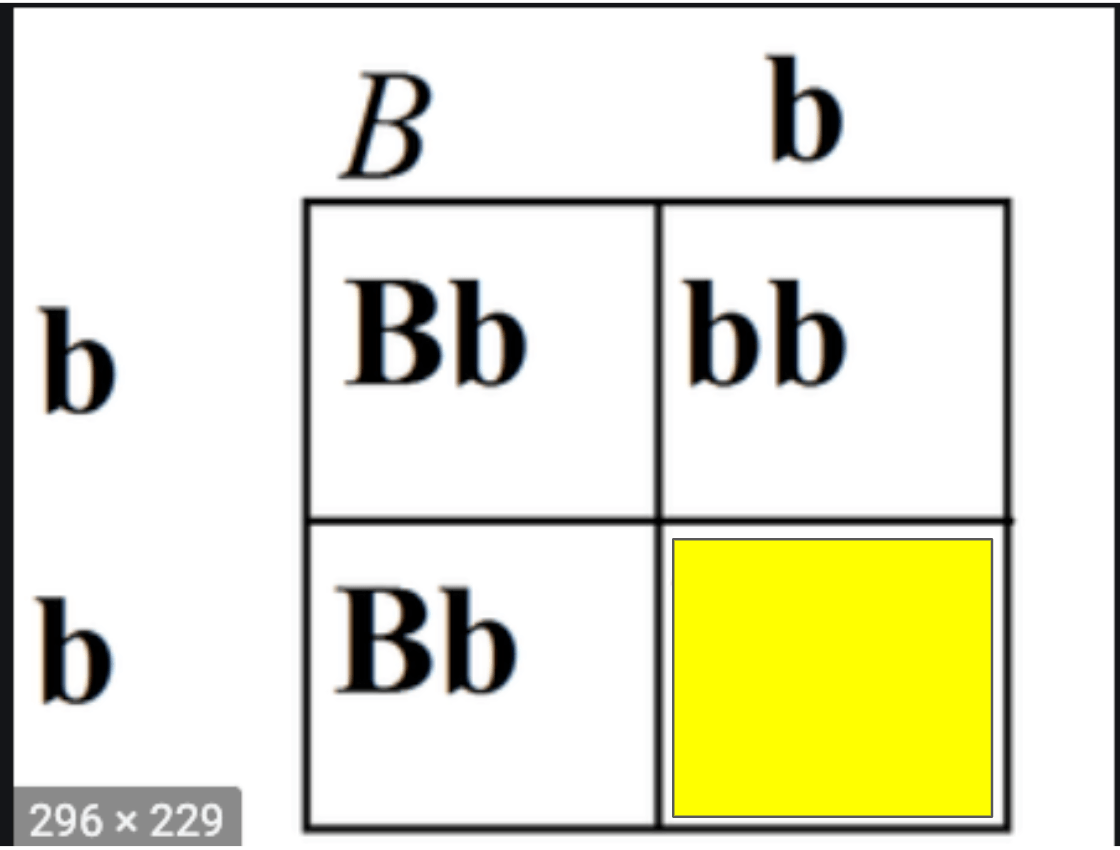
Fill in the Yellow Box

a)

Bb

b)

BB

c)

bb

9.

Which of the following allele pairs is heterozygous?

a)

RR

b)

Qq

c)

ss

10.
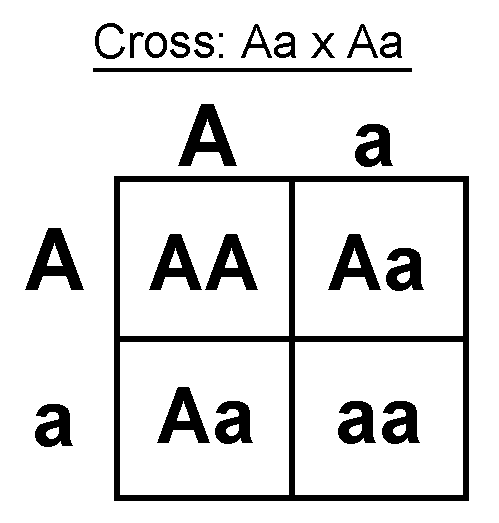
What allele combination should go in the missing box?
a)
AA
b)
Aa
c)
aa
d)
none of these
11.
B = brown fur  b = white fur
In the punnett square, what is the probability for white fur? 
a)
0%
b)
25%
c)
50%
d)
75%
12.
A red flowered plant (RR) breeds with a White flowered plant (WW). The gene for petal color in these plants expresses incomplete dominance.  What percentage of the offspring will have pink (RW) flowers?
a)
0%
b)
25%
c)
50%
d)
100%
13.
T - tall and t = short
In the punnett square below, what belongs in the missing square
a)
tt
b)
Tt
c)
Bb
d)
TT
14.
What you see, or the physical appearance.
a)
Genotype
b)
Phenotype
c)
Homozygous
d)
Heterozygous
15.
What is the probability of heterozygous offspring?
a)
25%
b)
50%
c)
0%
d)
100%
16.
What allele combination should go in the missing box?
a)
AA
b)
Aa
c)
aa
d)
none of these
17.
Each one of the boxes on the Punnett Square represents what probability of an offsprings' genotype?
a)
25%
b)
1%
c)
10%
d)
0%
18.
Which choice best represents the genotype of this cross?
a)
1 Yy: 2 yy: 0 YY
b)
2 Yy: 2 yy: 0 YY
c)
3 Yy: 1 yy: 0 YY
d)
1 Yy: 3 yy: 0 YY
19.
What is the phenotype of the offspring? (A-Brown hair; a-blond hair) 
a)
50 % Brown Hair and 50% Blond Hair 
b)
25 % Brown Hair and 75% Blond Hair 
c)
75 % Brown Hair and 25% Blond Hair 
d)
0% Brown Hair and 100% Blond Hair 
20.
Which of the following genotypes is homozygous dominant?
a)
A
b)
Aa
c)
AA
d)
aa
21.
Which of the following genotypes is heterozygous?
a)
Bb
b)
BB
c)
bb
d)
B
22.
Which of the following is homozygous recessive?
a)
Tt
b)
tt
c)
TT
d)
T
23.
Which of the following is an example of phenotype?
a)
bb
b)
blue eyes
24.
Which of the following genotypes are purebred?
a)
Pf
b)
Pp
c)
PP
d)
pP
25.
If you are purebred dominant for a trait, your genotype would be...
a)
Tt
b)
TT
c)
tt
d)
tall
26.
Which of these is homozygous recessive?
a)
Rr
b)
rR
c)
RR
d)
rr
27.

A chart that shows all the possible combinations of alleles that can result from a genetic cross

a)

dominant allele

b)

codominance

c)

probability

d)

Punnett Square

28.

An organism's physical appearance or visible traits. (what it looks like)

a)

phenotype

b)

genotype

29.

An organism's genetic makeup, or allele combination. The letters we use to show the allele combination.

a)

phenotype

b)

genotype

30.

B = brown fur b = white fur

In the Punnett square, what is the probability for white fur?

a)

0%

b)

25%

c)

50%

d)

75%

31.
Dominant or recessive?
tt
a)
Dominant 
b)
Recessive
32.
Dominant or recessive?
Dd
a)
Dominant
b)
recessive
c)
neither
d)
homozygous
33.
Emily has brown hair. Which is most likely a true statement about Emily?
a)
Emily’s favorite color is brown.
b)
Emily has a parent with brown hair.
c)
Emily’s older brother has brown hair. 
34.
What should students use to identify the percent chance of a trait being passed down from a parent to its offspring?
a)
a graph
b)
a flow chart
c)
a data table
d)
a Punnett square
35.
Which statement best supports why many offspring look similar to their parents?
a)
Offspring inherit characteristics from one parent.
b)
Offspring inherit characteristics from both parents.
c)
Parents choose which characteristics to pass on to their offspring.
d)
Parents choose to change their appearance to match that of their offspring.
36.
Bob is a tall, slender young man with red hair and blue eyes. Which couple would most likely be Bob’s parents?
a)
a slender, red-haired father and a tall, blue-eyed mother
b)
a tall green-eyed father with long brown hair and a short, brown-haired mother
c)
a short, green-eyed, black-haired father and a tall, brown haired, brown-eyed mother
d)
a short, plump brown-haired father with freckles and a short, blue-eyed red-haired mother
37.
What are the possible combinations of a pea plant with the alleles PP and a male pea plant with the alleles pp.
P= purple
p= white
a)
all Pp
b)
all PP
c)
Pp,PP,Pp,PP
d)
all pp
38.
When the allele combination is a dominate and a recessive trait together which trait will be seen?
a)
Dominate
b)
Recessive
c)
none
d)
both
39.
Homozygous is when...
a)
the alleles are the same
b)
the alleles are different
c)
the alleles are absent
d)
the alleles are present
40.
B = brown fur  b = white fur
In the punnett square, what is the probability for white fur? 
a)
0%
b)
25%
c)
50%
d)
75%
41.
Aa is
a)
homozygous (purebred)
b)
heterozygous (hybrid)
42.
What is a phenotype?
a)
The expression of a trait; physical appearance.
b)
refers to the genetic makeup of an individual
c)
An organism that has the same genes for a trait (ex. TT or tt)
d)
the passing of traits from parent to offspring
43.
This means Different Gene
a)
Dominant
b)
Recessive
c)
Homozygous
d)
Heterozygous
44.
Homozygous or heterozygous?
BB
a)
Homozygous
b)
Heterozygous
45.
Which of the following is a phenotype?
a)
Aa
b)
red hair
c)
heterozygous
d)
DNA
46.
Heterozygous is when...
a)
the alleles are the same
b)
the alleles are different
c)
the alleles are absent
d)
the alleles are present
47.
In a heterozygous genotype, the ___________ allele takes over in the phenotype.
a)
recessive
b)
dominant
c)
lower case letter
d)
both 
48.
T - tall and t = short
In the punnett square below, what belongs in the missing square
a)
tt
b)
Tt
c)
Bb
d)
TT
49.
G = green, g = yellow
The genotype for a yellow plant is...
a)
GG
b)
Gg
c)
gg
d)
all of the choices result in yellow
50.
B = brown fur  b = white fur
In the punnett square, what is the probability for white fur? 
a)
0%
b)
25%
c)
50%
d)
75%
51.
Which of the following alleles is homozygous (purebred) recessive?
a)
Tt
b)
tt
c)
TT
d)
t
52.
Two brown eyed parents (Bb) have a baby. What is the chance the baby is blue eyed?
a)
0 %
b)
25%
c)
50%
d)
75%
53.
Dominant alleles are represented by a:
a)
Male gene
b)
lowercase letter
c)
recessive trait
d)
capital letter
54.
Aa, DD, bB, yy are all examples of
a)
genotypes
b)
phenotypes
55.
In a heterozygous genotype, the ___________ allele takes over in the phenotype.
a)
recessive
b)
dominant
c)
lower case letter
d)
both 
56.
What you see, or the physical appearance.
a)
Genotype
b)
Phenotype
c)
Homozygous
d)
Heterozygous
57.
AA and Aa always show up as
a)
dominant
b)
recessive
58.
aa always shows up as
a)
dominant
b)
recessive
59.
Aa is
a)
homozygous
b)
heterozygous
60.
Which of the following is a phenotype?
a)
Aa
b)
red hair
c)
heterozygous
d)
DNA
61.
What is a punnett square?
a)
graph used to predict the possible genotypes of offspring in a given cross
b)
a graph used to predict the possible birth rate of offspring.
c)
a graph used to predict the possible behavioral characteristics an offspring could have
d)
None of the above
62.
In a punnet square where are the parent alleles written?
a)
Top and inside the boxes
b)
Only on the left and right side of the boxes. 
c)
outside of the boxes (top and left side)
d)
All on the top side of the boxes
63.
What you see, or the physical appearance.
a)
Genotype
b)
Phenotype
c)
Homozygous
d)
Heterozygous
64.
Genotype refers to the ...
a)
physical expression of the genes
b)
the possible combination of alleles in a gene
c)
whether an allele is dominant or recessive
d)
how an organism will appear
65.
What is the dominant trait?
a)
yellow pea seeds
b)
green pea seeds
c)
there is no dominant seed
d)
Jolly green giant
66.

Green peas are dominant to yellow peas what letter would we use to represent the allele for green peas

a)

G

b)

g

c)

Y

d)

y

67.

Green peas are dominant to yellow peas what letter would we use to represent the allele for yellow peas

a)

G

b)

g

c)

Y

d)

y

68.

Purple flowers are dominant to white flowers. What letter would we use for the purple allele

a)

P

b)

p

c)

W

d)

w

69.

Purple flowers are dominant to white flowers. What letter would we use for the white allele

a)

P

b)

p

c)

W

d)

w

70.

Brown fur is dominant to Gray fur. What letter would we use for the gray allele

a)

B

b)

b

c)

G

d)

g

71.

Red flowers are dominant to Blue flowers cross a Heterozygous flower with a homozygous recessive flower. Choose the correct parent cross below

a)

Rr with rr

b)

Rr with RR

c)

Rb with bb

d)

Rr with bb

72.

Hairy guinea pigs are dominant to hairless guinea pigs. Cross a purbred recessive guinea pig with a purbred dominant guinea pig

a)

Hh with Hh

b)

hh with HH

c)

Hg with gg

d)

Hh with gg

73.

Gray mice are dominant to white mice cross a Hybrid mouse with a Hybrid mouse

a)

Gw with Gw

b)

gw with gw

c)

GG with GG

d)

Gg with Gg

74.

Aqua martians are dominant to yellow martians. Cross a yellow martian with a Heterozygous martian

a)

YY with Yy

b)

aa with Aa

c)

YY with Ay

d)

AA with Aa

75.

Tall pea plant are dominant to short pea plants cross a heterozygous pea plant with a short pea plant

a)

Ts with ss

b)

Tt with Tt

c)

Tt with tt

d)

Ts with tt

76.

What genotype goes in the missing square

a)

aa

b)

Aa

c)

AA

d)

none of the above

77.
a)

HH

b)

Hh

c)

hh

d)

none of the above

78.

What genotype goes in the missing square

a)

Aa

b)

aa

c)

AA

d)

none of the above

79.
a)

Rr

b)

rr

c)

RR

d)

none of the above

80.
a)

gg

b)

GG

c)

Gg

d)

none of the above

81.

Gray fur is dominant to white fur. What is the probability of having the purebred recessive genotype

a)

25%

b)

50%

c)

75%

d)

100%

82.

Gray fur is dominant to white fur what is the probability of having Gray fur

a)

25%

b)

50%

c)

75%

d)

100%

83.

Red flowers are dominant to blue flowers. What is the probability of being Homozygous recessive

a)

25%

b)

50%

c)

75%

d)

100%

84.

Red flowers are dominant to blue flowers what is the probability of having red flowers

a)

25%

b)

50%

c)

75%

d)

1100%

85.

Hairy guinea pigs are dominant to hairless guinea pigs. What is the probability of having hairless guinea pigs

a)

25%

b)

50%

c)

75%

d)

100%

86.

Webbed fingers (F) are dominant over nonwebbed fingers (f). If parent A (Ff) and parent B (Ff) have children, which of the following are true? Select the correct Genotype and Phenotype outcomes.

a)

Phenotypes: 75% chance of having webbed fingers and 25% chance of not.

b)

Phenotypes: 100% chance of having webbed fingers and 0% chance of not.

c)

Phenotypes: 25% chance of having webbed fingers and 75% chance of not

d)

Genotypes: FF 25%, Ff 50%, ff 25%

e)

Genotypes: FF 75%, Ff 50%, ff 25%

87.

Brown eyes (B) tend to be dominant whereas blue eyes (b) tend to be recessive. Parents with heterozygous genes want to know: what is the likelihood of them having a child with blue eyes?

a)

0%

b)

25%

c)

75%

d)

100%

88.

Two heterozygous (Tt) tall pea plants are crossed. Tall (T) is dominant. Short (t) is recessive. Which is the likelihood of each phenotype?

a)

50% tall and 50% short

b)

75% tall and 25% short

c)

100% short

89.

Which of the following would complete this Punnett Square?

a)

aa

b)

AA

c)

Aa

90.

Brown eyes are dominant (B) to blue (b). If Parent A (bb) and Parent B (Bb) have a child, what is the likelihood that the child will have brown eyes?

a)

25%

b)

50%

c)

75%

d)

100%

91.

Select TWO answers. Which are the missing parts?

a)

BB

b)

bb

c)

Bb

92.

Which of the following must be the father's genotype?

a)

RR

b)

Rr

c)

rr

93.

If the father is homozygous recessive for dimples, what must the mother be for this Punnett Square?

a)

Dd (Heterozygous)

b)

DD (Homozygous Dominant)

c)

dd (Homozygous Recessive)

94.

The Austrian Monk who is deemed the Father of Genetics?

a)

John Hammond

b)

Gregor Mendel

c)

Isaac Newton

d)

Mr. Betenson

95.

In a heterozygous genotype, the ___________ allele takes over in the phenotype.

a)

recessive

b)

dominant

c)

lower case letter

d)

both

96.

What type of inheritance pattern is shown here?

a)

incomplete dominance

b)

dominant

c)

recessive

d)

codominance

97.

In plants, tall (T) is dominant to short (t). Perform the following cross: Tt x Tt. What is the probability of producing a short plant?

a)

0%

b)

25%

c)

75%

d)

100%

98.
Heterozygous is when...
a)
the alleles are the same
b)
the alleles are different
c)
the alleles are absent
d)
the alleles are present
99.
Dominant alleles are represented by a:
a)
Male gene
b)
lowercase letter
c)
recessive trait
d)
capital letter
100.
What you see, or the physical appearance.
a)
Genotype
b)
Phenotype
c)
Homozygous
d)
Heterozygous
101.

What is the passing of genetic traits from parent to offspring called?

a)

heredity

b)

gene

c)

trait

d)

allele

102.

Having two different genes for a trait is sometimes called hybrid. What else can this be called?

a)

protein

b)

homozygous

c)

codominant

d)

heterozygous

103.

What is a single piece of coiled DNA found in the cells that contains genes that encode traits?

a)

gene

b)

trait

c)

chromosome

d)

DNA

104.

When two traits are blended together, what is this called?

a)

incomplete dominance

b)

codominance

c)

heterozygous

d)

homozygous

105.

What type of inheritance pattern is shown here?

a)

incomplete dominance

b)

dominant

c)

recessive

d)

codominance

106.

AA and Aa always show up as ---

a)

dominant.

b)

recessive.

107.

B = brown fur b = white fur

In the punnett square, what is the probability for white fur?

a)

0%

b)

25%

c)

50%

d)

75%

108.

In a heterozygous genotype, the ___________ allele takes over in the phenotype.

a)

recessive

b)

dominant

c)

both

109.
the passing of genetic traits from parent to offspring.
a)
heredity
b)
trait
c)
gene
d)
allele
110.
the condensed form of DNA is called________________
a)
an allele
b)
a gene
c)
a chromosome
d)
a phenotype
111.
What are the possible genotypes for this cross?
a)
TT = 25% Tt= 50% tt=25%
b)
all tall
c)
TT= 75% tt = 25%
d)
Tt = 100%
112.
Two brown eyed parents (Bb) have a baby. What is the chance the baby is blue eyed?
a)
0 %
b)
25%
c)
50%
d)
75%
113.
A person heterozygous for wet earwax (Ww) mates with a person homozygous recessive for dry earwax. What is the chance their baby is heterozygous?
a)
0%
b)
25%
c)
50%
d)
100%
114.

Which of the following is a phenotype?

a)

Aa

b)

red hair

c)

heterozygous

d)

DNA

e)

I don't know.

115.
Which of the following is NOT a genotype?
a)
heterozygous
b)
a trait
c)
Bb
d)
homozygous recessive
116.

Brown (B) is dominant to white (b) for fur color in rabbits. Complete a Punnett Square with parents of Bb and Bb.

117.

The physical expression of a trait is the

a)

Genotype

b)

Phenotype

c)

Heterozygous

d)

Homozygous

118.

The genetic makeup of an organism is the

a)

Genotype

b)

Phenotype

c)

Heterozygous

d)

Homozygous

119.

When an organism has two of the SAME alleles (gene versions) for a trait, they are _________ for the trait.

a)

Genotype

b)

Phenotype

c)

Heterozygous

d)

Homozygous

120.

When an organism has two of the DIFFERENT alleles (gene versions) for a trait, they are _________ for the trait.

a)

Genotype

b)

Phenotype

c)

Heterozygous

d)

Homozygous

121.

Red flowers (R) is dominant to white flowers (r). What percent of the offspring could have red flowers?

a)

25%

b)

50%

c)

75%

d)

100%

122.

Red flowers (R) is dominant to white flowers (r). What percent of the offspring could have white flowers?

a)

25%

b)

50%

c)

75%

d)

100%

123.

Brown fur (B) is dominant to white fur (b). What percent of the offspring could have brown fur?

a)

25%

b)

50%

c)

75%

d)

100%

124.

Brown fur (B) is dominant to white fur (b). What percent of the offspring could have white fur?

a)

0%

b)

25%

c)

50%

d)

75%

125.

Brown fur (B) is dominant to white fur (b). What percent of the offspring could have white fur?

a)

0%

b)

25%

c)

50%

d)

75%