
NEW
Font size
 Worksheets
Unit 6 Review - Mechanisms of Evolution
Total questions: 47
Worksheet time: 39mins
A gene pool consists of
all of the genes, including all the different alleles, that are present in a population
some of the genes, including the different alleles, that are present in a population
all of the genes that are present in all populations
all of the genes, including all the different alleles, that are present in all populations
The number of times a particular allele appears in a gene pool is known as the
population of the allele
relative percentage of the allele
frequency of the allele
evolution of the allele

Which answer is more appropriate?
Traits are good or bad.
Traits can be harmful or hurtful depending on the environment.
Traits are always helpful or hurtful, regardless of the environment.
Traits are helpful or bad.
Which most closely represents allele frequency?
How many copies of an allele are found within a population
How many individuals within a population have a specific allele
The number of copies of a specific gene within a population
What is a gene pool?
All the alleles/genes of a population.
All the individuals within a population.
A pool containing genes
This can cause changes in allele frequency by introducing new alleles to a population.
mutations
selection pressures
genetic drift
founder effect
gene flow
How do you "win" at natural selection?
survive
go extinct
survive & reproduce
What word describes a trait that helps an organism survive in its environment?
natural selection
mutation
camouflage
adaptation
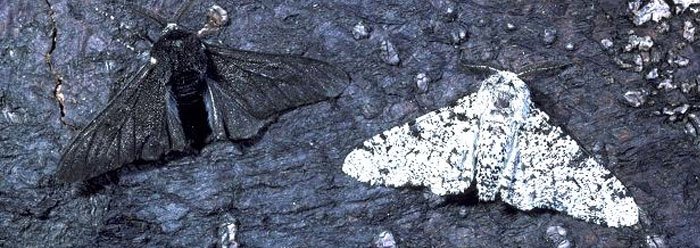
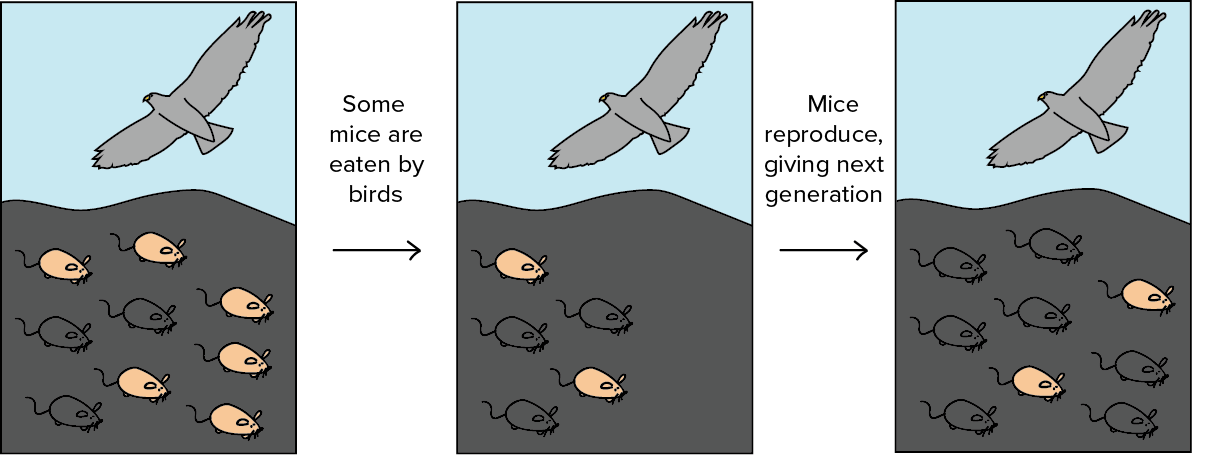
diversity
evolution
mutation
fitness
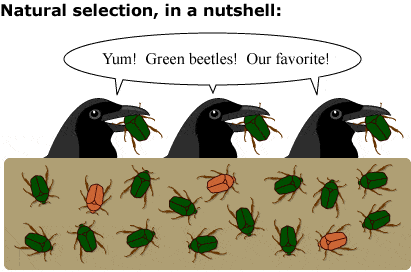
Charles Darwin observed that finches of different species on the Galápagos Islands have many similar physical characteristics, this supports the hypothesis that these finches
are twins
acquired traits through use and disuse.
all eat the same type of food.
descended from a common ancestor.
If green and brown moths live in a forest environment, the fact that the brown moths are easier to see and are less likely to survive is called
natural selection
overproduction
competition
What eventually happens to a species when the environment changes and the organisms do not adapt?
Classification
Extinction
Overproduction
A behavior or structure that allows organisms to survive, reproduce, and pass on traits to offspring is called an
competition
variation
adaptation
Which term refers to an organism that hunts and kills for food?
Prey
Predator
Which term refers to an organism that is hunted and eaten for food?
Predator
Prey
During a hurricane, a population of beetles almost gets completely wiped out. The only beetles that survived were lucky that they were in their nest at the time of the hurricane and had enough food to survive.
Natural selection
Genetic Drift
Gene Flow
Non-Random Mating
Insects become resistant to pesticides very quickly, sometime in one generation. If an insect is resistant to the chemical, most of the offspring will also be resistant. Considering that insect generations can be a matter of weeks, insects in an area can become immune to a chemical within months.
Mutation
Natural Selection
Genetic Drift
Gene Flow
A chemical spill causes a genetic change in the offspring of ladybugs to have blue dots instead of black dots.
Natural Selection
Genetic Drift
Mutation
Gene Flow
This is a pattern of natural selection where one extreme form of a trait is more advantageous than the average or the opposite extreme; as a result, this trait in the population tends to evolve towards that one extreme
Directional selection
Disruptive selection
Stabilizing selection
Forward selection
This is a pattern of natural selection in which the average (or intermediate) form of a trait is the most advantageous, and so a population evolves away from the extremes and toward the average
Disruptive selection
Directional selection
Stabilizing selection
Middle selection
The _________________ _________________ occurs when there is a reduction in population due to natural disasters, over hunting or disease.
founder effect
gene flow
bottleneck effect
genetic drift
As a population recovers from reduction due to the bottleneck effect, the population will experience -
a loss of genetic dicversity.
migration.
no change to allele frequency.
genetic regulation.
What is gene flow?
The addition or removal of alleles in a population due to individuals entering or leaving one population for another
A change in allele frequencies when a new population arises from only a few individuals
A reduction in population caused by natural disasters, disease, hunting, etc.
A change in the gene pool due to chance
What is genetic drift?
A population for which the gene frequencies do not change
A change in allele frequencies due to selection
The addition or removal of alleles in a population due to individuals entering or leaving one population for another
A change in the gene pool due to chance
When Christopher Columbus came to the Americas, he randomly chose 3 chickens from Spain to bring along. These 3 chickens were the only chickens to breed in the Americas for hundreds of years.
natural selection
genetic drift
founder effect

What type of selection is depicted in the picture?
stabilizing
directional
disruptive


What type of natural selection is this: Small turtles are too weak to protect themselves from predators and large turtles are too slow to hide from predators. Average-sized turtles have high fitness.
Disruptive Selection
Directional Selection
Stabilizing Selection

gene flow
natural selection
bottleneck effect
founder effect

