wayground logo

Free Printable Worksheets

Font size

S
M
L
XL
Worksheets

Government Constitution Test Study Guide

Total questions: 87

Worksheet time: 50mins

Name
Class
Date
1.
Why were the first ten amendments to the U.S. Constitution originally created?
a)
To eliminate state governments
b)
To establish a new form of monarchy
c)
To address Anti-Federalist concerns about potential government overreach
d)
To expand federal government power
2.
Which amendment protects citizens from being forced to house soldiers in their private homes during peacetime?
a)
Third Amendment
b)
Fourth Amendment
c)
Second Amendment
d)
First Amendment
3.
The concept of 'unenumerated rights' is most closely associated with which amendment?
a)
Eighth Amendment
b)
Tenth Amendment
c)
Fifth Amendment
d)
Ninth Amendment
4.
Which amendment provides protection against self-incrimination and double jeopardy?
a)
Seventh Amendment
b)
Sixth Amendment
c)
Fifth Amendment
d)
Fourth Amendment
5.
The right to a speedy and public trial by an impartial jury is guaranteed by which amendment?
a)
Sixth Amendment
b)
Seventh Amendment
c)
Fifth Amendment
d)
Eighth Amendment
6.
Which amendment specifically addresses the right to bear arms?
a)
Second Amendment
b)
First Amendment
c)
Third Amendment
d)
Fourth Amendment
7.
The principle of federalism is most directly established by which amendment?
a)
Eighth Amendment
b)
Tenth Amendment
c)
Ninth Amendment
d)
Fifth Amendment
8.
Which amendment protects against unreasonable searches and seizures?
a)
Sixth Amendment
b)
Fourth Amendment
c)
Fifth Amendment
d)
Third Amendment
9.
The right to jury trial in civil cases is guaranteed by which amendment?
a)
Ninth Amendment
b)
Sixth Amendment
c)
Seventh Amendment
d)
Eighth Amendment
10.
Which amendment prohibits cruel and unusual punishment?
a)
Eighth Amendment
b)
Sixth Amendment
c)
Seventh Amendment
d)
Ninth Amendment
11.
"Right to bear arms" (Gun rights)
a)
1st
b)
2nd
c)
3rd
d)
4th
12.

How many amendments have been added to the U.S. Constitution?

a)

0

b)

34

c)

27

13.
Which amendment protects the rights... No Double Jeopardy, Right to remain Silent?
a)
8
b)
10
c)
5
d)
15
14.
Which amendment stated that a warrant is needed to Search and Seize property?
a)
8
b)
16
c)
12
d)
4
15.
Which amendment stated that the government can't MAKE you house soldiers?
a)
4
b)
5
c)
10
d)
3
16.
Which amendment guarantees No Torture or Crazy Fines and Bail Amounts (NO cruel & unusual punishment)?
a)
10
b)
1
c)
8
d)
18
17.
Which amendment guarantees a Speedy Criminal Trial?
a)
4
b)
19
c)
6
d)
10
18.
Which amendment guarantees a jury in a Civil Trial?
a)
7
b)
17
c)
10
d)
1
19.
How many amendments are in the Bill of Rights?
a)
8
b)
12
c)
10
d)
13
20.
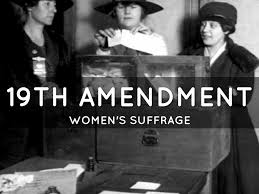
Which amendment guarantees women the right to vote?
a)
1st Amendment
b)
4th Amendment
c)
19th Amendment
d)
12th Amendment
21.

Powers not listed in the Constitution go to the states and people is which amendment?

a)
7th
b)
8th
c)
9th
d)
10th
22.
When each branch has distinct powers that cannot be taken away by the others is known as
a)
Judicial Review
b)
Separation of Powers
c)
Veto
d)
Council
23.
Who interprets laws and makes certain the Constitution is being obeyed?
a)
President
b)
Congress
c)
Supreme Court Justices
d)
Governor
24.

a key constitutional principle that divides the functions of government among three branches

a)

federalism

b)

sectionalism

c)

separation of duties

d)

separation of power

25.

Which term is defined as the system created to keep any one branch of government from becoming too powerful?

a)

Popular Sovereignty

b)

Checks and Balances

c)

Federalism

d)

Suffrage

26.
What term refers to the idea that the national government shares power with state governments?
a)

Articles of Confederation

b)

Ratification

c)

Federalism

d)

Checks and Balances

27.
When both the federal government and the state government can tax people this is an example of..
a)
Popular Sovereignty
b)
Radicalism
c)
Federalism
d)
Limited Government 
28.

How many TOTAL Senators do we have?

a)

2

b)

100

c)

435

d)

535

29.

Which house requires you be at least 25 years old, a U.S. citizen for at least 7 years and live in the state and district you represent?

a)

Senate

b)

House of Representatives

30.

If you are a member of this house you must represent the citizens across your entire state.

a)

Senate

b)

House of Representatives

31.

Which section of the Constitution talks about the Legislative Branch?

a)

Article I

b)

Article II

c)

Article III

d)

Article IV

32.

How many total Representatives are there?

a)

50

b)

100

c)

435

d)

535

33.

A tax bill must start in which house?

a)

Senate

b)

House of Representatives

34.

Who is the President of the Senate?

a)

Majority Leader

b)

Minority Leader

c)

Vice President

d)

President

35.

Who is the leader of the House of Representatives?

a)

Vice President

b)

President

c)

Speaker of the House

d)

Majority Leader

36.

Congress can pass bills over a presidential veto with ______ vote.

a)

1/2

b)

2/3

c)

3/4

d)

5/6

37.

Bicameral means

a)

1 house.

b)

2 houses.

c)

3 houses.

d)

4 houses.

38.

Who approves presidential appointments, like ambassadors, judges, and cabinet members?

a)

Senate

b)

House of Representatives

39.

Serves 2 year terms

a)

Senate

b)

House of Representatives

40.

Must be 30 or older, a citizen for 9 years and live in the state they represent

a)

Senate

b)

House of Representatives

41.

Serve 6 year terms

a)

Senate

b)

House of Representatives

42.
Who is the person in charge of the Executive Branch?
a)
Attorney General
b)
The president
c)
Secretary of Defense
43.
Name one thing the president has the power to do.
a)
Veto Laws
b)
Makes Laws
c)
Check to see if laws are fair.
44.
The president's term last for _____________ years.
a)
4
b)
c)
3
45.
The Executive Branch makes sure that laws are _______________.
a)
made
b)
fair
c)
carried out
46.

Who are the leaders of the executive departments who advise the president?

a)

President

b)

Legislative Branch

c)

Parliament

d)

Cabinet

47.
To be President you must be at least ____ years old
a)
25
b)
30
c)
35
d)
40
48.
How many terms may the president serve?
a)
1
b)
2
c)
4
d)
unlimited
49.
To be president you must be 
a)
a citizen for 7 years
b)
a citizen for 9 years
c)
a natural born citizen
d)
a citizen for 14 years
50.
.  Which amendment addresses the order of succession to the Presidency if the President dies or resigns?
a)
20
b)
25
c)
22
d)
23
51.
Which amendment addresses the number of years a President can serve?  
a)
20
b)
22
c)
23
d)
25
52.
.  Who has the expressed power to declare war?  
a)
President
b)
Congress
c)
House
d)
Senate
53.
What role gives the President the ability to rule as head of all the branches of the military?  
a)
Chief of State
b)
Chief Diplomat
c)
Chief Citizen
d)
Commander in Chief
54.

True or False: The number of electors in a state is a determined by the number of Senators added to the state's representatives in the House of Representatives.

a)

True

b)

False

55.

Which of the following is a power of the President that does not need

the approval of the Senate?

a)

To pardon criminals

b)

Appointing an ambassador

c)

To make a treaty with another country

d)

Appointing a member of the Cabinet

56.

The number of electors needed to win the election is

a)

100

b)

270

c)

435

d)

538

57.

How are federal judges selected?

a)

Named by the President, confirmed by the Senate.

b)

Named by the President.

c)

They are elected.

d)

Named by the previous judge.

58.

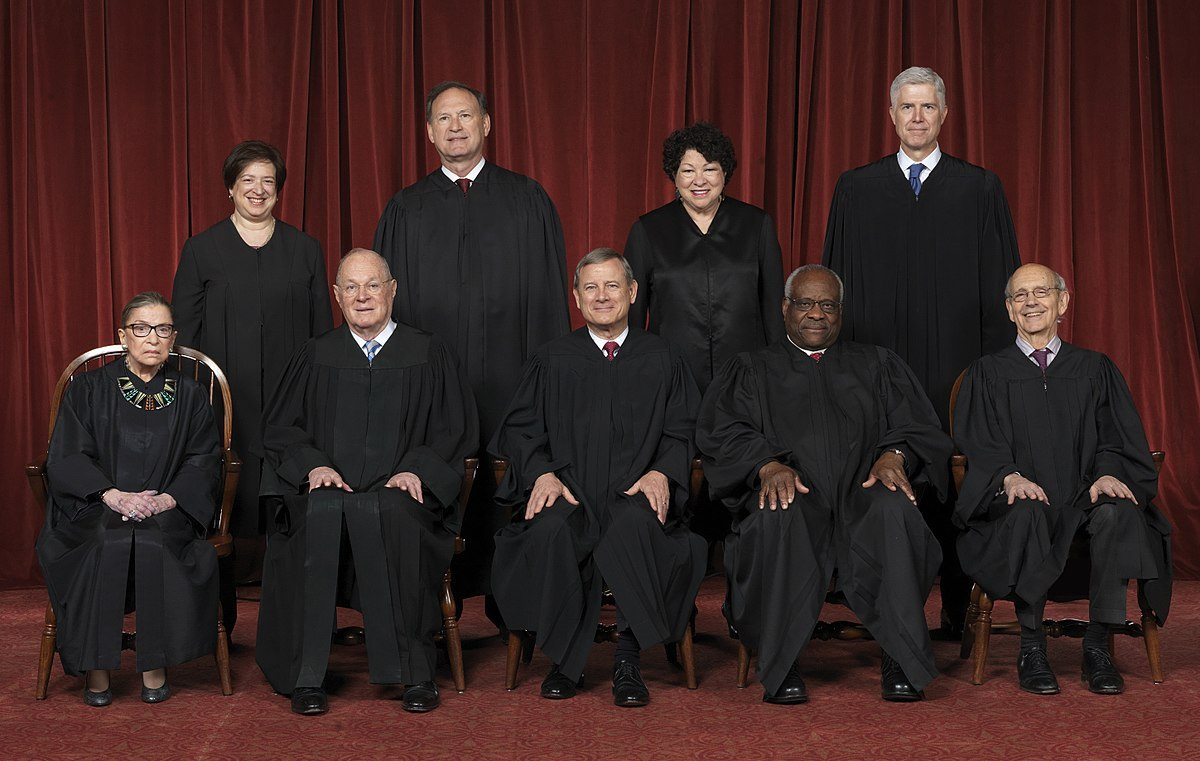
How many Supreme Court Justices sit on the Supreme Court?

a)

7

b)

9

c)

5

d)

12

59.

Choose the answer(s) that are true of Judicial Review.

a)

Allows the US Supreme Court the authority to choose which cases they will hear.

b)

Is the result of Marbury v Madison

c)

The actions of the executive and legislative branches of government are subject to review.

d)

Gives the US Supreme Court authority to rule actions unconstitutional.
60.

The Supreme Court ruling a State law unconstitutional is an example of what?

a)

Judicial Review

b)

Judicial Restraint

c)

Judicial Activism

d)

Jurisdiction

61.

Original Jurisdiction is when:

a)

a court is the first to hear a case

b)

a court has the authority to hear a case

c)

a court reviews the decision of a lower court

d)

power is shared between the Federal and State courts to hear a certain case
62.

If a Supreme Court justice agrees with the decision of the court, but did not agree with the reasoning of how they came to that conclusion, the justice may write a:

a)

Writ of Certiorari

b)

Concurring Opinion

c)

Majority Opinion

d)

Dissenting Opinion

63.

The Rule of 4 states that:

a)

Attorney's are only allotted 4 minutes per witness for questioning

b)

If there are ever less than 4 Supreme Court Justices, the role of the Judicial Branch is taken over by the President

c)

There must be at least 4 members of a jury in order to try a case

d)

4 or more Justices must agree to hear a case for it to go to the Supreme Court

64.

What is the opinion of the Supreme Court justices who make up the minority?

a)

Majority Opinion

b)

Concurring Opinion

c)

Unanimous Decision

d)

Dissenting Opinion

65.

A trial, or district, court has

a)

appellate jurisdiction

b)

original jurisdiction

c)

concurrent jurisdiction

d)

federal jurisdicition

66.

If the Supreme Court finds a law in conflict with the Constitution, it

a)

asks Congress to repeal the law

b)

declares the law unconstitutional

c)

changes the Constitution

d)

files an injunction

67.

What does the judge decide in an appeals case?

a)

If the trial was judged fairly

b)

the length of the convicted criminal's sentence

c)

what a convicted person eats for his/her last meal

d)

whether a convicted person should change lawyers

68.

What is the Judicial Branch's main role?

a)

carry out the process of checks and balances

b)

rewrite and amend laws

c)

declare laws constitutional or unconstitutional

d)

to interpret laws and protect people's rights.

69.

Who decides the facts in a case?

a)

the accused

b)

the defendant

c)

the jury

d)

the lawyers

70.

When all justices agree on a decision and the reasoning behind it, the court may issue a:

a)

concurring opinion

b)

dissenting opinion

c)

brief

d)

unanimous opinion

71.

Article one of the Constitution deals with

a)

Congress

b)

President

c)

Supreme Court

d)

Amendments

72.

Article 2 deals with

a)

Congress

b)

President

c)

Supreme Court

d)

Amendments

73.

Article 3 deals with

a)

President

b)

Supreme Court

c)

Congress

d)

Amendments

74.

Article 6 deals with

a)

Supremacy clause

b)

Elastic Clause

c)

Necessary and Proper Clause

d)

Amendments

75.

Article 5 deals with

a)

Supremacy

b)

Amendments

c)

Congress

d)

State relationships

76.

Article 4 talks about the

a)

Supreme Court

b)

Amendments

c)

Relationship with the States

d)

Supremacy Clause

77.

Article 7 deals with

a)

Ratification

b)

Amendments

c)

Supremacy Clause

d)

Supreme Court

78.

These people argued that the Constitution did not protect individual rights, and that a bill of rights was needed to protect freedom of speech, religion, and the press

a)

Federalists

b)

Anti-Federalists

79.

Wanted a weak national government that would not threaten states’ rights

a)

Federalists

b)

Anti-Federalists

80.

Mostly urban; merchants, skilled workers, and laborers. Many lived in New England

a)

Federalists

b)

Anti-Federalists

81.

These were the people who wanted to ratify the new Constitution

a)

Federalists

b)

Anti-Federalists

82.

What was the Great Compromise?

a)
The Great Compromise was a treaty that ended the Revolutionary War.
b)
The Great Compromise established a unicameral legislature with equal representation for all states.
c)
The Great Compromise was a financial agreement to fund the federal government.
d)
The Great Compromise was an agreement that created a bicameral legislature with representation based on population in the House and equal representation in the Senate.
83.

What was the Three-Fifths Compromise?

a)
The Three-Fifths Compromise was a policy to grant full citizenship to enslaved people.
b)
The Three-Fifths Compromise was an agreement to count enslaved individuals as three-fifths of a person for congressional representation.
c)
The Three-Fifths Compromise was a treaty between northern and southern states.
d)
The Three-Fifths Compromise was a law to abolish slavery in the United States.
84.

Necessary and Proper Clause

a)
The Necessary and Proper Clause is only applicable to state governments.
b)
The Necessary and Proper Clause allows Congress to create laws needed to execute its powers.
c)
The Necessary and Proper Clause limits Congress's ability to create laws.
d)
The Necessary and Proper Clause allows the President to create laws.
85.

According to the Preamble, for what purpose was the Constitution written?

a)

To set up a gov't that would provide for the public good regardless of people's rights

b)

To create a gov't that protected people's rights regardless of the public good

c)

To abolish the former monarchy that once ruled the US

d)

To establish a gov't that would promote the public good and protect people's rights

86.
What is the introduction to the Constitution called? 
a)
Articles of Confederation
b)
Declaration of Independence
c)
Bill of Rights
d)
Preamble
87.

The Preamble lists the __________ of the United States Constitution

a)

Grievances

b)

Unalienable Rights

c)

Purposes

d)

Weaknesses