
 Worksheets
Ag Power, Structure, and Technology Final Fall 2024
Total questions: 90
Worksheet time: 45mins
Name
Class
Date
1.
There are two table saws in the shop.
a)
True
b)
False
2.
Pick the smallest fraction
a)
1/2
b)
1/4
c)
1/8
d)
1/16
e)
1/32
3.
How wide is a saw blade?
a)
1/2 inch
b)
1/4 inch
c)
1/8 inch
d)
1/16 inch
e)
1/32 inch
4.

You stand at the front of this table saw, about to feed a piece of wood toward the blade. Is the blade spinning toward you or away from you?
a)
Toward you
b)
Away from you
5.

You stand at the front of this table saw, about to feed a piece of wood toward the blade. Will the blade throw the cut piece toward you or pull it out of your hands?
a)
The blade will push the piece toward you
b)
The bade will pull the piece away from you
6.
What numbers should hardened safety glasses have?
a)
Z87
b)
Z88
c)
H87
d)
Shade 12
7.
Why won't my ABC fire extinguisher put out class D fires?
a)
Class D fires are too hot
b)
Class D fires do not exist
c)
It can
8.
What should students do in the event of a fire.
a)
Report to the Instructor
b)
Evacuate with the alarm
c)
Try to extinguish it
9.
What 3 things does a fuel burning engine need to function?
a)
Fuel
b)
Air
c)
Spark
10.
The most common cause of shop accidents is:
a)
talking to on your phone
b)
trying to hurry your work
c)
a fellow classmate’s fault
d)
the instructor’s fault
11.
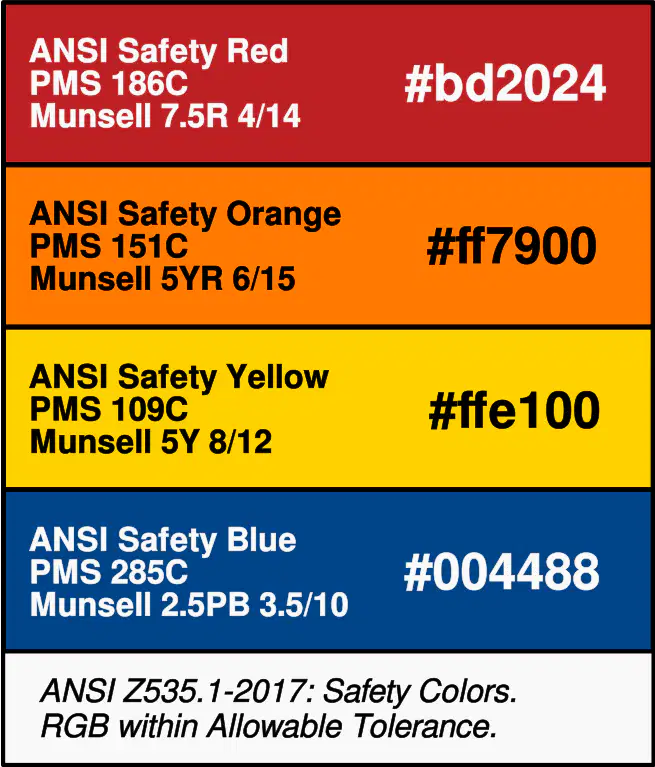
danger or emergency such as safety switches and fire equipment.
a)
Red
b)
Orange
c)
Yellow
d)
Blue
e)
Safety Green
12.
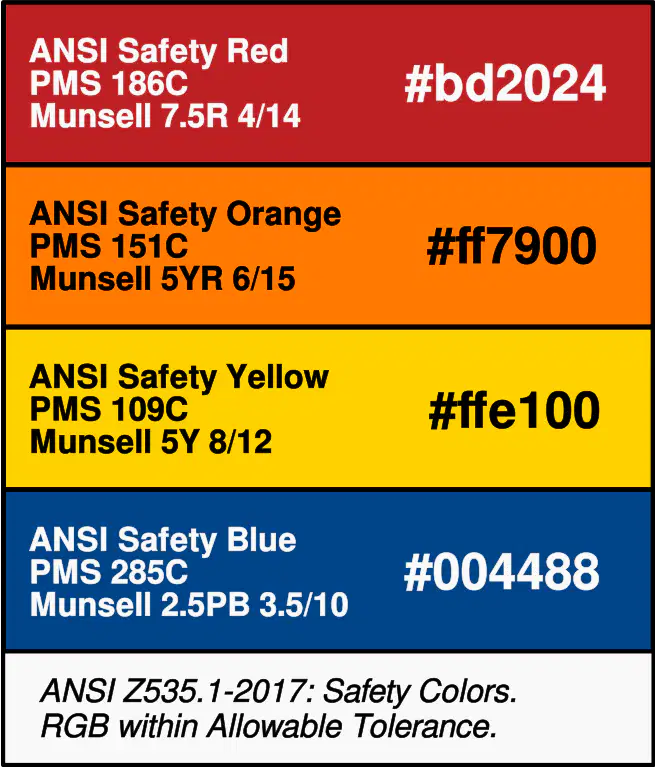
machine hazards such as edges and openings. Orange means warning. Orange is also used as background for electrical switches, levers, and controls.
a)
Orange
b)
Red
c)
Yellow
d)
Blue
e)
Safety Green
13.
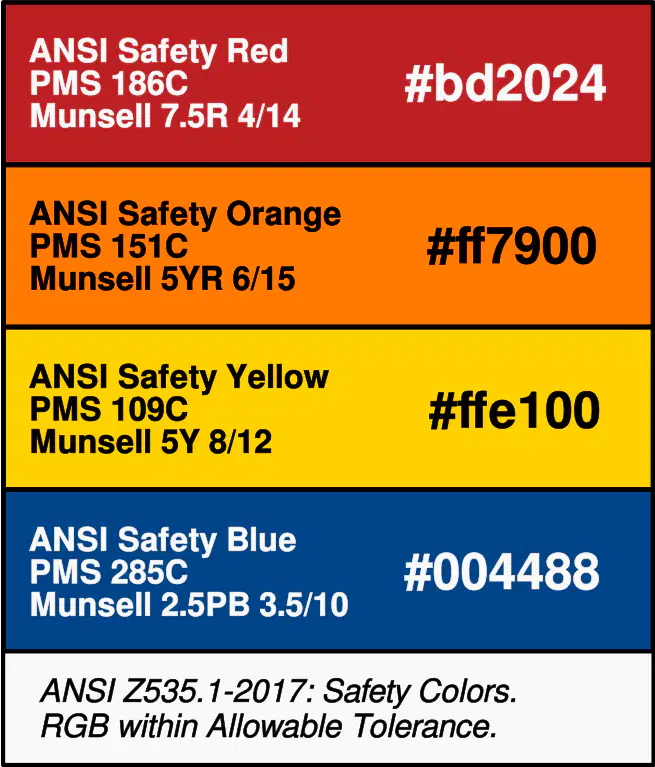
like the amber traffic light, means caution. It is used to identify parts of machines, such as wheels, levers, and knobs that control or adjust the machine. Yellow and black stripes are used in combination to mark stairs, protruding objects, and other stationary hazards.
a)
Yellow
b)
Red
c)
Orange
d)
Blue
e)
Safety Green
14.
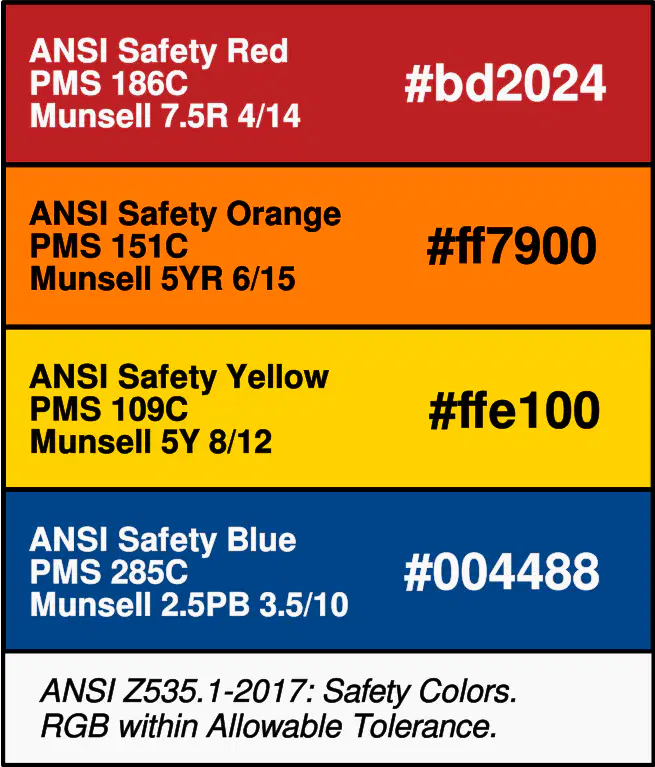
signs if a warning or caution is intended. These are informational signs such as “OUT OF ORDER” or “DO NOT OPERATE”. Such signs are made of white letters on a blue background.
a)
Blue
b)
Red
c)
Orange
d)
Yellow
e)
Safety Green
15.
The student should notify the instructor immediately in case of _________.
a)
accidents
b)
injury
c)
defective equipment or tools
d)
all of the above
16.
A student is permitted to leave the agricultural mechanics laboratory only ________.
a)
with the instructor’s permission
b)
to go to the office
c)
to go to the bathroom
d)
to get a drink
17.
Which of the following is not allowed in the mechanics laboratory?
a)
Working and cleaning
b)
Carelessness and horseplay
c)
Thinking and doing work
d)
All of the above
18.
Any student who has had an accident should:
a)
leave the shop at once
b)
continue to work
c)
notify the teacher immediately
d)
wrap it with duct tape and a paper towel
19.
Students should not rush laboratory work because it may lead to _________.
a)
premature failure
b)
structural collapse
c)
accidents and injury
d)
class finishing early
20.
Approved Z87 safety glasses or goggles must be worn _________.
a)
only in hazardous areas
b)
at all times
c)
never
d)
none of the above
21.
At the end of class, the shop should be ___________.
a)
left as is at the end of class
b)
cleaned and all tools returned to their proper place
c)
cleaned, if you feel like it.
d)
None
22.
Shop clothing is unsafe if it is ___________.
a)
loose
b)
baggy
c)
flammable
d)
all of these
e)
none of these
23.
If tools and/or equipment become defective, one should...
a)
fix them
b)
report them to the instructor
c)
put them away
d)
none of these
24.
If a visitor comes into the mechanics laboratory, one should ___________.
a)
make him/her leave because of unsafe conditions
b)
invite him/her into the laboratory and demonstrate what you are doing
c)
have them take the safety test
d)
issue them a pair of safety glasses
25.
The most common cause of shop accidents is:
a)
talking to on your phone
b)
trying to hurry your work
c)
a fellow classmate’s fault
d)
the instructor’s fault
26.
Any student who has had an accident causing the loss of blood should:
a)
leave the shop at once
b)
continue to work
c)
notify the teacher immediately
d)
wrap it with duct tape and a paper towel
27.
Safety precautions in the shop must be followed by:
a)
students in the shop
b)
anyone who enters the shop
c)
only your teacher
d)
none of the above
28.
You are going to weld. When should you check for flammable materials?
a)
before welding
b)
in between welding exercises
c)
when finished welding
d)
never, welding does not create sparks
29.
Any student who has had an accident not causing the loss of blood should:
a)
leave the shop at once
b)
continue to work
c)
notify the teacher immediately
d)
wrap it with duct tape and a paper towel
30.
If you are injured while working in the shop, you should, first:
a)
go to the nurse
b)
notify the teacher immediately
c)
have a classmate take you to the nurse
d)
all of the above
31.
The condition of a tool should be checked:
a)
before using the tool
b)
while using the tool
c)
when finished with the tool
d)
by someone else
32.
The most important reason for cleaning up oil spills on the floor is;
a)
to keep the floor clean
b)
to prevent a slip or fall
c)
to prevent damage to the floor
d)
to prevent damage to the oil
33.
When welding, you should remove flammable materials:
a)
before welding
b)
in between welding exercises
c)
when finished welding
d)
never, welding does not create sparks
34.
You should handle hot metal with __________ ?
a)
pliers or vise grips
b)
leather gloves
c)
hands
d)
none of the above
35.
Burns should be reported to the instructor:
a)
only if you need First Aid
b)
whenever the burn is serious
c)
anytime you are burned
d)
never, you will heal
36.
In the event of an eye injury, you should;
a)
notify the instructor immediately
b)
only if it hurts or stings
c)
at the end of the block
d)
tell your next teacher, so you do not miss any shop time
37.
Which of the following will not extinguish a grease fire?
a)
Water
b)
Fire extinguisher
c)
Baking soda
d)
Dirt
38.
Which is NOT part of the fire triangle
a)
fuel
b)
combustion
c)
oxygen
d)
heat
39.
Extension cords should be checked for damaged plugs or wire:
a)
before using the cord
b)
only if the cord does not work
c)
after you are finished with the cord
d)
never, extension cords are not dangerous
40.
The safest way to hand someone a tool is;
a)
Toss it to them
b)
Roll or slide the tool on the floor
c)
Hand it to them handle first
d)
Hand it to them with the sharp edge or point first
41.
Before using a portable power tool, you should first:
a)
check to make sure all guards are in place and working
b)
check to make sure it is plugged in
c)
make sure it is the right brand
d)
make sure you have enough time to use it
42.
Students should never ________ while working in the mechanics laboratory.
a)
listen
b)
shout
c)
talk
d)
hear
43.
Students should never ________ while working in the mechanics laboratory.
a)
listen
b)
commit acts of horseplay with or against their instructor or peers
c)
talk
d)
hear
44.
According to safety studies, which part of the body is most likely to be injured in the shop?
a)
Head
b)
Body
c)
Arms and Hands
d)
Legs and Feet
45.
Which of the following is the best choice for protecting you feet in the shop?
a)
Flip-flops
b)
Running shoes
c)
Dress shoes
d)
Leather work boots
46.
Which of the following is the best choice for protecting your legs in the shop?
a)
Running shorts
b)
Baggy shorts
c)
Warm up pants
d)
Jeans
47.
Can a welding arc give you a sunburn?
a)
Yes
b)
No
48.
Why are Z87 safety glasses important in the shop?
a)
Protect your eyes from injury.
b)
So I cannot see what I am doing.
c)
No one in the real world wears safety glasses.
d)
My eyeglasses are good enough.
49.
Can a welding arc burn your retinas?
a)
Yes
b)
No
50.
What is the sound decibel limit for working 8 hours?
a)
10 dBA
b)
50 dBA
c)
90 dBA
d)
100 dBA
51.
What are the dimensions of a 2x4?
a)
about 2″ x 4″
b)
about 1.5″ x 3.5″
c)
about 1.25" x 3.25"
d)
I don't know
52.
How far apart are studs in residential construction?
a)
16 inches
b)
44 inches
c)
27 inches
d)
0
53.
Dead loads
a)
are those that are constant and are a permanent part of the structure. They consist of the combined weight of the building materials in the roof structure.
b)
are temporary loads that move, or can be moved, without altering the structure.
54.
Live loads
a)
are those that are constant and are a permanent part of the structure. They consist of the combined weight of the building materials in the roof structure.
b)
are temporary loads that move, or can be moved, without altering the structure.
55.
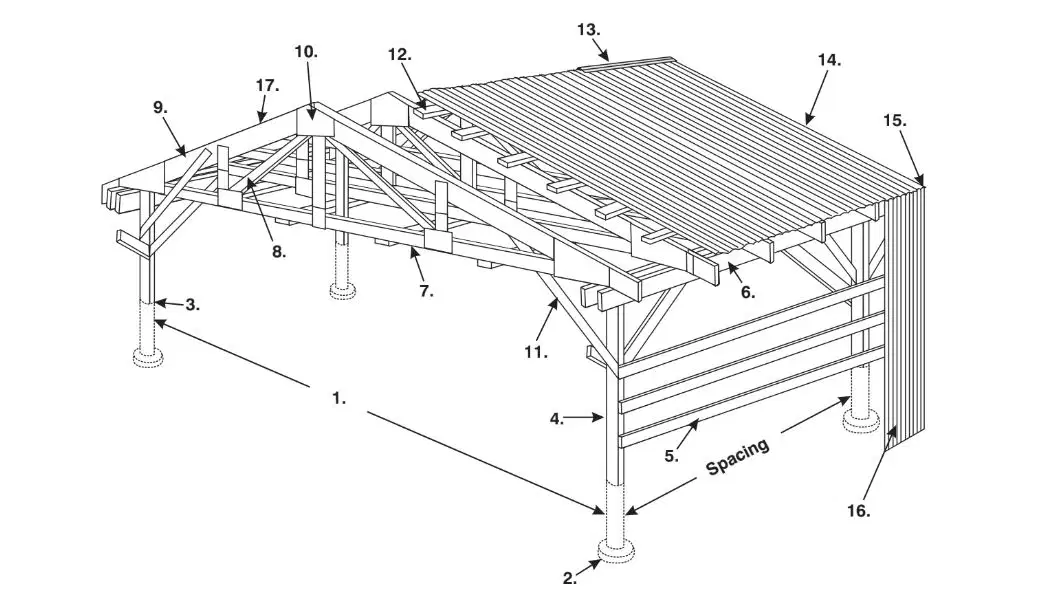
Identify number 10
a)
Span
b)
Gusset
c)
Siding
d)
Girder
e)
Purlin
56.
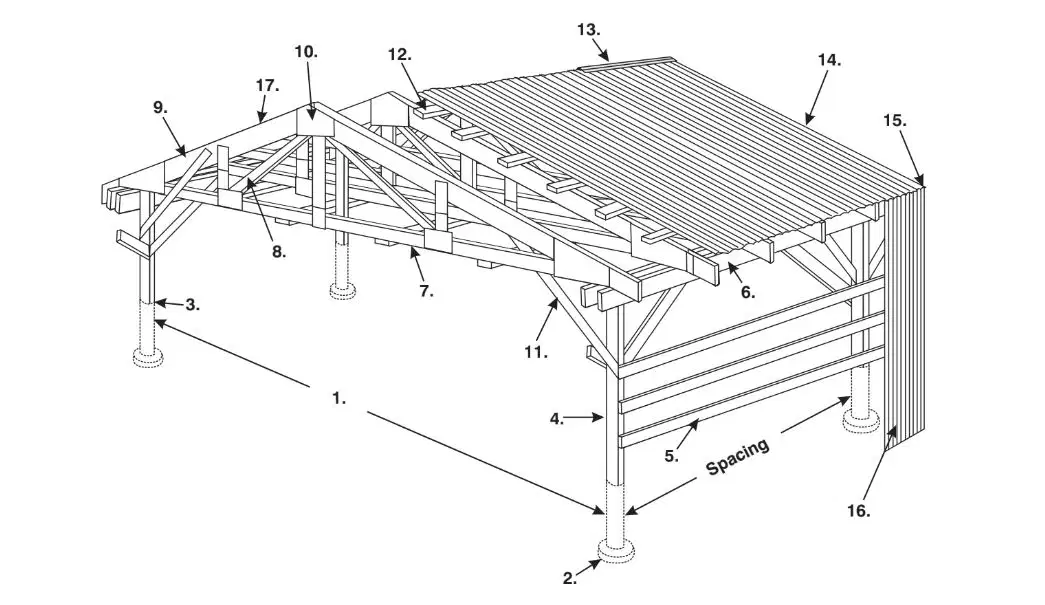
Identify number 1
a)
Span
b)
Gusset
c)
Siding
d)
Girder
e)
Purlins
57.
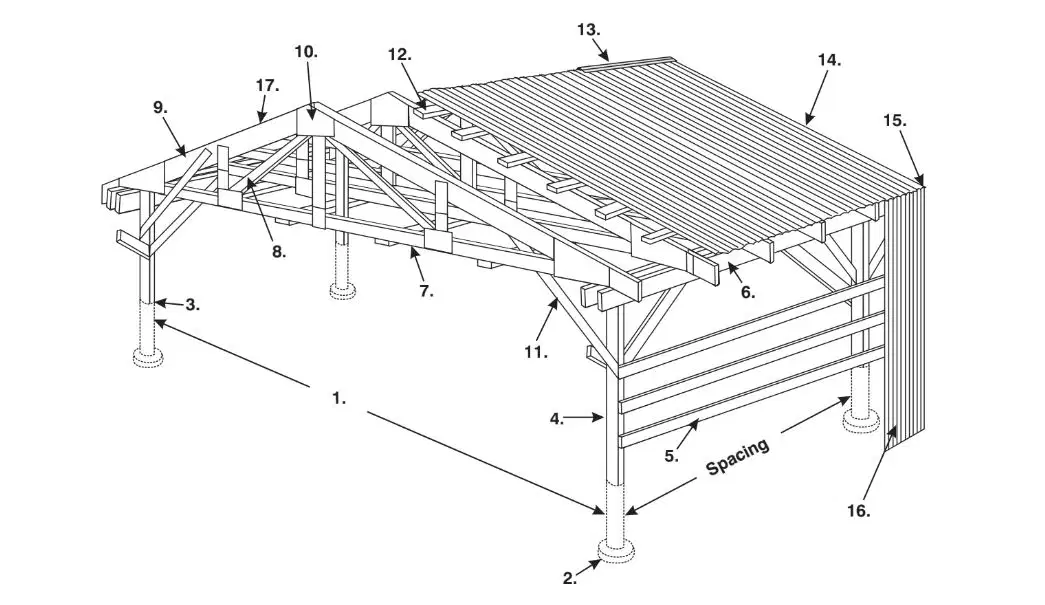
Identify number 16
a)
Span
b)
Gusset
c)
Siding
d)
Girder
e)
Purlins
58.
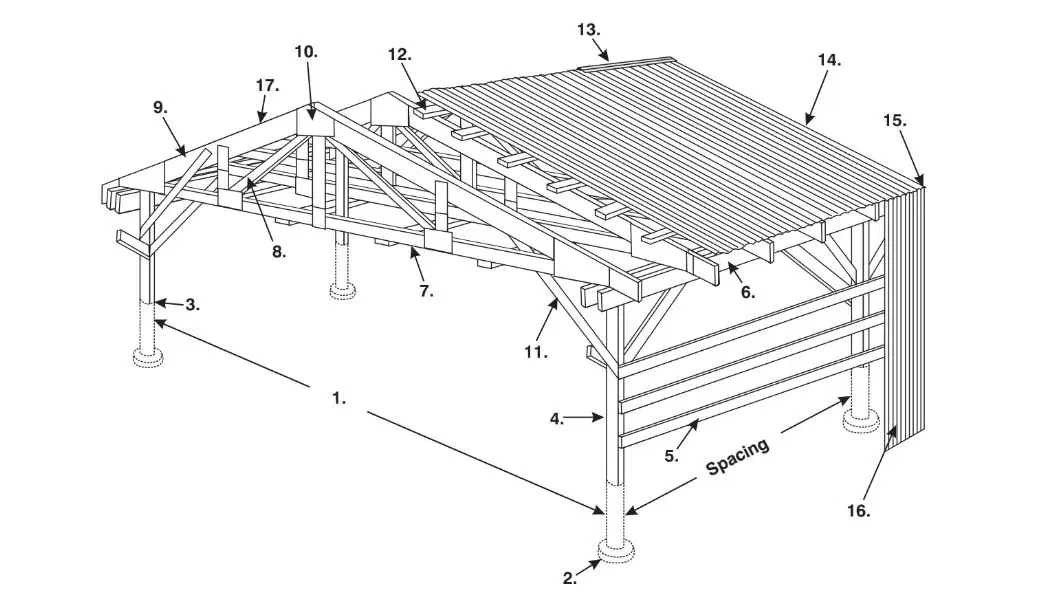
Identify number 5
a)
Girder
b)
Purlins
59.
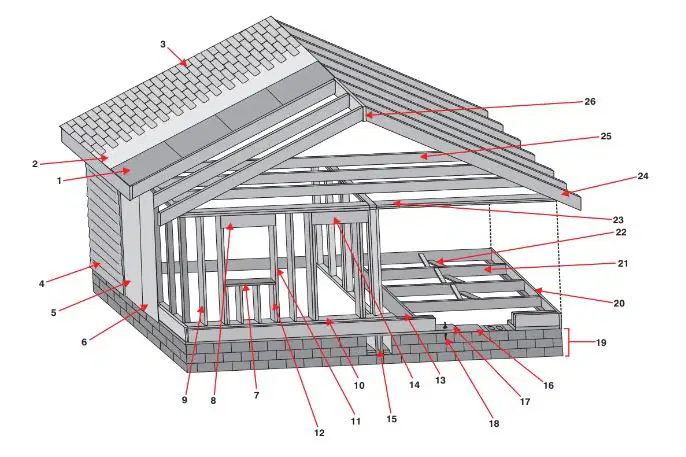
Identify 3
a)
Shingles
b)
Insulation Wrap
c)
Wall Sheeting
d)
Ceiling Joist
e)
Floor Joist
60.
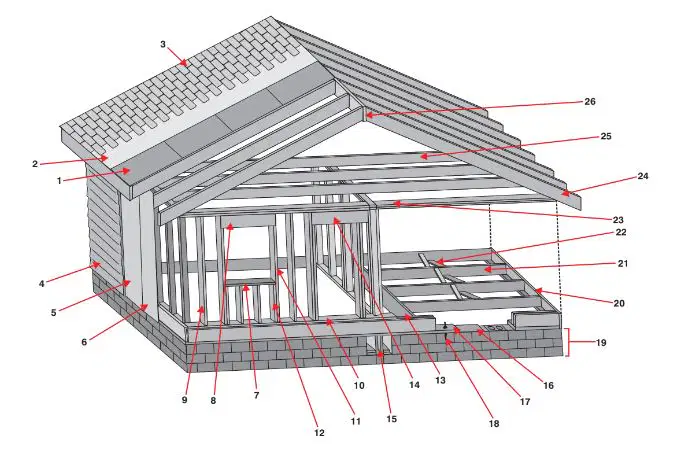
Identify 9
a)
Stud
b)
Siding
c)
Insulation Wrap
d)
Wall Sheeting
e)
Ceiling Joist
61.

Identify 4
a)
Siding
b)
Insulation Wrap
c)
Ceiling Joist
d)
Floor Joist
62.
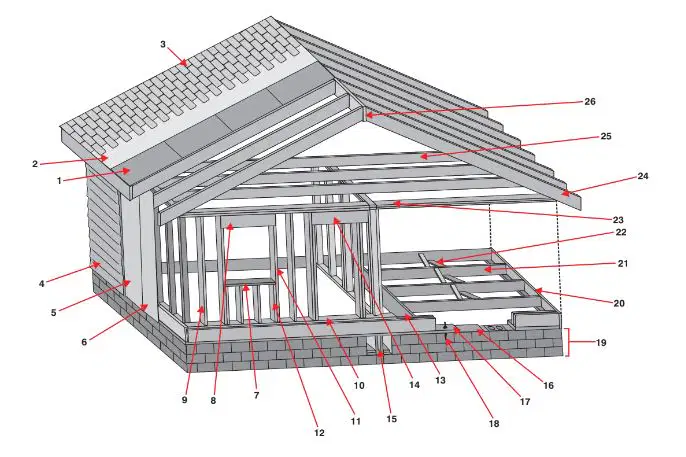
Identify 5
a)
Stud
b)
Insulation Wrap
63.
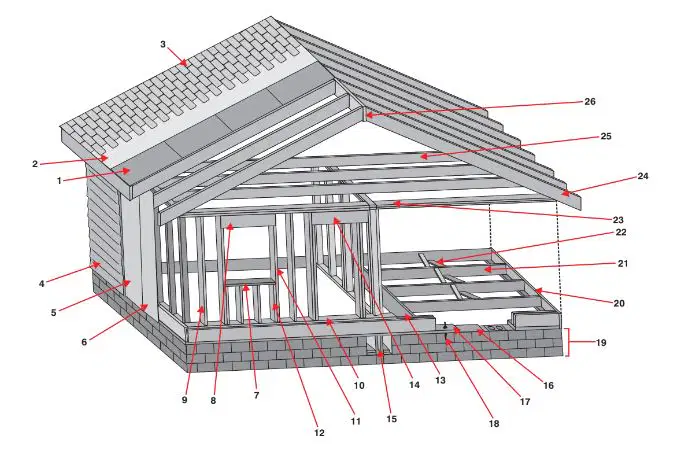
Identify 6
a)
Stud
b)
Siding
c)
Wall Sheeting
d)
Floor Joist-#21
64.
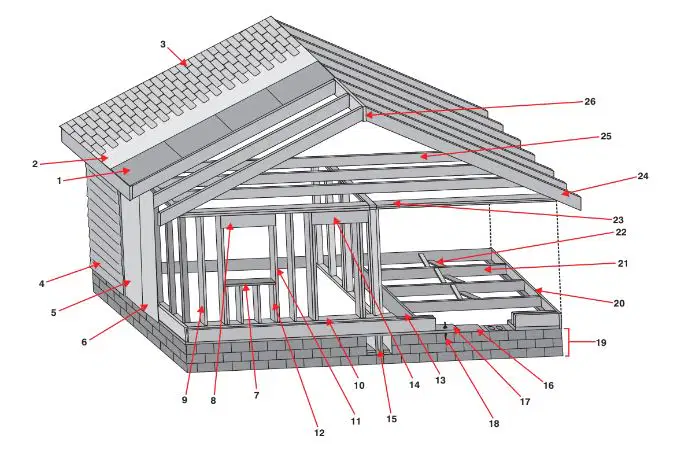
Identify 21
a)
Floor Joist
b)
Sheeting
c)
Stud
d)
Siding
e)
Insulation Wrap
65.

What bit is this?
a)
Torx
b)
Philips
c)
Robertson
d)
Allen (Allen Keys)
e)
Slotted/Flat
66.
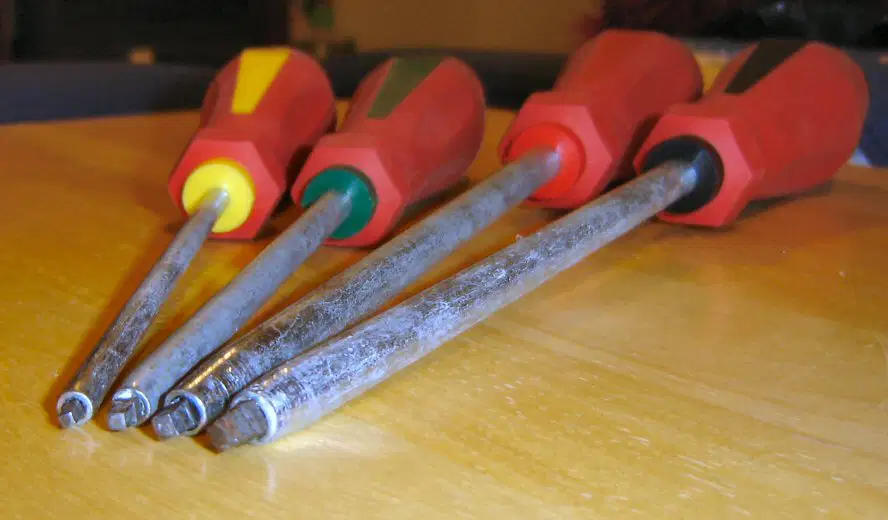
What bit is this?
a)
Torx
b)
Philips
c)
Robertson/Square
d)
Allen (Allen Keys)
e)
Slotted/Flat
67.

What bit is this?
a)
Torx
b)
Philips
c)
Robertson
d)
Allen (Allen Keys)
e)
Slotted/Flat
68.

What bit is this?
a)
Torx
b)
Philips
c)
Robertson
d)
Allen (Allen Keys)
e)
Slotted/Flat
69.
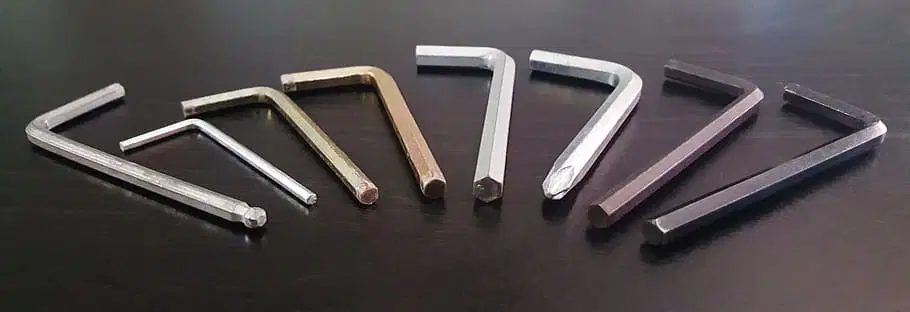
What bit is this?
a)
Torx
b)
Philips
c)
Robertson
d)
Allen (Allen Keys)
e)
Slotted/Flat
70.

What tool am I?
a)
Framing Hammer
b)
Ball Peen Hammer
c)
Claw Hammer
d)
Sledgehammer
e)
71.
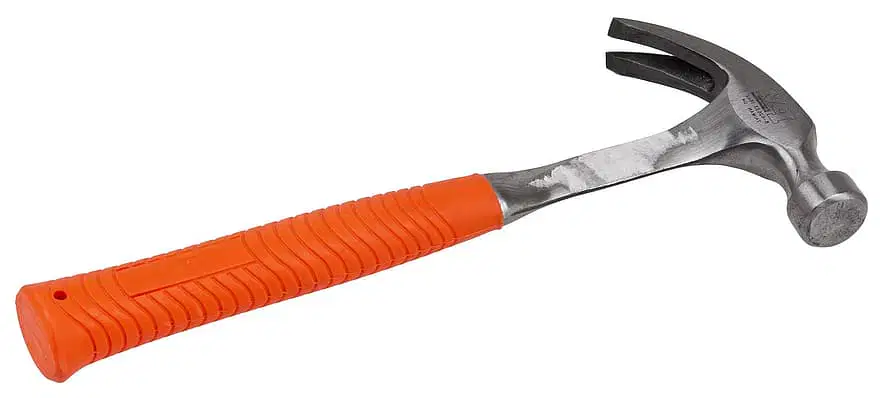
What tool am I?
a)
Framing Hammer
b)
Ball Peen Hammer
c)
Claw Hammer
d)
Sledgehammer
e)
72.
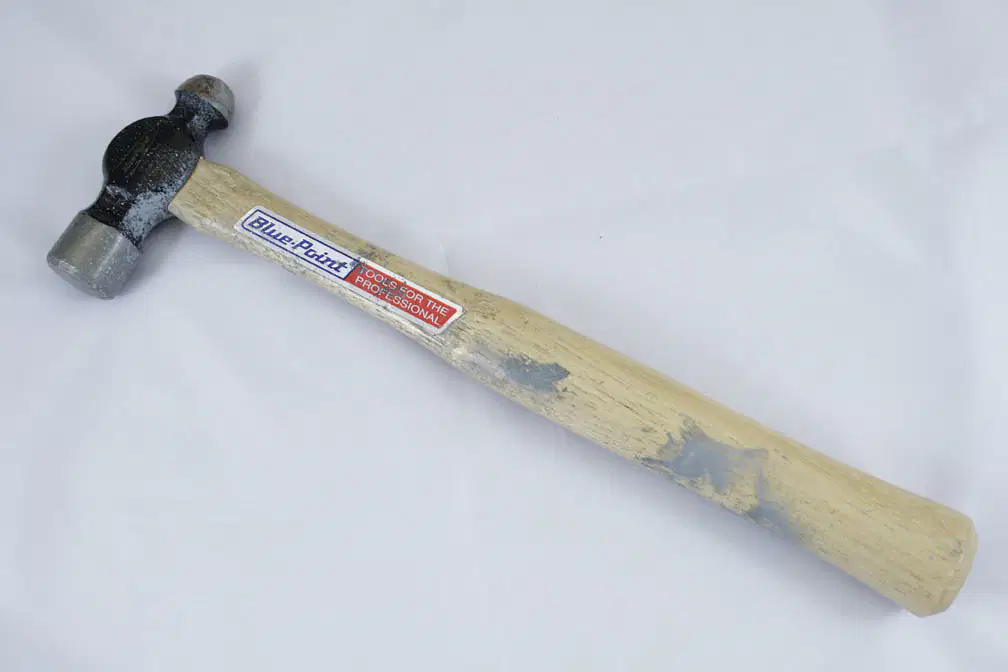
What tool am I?
a)
Framing Hammer
b)
Ball Peen Hammer
c)
Claw Hammer
d)
Sledgehammer
e)
73.

What tool am I?
a)
Framing Hammer
b)
Ball Peen Hammer
c)
Claw Hammer
d)
Sledgehammer
e)
74.
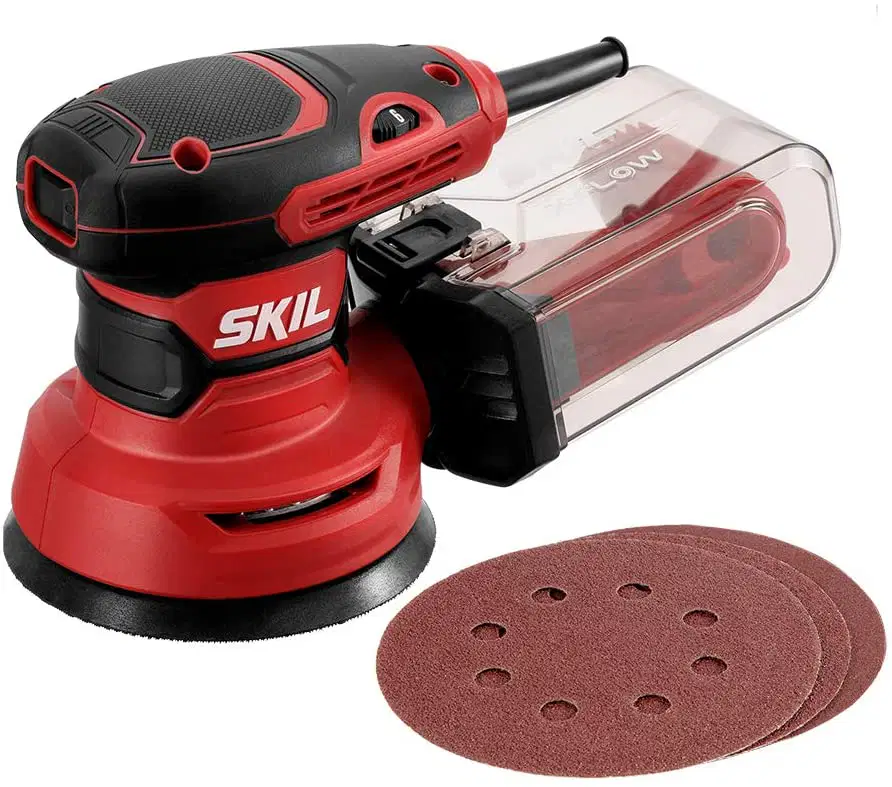
What tool am I?
a)
Quarter-Sheet Sander
b)
Random Orbital Sander
c)
Belt Sander
75.
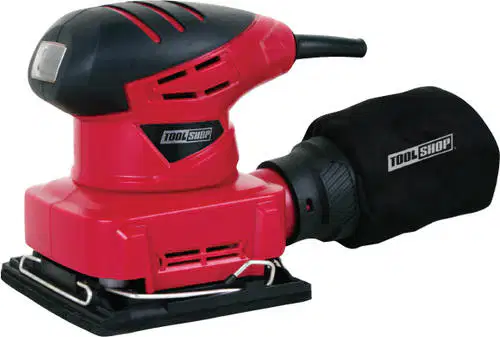
What tool am I?
a)
Quarter-Sheet Sander
b)
Random Orbital Sander
c)
Belt Sander
76.
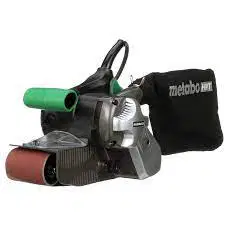
What tool am I?
a)
Quarter-Sheet Sander
b)
Random Orbital Sander
c)
Belt Sander
77.

What am I?
a)
Table Saw
b)
Circular Saw
c)
Miter Saw
d)
Radial Arm Saw
78.

What am I ?
a)
Table Saw
b)
Circular Saw
c)
Miter Saw
d)
Radial Arm Saw
79.
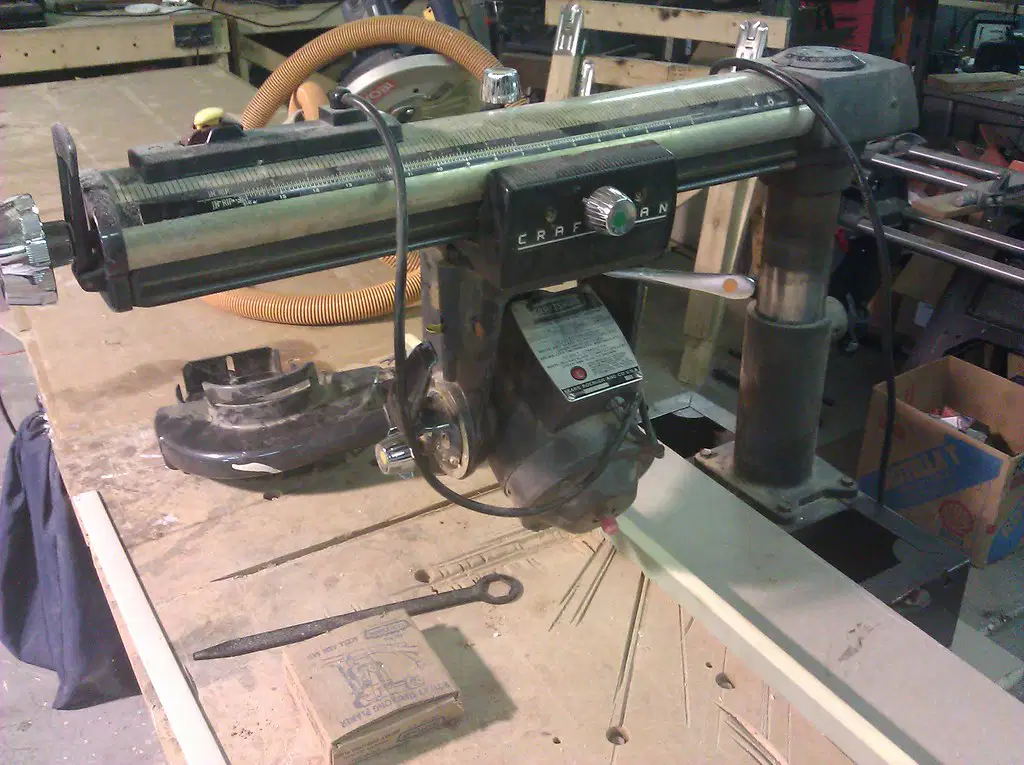
What am I?
a)
Table Saw
b)
Circular Saw
c)
Miter Saw
d)
Radial Arm Saw
80.

Identify this saw
a)
scroll saw
b)
band saw
c)
chain saw
d)
motorized miter saw
e)
radial arm saw
81.

Identify this saw
a)
table saw
b)
band saw
c)
chain saw
d)
motorized miter saw
e)
radial arm saw
82.
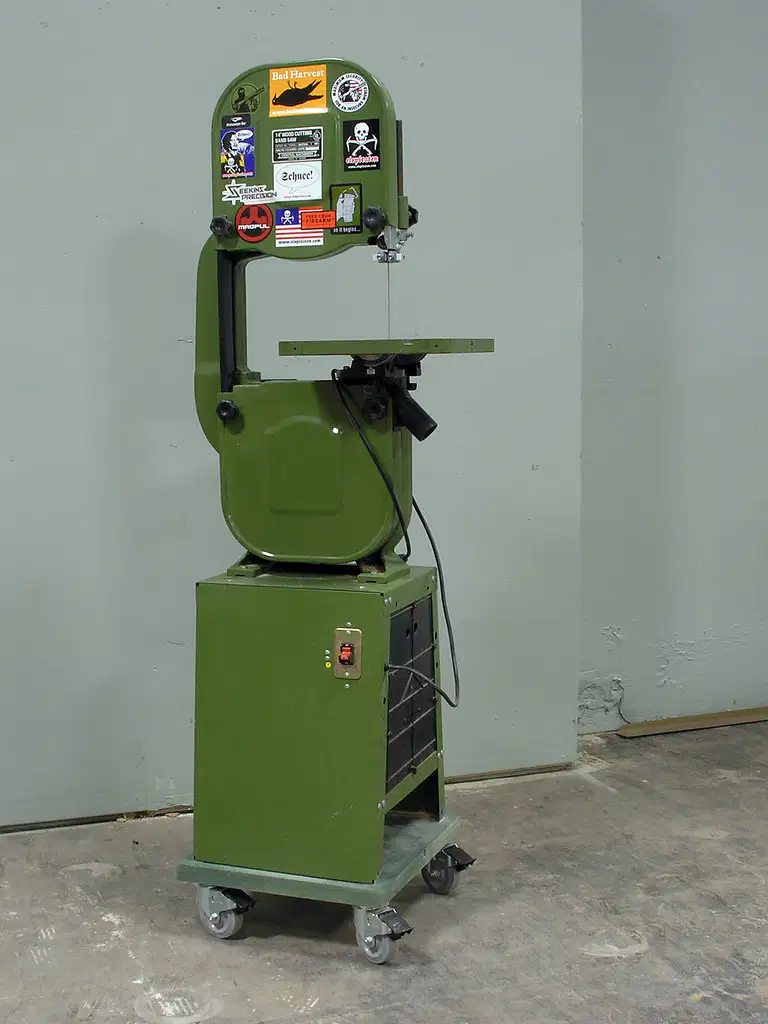
Identify this saw
a)
table saw
b)
band saw
c)
chain saw
d)
motorized miter saw
e)
radial arm saw
83.
pneumatic
a)
A ___________________power tool is powered by compressed air.
b)
A ________________power tool is powered by a compressed liquid, usually oil.
84.
hydraulic
a)
A ___________________power tool is powered by compressed air.
b)
A ________________power tool is powered by a compressed liquid, usually oil.
85.
_____________ ______________ is the three-jaw part that holds the bit.
a)
Drill chuck
b)
Bit holder
c)
Student group
d)
Impact vice
86.
Wood glue only works on wood.
a)
True
b)
False
87.
What should you use to start the sanding process?
a)
80 Grit
b)
150 Grit
c)
220 Grit
88.
Do higher grit numbers (220 and up) remove more material or smooth and polish the piece?
a)
They are aggressive and remove more material.
b)
That sandpaper is very fine textured and removes little material at a time.
89.
What is prestain?
a)
A wood treatment that sets up lumber for absorbing stain.
b)
A wood finish that protects the piece as well as changing the tint/hue of the lumber
90.
What is stain?
a)
A wood treatment that sets up lumber for absorbing stain.
b)
A wood finish that protects the piece as well as changing the tint/hue of the lumber
100 %

